How Much Is Motorcycle Insurance in Michigan?
Riding the open roads of Michigan on two wheels is an incredible feeling, but the thought of insurance costs can often put a damper on the dream. It’s frustrating trying to figure out how much you’ll actually pay when every quote seems different and the state’s unique no-fault laws add another layer of complexity. This guide is here to break down exactly what goes into calculating motorcycle insurance rates in Michigan, so you can navigate the process with confidence and find coverage that fits your budget and needs.
Understanding Michigan's Unique No-Fault System for Motorcycles
Michigan's insurance landscape is famously complicated, especially when it comes to its no-fault system. While cars and motorcycles share the roads, how they’re treated by insurance laws can be vastly different, leading to a lot of confusion for riders.
How No-Fault Affects Your Motorcycle Policy
You might have heard about Michigan’s no-fault auto insurance, which means your own insurance company pays for your medical expenses and lost wages after a car accident, regardless of who was at fault. This system is designed to streamline claims and reduce lawsuits. However, here's where it gets tricky for us riders: motorcycles are generally excluded from the no-fault personal injury protection (PIP) benefits that cars receive.
What this often means in Michigan is that if you're involved in an accident, your initial medical expenses and lost wages may fall to the no-fault insurer of a car involved in the crash. If no car is involved, or if the at-fault driver is uninsured, you could be in a bind. This unique situation means that motorcyclists often need to carry robust medical coverage options on their own policy, or rely on personal health insurance, to ensure they're adequately protected. It really highlights why understanding your policy in Michigan is crucial. For a deeper dive into the specifics, you might want to read more about Michigan Motorcycle Insurance No-Fault Explained.
The Impact of Unlimited PIP on Car Insurance and Its Motorcycle Nuance
Michigan used to be the only state with mandatory unlimited lifetime PIP medical benefits for all auto policies, which contributed to some of the highest car insurance rates in the nation. While reforms in 2020 introduced more choice for car owners, allowing them to select lower PIP medical caps, the default for new policies and many existing ones remains unlimited PIP.
This history with unlimited PIP for cars can sometimes create a false sense of security or expectation when riders look at motorcycle insurance. Since motorcycles are often excluded from this direct PIP coverage, your motorcycle policy won't automatically come with unlimited medical benefits in the same way a car policy might. This means you need to be extra diligent about your own medical coverage. Many riders opt for higher limits of medical payments coverage on their motorcycle policy or ensure their personal health insurance offers robust coverage for accident-related injuries. It's a key distinction that really impacts the cost and type of coverage you'll need to feel truly protected on Michigan's roads.
Average Motorcycle Insurance Costs in Michigan
When you're trying to budget for your next riding season, one of the first questions is always, "How much is this going to set me back?" The truth is, there's no single answer, but we can look at averages and common factors to give you a clearer picture.
What Riders Can Expect to Pay Annually
Based on recent data, the average cost for motorcycle insurance in Michigan can range significantly, but many riders find themselves paying anywhere from $700 to $1,500 annually for a decent policy. Now, this is just an average, and your specific rate could be higher or lower depending on a multitude of factors, which we’ll dive into shortly. Compared to the national average for motorcycle insurance, Michigan often hovers around or slightly above it, which isn't surprising given its overall higher insurance costs due to the state's no-fault system and other unique factors impacting auto insurance.
For instance, a seasoned rider in Battle Creek with a modest cruiser and a clean record might pay closer to the lower end of that spectrum, perhaps around $650-$800 per year. Conversely, a younger rider in Detroit with a brand-new sport bike could easily see premiums pushing $2,000 or more annually. The range truly reflects the diversity of riders, bikes, and locations across the Great Lakes State. To get a quick, personalized estimate without the hassle, comparison sites like The Zebra can be a real lifesaver here, providing you with a snapshot of different rates.
Cost Differences by Major Michigan Cities
Just like with car insurance, where you live within Michigan can have a substantial impact on your motorcycle insurance premiums. It's not just about rural vs. urban; even within urban areas, specific zip codes can tell a very different story.
- Detroit and surrounding Metro Areas: Riders in and around Detroit, including cities like Warren or Sterling Heights, often face some of the highest motorcycle insurance rates in the state. This is typically due to higher population density, increased traffic congestion (which correlates with more accidents), and unfortunately, higher rates of vehicle theft. If you're parking your shiny new Harley-Davidson Street Glide in a high-risk area, insurers are going to factor that into your premium.
- Grand Rapids and Western Michigan: In areas like Grand Rapids, Kalamazoo, or Lansing, rates might be a bit more moderate than Detroit. While these are still urban centers, they generally experience lower traffic density and theft rates compared to the far eastern side of the state. A rider in Grand Rapids with a Kawasaki Vulcan might see rates that are manageable, but still reflect the risks of city riding.
- Northern Michigan and Rural Areas: If you're lucky enough to ride primarily in the more rural expanses of Northern Michigan, perhaps around Traverse City or the Upper Peninsula, you might find some of the lowest rates in the state. Fewer cars on the road, lower population density, and typically lower theft rates all contribute to reduced risk in the eyes of an insurer. However, even in these serene locales, factors like deer strikes can be a concern, and comprehensive coverage might still be a wise investment.
It's clear that your address isn't just for mail; it's a significant data point for insurers trying to gauge your risk. Comparing average costs by state can give you a broader perspective, but knowing your local nuances is key to understanding your Michigan specific quote. For more on general pricing, take a look at our guide on Average Motorcycle Insurance Cost by State.
Key Factors Influencing Your Michigan Motorcycle Insurance Rates
Understanding the average cost is a great start, but to truly get a handle on your specific premium, we need to dig into the individual factors that insurance companies scrutinize. These elements combine to form your unique risk profile, directly impacting what you'll pay.
Your Riding Profile and History
Your personal journey as a rider and your track record on the road are huge influences on your insurance costs. Insurers want to know how risky you are to cover.
- Age and Experience: This is a big one. Young riders, especially those under 25, typically face much higher premiums. Why? Because statistics show they have less experience and a higher likelihood of being involved in accidents. As you gain more years and experience on two wheels, your rates tend to decrease, assuming a clean riding record. For example, a 20-year-old on their first bike in Ann Arbor will pay significantly more than a 45-year-old seasoned rider in the same city. Taking a Motorcycle Safety Foundation (MSF) course can often mitigate some of the high costs for younger riders, as it demonstrates a commitment to safe riding practices. This is a common theme that affects costs for younger riders, as discussed in Motorcycle Insurance Cost by Age.
- Driving Record: This is probably one of the most impactful factors. A history of accidents, speeding tickets, or even a DUI on your record will almost certainly drive up your insurance costs dramatically. Insurers see these as clear indicators of high-risk behavior. Michigan, like many states, tracks these violations, and they stay on your record for a number of years, affecting not just your motorcycle rates but often your car insurance too. A clean driving record is your best friend when it comes to affordable insurance.
- Credit Score: Believe it or not, your credit score can play a role in your insurance premiums in Michigan. Insurers use credit-based insurance scores as a predictor of how likely you are to file a claim. Statistically, individuals with lower credit scores are sometimes associated with a higher risk of filing claims. While it might seem unfair, it's a common practice. Maintaining a good credit score can indirectly lead to better insurance rates. We go into more detail on this topic in Does Your Credit Score Affect Motorcycle Insurance?.
Your Motorcycle's Make, Model, and Value
The bike you choose to ride is another primary determinant of your insurance cost. Not all motorcycles are created equal in the eyes of an insurance provider.
- Bike Type: This is perhaps the most significant factor here.
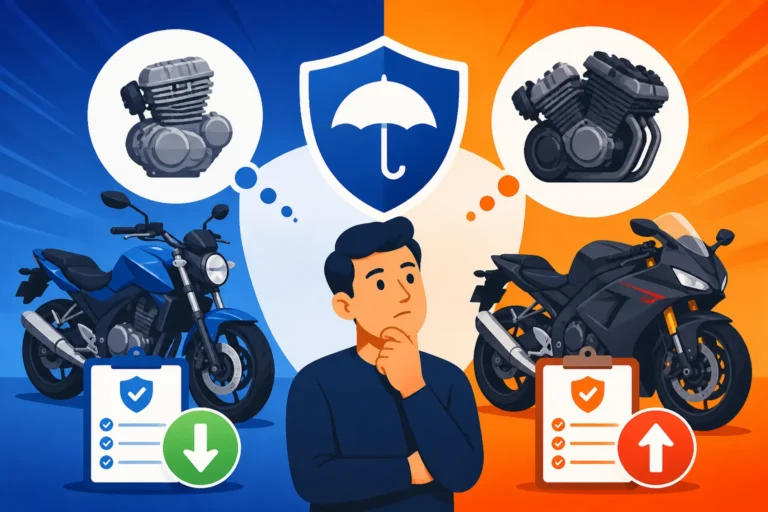
- Sport Bikes (e.g., Yamaha R6, Suzuki GSX-R): These high-performance machines are inherently more expensive to insure. They're built for speed, often ridden by younger demographics, and statistically have higher accident rates and repair costs. If you're riding a sport bike around the winding roads near Lake Michigan, expect higher premiums.
- Cruisers (e.g., Harley-Davidson Road King, Indian Scout): Generally, cruisers are cheaper to insure. They're typically ridden by more experienced, older riders, are less prone to high-speed incidents, and often have lower repair costs for minor damage.
- Touring Bikes (e.g., Honda Gold Wing, BMW K 1600 GTL): While expensive to buy, touring bikes can sometimes have moderate insurance costs, especially if ridden by mature, responsible riders. However, their high value means comprehensive and collision coverage will still be significant.
- Standard, Dual-Sport, and Adventure Bikes: These often fall somewhere in the middle, depending on their engine size and performance capabilities.
For a more detailed breakdown, check out Motorcycle Insurance Cost by Bike Type and specifically for performance bikes, Sport Bike Insurance Cost Why So High.
- Engine Size (CC): As a general rule, motorcycles with larger engine displacements (higher CCs) tend to cost more to insure. A 1000cc sport bike will almost always be more expensive to insure than a 300cc beginner bike, even if they are the same type. More power often means a higher potential for speed and, consequently, a higher risk of serious accidents.
- Value and Modifications: The actual cash value of your motorcycle is directly tied to the cost of comprehensive and collision coverage. A brand-new, high-end touring bike or a custom-built chopper will naturally be more expensive to insure than an older, lower-value motorcycle. Furthermore, if you've invested heavily in aftermarket parts, custom paint, or performance upgrades, you'll need to add specific Accessories & Custom Parts Coverage Explained to protect that investment, which will also increase your premium.
Coverage Choices and Deductibles
The types and amounts of coverage you choose, along with your deductible levels, are entirely within your control and dramatically impact your final premium.
- Minimum vs. Full Coverage: Every state, including Michigan, has minimum liability insurance requirements. In Michigan, the minimum liability is typically 20/40/10, meaning $20,000 for bodily injury per person, $40,000 for bodily injury per accident, and $10,000 for property damage per accident. While meeting these minimums is the cheapest way to ride legally, it offers very little protection for you or your bike. For a better understanding of these numbers, refer to Minimum Liability Insurance Explained The Three Numbers.
- Full Coverage (a combination of liability, collision, and comprehensive) is usually recommended, especially if you have a newer or financed bike. It protects your motorcycle from damage in an accident (collision) and from non-collision events like theft, vandalism, or natural disasters (comprehensive). While more expensive, it provides far greater peace of mind.
- Collision, Comprehensive, UM/UIM: Beyond basic liability, these coverages are essential for a robust policy, especially in Michigan's unique environment.
- Collision Coverage pays for damage to your motorcycle if you hit another vehicle or object, or if it overturns.
- Comprehensive Coverage protects your bike from things like theft, vandalism, fire, flood, or hitting an animal (a common concern in Michigan's rural areas).
- Uninsured/Underinsured Motorist (UM/UIM) Coverage is incredibly important in Michigan. As mentioned, while cars have no-fault PIP, motorcyclists might need to pursue compensation from the at-fault driver's liability insurance for medical expenses. If that driver is uninsured or doesn't have enough coverage, your UM/UIM policy can step in to cover your medical bills, lost wages, and pain and suffering up to your policy limits. Given the number of uninsured drivers on the road, this is not a coverage to skimp on.
For a complete overview of all your options, read up on Types of Motorcycle Insurance Coverage Explained.
- Deductibles: Your deductible is the amount you pay out-of-pocket before your insurance kicks in for a claim (for collision and comprehensive). Choosing a higher deductible (e.g., $1,000 instead of $250) will lower your premium, but means you'll pay more upfront if you need to file a claim. It's a balance between monthly cost and potential out-of-pocket expenses.
Smart Strategies to Save on Michigan Motorcycle Insurance
Even with Michigan's higher-than-average insurance costs, there are definitely ways to keep your motorcycle insurance premium in check without sacrificing essential coverage. It's all about being a smart shopper and proactive rider.
Leveraging Discounts
Insurance companies offer a variety of discounts, and often, riders aren't even aware of all the savings they could be getting. Don't leave money on the table!
- Motorcycle Safety Course Discount: This is one of the most universally beneficial discounts. Completing an approved motorcycle safety course, like those offered by the Michigan Rider Education Program (MiREP), not only makes you a safer rider but almost always qualifies you for a discount. It shows your insurer you're serious about minimizing risk.
- Multi-Policy Discount (Bundling): If you have car insurance, homeowner's insurance, or renter's insurance with the same company, inquire about bundling your motorcycle policy. Most major insurers like Progressive, Geico, and State Farm offer significant savings for combining multiple policies. This is often one of the easiest ways to cut down your overall insurance spend.
- Anti-Theft Device Discount: Installing an alarm system, a GPS tracking device (like a LoJack), or even a robust disc lock can often net you a discount, especially on comprehensive coverage. Insurers appreciate efforts to deter theft, which is a common claim, especially in urban areas of Michigan.
- Experienced Rider/Association Discounts: Some companies offer discounts for long-term riders, or for being a member of certain riding organizations (like the H.O.G. for Harley-Davidson owners, or AMA). Always ask your agent if there are any affiliations or milestones that could save you money.
You'd be surprised how much these discounts add up. Dive deeper into potential savings with our article on Motorcycle Insurance Discounts You're Missing.
Comparing Quotes and Choosing Wisely
This might sound obvious, but it’s the single most effective way to ensure you're getting the best rate for your Michigan motorcycle insurance. Don’t settle for the first quote you get!
- Shop Around Annually: Your insurance needs and the market change. What was the best deal last year might not be this year. Make it a habit to shop for new quotes at least once a year, or whenever you renew your policy, buy a new bike, or have a significant life event (like moving or getting married).
- Utilize Comparison Tools: This is where modern technology really shines. Instead of calling multiple companies one by one, which can be a tedious and time-consuming process, use online comparison tools. Websites like The Zebra allow you to input your information once and get multiple quotes from various carriers simultaneously. This streamlines the process and helps you quickly identify which companies are offering the most competitive rates for your specific profile in Michigan. Don't just go with the first quote you get; comparison sites like The Zebra can be a real lifesaver here.
- Consider Local Agents vs. Online Platforms: While online tools are convenient, don't discount the value of a local independent insurance agent. They often work with multiple carriers and can provide personalized advice, sometimes finding niche policies or discounts you might miss online. However, direct online insurers often have very competitive rates, so it’s worth checking both avenues. Learning How to Compare Motorcycle Insurance Quotes effectively can save you hundreds.
Adjusting Your Coverage for Maximum Value
Your coverage needs aren’t static; they change over time. Regularly re-evaluating your policy can lead to smart savings.
- Re-evaluate Full Coverage on Older, Paid-Off Bikes: If your motorcycle is older and fully paid off, the cost of comprehensive and collision coverage might start to outweigh the bike's actual cash value (ACV). At some point, it might make financial sense to drop these coverages and switch to a liability-only policy, saving you a good chunk of money. This is a common decision point discussed in Do You Need Full Coverage on a Paid-Off Motorcycle?. Just be sure you understand the financial risk you're taking on if you decide to self-insure for damage to your own bike.
- Consider Seasonal Lay-Up Coverage for Winter Storage: Michigan winters are no friend to motorcyclists. If your bike is stored for several months out of the year, inquire about "seasonal lay-up" or "storage" coverage. This option suspends your collision liability during the off-season, significantly reducing your premium, while maintaining comprehensive coverage for theft, fire, or vandalism while your bike is tucked away. It's a fantastic way for Michigan riders to save without completely canceling their policy. For more information, check out Seasonal Lay-Up & Winter Storage Insurance.
- Review Your Deductibles: If you've been riding for a while and have built up an emergency fund, consider increasing your collision and comprehensive deductibles. A higher deductible means you'll pay more out-of-pocket if you make a claim, but it will lower your annual premium. Just ensure you can comfortably afford that higher deductible should you need to pay it.
By taking these proactive steps, Michigan riders can navigate the sometimes-daunting world of motorcycle insurance and secure a policy that offers both protection and affordability.
| Factor | Impact on Michigan Motorcycle Insurance Cost | Notes |
|---|---|---|
| Rider Age | Younger (under 25) = Higher | Decreases significantly after 25, then gradually over time with a clean record. |
| Riding Experience | Less = Higher | More years on a motorcycle means lower rates. |
| Driving Record | Accidents/Tickets/DUIs = Much Higher | Clean record is paramount for low rates. Major violations drastically increase premiums. |
| Bike Type | Sport Bikes = Highest | Cruisers/Touring/Standards = Moderate to Lower. |
| Engine Size (CC) | Larger CC = Higher | More powerful bikes generally carry higher risk premiums. |
| Coverage Choices | Full Coverage = Higher | Minimum Liability = Cheapest. Adds protection but increases cost. |
| Deductible Amount | Higher Deductible = Lower Premium | Choose a deductible you can comfortably afford in an emergency. |
| Location (ZIP Code) | Urban (e.g., Detroit) = Higher | Rural (e.g., UP) = Lower. Influenced by theft rates, traffic density, and accident frequency. |
| Credit Score | Lower Score = Higher | Insurers use credit-based insurance scores as a risk factor. |
| Discounts Applied | Safety Course/Bundling/Anti-Theft = Lower | Always ask for and utilize all eligible discounts. |
Disclaimer
Please remember that insurance policies and state laws, especially in Michigan, can change. This information is intended for general guidance only and should not be considered legal or financial advice. Always consult with a licensed insurance professional to discuss your specific needs and obtain personalized quotes and information.