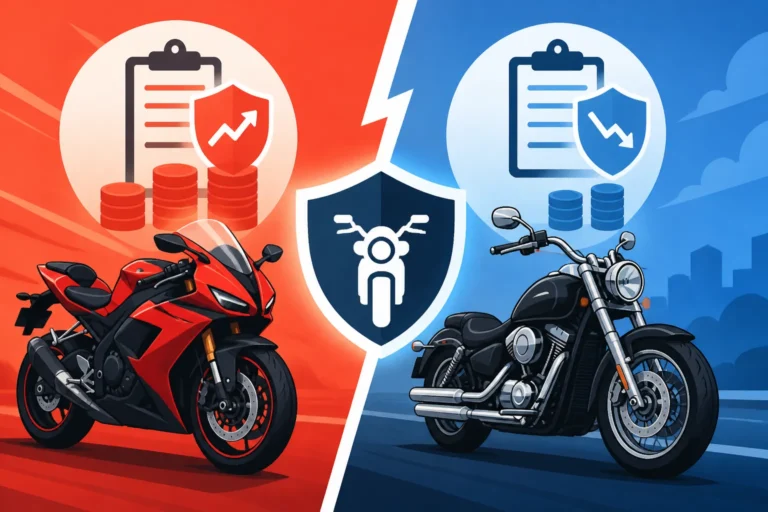
Multi-Bike Discount: Insuring More Than One Motorcycle
If you are like most riders I know, your "one bike" eventually turns into two, and before you know it, there is a third taking up space in the garage. Managing multiple insurance policies can feel like a logistical nightmare and a massive drain on your wallet. This guide solves that frustration by breaking down exactly how a multi-bike discount works so you can keep your collection covered without overpaying for bikes you can only ride one at a time.
Understanding the Multi-Bike Discount Basics
The concept behind a multi-bike discount is actually quite logical when you look at it from an underwriter’s perspective. Most insurance companies realize that even if you own five motorcycles, you physically cannot ride more than one of them at any given moment. Because the "exposure to risk" for the insurance company does not double just because you bought a second bike, they are usually willing to offer a significant price break. This is the foundation of the multi-bike discount, and it is often the most effective way for enthusiasts to manage the Average Motorcycle Insurance Cost by State when their collection starts to grow.
Most riders assume that adding a second bike will simply double their premium, but that is rarely the case. When you place multiple units on a single policy, you are typically only paying the full liability rate for the primary vehicle, with deeply discounted rates for the subsequent bikes. This is because the liability—the damage you might cause to others—is tied to the human operator who can only be in one saddle at a time. Of course, comprehensive and collision coverage will still apply to each bike individually since a garage fire or a theft could potentially affect the entire fleet at once.
What is a Multi-Bike Discount
A multi-bike discount is a specific price reduction offered by insurance carriers to policyholders who insure more than one motorcycle under the same account. It is not just a flat percentage off the total; rather, it is a nuanced adjustment to the premium of each additional bike. For example, if you are looking at the Motorcycle Insurance Cost by Bike Type, you might find that while your primary touring bike costs a certain amount to insure, adding a small vintage café racer results in a premium for that second bike that is 10% to 25% lower than if it were on its own policy.
In my experience, these discounts are often applied automatically when you request a quote for more than one VIN. However, the depth of the discount can vary wildly between carriers. Some companies are very "multi-bike friendly" because they want to capture the business of serious enthusiasts, while others might offer a token 5% discount that barely makes a dent in the bill. This is why using a comparison tool like The Zebra is so helpful, as it allows you to see which companies actually reward you for having a multi-bike garage versus those that just offer a standard rate.
How Insurers View Multi-Bike Risk
Insurers view risk through the lens of probability. If you own a Ducati Panigale and a Honda Grom, the insurance company knows you are likely using them for very different purposes. They also know that while the Ducati carries a high risk of expensive claims, the Grom is a lower-cost liability. By bundling them, the insurer secures a larger total premium from you while knowing that your total time spent on the road remains roughly the same whether you have one bike or ten.
The risk assessment also considers who is living in your household. If you are a solo rider, the risk is at its lowest because the "one rider, many bikes" rule is strictly true. However, if you have a spouse or a child with a motorcycle endorsement, the insurer assumes that multiple bikes could be on the road simultaneously. This is a common point of confusion for many riders. If you want to maximize your savings, you need to be clear about who the primary operators are for each machine, as this directly affects how the Multi-Bike Discount: Insuring More Than One Motorcycle is calculated for your specific household.
Common Qualification Rules
To qualify for these savings, there are usually a few "unwritten" rules you need to follow. First and foremost, all the motorcycles typically need to be registered at the same address and owned by the same person or married couple. You usually cannot bundle your bike with a buddy’s bike just to save money, even if you share a garage space. Most carriers also require that the bikes be on the same policy document with the same renewal dates to make the administrative side easier for them.
Another factor is the type of bikes you are trying to insure. Most standard carriers will allow you to mix and match cruisers, sport bikes, and touring models. However, if you are trying to include Off-Road & Dirt Bike Insurance Requirements into a street-legal policy, you might run into some hurdles depending on the company's specific underwriting rules. Always check if there are limits on the number of bikes allowed per policy; some companies cap it at four or five, while specialty insurers might let you list a dozen or more if you have a significant collection.
Financial Advantages of a Multi-Bike Policy
The most immediate benefit of a multi-bike policy is, of course, the bottom line. When you look at How Much Is Motorcycle Insurance? 2026 Guide, the data consistently shows that the "cost per bike" drops as the size of the fleet increases. It is a classic case of a bulk discount. Beyond the raw premium, you are also saving on "policy fees" that many companies tack on to every individual account they open. If you have three separate policies, you are potentially paying three sets of administrative fees every year.
Furthermore, a multi-bike policy allows for better financial planning. Instead of tracking three different due dates and three different sets of paperwork, everything is consolidated. This reduces the risk of a missed payment, which could lead to a lapse. Understanding What Happens if My Motorcycle Insurance Lapses? is crucial, as a lapse on even one bike can cause your rates to spike across your entire fleet when you go to renew or reinstate coverage.
Comparing Individual vs Bundled Premiums
When you compare individual premiums to a bundled policy, the difference is often enough to pay for a year’s worth of maintenance or a new set of tires. For instance, if you have a high-performance bike, you already know the Sport Bike Insurance Cost (Why So High) can be frustrating. By bundling that sport bike with a more "sensible" cruiser, the multi-bike discount can help offset the heavy premium required for the faster machine.
| Number of Bikes | Estimated Discount per Bike | Primary Benefit |
|---|---|---|
| 1 Bike | 0% (Baseline) | Standard coverage |
| 2 Bikes | 10% – 15% | Reduced liability on 2nd unit |
| 3 Bikes | 15% – 20% | Bulk administrative savings |
| 4+ Bikes | 20% – 25%+ | Significant "collector" status breaks |
As shown in the table, the more bikes you add, the more the percentage generally scales up, until you hit a plateau. This is why I always recommend that before you buy a second bike, you run the numbers through The Zebra to see if your current carrier is actually the best fit for a multi-bike setup. You might find that while your current company was the cheapest for one bike, a competitor is far better once you have a pair of them in the driveway.
Administrative Convenience
There is a mental load that comes with owning multiple vehicles. Between registration renewals, oil changes, and chain adjustments, the last thing you want is more paperwork. A single multi-bike policy means one login, one app to manage, and one insurance card to keep in your wallet (or digitally on your phone). This simplicity is underrated. It also makes it much easier to handle a Moving to Another State: Motorcycle Insurance situation, as you only have one policy to update rather than a handful of individual ones.
From a claims perspective, having everything in one place can also be a godsend. If a storm hits your area and a tree limb falls on two of your bikes, you only have to deal with one adjuster and one claim file. Dealing with two different insurance companies for the same incident is a nightmare I wouldn't wish on any rider. Keeping your fleet under one roof ensures that the "big picture" of your motorcycle hobby is understood by your insurance representative.
Impact on Deductibles and Limits
Another financial perk often overlooked is the ability to standardize your coverage limits across all bikes. This ensures that you aren't accidentally underinsured on one bike while having "cadillac" coverage on another. For example, if you’ve read up on Minimum Liability Insurance Explained (The Three Numbers), you know how important it is to have high enough limits to protect your assets. A multi-bike policy ensures those limits are consistent.
In some cases, insurers offer a "vanishing deductible" that applies to the entire policy. This means as you maintain a clean riding record, the deductible for all your bikes might decrease simultaneously. This is a massive win for riders who have several bikes but perhaps only put high mileage on one of them. You are essentially earning a "safety credit" for your entire garage based on your overall behavior as a rider, regardless of which set of handlebars you happen to be holding that day.
Factors That Influence Your Multi-Bike Savings
While the multi-bike discount is a powerful tool, it isn't a magic wand that makes insurance cheap for everyone. Several variables will dictate just how much you actually save. The most significant factor is usually the "composition" of your fleet. If you have three identical high-end sport bikes, your savings will look different than if you have a touring bike, a scooter, and a vintage cruiser.
Your personal profile also plays a huge role. If you are a younger rider, you are already facing challenges with Motorcycle Insurance for Young Riders Under 25. In this scenario, adding a second bike might not yield as large a discount because the insurer still views your overall risk profile as high. Conversely, an experienced rider with decades of clean history will see the multi-bike discount as a "cherry on top" of already low rates.
Bike Type and Engine Size
The physical characteristics of your motorcycles are the primary drivers of cost. You might wonder, Does Engine Size (CC) Affect Insurance Cost? The answer is a resounding yes. If you add a 1300cc Hayabusa to a policy that previously only had a 250cc Rebel, the "discount" you get on the Hayabusa is still going to be calculated against a very high base rate. The multi-bike discount is a percentage, so a 15% discount on a $1,000 premium is much more impactful than 15% off a $200 premium.
Furthermore, the "risk mix" matters. Insurers love it when you have a variety of bikes because it suggests a more balanced riding lifestyle. If you have a dedicated track bike that is only used occasionally and a daily commuter, the insurer sees that the high-risk bike is spending less time on public roads. This "usage-based" logic often helps solidify the discount rates that companies like The Zebra can help you uncover when comparing specialized motorcycle insurers.
Rider Experience and Demographics
Your age, location, and riding history are the foundation upon which any discount is built. If you have a few speeding tickets on your record, the insurer might be less inclined to give you a deep multi-bike discount because they are worried about your judgment regardless of how many bikes you own. It’s always worth checking How Much Is Motorcycle Insurance After a Speeding Ticket? to see how your history might be eating into your potential savings.
On the flip side, if you have completed safety courses or are a member of a national riding organization (like the AMA or H.O.G.), those "stacked" discounts can work alongside your multi-bike discount to bring the price down even further. Many riders don't realize they can layer these savings. It isn't just about the number of bikes; it is about proving to the insurer that you are a responsible, serious enthusiast who takes care of their equipment and respects the road.
Geographic Location and Storage
Where you keep your bikes is just as important as what you ride. If you live in a high-theft area, your comprehensive coverage will remain high even with a multi-bike discount. However, if you store your bikes in a locked, alarm-protected garage in a rural area, the insurer feels much better about the risk of a "total garage loss" (where all bikes are stolen or destroyed at once).
Your location also dictates the riding season. In northern states, you might be looking into Seasonal Lay-Up & Winter Storage Insurance. When you have multiple bikes, the ability to put the entire fleet into a "comprehensive-only" mode during the winter months can save you hundreds of dollars. A good multi-bike policy makes this transition seamless, allowing you to suspend the liability and collision portions for the whole garage with one phone call when the first snow falls.
Navigating the Challenges of Multiple-Motorcycle Coverage
It’s not all sunshine and open roads when it comes to insuring a fleet. There are specific challenges that come with multi-bike ownership that can catch you off guard. One of the biggest is the "all-or-nothing" nature of some policies. If you have one bike that is particularly difficult to insure—perhaps a custom-built chopper or a bike with a salvage title—it can sometimes make the entire policy more expensive or harder to place with a standard carrier.
You also have to be careful about "primary rider" designations. If you tell the insurance company that you are the only rider for all four of your bikes, but then your roommate crashes one of them, you could find yourself in a very difficult claims situation. Transparency is key. You need to ensure that the Types of Motorcycle Insurance Coverage Explained on your policy actually match the reality of how your bikes are being used and by whom.
The Problem with High-Performance Sport Bikes
We have to talk about the "elephant in the garage": sport bikes. If your multi-bike collection is nothing but liter-class supersports, don't expect the insurance company to throw a parade for you. Even with a multi-bike discount, the "base" risk for these machines is so high that the total bill will still be substantial. Insurers are wary of "collections" that seem to point toward high-speed group riding or stunting.
If you are struggling with the Sport Bike Insurance Cost (Why So High), the best strategy is often to mix in a lower-risk bike, like a dual-sport or a standard naked bike. This "diversifies" your risk profile in the eyes of the underwriter. Sometimes, adding a small, cheap-to-insure bike can actually trigger a multi-unit discount that lowers the overall bill more than if you just had the sport bike alone. It sounds counterintuitive, but I've seen it happen!
Mixed Use Policies: Cruisers vs Dirt Bikes
Many riders enjoy both the pavement and the dirt. If you are trying to insure a Harley-Davidson alongside a KTM enduro bike, you need to ensure your policy handles both correctly. Most standard policies are designed for street-legal machines. If your dirt bike isn't plated for the road, you might need a specialized "off-road" endorsement or a separate policy entirely.
However, many "enthusiast-focused" insurers will allow you to bundle these together. This is where Off-Road & Dirt Bike Insurance Requirements come into play. Bundling your dirt bike with your cruiser can protect it against theft or fire (comprehensive) while it’s in your trailer or garage, which is often a much better deal than buying a standalone dirt bike policy that might lack those protections.
Managing Policy Lapses and Lay-ups
When you have a lot of bikes, it is easy to let one slip through the cracks. Maybe you have a "project bike" that hasn't been started in two years. You might be tempted to just drop the insurance on it to save a few bucks. But be careful. In many states, if the registration is active, the insurance must be active too. Dropping coverage can lead to Penalties for Riding Without Insurance or, worse, the DMV suspending your registration.
A better approach is the "lay-up" or "storage" coverage I mentioned earlier. This keeps the policy active (and keeps your multi-bike discount intact for the other bikes) but reduces the cost to a bare minimum. It also ensures that if you finally get that project bike running on a sunny Saturday, you aren't tempted to take a "quick test ride" without coverage. A single multi-bike policy makes managing these statuses much easier than juggling separate accounts.
Comparing Top Providers for Multi-Bike Discounts
Not all insurance companies are created equal when it comes to the "more than one" crowd. Some big-name auto insurers treat motorcycles as a side business and don't offer very aggressive discounts for multiple units. On the other hand, specialized motorcycle insurers live and breathe this stuff. They understand that a guy with five bikes is often a safer bet because he clearly values and maintains his machines.
When you're shopping, look for companies that explicitly market to "collectors" or "enthusiasts." These are the ones who will give you the 25% or 30% breaks on your second and third bikes. Using a platform like The Zebra is the fastest way to weed out the "one-bike-only" companies and find the carriers that truly want your business. They can help you see the Best Motorcycle Insurance for Multiple Bikes based on real-time data and user reviews.
Leading Carriers and Their Discount Percentages
While I can't give you a static number (since rates change faster than a 600cc sport bike), history shows that certain companies are consistently more generous. Progressive and Geico are often cited by riders as having some of the most straightforward multi-bike portals. Dairyland is another favorite for those with older or more eclectic collections, as they tend to be very flexible with "non-standard" fleets.
- Progressive: Known for a very easy "add-a-bike" process and stacking discounts.
- Geico: Often competitive on the raw liability rates for multiple units.
- Dairyland: Great for vintage collections and riders with "less than perfect" records.
- Harley-Davidson Insurance: Obviously a top choice if your garage is full of Milwaukee iron, as they offer specialized "custom parts" coverage that scales well with multiple bikes.
Using Comparison Tools like The Zebra
The secret to getting the best deal isn't loyalty—it's shopping. Every few years, your "risk profile" changes. Maybe you turned 30, moved to a house with a garage, or finally sold that high-risk sport bike. This is the perfect time to use The Zebra to see if another carrier can beat your current multi-bike rate.
The Zebra acts as an aggregator, pulling in quotes from multiple sources so you can compare apples to apples. This is especially helpful for multi-bike owners because the math gets complicated quickly. Trying to calculate 15% off one bike and 10% off another across five different websites is a recipe for a headache. Let the technology do the heavy lifting so you can get back to what really matters: deciding which bike you’re going to ride this weekend.
Strategic Tips for Lowering Multi-Bike Costs
If you want to squeeze every last drop of savings out of your insurance company, you have to be strategic. One of the best ways is to look at the Motorcycle Insurance Discounts You're Missing. Most people know about the multi-bike discount, but they forget about the "loyal customer" discount or the "safety course" discount. When you apply these to a multi-bike policy, the savings compound.
Also, think about your deductibles. If you have four bikes, and you have a $500 deductible on all of them, you are paying for a lot of "low-end" protection. If you are financially stable enough to handle a $1,000 repair out of pocket, raising your deductible across the entire fleet can drastically lower your annual premium. Over a few years, the savings on the premium will likely more than cover the cost of any single deductible you might have to pay.
Bundling with Auto or Home
The "Multi-Policy" discount is the big brother of the "Multi-Bike" discount. If you can move your car, your house, and your four motorcycles to the same company, you are going to see a massive drop in the total bill. This is the "Holy Grail" of insurance savings. However, be careful—sometimes a company that is great at homeowners insurance is terrible (and expensive) at motorcycle insurance.
You have to do the math. Sometimes it is cheaper to have your house and car with Company A, and your fleet of motorcycles with a specialized Company B. Use The Zebra to run both scenarios. Don't just assume that "bundling everything" is always the cheapest option. For serious riders with expensive custom bikes, a specialized insurer might offer much better Accessories & Custom Parts Coverage Explained than a standard "Big Box" auto insurer ever could.
Leveraging Seasonal Storage Options
Finally, don't pay for what you aren't using. If you have a bike that only comes out for "special occasions" or vintage rallies, talk to your agent about a seasonal policy or a "limited mileage" discount. Many insurers offer a lower rate if you can prove the bike is ridden less than 2,000 miles a year.
Combined with the multi-bike discount, these usage-based adjustments can make it surprisingly affordable to keep a "stable" of bikes. Just make sure you are honest about the mileage. If you have a claim and the odometer shows you’ve been riding 10,000 miles a year on a "limited use" policy, the insurer could deny your claim. Transparency, strategy, and the right tools like The Zebra are your best friends in the quest for the perfect multi-bike insurance setup.
Disclaimer
This guide is intended for informational purposes only and does not constitute professional legal or financial advice. Insurance laws, discount availability, and underwriting rules vary significantly by state and insurance provider. Always consult with a licensed insurance agent or read your specific policy documents to understand your coverage and eligibility for discounts. Coverage limits and requirements are subject to change based on legislative updates and individual carrier policies.