How to Lower Your Motorcycle Insurance Premium
Most riders open their renewal notice and feel a gut punch. You have the bike, the gear, and the open road, but the monthly bill is eating into your gas and maintenance money. It is frustrating when you feel penalized for a hobby you love. This guide breaks down exactly how to lower your motorcycle insurance premium without sacrificing the protection you actually need.
Adjusting Your Coverage and Policy Structure
The first place most riders look to save money is their actual coverage levels. While you never want to be underinsured in a catastrophe, many riders are carrying "ghost" costs—coverage they don't need or deductibles that are far too low for their financial situation. Understanding the balance between risk and monthly savings is the cornerstone of a lower premium.
Finding the Sweet Spot Between Liability and Full Coverage
One of the biggest debates in the garage is the Liability-Only vs Full Coverage Cost. If you are riding a bike that is over ten years old and has a market value of less than $3,000, you might be paying more in premiums over three years than the bike is actually worth. In these cases, dropping collision and comprehensive can save you a massive percentage on your bill. However, if you are still making payments, your lender will likely require full coverage, so your hands are tied until that title is in your drawer.
For those with paid-off bikes, look at the math. If a "liability-only" policy costs $200 a year and "full coverage" costs $800, you are paying $600 for the privilege of the insurance company replacing a $3,000 bike. After deductibles, you are barely coming out ahead if you total the bike. By switching to liability only, you effectively become your own insurance company for the physical bike, but you must be disciplined enough to save that extra cash for a replacement if the worst happens.
Increasing Your Deductible Strategically
If you decide to keep full coverage, the fastest lever you can pull to drop your rate is increasing your deductible. Many riders default to a $250 or $500 deductible because it feels "safe." But if you move that to $1,000 or even $1,500, your annual premium can drop by 15% to 30%. This is essentially a bet on your own riding skills. You are telling the insurer, "I'll handle the minor scratches and tip-overs myself; you just be there if the bike gets stolen or flattened."
Before you make this move, ask yourself: "If I drop my bike in a parking lot tomorrow, do I have $1,000 sitting in a savings account?" If the answer is no, a high deductible is a trap. If the answer is yes, then you are likely overpaying for a low deductible. Understanding What Is the Deductible on Motorcycle Insurance? and how it interacts with your specific bike's value is vital before you sign on the dotted line.
Evaluating the Necessity of Add-on Coverages
Insurance companies love to tack on "extras" that sound great in a brochure but add up quickly. Roadside assistance, trip interruption coverage, and carried contents coverage are frequent culprits. If you already have a membership with a motorcycle-specific towing service or your credit card offers roadside assistance, you are paying for the same service twice.
Take a look at your policy and see if you’re paying for "custom parts and equipment" coverage. If your bike is bone-stock, you don't need it. Conversely, if you have $5,000 in chrome and aftermarket exhaust, you might actually be underinsured. Trimming these small $5 and $10 monthly add-ons can collectively drop your bill by $100 or more over the course of a year, leaving more room in the budget for tires and oil changes.
Leveraging Safety Initiatives and Riding Habits
Insurance is ultimately a game of statistics. The company is trying to guess how likely you are to cost them money. By proving that you are a lower-than-average risk through your actions and choices, you can force them to lower the price they charge you. This isn't just about being a "good rider" in your head; it’s about having the paperwork to prove it.
The Power of Motorcycle Safety Courses
Even if you have been riding for thirty years, taking a Basic or Advanced RiderCourse from the Motorcycle Safety Foundation (MSF) can trigger an immediate discount. Most major carriers offer a 5% to 15% discount for three years after completing a certified course. So, Does a Motorcycle Safety Course Lower Insurance? Absolutely. In many cases, the discount over three years actually pays for the cost of the course itself, meaning you get free professional training.
Beyond the basic course, many insurers now recognize advanced training, such as track days with a coaching component or police-style slow-maneuver courses. These certifications show the underwriter that you are proactive about your safety. It’s one of the few ways to lower your rate that actually makes you a better, more confident rider in the process.
Bundling and Multi-Policy Advantages
The "loyalty" aspect of insurance is often a myth, but the "bundling" aspect is very real. If you have your car, renters, or homeowners insurance with one company and your motorcycle with another, you are leaving money on the table. Companies offer multi-policy discounts because it’s cheaper for them to keep one customer with three policies than to find three separate customers.
However, be careful. Sometimes a "specialty" motorcycle insurer will still be cheaper than a bundled "big name" auto insurer. This is where using a tool like The Zebra becomes incredibly helpful. You can see if your bundled discount actually beats the specialized rates of a company that only does bikes. Sometimes the bundle saves you 20% on the motorcycle side but raises your car insurance, so always look at the total "out of pocket" for all your policies combined.
Riding Habits and Low-Mileage Discounts
Are you a "Sunday Morning" rider or a "Year-Round Commuter"? If you only put 2,000 miles a year on your bike, you shouldn't be paying the same rate as someone who rides 15,000 miles through heavy city traffic. Many insurers ask for your estimated annual mileage. Be honest but accurate. If you over-estimate your mileage, you are over-paying your premium.
Some newer insurance tech companies even offer pay-per-mile or "usage-based" insurance. If your bike spends most of its time in the garage, this can be a game-changer. They might use a plug-in device or a phone app to track your riding. While the idea of "big brother" watching your leans might be off-putting to some, for the casual cruiser rider, it is often the single most effective way to slash a premium in half.
How Your Bike and Personal Profile Affect the Bill
You can change your coverage, and you can take a class, but some of the biggest factors in your premium are things you decided the day you bought the bike or chose where to live. Understanding What Affects Your Motorcycle Insurance Rate? can help you make better decisions the next time you are looking at a new machine in the showroom.
Choosing the Right Bike for Lower Rates
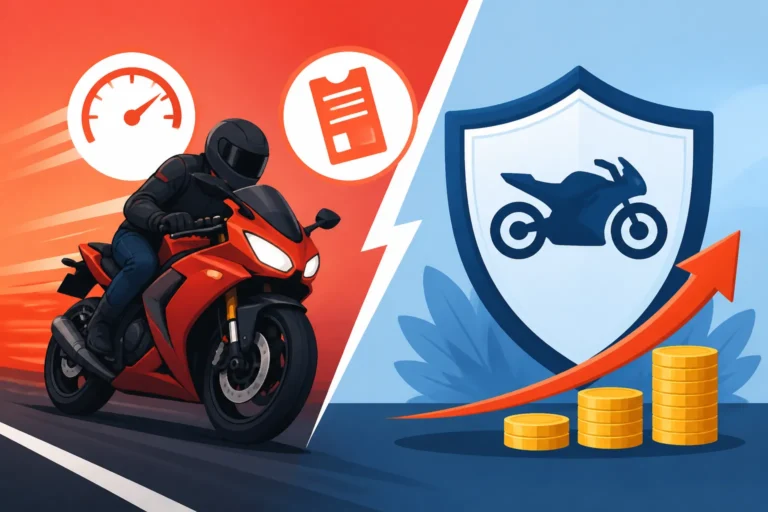
The type of motorcycle you ride is perhaps the largest variable in the insurance equation. A 600cc supersport bike often costs three to four times more to insure than a 1200cc cruiser. Why? Because the statistics show that supersport riders are more likely to be involved in high-speed accidents and thefts. Insurance companies see a "crotch rocket" and immediately think "high risk," regardless of your personal driving record.
If you are looking to save money, a Cruiser Motorcycle Insurance Cost analysis will show that these bikes are generally much friendlier to your wallet. Even within the same brand, a touring bike with a massive engine can be cheaper to insure than a smaller, lighter naked bike because the demographic of the touring rider is seen as more mature and stable. Always get a quote before you buy a bike; don't let the insurance bill be a surprise after you've already signed the financing paperwork.
| Strategy | Typical Savings Range | Effort Level |
|---|---|---|
| MSF Safety Course | 5% – 15% | Moderate |
| Multi-Policy Bundling | 10% – 25% | Low |
| Increasing Deductible | 15% – 30% | Low |
| Anti-Theft Devices | 2% – 10% | Moderate |
| Pay-in-Full Discount | 5% – 10% | Low |
| Low Mileage/Usage-Based | 10% – 40% | High |
The Impact of Location and Storage Security
Where you park your bike at night matters immensely to your premium. If you live in a high-crime zip code and park your bike on the street, your comprehensive coverage (which covers theft) will be sky-high. Conversely, storing your bike in a locked, private garage can trigger a discount. Many insurers also offer discounts for anti-theft devices like GPS trackers, disc locks with alarms, or even LoJack systems.
If you move even a few miles away into a different zip code, you might see your rate fluctuate by hundreds of dollars. If you are planning a move, it’s worth checking how your new address will affect your Motorcycle Insurance Cost by Bike Type. Sometimes, a bike that was affordable in a rural area becomes prohibitively expensive once you move into the heart of a city like Chicago or Philadelphia.
Credit Scores and Driving Records
In most states, your "insurance score"—which is heavily based on your credit report—is used to determine your premium. It feels unfair to many riders, but insurers have found a direct correlation between financial responsibility and riding safety. Improving your credit score by even 50 points can sometimes move you into a different "tier" of insurance, resulting in a significantly lower rate at your next renewal.
Of course, your driving record is the most obvious factor. A single speeding ticket on your motorcycle (or even in your car) can stay on your record for three to five years, keeping your premiums elevated. If you do get a ticket, look into "ticket dismissal" or "defensive driving" courses that might prevent the points from hitting your license. Keeping your record clean is the most boring but effective way to keep your insurance cheap over the long haul.
Shopping and Comparing Like a Pro
The biggest mistake riders make is "setting and forgetting" their insurance. Rates change, company appetites for risk change, and your bike depreciates every year. If you have been with the same company for five years, you are almost certainly paying more than a new customer with the same profile.
When to Switch and How Often to Shop
You should be looking at How to Compare Motorcycle Insurance Quotes at least once a year, or whenever you have a major life change. Did you get married? Rates often drop. Did you buy a house? Bundle and save. Did you turn 25, 30, or 50? These are all "milestone" ages where insurance companies often re-evaluate your risk level.
Shopping around doesn't mean you have to leave your current company, either. Sometimes, showing your current agent a lower quote from a competitor can magically "find" a new discount they forgot to apply. If they won't budge, knowing How to Switch Motorcycle Insurance Companies is easy. Most companies will pro-rate your refund, so you don't even have to wait until your policy expires to move to a cheaper carrier.
Using Comparison Tools Effectively
In the old days, you had to call five different agents and spend hours on the phone. Now, platforms like The Zebra allow you to enter your information once and see side-by-side comparisons. This is crucial because insurance is not a "one size fits all" industry. One company might hate insuring Harleys but love BMW touring bikes. Another might be incredibly cheap for young riders but expensive for seniors.
Using The Zebra helps you find these "outliers." You might find that a smaller, regional company is half the price of the national brand you see on TV commercials. These smaller players often don't have huge advertising budgets, so they pass those savings on to the riders. Checking The Zebra every six months is the digital equivalent of checking your tire pressure—it's just good maintenance for your financial life.
Avoiding the Pitfalls of Lapsing Coverage
Whatever you do, do not let your insurance lapse while you are "shopping." Even a one-day gap in coverage can cause your future rates to skyrocket. Insurance companies see a gap in coverage as a massive red flag, assuming that you were either riding illegally or are financially unstable. Always ensure your new policy starts on the same day (or the day before) your old one ends.
If you are selling a bike and haven't bought a new one yet, look into a "non-owner" policy or keep a very basic policy active if you still have a license. Staying "continuously insured" is one of the best ways to keep your rates low for the rest of your life. It’s a long-game strategy that pays dividends every time you ask for a new quote.
Seasonal Adjustments and Storage Hacks
For many of us, riding isn't a year-round activity. If you live in a state where the snow flies four months a year, you shouldn't be paying for full collision and liability coverage while your bike is on a battery tender in the garage.
Lay-Up Policies for Winter Months
Many insurers offer what is called Seasonal Lay-Up & Winter Storage Insurance. This essentially pauses your liability and collision coverage during the months you aren't riding, while keeping your comprehensive coverage active. This ensures that if the garage catches fire or someone breaks in and steals the bike, you are still protected, but you aren't paying for "road" risks when there is two feet of snow outside.
Some companies build this into the annual premium automatically, assuming you won't ride in the winter, while others require you to call and manually adjust it. If you have to do it manually, knowing How to Suspend Motorcycle Insurance for Winter can save you 20% to 40% of your annual cost. Just remember to call and turn it back on before that first warm day in March, or you’ll be riding without any legal protection.
Maintaining Comprehensive Only for Stored Bikes
If you have multiple bikes and one is a "project" that won't be on the road for a year, don't cancel the insurance entirely. Instead, switch it to "comprehensive only." This is often called "storage coverage." It keeps the bike insured against theft, fire, and vandalism for just a few dollars a month.
More importantly, it maintains your "continuous insurance" history. If you cancel the policy and try to restart it a year later, the insurance company will treat you like a brand-new, high-risk rider. By keeping that "comprehensive only" thread alive, you keep your "loyal customer" status and your lower rates intact for when the project is finally road-ready.
Motorcycle Insurance Disclaimer
This guide is for informational purposes only and does not constitute legal or financial advice. Insurance requirements and available discounts vary significantly by state, provider, and individual circumstances. Always consult with a licensed insurance agent or professional to discuss your specific coverage needs and ensure you are in compliance with local laws. Riding without the minimum legally required insurance can lead to severe legal penalties and financial ruin. This content was created with help from tools like The Zebra to provide a broad market overview.