How Much Is Motorcycle Insurance? 2026 Cost Guide
You just found the perfect bike, maybe a sleek Kawasaki Ninja or a rugged Harley-Davidson Pan America, and you are ready to hit the open road. But then you call for a quote and your heart drops because the insurance premium is nearly as much as the monthly bike payment. This guide breaks down exactly what affects your wallet and how to navigate the complex world of 2026 insurance rates.
Decoding the Factors That Drive Your Premium
When you sit down to look at your monthly expenses, motorcycle insurance often feels like a moving target. Unlike car insurance, which is relatively standardized, motorcycle rates swing wildly based on variables you might not even consider. It is not just about whether you have a clean driving record; it is about how the insurance company perceives the intersection of your machine, your lifestyle, and your home base.
The Machine Matters Most
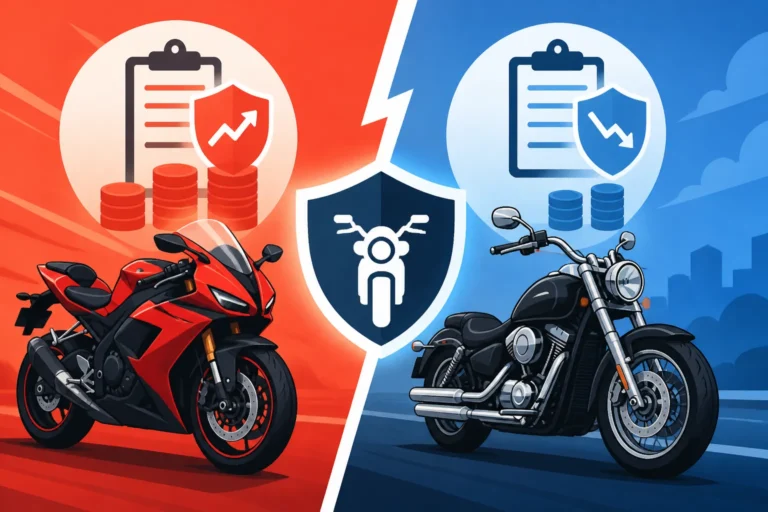
The bike sitting in your garage is the single biggest factor in determining your rate. Insurance companies categorize motorcycles into risk brackets. A 1200cc sport bike is viewed as a high-speed projectile, while a 1200cc cruiser is seen as a leisure vehicle. This is why Does Engine Size (CC) Affect Insurance Cost? is such a common question among new riders. It is not just about the power; it is about the "intent" of the bike.
Consider the difference between a Honda Rebel 500 and a Yamaha R6. Both are popular, but the R6 is designed for the track, featuring lightweight fairings that are expensive to replace and an engine tuned for high-RPM performance. Even a minor tip-over in a parking lot can result in thousands of dollars in plastic damage. On the other hand, the Rebel is a sturdy cruiser with fewer breakable bits and a much lower statistical likelihood of being involved in a high-speed collision. When insurers look at your bike, they are calculating the "loss cost"—how much they expect to pay out if you lay it down.
Furthermore, the theft rate of your specific model plays a massive role. If you live in a city like Miami or San Francisco and own a highly sought-after bike like a Ducati Panigale, your comprehensive coverage will be significantly higher than if you owned a niche adventure bike like a Moto Guzzi. Thieves want bikes they can strip for parts or sell quickly, and common sport bikes are often at the top of that list.
The Human Element and Your History
You might be a seasoned rider with twenty years of experience, but if you have a spotty credit score or a recent speeding ticket in your car, your motorcycle rates will suffer. Insurers use a "Total Household Risk" profile. They believe that how you handle your finances and your Toyota Camry is a direct reflection of how you will handle your Triumph Bonneville. This is a major reason What Affects Your Motorcycle Insurance Rate? can be so frustrating for riders who keep their two-wheeled activities strictly legal but have a lead foot in their daily driver.
Your age is another non-negotiable factor. If you are looking into How Much Is Motorcycle Insurance for an 18 Year Old? the numbers can be staggering, sometimes exceeding $2,000 or $3,000 a year for full coverage. This is because statistics show that younger riders have less "road craft"—the ability to anticipate hazards before they happen. Experience is not just about how long you have had your license, but how many miles you have actually spent in the saddle.
Even your marital status and education level can sneak into the algorithm. Carriers often find that married riders over the age of 30 are statistically less likely to take unnecessary risks on the road. They view these individuals as having more "skin in the game," leading to lower premiums. It may seem unfair to judge a rider by their diploma or their wedding ring, but in the world of actuarial science, these are proven indicators of risk.
Geography and Environment
Where you park your bike at night is just as important as how you ride it. A rider in rural Iowa will almost always pay less than a rider in downtown Chicago. The reason is simple: traffic density and crime. In a high-density urban environment, the chances of a distracted driver merging into you or a thief lifting your bike into a van are exponentially higher. This geographic variance is a cornerstone of the Average Motorcycle Insurance Cost by State data we see every year.
Weather also plays a quiet role in your rates. In states like Florida or Texas, where riding is a year-round activity, you are on the road more often, which means more "exposure" to potential accidents. Conversely, in a state like Minnesota, the "riding season" might only be five months long. While many riders in the north complain about the cold, their insurance companies often bake those "off-months" into the premium, resulting in a lower annual total than their southern counterparts.
Using a comparison tool like The Zebra can help you see how these zip code differences manifest in real-time. By plugging in your specific location, The Zebra allows you to see how shifting just ten miles into a different county might save you hundreds of dollars. It is an essential step for any rider who is moving or considering a new home and wants to keep their riding hobby affordable.
Average Motorcycle Insurance Cost by State
The United States is a patchwork of different insurance laws and risk profiles, which means there is no single "average" price for the country. If you are looking for How Much Is Motorcycle Insurance? 2026 Cost Guide answers, you have to look at the state level. Some states require high levels of Personal Injury Protection (PIP), while others have very low liability minimums that can lead to deceptively cheap quotes.
The Pricey Coastal Regions
States like California, Florida, and Louisiana consistently rank as some of the most expensive places to insure a motorcycle. In California, the sheer volume of traffic and the legality of lane splitting create a unique risk environment. While lane splitting can be safer when done correctly, insurers still see it as an added variable for accidents. Florida is a different animal altogether; the lack of a universal helmet law for certain riders and the high rate of uninsured motorists drive up the cost of Uninsured/Underinsured Motorist coverage.
In these high-cost states, you might see annual premiums for a modern cruiser hovering around $800 to $1,200 for full coverage. If you step up to a sport bike, those numbers can easily double. Residents in these areas often find themselves searching for the best possible deals by using platforms like The Zebra to cross-reference multiple carriers who might have different appetites for coastal risk.
Mid-Tier States and the Rust Belt
States like Ohio, Pennsylvania, and Illinois tend to fall in the middle of the pack. These areas have moderate traffic in their major cities but vast stretches of rural roads that balance out the risk. In these states, the "lay-up" period is a factor. Many insurers in the Midwest assume you won't be riding in January when there are three feet of snow on the ground, so they adjust the annual premium accordingly.
For a rider in a state like Ohio, a standard bike like a Suzuki SV650 might cost between $400 and $600 per year for a solid full-coverage policy. This is also where Liability-Only vs Full Coverage Cost becomes a major point of discussion. Because the rates aren't astronomical, many riders opt for the peace of mind that comes with full coverage, whereas in high-cost states, they might be tempted to drop down to liability only just to survive the monthly bill.
The Budget-Friendly Midwest and Rural South
If you want the cheapest motorcycle insurance in the country, you should head to the Great Plains or the rural parts of the South. States like Iowa, Wyoming, and South Dakota offer some of the lowest rates in the nation. The reason is lack of congestion. When there are fewer cars to hit and fewer people to steal your bike, the insurance company passes those savings on to you.
In these regions, it is not uncommon to find full coverage for a modest bike for under $300 a year. Even high-performance bikes are more affordable here. However, even in these "cheap" states, riders still face the same personal risk factors. A DUI or a series of speeding tickets will still tank your rates, regardless of how empty the roads are.
| Bike Type | Average Annual Cost (Young Rider) | Average Annual Cost (Experienced Rider) |
|---|---|---|
| Sport Bike (600cc-1000cc) | $1,800 – $3,500 | $800 – $1,500 |
| Cruiser (Harley/Indian) | $700 – $1,200 | $350 – $600 |
| Touring (Gold Wing/BMW RT) | $800 – $1,300 | $400 – $750 |
| Adventure / Dual-Sport | $600 – $1,000 | $300 – $550 |
| Standard / Naked Bike | $700 – $1,100 | $350 – $600 |
The Financial Impact of Bike Types
Choosing the right bike is about more than just ergonomics and style; it is a financial decision that lasts for the life of your ownership. I have seen many new riders buy a used "liter bike" (1000cc) for $5,000, only to realize the insurance is $2,500 a year. That is a 50% "tax" on the value of the bike every single year. Understanding Motorcycle Insurance Cost by Bike Type is essential before you sign the title.
Sport Bikes and the Speed Tax
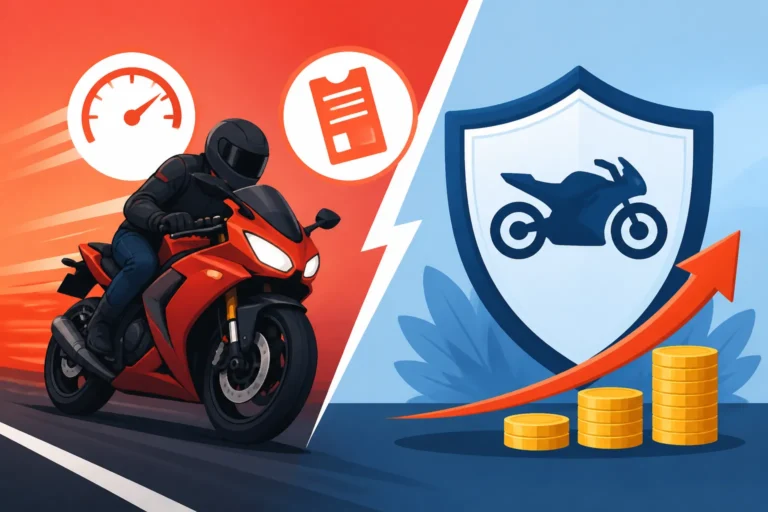
Sport bikes are the "red flag" of the motorcycle insurance world. Carriers see fairings, clip-on handlebars, and rear-set footpegs and immediately think of high-speed accidents and expensive repairs. Even if you are a responsible rider who only uses the bike for commuting, you are paying for the collective mistakes of everyone else on a sport bike. This is colloquially known as the "speed tax."
The cost of Why Is My Motorcycle Insurance So Expensive? usually leads back to this category. If you have a bike like a Suzuki GSX-R or a Kawasaki Ninja ZX-10R, you are in the highest risk tier. Insurers also look at the "power-to-weight" ratio. A bike that weighs 400 pounds but has 200 horsepower is a statistical nightmare for an actuary. If you must have a sport bike, look for "street-tuned" versions like the Kawasaki Ninja 650 or the Yamaha R7, which often have significantly lower premiums than their "supersport" cousins.
Cruisers and Touring Bikes
Cruisers, like those from Harley-Davidson or Indian, usually enjoy much more favorable rates. The demographic that buys these bikes tends to be older and more risk-averse. Furthermore, these bikes are built for low-end torque rather than top-end speed, which leads to fewer high-speed "off-track" excursions. However, the sheer cost of the parts can keep premiums from being "cheap." A chrome primary cover for a Harley can cost more than an entire fairing kit for a budget sport bike.
Touring bikes, such as the Honda Gold Wing or the BMW K1600GTL, are also surprisingly affordable to insure despite their high purchase prices. These are the "minivans" of the motorcycle world in terms of risk. Owners of these bikes usually have high levels of experience, take safety courses, and use their bikes for long-distance travel on highways rather than carving canyons at twice the speed limit.
Standard and Dual-Sport Motorcycles
If you are looking for a "Goldilocks" bike that offers a balance of performance and low insurance costs, the standard or "naked" bike category is your best bet. Bikes like the Triumph Street Triple or the Yamaha MT-07 offer great performance but aren't wrapped in expensive plastic. They are also viewed as more "utilitarian" by insurers, which works in your favor.
Dual-sport and adventure bikes (ADVs) like the Honda CRF300L or the BMW R1250GS also have excellent insurance profiles. While they are expensive to buy, they are designed to be dropped. They don't have delicate fairings, and the riding style is usually more focused on exploration than raw speed. For a new rider, a dual-sport is often the smartest financial move you can make when considering the total cost of ownership.
Age and Demographics: Why Youth Costs a Premium
It is a painful reality: being young is expensive in the world of insurance. Carriers rely on decades of data that show a direct correlation between age and accident frequency. If you are under 25, you are fighting an uphill battle, but understanding how the tiers work can help you plan for the future when your rates will finally start to drop.
Teenage Riders and Early 20s
For a teenager, getting a motorcycle license is a rite of passage, but the insurance bill can feel like a punishment. At this age, the lack of a long-term driving record means the insurer has nothing to judge you by except the "risky" behavior of your peers. If you are a 19-year-old on a sport bike, you are essentially "guilty until proven innocent" in the eyes of the insurance company.
To mitigate these costs, many young riders choose to stay on their parents' policy if possible. However, even then, the premium for the motorcycle will be distinct. The best way for a young person to save is to start with a small-displacement bike—something in the 250cc to 400cc range. Insurers are much more forgiving of a young rider on a Honda CBR300R than they are on a CBR600RR. The difference in premiums can be over $1,000 per year.
The Golden Age of Lower Premiums
Once you hit 30, and especially once you hit 40, you enter what I call the "Golden Age" of motorcycle insurance. By this time, most riders have a stable living situation, a better credit score, and a decade or more of driving experience. This is when you will see the most significant drops in your annual premium. It is also the time when many riders finally upgrade to their "dream bike" because they can finally afford to insure it.
Between the ages of 35 and 55, you are statistically the safest rider on the road. You have the reflexes of a younger person but the wisdom of an older one. If you maintain a clean record during these years, you can often secure full coverage for a fraction of what you paid in your 20s. Using The Zebra during these years is still important, as your "safe" status makes you highly attractive to different companies, and they may get into a "price war" to earn your business.
Senior Riders and Changing Risk Profiles
As riders move into their 60s and 70s, the risk profile begins to shift again. While senior riders have a lifetime of experience, insurers begin to worry about slower reaction times and the increased physical fragility of the rider. An accident that a 25-year-old could walk away from might result in a much more expensive medical claim for a 70-year-old.
However, many senior riders transition to trikes or three-wheelers like the Can-Am Spyder during this time. These vehicles are seen as much more stable and less likely to be involved in a single-vehicle tip-over. As a result, insurance for three-wheelers is often very affordable for older riders. It is a great way to stay on the road without the high premiums associated with heavy, two-wheeled touring bikes.
Coverage Types and Their Price Tags
When you get a quote, you are usually looking at a "package" of different coverages. Understanding what each part does—and what it costs—allows you to customize your policy to fit your budget. You don't always need "the works," but you also don't want to be underinsured when the unthinkable happens.
Liability-Only vs Full Coverage
Liability insurance is the bare minimum required by law in most states. It covers the damage you do to others—their cars, their medical bills, and their property. It does nothing for you or your bike. Many riders with older bikes choose this route because it is the cheapest way to stay legal. However, if you are looking for How Much Is Full Coverage Motorcycle Insurance? you are moving into a realm that includes Collision and Comprehensive.
Collision covers damage to your bike if you hit something (another car, a fence, or even a pothole). Comprehensive covers everything else: theft, fire, vandalism, and hitting a deer. For most riders with a bike worth more than $3,000, full coverage is a necessity. The price difference can be substantial—often doubling the cost of the policy—but without it, a single stolen bike means you are out of luck and out of a ride.
Add-Ons Like Roadside Assistance and Accessories
Motorcycles are more prone to mechanical issues and flat tires than cars, and you can't exactly carry a full-sized spare tire. Roadside assistance is an add-on that is usually very cheap—often less than $20 a year—but it is worth every penny. Whether it is a snapped clutch cable in the middle of nowhere or a dead battery, having a professional tow service geared toward motorcycles is a lifesaver.
Another often-overlooked cost is accessory coverage. Standard policies usually only cover the bike as it came from the factory. If you have added $5,000 worth of Chrome, a custom exhaust, and high-end saddlebags, those items are not covered unless you add an accessory endorsement. If you are a Harley rider who has spent thousands on customization, this is a non-negotiable addition to your policy.
Deductibles and Out-of-Pocket Balance
The easiest way to manipulate your premium is by changing your deductible. A deductible is the amount you pay out-of-pocket before the insurance kicks in. Most riders start with a $500 deductible. If you increase that to $1,000, your annual premium will drop significantly.
This is a calculated risk. If you are a safe rider with a secure garage, a higher deductible makes sense. You are betting on yourself. However, if you live in an apartment complex where bikes are frequently knocked over or stolen, a lower deductible might be safer. It is all about how much "liquid cash" you have on hand to cover a surprise repair bill.
How to Lower Your Motorcycle Insurance Bill
You don't have to just accept the first quote you get. There are several proactive steps you can take to shave hundreds of dollars off your annual bill. Insurance is a game of numbers, and you can tip those numbers in your favor.
Safety Courses and Training
One of the most effective ways to lower your rate is by taking a certified safety course. Programs like the Motorcycle Safety Foundation (MSF) Basic RiderCourse are recognized by almost every major insurer. Not only does this often waive the riding portion of your DMV test, but it also triggers a discount of 5% to 15% on your insurance. Does a Motorcycle Safety Course Lower Insurance? Yes, and it also makes you a better rider, which is the ultimate way to keep your rates low.
Many carriers are also starting to recognize advanced training. Taking a "track day" school or an advanced street skills course can sometimes result in additional discounts. Insurers love riders who are constantly trying to improve their skills because those riders are significantly less likely to make the basic mistakes that lead to expensive claims.
Bundling and Loyalty Discounts
If you already have car insurance or homeowners insurance, your first call should be to that same company. Bundling is the most powerful discount in the insurance industry. By giving one company all of your business, they are much more likely to give you a "multi-policy" discount. This can often save you 20% or more across all of your policies.
However, don't assume that your current car insurer is the best for motorcycles. Some companies, like Progressive or Geico, specialize in motorcycles and might have better base rates than a company that primarily focuses on home insurance. This is where The Zebra becomes invaluable. You can compare the "bundled" price of your current insurer against the "stand-alone" price of a specialist to see which actually saves you more money.
Usage-Based and Pay-Per-Mile Models
A new trend for 2026 is the rise of usage-based insurance (UBI). For riders who only take their bikes out on sunny Sundays, paying for a full-time, high-mileage policy feels like a waste. Some companies now offer "pay-per-mile" insurance or use a phone app to track how you ride. If the app sees that you aren't speeding, hard-braking, or riding at 2 AM, it will reward you with lower premiums.
This isn't for everyone. If you don't like the idea of a "Big Brother" app tracking your every move, you might want to stick to a traditional policy. But for the commuter who rides the same five-mile route every day or the collector who only rides 1,000 miles a year, UBI can cut insurance costs in half.
Navigating High-Risk Insurance Situations
Sometimes, life happens. A mistake in your past shouldn't keep you off two wheels forever, but it will make things more expensive for a while. Navigating high-risk insurance requires a different strategy and a bit of patience.
Dealing with Tickets and Accidents
A single speeding ticket might not hurt you too much, but two or three in a short period will signal to the insurer that you are a "high-velocity" risk. If you find yourself in this situation, the best thing you can do is wait it out. Most violations fall off your record after three years. In the meantime, you might have to switch to a non-standard carrier that specializes in high-risk riders.
Platform like The Zebra is particularly helpful here because they can identify which carriers are "ticket-forgiving" and which ones will immediately skyrocket your rates. Some smaller, specialty companies are more willing to look at the context of a ticket than the giant national carriers.
SR-22 and FR-44 Filings
If you have had a DUI or a serious license suspension, the state may require you to carry an SR-22 or FR-44 filing. This is not insurance itself, but a certificate your insurance company files with the DMV to prove you have the required coverage. Not all companies offer this service, and those that do will charge a premium for it.
If you are a rider in this category, your goal should be "compliance." You need to keep your policy active with no lapses for the entire duration of the requirement (usually three years). Even a one-day lapse can reset the clock on your SR-22 requirement. It is expensive, but it is the only way to eventually return to standard rates.
Credit Scores and Financial Responsibility
It is a hard pill to swallow, but in many states, your credit score has a direct impact on your motorcycle insurance rate. Insurers have found that people who manage their credit well tend to be more responsible on the road. If your credit is poor, you might be paying 30% more for insurance than someone with the exact same bike and driving record but a better score.
Improving your credit score is a long-term project, but in the short term, you can look for insurers that don't use credit as a primary rating factor. These companies are becoming rarer, but they do exist. Again, using a comparison tool is the best way to find these outliers and ensure you aren't being unfairly penalized for a financial setback that has nothing to do with your riding ability.
Disclaimer
The information provided in this guide is for informational purposes only and does not constitute legal or financial advice. Insurance rates, laws, and coverage options vary significantly by state, individual circumstances, and specific insurance providers. Always consult with a licensed insurance professional and review your specific policy documents before making any decisions regarding your coverage. Values and projections for 2026 are based on current market trends and are subject to change based on economic conditions and regulatory shifts.