Do You Need Full Coverage to Register a Motorcycle?
Standing in line at the DMV—perhaps the one on Mission Valley in San Diego or the busy North Main office in Houston—is stressful enough without worrying if your paperwork is in order. Many riders find themselves sweating at the counter, wondering if they need a "full coverage" policy just to get their plates. This guide clarifies exactly what the law requires for registration versus what your lender might demand.
Understanding State Registration Laws vs. Lender Demands
The confusion around "full coverage" usually stems from a misunderstanding of who is making the rules. When you walk up to a government window to register your bike, the clerk isn't interested in whether your bike is protected against theft or if you can afford to fix your fairings after a low-side slide. Their only concern is whether you have met the state's financial responsibility laws. These laws are designed to protect the public from the damage you might cause, not to protect your personal investment.
In almost every jurisdiction, the state only requires you to carry liability insurance. This is the bare minimum needed to satisfy the legal requirements for a license plate. However, if you are one of the many riders who didn't pay cash for their bike, you have another "boss" to answer to: the bank. Lenders have a vested interest in the motorcycle because it serves as collateral for the loan. If you total the bike and don't have insurance to cover the loss, the bank is left with a worthless loan and no asset to seize. This is why Motorcycle Insurance Requirements for Financed Bikes are significantly stricter than what the DMV mandates.
Minimum Liability Requirements
When people talk about the "legal minimum," they are usually referring to Minimum Liability Insurance Explained (The Three Numbers). These numbers, such as 25/50/25, represent the thousands of dollars your insurance company will pay out for bodily injury per person, bodily injury per accident, and property damage. If you carry these minimums, you are legally compliant in the eyes of the state.
When you're trying to figure out if that premium hike for extra protection is worth it, using a tool like The Zebra can help you see the stark difference in pricing between these basic state minimums and a more robust policy. For registration purposes, as long as your insurance binder shows these liability limits, the clerk will generally process your application. You don't need to prove you have fire or theft protection to the state; they just want to know that if you take out a Lexus’s bumper, his insurance company has someone to call.
When Full Coverage Is Mandatory
While the DMV doesn't care about "full coverage," your lienholder absolutely does. If you are financing a new Kawasaki Ninja or a Harley-Davidson Street Glide, your contract likely specifies that you must maintain both collision and comprehensive insurance. This is what people colloquially call "full coverage." If you try to drop these coverages to save money, the lender will be notified by the insurer, and they may force-place a much more expensive policy on your behalf or even repossess the bike.
It is a common mistake to think that because you are "registering" the bike, you only need the registration-minimum. In reality, you need to satisfy both the state and the bank simultaneously. Before you head to the DMV, take five minutes on The Zebra to ensure your policy meets the state's minimums while also satisfying your lender’s requirements, as they often have different deductible limits they allow you to carry.
What the DMV Actually Looks for at the Counter
When you finally reach the front of the line, the clerk is going to ask for a specific set of documents. This usually includes the title (or a copy of the lien), a bill of sale, an odometer disclosure, and, most importantly, Proof of Insurance & Registration for Motorcycles. Without a valid insurance card or binder, the process stops dead. In states like Texas or California, the insurance must be active the very day you are standing there, and many states are now linked to electronic databases that verify your coverage in real-time.
Some riders believe they can get away with a "grace period" they might have from a previous bike. While it is true that many companies offer a Motorcycle Insurance Grace Period When Buying, this is often for the coverage itself, not for the physical proof required by the DMV. If the clerk can't see a document with the specific VIN of the new motorcycle listed on it, they may reject your registration. I’ve seen riders in Austin have to step out of line, call their agent, and have a PDF emailed to them just to keep their spot.
Digital vs. Paper ID Cards
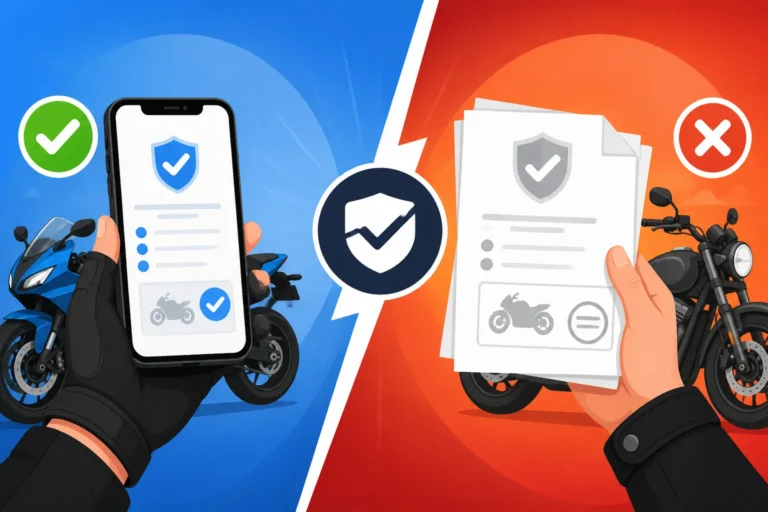
We live in a digital age, but the DMV is often the last place to catch up. While most states now accept Proof of Insurance: Digital vs Paper for Riders, it is always safer to have a printed copy. Screens can go dark, apps can crash, and some older systems at the DMV aren't equipped to scan barcodes from a smartphone. If you’re registering a bike in a state with strict enforcement, like the California Motorcycle Insurance Requirements, having that physical slip of paper can save you twenty minutes of technological frustration.
Furthermore, the document must be an "official" insurance card or a binder. A printout of your policy's "declarations page" is usually acceptable because it lists the specific coverage limits and the VIN, but a simple receipt of payment for an insurance policy is rarely enough. The clerk needs to see the effective dates to ensure the policy hasn't expired.
The Question of "Uninsured" Registration
A frequent question that pops up in rider forums is: Motorcycle Registration Without Insurance: Possible?. In the vast majority of states, the answer is a resounding no. Insurance is a prerequisite for the "privilege" of using public roads. However, there are very specific, rare exceptions. For example, if you are registering a bike as "Planned Non-Operation" (PNO) in California because it is a project bike that won't leave your garage, you might be able to register it without active liability insurance. But for a standard, street-legal registration, the insurance card is your ticket to the plate.
If you attempt to circumvent this, you run into the Penalties for Riding Without Insurance, which can include the immediate suspension of your newly minted registration. Some states perform "random audits" where they cross-reference registration databases with insurance company rolls. If a match isn't found, they send out a "notice of intent to suspend" your registration, which can cost hundreds of dollars to rectify.
Why "Full Coverage" Is a Misnomer in the Insurance Industry
One of the biggest hurdles for new riders is the terminology. If you tell an insurance agent you want "full coverage," they might give you ten different versions of what that means. In the context of registration, "full coverage" is irrelevant. In the context of your wallet, it is everything. "Full coverage" is essentially a marketing term for a bundle that includes Liability, Collision, and Comprehensive.
The Zebra allows you to toggle between basic liability and full coverage during the quoting process, which is eye-opening. You’ll see that while liability is what gets you the license plate, the "full" parts of the policy are what save you from a $15,000 loss if someone vanizes your bike overnight. For many riders, the cost of adding these is worth the peace of mind, even if the state doesn't require it for registration.
Collision and Comprehensive Breakdown
To truly understand why the DMV doesn't require these, you have to look at what they cover. Collision insurance pays for damage to your motorcycle if you hit another vehicle or an object (like a fence or a light pole). Comprehensive coverage handles everything else: theft, fire, vandalism, or hitting a deer. Since neither of these coverages pays for the medical bills of other people, the state sees them as optional.
However, if you are riding an expensive machine, going with the Minimum Coverage to Ride Legally in Each State is a massive gamble. Imagine you just bought a brand-new Indian Scout. You register it with basic liability to save a few bucks. Two weeks later, it’s swiped from your apartment complex. Because the state only required liability, and you only bought liability, you are now out the entire cost of the bike. This is a common tragedy in the riding community that could have been avoided by looking beyond mere registration requirements.
Comparing Costs and Benefits
Is the jump from liability to full coverage worth it? That depends on your bike's value and your "risk appetite." Many riders find that after checking rates on The Zebra, the cost of adding collision isn't as high as they feared, especially if they have a clean riding record. If your bike is worth less than $2,000, you might decide that the premiums for full coverage would exceed the value of the bike within a few years. In that case, sticking to the registration minimums makes financial sense.
On the flip side, if you're on a $25,000 touring rig, "liability only" is a recipe for disaster. The state will let you register it that way, but you're effectively self-insuring a five-figure asset. Always calculate your "break-even" point—how many years of premiums does it take to equal the value of the bike? If the answer is ten or more, full coverage is usually a smart move.
State-Specific Nuances and Exceptions
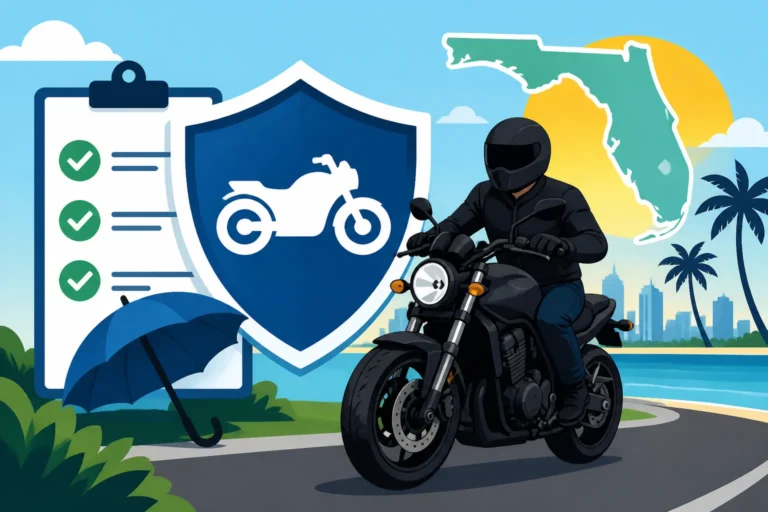
Not all states play by the same rules. While the general rule is "liability for registration," some states have quirks that catch riders off guard. For instance, Do You Need Insurance for a Motorcycle in Florida? is one of the most searched topics because Florida’s laws are famously weird. In the Sunshine State, you technically don't need insurance to register a motorcycle, but you are still financially responsible if you cause an accident. If you cause a crash and don't have insurance, your license and registration can be suspended after the fact. It’s a "ride at your own risk" system that often ends in legal nightmares.
Then there is New Hampshire, which doesn't mandate insurance for most riders at all. However, even there, if you are found at fault in an accident, you must prove you can pay for the damages, or you lose your right to drive. Most people in "no-requirement" states still buy insurance because the alternative—losing your house over a motorcycle accident—is too grim to contemplate.
| Feature | Required for Registration? | Required by Lenders? | What It Covers |
|---|---|---|---|
| Liability (BI/PD) | Yes (Except NH/FL*) | Yes | Damage/Injuries you cause to others |
| Collision | No | Yes | Damage to your bike from an accident |
| Comprehensive | No | Yes | Theft, fire, vandalism, animal strikes |
| Uninsured Motorist | Varies by State | No | Your injuries if hit by a non-insured driver |
| Medical Payments | No | No | Your medical bills regardless of fault |
*In Florida, insurance is not required for registration but is required to avoid penalties after an accident or to ride without a helmet if over 21.
Practical Steps to Getting Registered Fast
To make your DMV trip as painless as possible, follow a checklist. First, verify the specific liability limits for your state. If you’re in a high-minimum state, your out-of-state policy might not cut it. Second, ensure your insurance company has the correct VIN on the binder. A single mistyped digit will result in a rejection at the window.
Third, if you just bought the bike, check if you fall under a Motorcycle Insurance Grace Period When Buying. Even if you do, try to get a specific ID card for the new bike before you go. Having a clear, printed document that says "Proof of Insurance" at the top makes the clerk's job easier, and an easy clerk is a fast clerk. Finally, don't forget to bring your motorcycle endorsement or license; some states won't let you register a vehicle in your name if you aren't legally allowed to operate it.
Disclaimer
The information provided in this guide is for informational purposes only and does not constitute legal or professional insurance advice. Insurance laws and DMV regulations vary significantly by state and are subject to frequent changes. Always verify current requirements with your local Department of Motor Vehicles and a licensed insurance agent before making coverage decisions or attempting to register a vehicle.