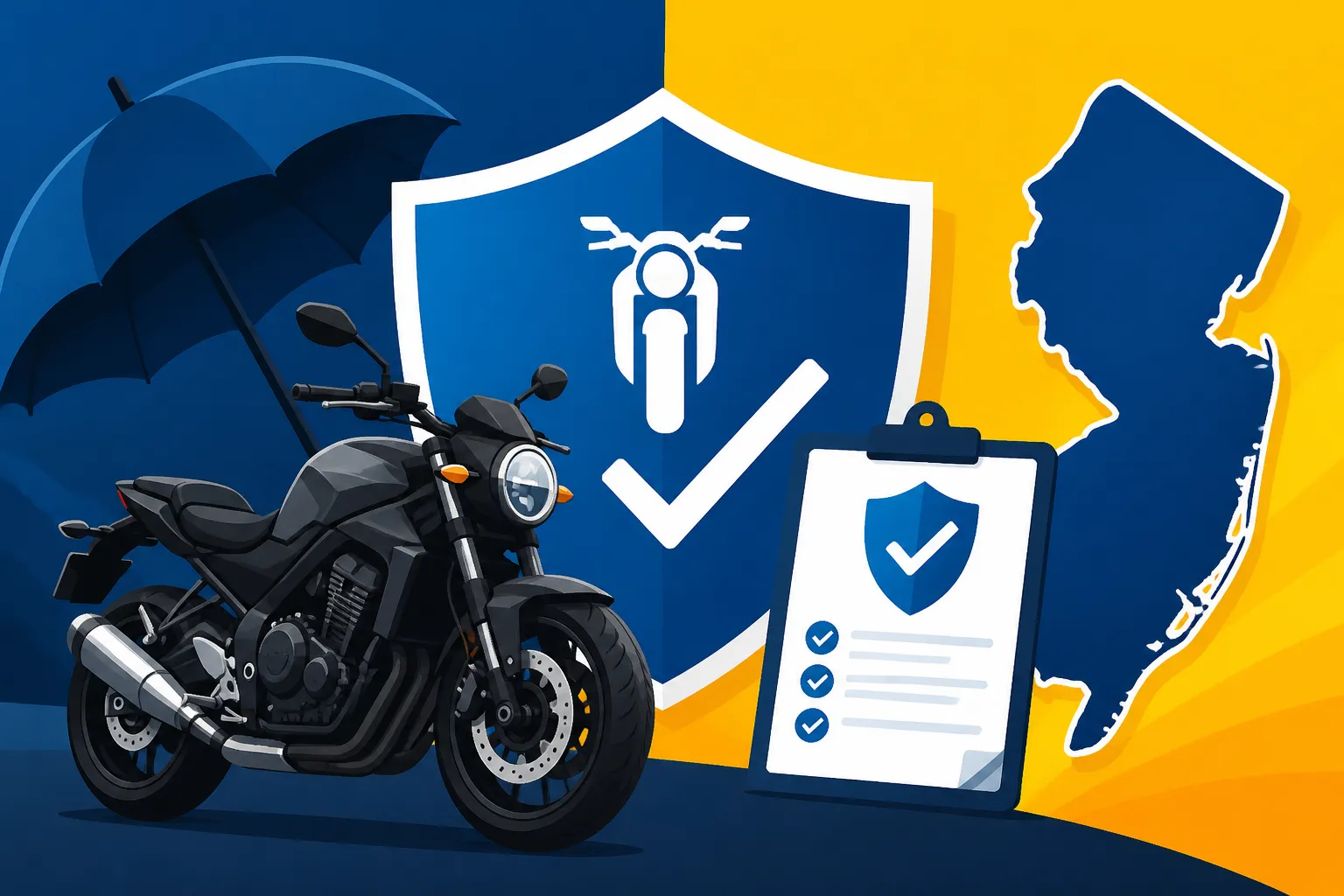
Is Motorcycle Insurance Required in New Jersey?
Riding your motorcycle in New Jersey should be about the open road and endless possibilities, not about gnawing worries over whether you're legally protected. Many riders find themselves scratching their heads, trying to navigate the complex world of insurance mandates. This guide is here to untangle those knots, giving you a crystal-clear understanding of New Jersey's motorcycle insurance requirements so you can ride with peace of mind.
Is Motorcycle Insurance Required in New Jersey?
Let’s get straight to the point because this is one area where you absolutely cannot afford to be guessing. Yes, motorcycle insurance is unequivocally required in New Jersey. The Garden State takes its financial responsibility laws very seriously, and that extends directly to anyone operating a motorcycle on its public roads. You simply cannot register your bike or legally ride it without having at least the minimum amount of liability coverage in place.
The Mandate for Riders
Think of it like this: just as you wouldn’t drive a car without insurance, the same principle applies to your motorcycle in New Jersey. The state mandates this coverage primarily to protect other drivers and their property in case you’re at fault in an accident. It’s not just a suggestion or a good idea; it’s a legal obligation. If you’re pulled over and can’t provide valid proof of insurance, you’re looking at some pretty significant consequences, which we’ll dive into a bit later. This requirement is a cornerstone of the state’s efforts to ensure that victims of accidents receive compensation, preventing them from bearing the full financial burden alone. This means every rider, from the seasoned veteran cruising the scenic byways to the new rider just getting their Motorcycle License, Endorsement & Insurance, needs to be properly insured.
Understanding New Jersey’s Financial Responsibility Law
New Jersey operates under a “no-fault” system for car insurance, which can sometimes cause confusion for motorcycle riders. However, it’s crucial to understand that motorcycles are largely exempt from the personal injury protection (PIP) components of the no-fault system that apply to cars. Instead, motorcycles in New Jersey are primarily governed by traditional tort liability rules. This means that if you’re found at fault in an accident, your liability insurance will cover the damages and injuries sustained by the other parties, up to your policy limits. The overarching principle is ensuring that anyone causing an accident has the financial means to cover the damage they inflict. For a deeper dive into the broader landscape, check out our guide on Financial Responsibility Laws for Riders. It’s not just about covering your own hide; it’s about being a responsible road user in a state with a lot of traffic and diverse riding conditions, from the bustling streets of Newark to the quiet roads down the shore.
New Jersey’s Minimum Motorcycle Insurance Requirements
So, you know you need insurance. But what kind, and how much? This is where the specific numbers come into play, and it’s essential to get them right. New Jersey, like most states, outlines specific minimum liability limits that every motorcycle insurance policy must meet. These limits are designed to provide a basic level of protection, though many seasoned riders will tell you that opting for higher coverage is almost always a smarter move.
Deciphering the Liability Limits
New Jersey requires specific liability coverage amounts, often expressed as three numbers. These typically represent bodily injury liability per person, bodily injury liability per accident, and property damage liability. As of 2024, the minimum liability coverage requirements for motorcycles in New Jersey are generally:
- $15,000 for bodily injury liability per person
- $30,000 for bodily injury liability per accident
- $5,000 for property damage liability per accident
These numbers are often seen expressed as "15/30/5." This means if you're at fault in an accident, your insurance will pay up to $15,000 for injuries to one person, up to a total of $30,000 for all injuries in the accident, and up to $5,000 for damage to other people's property. While these are the legal minimums, consider this: what if you're involved in a serious accident that causes extensive injuries or damages an expensive vehicle? Those minimums can be exhausted very quickly, leaving you personally responsible for the remaining costs. Many riders opt for higher limits, such as 50/100/25, or even 100/300/50, for much greater peace of mind. Our article on Minimum Liability Insurance Explained (The Three Numbers) can help clarify these limits further.
Personal Injury Protection (PIP) in the Garden State
This is a point of common confusion. In New Jersey, Personal Injury Protection (PIP) is a mandatory coverage for standard automobile policies, designed to cover medical expenses regardless of who is at fault. However, and this is critical, **PIP is generally not available or required for motorcycle insurance policies in New Jersey.**
What does this mean for you as a rider? It means that if you're injured in a motorcycle accident, your medical expenses won't be covered by a motorcycle PIP policy. Instead, you'll typically rely on your personal health insurance to cover your medical bills. If another driver is at fault, their bodily injury liability coverage would be responsible for your medical costs, lost wages, and other damages, assuming those costs exceed your health insurance coverage or other available personal resources. This is why having robust health insurance and considering higher bodily injury liability and possibly Uninsured/Underinsured Motorist (UM/UIM) coverage on your motorcycle policy is so important. UM/UIM coverage can be a lifesaver if you're hit by a driver who doesn't have enough insurance to cover your injuries or damages.
Here's a quick summary of New Jersey's minimum requirements:
| Coverage Type | Minimum Required Limit in New Jersey | What it Covers |
|---|---|---|
| Bodily Injury Liability (per person) | $15,000 | Injuries to one person in an accident you cause |
| Bodily Injury Liability (per accident) | $30,000 | Total injuries to all people in an accident you cause |
| Property Damage Liability | $5,000 | Damage to other people's property (vehicles, fences, etc.) in an accident you cause |
| Personal Injury Protection (PIP) | Not Required/Generally Unavailable | Not applicable for motorcycle policies; typically rely on health insurance |
What Happens If You Ride Without Insurance in New Jersey?
It’s tempting to think you might save a few bucks by skipping insurance, but trust me, it’s a gamble you absolutely do not want to take in New Jersey. The repercussions for riding uninsured are severe, far outweighing any potential short-term savings. The state views riding without insurance as a serious offense, and the penalties reflect that.
Penalties and Consequences You Need to Know
Let’s talk about the cold, hard facts. If you’re caught riding without motorcycle insurance in New Jersey, you’re looking at a multi-layered set of penalties that can quickly become a financial nightmare.
For a first offense:
- Fines: You could face a fine between $300 and $1,000. That's a hefty chunk of change that could have gone towards your actual insurance premiums.
- Surcharge: An annual surcharge of $250 for three years can be imposed by the New Jersey Motor Vehicle Commission (NJMVC). This adds up to an additional $750 on top of your fine.
- License Suspension: Your driver's license and motorcycle registration will be suspended for one year. That means no riding, no driving, and a massive disruption to your life.
- Community Service: You might also be required to perform community service.
For subsequent offenses:
- Higher Fines: The fines can escalate dramatically, potentially reaching $5,000.
- Jail Time: Yes, you read that right. Repeat offenders could face up to 14 days in jail.
- Extended License Suspension: Your license and registration could be suspended for up to two years.
- Surcharge: The $250 annual surcharge for three years still applies.
Beyond the immediate legal trouble, having your license suspended means a massive inconvenience for your daily life. How will you get to work? Run errands? See friends and family? It's a logistical headache that could easily be avoided. This is a much more severe consequence than simply a ticket, highlighting why Penalties for Riding Without Insurance is such a critical topic for all riders to understand.
The Financial Fallout of an Uninsured Accident
Now, imagine the worst-case scenario: you’re riding without insurance and get into an accident where you’re at fault. This is where the true financial devastation can hit.
* **Personal Liability for Damages:** Without liability insurance, you are personally responsible for all the damages and injuries you cause. This could include the other driver’s medical bills, lost wages, pain and suffering, and the cost to repair or replace their vehicle or property. These costs can easily climb into tens of thousands, hundreds of thousands, or even millions of dollars.
* **Lawsuits:** The injured party can sue you directly to recover their losses. A judgment against you could lead to wage garnishment, liens on your property, and severe damage to your credit for years to come.
* **Your Own Damages:** Even if you weren’t at fault, if you lack comprehensive and collision coverage, you’d have no way to pay for repairs to your own motorcycle or your own medical bills unless you pursued the at-fault driver (who might also be uninsured or underinsured).
* **SR-22 Requirement:** After being caught without insurance, or after certain violations, you might be required to obtain an SR-22 filing, which is a certificate of financial responsibility. This isn’t insurance itself, but a proof that you have it. Having an SR-22 on your record will significantly increase your insurance premiums, making it much harder and more expensive to get coverage in the future. We discuss this in more detail in our guide on SR-22 for Motorcycles: When It’s Required.
In short, riding without insurance isn't "saving money"; it's taking on an astronomical, completely unnecessary risk that can destroy your financial future and severely impact your quality of life.
Essential Steps to Ensure You’re Covered
Okay, we’ve covered the “why” and the “what if.” Now, let’s talk about the “how.” Getting and maintaining proper motorcycle insurance in New Jersey doesn’t have to be a headache. With a few smart steps, you can ensure you’re compliant with the law and adequately protected on the road.
Getting the Right Policy
The first step is to shop around for a policy that meets New Jersey’s minimum requirements but also provides you with the level of protection you actually need. Don’t just settle for the cheapest option without understanding what it covers.
* **Compare Quotes:** Get quotes from multiple insurance providers. Companies like Progressive, Geico, Dairyland, and Markel are well-known in the motorcycle insurance space. Don’t assume your car insurance provider automatically offers the best rates for your bike. Each company has different underwriting criteria, and what works for your car might not be ideal for your motorcycle. You can easily get How to Get Motorcycle Insurance Quotes Online to compare options.
* **Beyond the Minimums:** While the 15/30/5 minimums are legally sufficient, consider increasing your bodily injury and property damage liability limits. The cost difference for significantly higher coverage is often surprisingly small, especially when weighed against the potential financial ruin of an accident.
* **Consider Additional Coverages:** Think about adding comprehensive and collision coverage, especially if your bike is newer, financed (which often requires it), or valuable. Collision covers damage to your bike from an accident, regardless of fault, while comprehensive covers non-collision events like theft, vandalism, fire, or hitting an animal. You might also want to look into Uninsured & Underinsured Motorist Coverage (UM/UIM) to protect yourself if another rider or driver with insufficient insurance causes an accident.
* **Discounts:** Always ask about available discounts. Many insurers offer reductions for completing a motorcycle safety course, being a mature rider, having a clean driving record, belonging to a motorcycle club, or bundling your motorcycle policy with your auto or home insurance. Even small savings add up! Our guide to Motorcycle Insurance Discounts You’re Missing has a full breakdown.
Staying Compliant and Protected
Once you have your policy, your job isn’t quite done. Maintaining compliance and ensuring you’re always protected is an ongoing process.
* **Proof of Insurance:** Always carry proof of insurance with you when you ride. New Jersey accepts electronic proof on your smartphone, but it’s always wise to have a physical copy in your wallet or saddlebag as a backup. Make sure you understand the rules for Proof of Insurance & Registration for Motorcycles.
* **Keep Your Policy Updated:** If you move, get a new bike, modify your current one, or add another rider, inform your insurance company immediately. These changes can affect your coverage and premiums, and failing to update your policy could lead to issues if you need to file a claim. If you’re wondering How to Add a New Motorcycle to Your Policy, we’ve got you covered.
* **Review Annually:** Don’t just set it and forget it. Review your policy at least once a year, or whenever your renewal comes up. Your needs might have changed, or new discounts could be available. It’s also a good time to get fresh quotes to ensure you’re still getting the best rate.
* **Understand Your Policy:** Read through your policy documents. It sounds tedious, but knowing your deductibles, coverage limits, and exclusions will save you a lot of stress and potential grief if you ever need to file a claim. Knowledge is power, especially when it comes to protecting yourself and your prized motorcycle.
By taking these proactive steps, you can confidently hit the roads of New Jersey, knowing you're legally compliant and financially protected, leaving you free to enjoy the ride.
Disclaimer
Please remember that insurance laws and requirements can change. While this guide provides comprehensive and up-to-date information, it is always best to consult directly with the New Jersey Motor Vehicle Commission (NJMVC) or a licensed insurance professional for the most current and personalized advice regarding your specific motorcycle insurance needs. This content is for informational purposes only and does not constitute legal or financial advice.