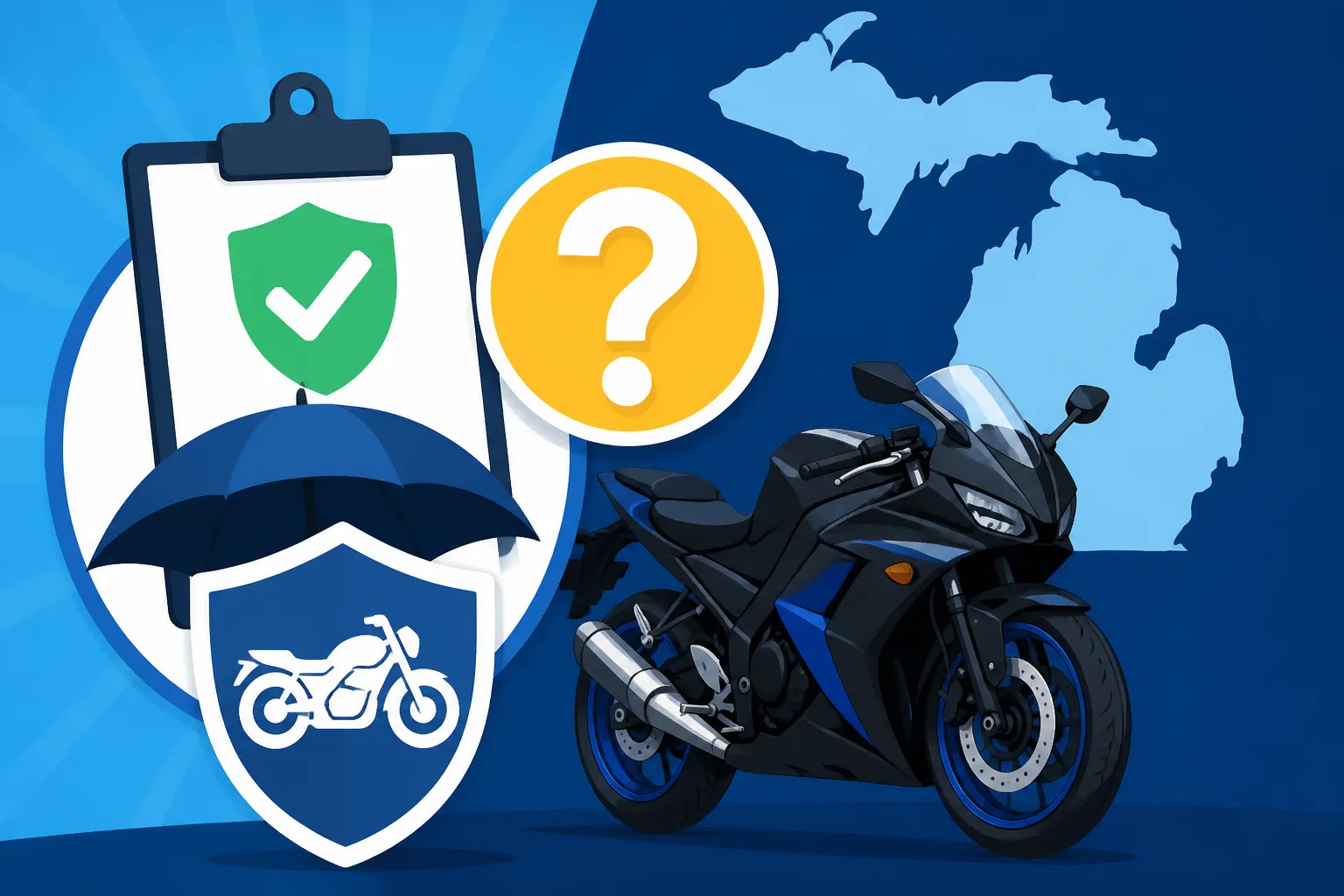
Is Motorcycle Insurance Required in Michigan?
Riding your motorcycle in Michigan can be an incredible experience, from cruising along the scenic shores of Lake Michigan to exploring the winding roads of the Upper Peninsula. But before you hit the open road, a common question often pops up, and it’s one that can be a real head-scratcher: Is motorcycle insurance required in Michigan? Especially with the state's famously complex no-fault car insurance laws, it's easy to get confused about what's mandated for two wheels. This guide will cut through the legal jargon and state exactly what you need to know to stay legal and protected on your bike in the Wolverine State.
Is Motorcycle Insurance Required in Michigan?
Let's get straight to it because there's no room for guesswork when it comes to legal requirements. The short answer is an unequivocal "yes."
The Short Answer: Yes, It Is
Unlike a handful of states that might offer some wiggle room or alternative proof of financial responsibility, Michigan is not one of them when it comes to motorcycles. If you plan to register and ride your motorcycle on public roads in Michigan, you are legally obligated to carry motorcycle insurance. This isn't just a recommendation; it's a firm legal requirement designed to ensure that if you're involved in an accident, there's a mechanism in place to cover potential damages and injuries. Think of it as your passport to the pavement – you simply can't ride legally without it. The Michigan Vehicle Code explicitly mandates that all registered motor vehicles, including motorcycles, must be insured.
It's a common misconception, especially for those familiar with Michigan's unique auto insurance landscape, that motorcycles might operate under different, less stringent rules. However, the requirement for basic liability coverage for motorcycles is just as firm as it is for cars, though the type of coverage and how it works in an accident can differ significantly. For a broader perspective on requirements nationwide, you can look into guides like Is Motorcycle Insurance Required? State-by-State.
Michigan's Unique No-Fault System for Cars vs. Motorcycles
Here's where things get interesting, and frankly, a bit complicated, for motorcyclists in Michigan. The state is renowned for its no-fault auto insurance system, which means that after a car accident, your own insurance company typically pays for your medical expenses and other economic losses, regardless of who was at fault. This system was designed to streamline claims and reduce litigation for car accidents.
However, and this is crucial, motorcycles are generally excluded from Michigan's no-fault personal injury protection (PIP) benefits in the same way cars are. This doesn't mean motorcyclists are left entirely out in the cold for medical expenses, but the mechanism for coverage is different. If a motorcyclist is involved in an accident with a motor vehicle (like a car or truck), the auto insurer of the car involved in the accident is typically responsible for paying the motorcycle rider's medical expenses and lost wages, up to the limits of that auto policy's PIP coverage. If the car involved is uninsured, or there's no car involved (like a single-bike accident), the responsibility can then fall to the motorcyclist's own auto insurance policy (if they have one), or a resident relative's auto policy. If none of these options exist, a state fund might cover some expenses.
This distinction is vital because it means that while you still need liability insurance for your motorcycle, the comprehensive medical coverage you might expect from a "no-fault" system often hinges on another vehicle's auto policy when you're on a motorcycle. It also means that motorcyclists can still be sued for pain and suffering in certain circumstances, which isn't typically the case for car drivers under the no-fault system. Understanding these intricacies is key to making informed decisions about your coverage. For an even deeper dive into this, check out our guide on Michigan Motorcycle Insurance No-Fault Explained.
Understanding Michigan's Minimum Motorcycle Insurance Requirements
So, we know insurance is mandatory. Now, let's talk about what kind of insurance and how much you need to legally ride in Michigan. The state specifies minimum coverage limits, but it's always wise to consider more than just the bare minimum.
Bodily Injury and Property Damage Liability
The core of your mandatory motorcycle insurance in Michigan is liability coverage. This is the part of your policy that pays for damages and injuries you cause to others if you're at fault in an accident. It’s there to protect your assets if you're sued after a crash. Michigan's minimum liability requirements are expressed in a series of numbers, usually like this: 20/40/10.
Let's break down what those numbers mean in Michigan's context:
- $20,000 for bodily injury liability per person: This is the maximum amount your insurance will pay for medical bills, lost wages, and pain and suffering for one person you injure in an accident where you are at fault.
- $40,000 for bodily injury liability per accident: This is the maximum amount your insurance will pay for all bodily injuries combined in a single accident where you are at fault, regardless of how many people were injured. So, if three people were injured, your policy would pay up to $40,000 total, with no single person receiving more than $20,000.
- $10,000 for property damage liability per accident: This is the maximum amount your insurance will pay for damage to other people's property (like their vehicle, a fence, a mailbox, etc.) in an accident where you are at fault.
While these are the legal minimums, many seasoned riders and financial experts will tell you that these amounts are often woefully inadequate in the event of a serious accident. Medical costs, vehicle repair bills, and legal fees can easily skyrocket past these figures, leaving you personally responsible for the difference. It's why many riders opt for higher limits, such as 50/100/25, or even 100/300/50, for better peace of mind. For more on how these numbers work, see our article on Minimum Liability Insurance Explained The Three Numbers.
Personal Injury Protection (PIP) and Medical Benefits
As discussed earlier, traditional Michigan no-fault PIP coverage does not apply directly to motorcyclists in the same way it does to car drivers. However, this doesn't mean motorcyclists are without recourse for medical bills after an accident. Michigan law dictates a specific order of priority for payment of medical benefits for an injured motorcyclist when an automobile is involved in the crash:
- The auto insurer of the owner or registrant of the motor vehicle involved in the accident.
- The auto insurer of the operator of the motor vehicle involved in the accident.
- The auto insurer of the owner or registrant of the motorcycle involved in the accident (if the motorcyclist also owns an insured automobile).
- The auto insurer of the operator of the motorcycle involved in the accident (if the motorcyclist is insured through their own auto policy).
- The auto insurer of a resident relative's car policy.
- The Michigan Assigned Claims Plan (MACP), if no other coverage applies.
This unique hierarchy is critical for motorcyclists to understand. It means that even if you only carry liability on your motorcycle, your medical bills could still be covered by another party's car insurance policy. However, this also highlights the vulnerability if no automobile is involved in your accident (e.g., you hit a deer, slide on gravel, or simply drop your bike). In those scenarios, your medical expenses would fall to your health insurance, or out-of-pocket, unless you have specific medical payments (MedPay) coverage on your motorcycle policy, which is typically optional.
Uninsured/Underinsured Motorist Coverage (Optional but Recommended)
While not legally required in Michigan for motorcycles, Uninsured/Underinsured Motorist (UM/UIM) coverage is a smart addition to any motorcycle policy, particularly given the risks riders face. This coverage protects you if you're involved in an accident with a driver who either doesn't have insurance (uninsured) or doesn't have enough insurance to cover your damages (underinsured).
Think about it: even if you're the most careful rider on the road, you can't control what other drivers do. In a state where there are still many uninsured drivers, UM/UIM coverage acts as a critical safety net. If an uninsured driver totals your bike and leaves you with significant medical bills, your UM/UIM coverage would step in to cover those costs, up to your policy limits. Without it, you could be left to pay for everything yourself or pursue a difficult and often fruitless legal battle against someone with no assets. Many riders consider this almost as essential as liability itself, a true testament to its importance. Learn more about it with our detailed guide: Uninsured & Underinsured Motorist Coverage UM/UIM.
Here's a quick overview of Michigan's minimum motorcycle insurance requirements:
| Coverage Type | Michigan Minimum Requirement | What it Covers |
|---|---|---|
| Bodily Injury Liability (per person) | $20,000 | Injuries to one person you are at fault for |
| Bodily Injury Liability (per accident) | $40,000 | Total injuries to all people you are at fault for |
| Property Damage Liability (per accident) | $10,000 | Damage to others' property you are at fault for |
| Personal Injury Protection (PIP) | Varies | Medical benefits for injured motorcyclists (via auto insurers in specific priority order) |
| Uninsured/Underinsured Motorist | Optional | Your injuries/damages if hit by an uninsured/underinsured driver |
What Happens if You Ride Without Motorcycle Insurance in Michigan?
The temptation to skip insurance might seem appealing to save a few bucks, but the risks and penalties in Michigan are severe and far outweigh any perceived savings. It’s simply not worth it.
Penalties and Legal Consequences
If you're caught riding without the required motorcycle insurance in Michigan, you're looking at some serious trouble. The state takes uninsured driving very seriously, and the penalties reflect that:
- Fines: You could face substantial fines, potentially hundreds of dollars for a first offense.
- License Suspension: Your driver's license can be suspended, sometimes for an extended period, making it impossible to legally drive any vehicle, not just your motorcycle.
- Vehicle Impoundment: Your motorcycle could be impounded on the spot, meaning you'll have to pay towing fees, storage fees, and potentially other charges to get it back, in addition to proving you've obtained insurance.
- Jail Time: In some cases, particularly for repeat offenses, you could even face misdemeanor charges and potential jail time.
- SR-22 Filing: After being caught without insurance, you might be required to obtain an SR-22 filing, which is essentially proof of financial responsibility that your insurance company files with the state. This designation often labels you as a "high-risk" driver, significantly increasing your future insurance premiums for years.
These penalties aren't just minor inconveniences; they can create a major disruption to your life and finances. It's a risk that no responsible rider should consider. Our article on What Happens If You Ride Without Insurance? elaborates on the broader implications.
Financial Risks of an Uninsured Accident
Beyond the legal penalties, riding without insurance leaves you incredibly vulnerable to devastating financial consequences if you're involved in an accident.
Imagine this scenario: You're riding down a beautiful Michigan road, and a car unexpectedly cuts you off. You swerve, lose control, and lay your bike down. Thankfully, you're not severely injured, but your motorcycle is damaged, and you also hit a guardrail, causing property damage. If you don't have insurance, even if the other driver was at fault, you could face:
- Paying for Your Own Medical Bills: Unless an insured automobile was involved, your health insurance would be the primary payer. If you have no health insurance, you're on the hook for potentially tens of thousands of dollars in hospital bills, physical therapy, and medication.
- Paying for Damages to Your Bike: Without collision coverage (which is optional and requires liability first), you'd have to pay out-of-pocket for all repairs or replacement of your motorcycle.
- Paying for Property Damage You Cause: If you damaged public property, like that guardrail, or another vehicle, you would be personally responsible for those repair costs.
- Being Sued: If you were even partially at fault, or if the circumstances are unclear, you could be sued by other injured parties for their medical expenses, lost wages, and pain and suffering. Without liability insurance, you'd be personally responsible for any judgments against you, potentially leading to wage garnishment, asset seizure, or even bankruptcy.
The cost of motorcycle insurance pales in comparison to the financial ruin that an uninsured accident can bring. It's a small investment for substantial protection. For detailed information on the repercussions, read our piece on Penalties for Riding Without Insurance.
Getting the Right Motorcycle Insurance in Michigan
Securing the right motorcycle insurance in Michigan isn't just about ticking a box; it's about protecting yourself, your bike, and your financial future. Finding a policy that fits your needs and budget is entirely possible.
Factors Affecting Your Rates
Just like with car insurance, several factors influence how much you'll pay for motorcycle insurance in Michigan. Understanding these can help you anticipate costs and look for ways to save.
- Your Age and Experience: Younger, less experienced riders typically face higher premiums, as they are statistically more likely to be involved in accidents. As you gain experience and age, your rates generally decrease.
- Your Riding Record: A clean driving record with no accidents or tickets will always net you better rates. Conversely, a history of violations will significantly increase your premiums.
- Type of Motorcycle: Sport bikes and high-performance motorcycles are usually more expensive to insure due to their higher theft rates, higher repair costs, and increased likelihood of high-speed accidents. Cruisers, touring bikes, and standard motorcycles often have lower rates.
- Where You Live: Urban areas with higher traffic density and theft rates typically have higher insurance costs than rural areas.
- Coverage Limits and Deductibles: Choosing higher liability limits or adding optional coverages like collision, comprehensive, or UM/UIM will increase your premium. However, choosing a higher deductible (the amount you pay out-of-pocket before your insurance kicks in for a claim) can lower your premium.
- Annual Mileage: If you only ride occasionally or seasonally, some insurers might offer lower rates.
For a comprehensive breakdown of what influences your costs, our guide on How Much Is Motorcycle Insurance? 2026 Cost Guide offers invaluable insights.
Tips for Finding Affordable Coverage
Even with all these factors, finding affordable motorcycle insurance in Michigan is absolutely achievable. Here are some pro tips:
- Complete a Motorcycle Safety Course: Many insurance companies offer discounts if you complete an approved motorcycle safety course (like the MSF Basic RiderCourse). Not only does it make you a safer rider, but it can also shave a noticeable amount off your premium.
- Bundle Your Policies: If you also have car insurance, homeowner's, or renter's insurance, see if your current provider offers a multi-policy discount for bundling your motorcycle insurance with them. Companies like Progressive and State Farm are known for offering these kinds of discounts.
- Ask About Discounts: Don't be shy! Always ask your insurance agent about all available discounts. These can include discounts for experienced riders, multi-bike policies, anti-theft devices, loyal customer discounts, and even discounts for paying your premium in full.
- Shop Around and Compare Quotes: This is perhaps the most critical step. Rates can vary wildly between different insurance providers for the exact same coverage. Get quotes from multiple companies, like Dairyland, Markel, Geico, and local Michigan agents, to ensure you're getting the best possible rate. Don't just settle for the first quote you receive.
- Maintain a Clean Driving Record: This goes without saying, but avoiding tickets and accidents is the best way to keep your insurance rates low in the long run.
- Consider Higher Deductibles: If you have an emergency fund saved up, opting for a higher deductible on your comprehensive and collision coverage can lower your monthly or annual premium. Just make sure you can comfortably afford the deductible if you need to file a claim.
- Review Your Coverage Annually: Your needs and your bike's value change over time. What made sense two years ago might not be the most cost-effective option today. Review your policy every year or two to ensure you still have the right coverage at the best price.
Remember, if you have a financed bike, your lender will almost certainly require you to carry full coverage to protect their investment, regardless of state minimums. For more on that, see Motorcycle Insurance Requirements for Financed Bikes. And for those looking to cut costs, our guide on How to Get Cheap Motorcycle Insurance offers even more strategies.
Disclaimer
Please note that insurance laws and requirements can change. While this guide provides current information as of 2026, it is always recommended to verify the most up-to-date regulations with the Michigan Department of Insurance and Financial Services (DIFS) or a licensed insurance professional in Michigan. This content is for informational purposes only and does not constitute legal or financial advice.