Penalty for No Motorcycle Insurance in California
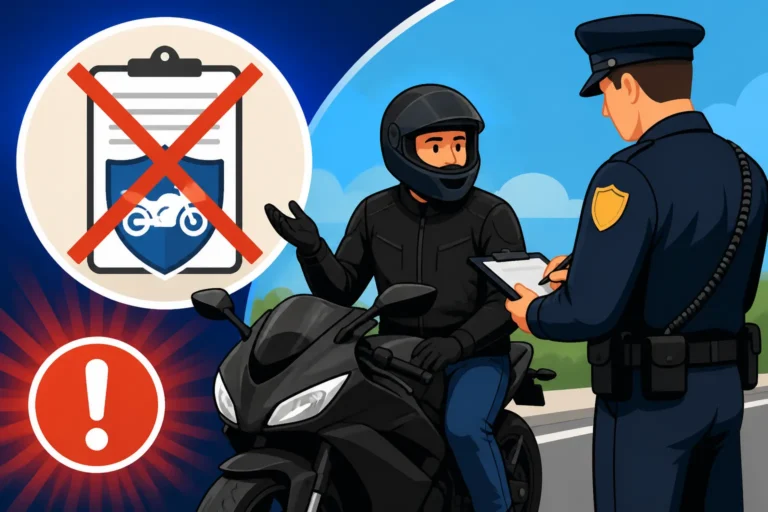
It's a frustrating thought, isn't it? You're out on the open road, enjoying the California sunshine on your motorcycle, when suddenly flashing lights appear in your rearview mirror. Maybe you forgot to renew your policy, or perhaps you thought you could get away with just a quick ride. Whatever the reason, riding without valid motorcycle insurance in California isn't just a minor oversight; it carries a cascade of penalties that can quickly turn a beautiful day into a real headache. This guide will walk you through exactly what to expect if you find yourself in this tricky situation in the Golden State, from immediate fines to long-term consequences, and how to navigate getting back on track.
The Legal Landscape: Why California Takes Motorcycle Insurance Seriously
California, like most states, doesn't mess around when it comes to vehicle insurance. The state's stance is pretty clear: if you're operating a vehicle on public roads, you need to be able to cover potential damages and injuries in case of an accident. This isn't just about protecting other drivers; it's about protecting yourself and your financial future. When you ride uninsured, you're not just breaking a rule; you're putting everyone, including yourself, at significant risk.
California's Mandatory Insurance Law
The state of California operates under what's known as "financial responsibility" laws. This means that every driver, including motorcyclists, must prove they can pay for any damage or injuries they cause in an accident. For most riders, the easiest and most common way to meet this requirement is by carrying a motorcycle insurance policy. It’s not just a suggestion; it’s a legal mandate under the California Vehicle Code. The primary goal is to ensure that victims of accidents caused by uninsured drivers aren't left holding the bag for medical bills, property damage, and other related expenses. Without this law, the aftermath of even a minor fender-bender could escalate into a major financial disaster for innocent parties.
Minimum Coverage Requirements for Riders
So, what does "proof of financial responsibility" actually look like in California? It boils down to specific minimum liability coverage amounts that your insurance policy must meet. These are often expressed as three numbers: for instance, 15/30/5. Let's break down what those mean in the context of California's legal minimums:
- $15,000 for injury/death to one person: This is the maximum amount your insurance company will pay for bodily injury liability for a single person injured in an accident where you are at fault.
- $30,000 for injury/death to more than one person: This is the maximum total amount your insurance will pay for bodily injury liability if multiple people are injured in an at-fault accident.
- $5,000 for property damage: This is the maximum amount your policy will pay for damage to another person's property (like their vehicle, fence, or mailbox) if you cause an accident.
These are just the minimums, folks. While they'll keep you compliant with the law, many experienced riders will tell you that these amounts are often woefully inadequate if you get into a serious accident. Imagine a collision with a new luxury SUV or an accident resulting in significant medical costs. Your minimum liability coverage could be quickly exhausted, leaving you personally responsible for the rest. That's why considering higher limits for your Liability Coverage for Motorcycles Explained is always a smart move.
Immediate Consequences of Riding Uninsured
You might think that getting caught without motorcycle insurance is just a slap on the wrist. Think again. California imposes a series of immediate and impactful penalties that can put a serious dent in your wallet and your ability to ride legally. These aren't just theoretical; they're enforced by law enforcement on a daily basis.
Fines and Fees That Add Up Fast
The first thing you'll likely face if pulled over without proof of insurance is a hefty fine. For a first offense, you're looking at a base fine that can range from a few hundred dollars. However, that's just the base fine. California adds various surcharges, assessments, and court fees, which can easily triple or quadruple the initial amount. It's not uncommon for a "minor" infraction like this to end up costing well over $800 to $1,000 for a first-time offender.
Let's say you're caught a second time within a specific period (usually 3 years). The penalties escalate significantly. Second offense fines are substantially higher, and the additional fees pile on even more aggressively. You could be looking at fines exceeding $2,000, not including any other penalties that might come your way. It’s a costly lesson to learn twice, and one that most riders desperately want to avoid.
Vehicle Impoundment and Registration Suspension
Beyond the financial hit, the state of California has the authority to take more direct action. If you're caught riding without insurance, especially if it's not your first rodeo, your motorcycle could be impounded on the spot. This means towing fees, daily storage fees at the impound lot, and the general hassle of trying to retrieve your bike. These costs can quickly run into hundreds of dollars, sometimes even thousands, depending on how long your motorcycle sits there.
To make matters worse, the Department of Motor Vehicles (DMV) can also suspend your motorcycle's registration. This means your bike is no longer legally allowed on the road, even if you manage to get it out of impound. You'll have to jump through hoops, pay fines, and prove you have current insurance before your registration can be reinstated. This process can be time-consuming and frustrating, delaying your return to the open road. This is a common consequence of riding without insurance, as detailed in our guide on What Happens If You Ride Without Insurance?.
Driver's License Suspension
Perhaps the most impactful immediate consequence for many riders is the potential suspension of their driver's license. If you're cited for driving without insurance, the California DMV can suspend your driving privileges for up to four years, especially if you're involved in an accident. Think about that: four years without being able to legally operate any motor vehicle. This isn't just about your motorcycle; it affects your ability to drive a car, too.
To get your license reinstated, you won't just need to pay all the fines and fees; you'll also have to provide proof of insurance (often an SR-22 filing, which we'll discuss shortly) and maintain it for a set period. This can be a particularly tough pill to swallow for anyone who relies on their vehicle for work, errands, or simply enjoying the freedom of the road.
Long-Term Repercussions You Can't Ignore
The immediate pain of fines and suspensions is one thing, but the consequences of riding uninsured in California don't simply disappear once you pay a fine. There are long-term repercussions that can haunt your financial well-being and driving record for years.
Increased Insurance Premiums (SR-22)
One of the most annoying long-term effects is the inevitable spike in your motorcycle insurance premiums. When you're cited for riding without insurance, especially if you caused an accident, you'll be designated as a "high-risk" driver by insurance companies. This status makes you a less desirable customer, and insurers will charge you significantly more to cover that perceived risk.
In many cases, the state of California will require you to file an SR-22 form with the DMV. An SR-22 isn't an insurance policy itself, but rather a certificate of financial responsibility that your insurance company files on your behalf, confirming you have the minimum required coverage. This form needs to be maintained for a specific period, usually three years. Not all insurance companies offer SR-22 filings, and those that do will charge higher rates. It's a clear signal to insurers that you're a greater risk, which means less competitive pricing for you. You can learn more about this in our article on SR-22 for Motorcycles: When It's Required.
Legal Liability in an Accident
This is where things can get truly devastating. If you're involved in an accident while riding uninsured and you are found to be at fault, you are personally and financially responsible for all damages and injuries. This means:
- Medical bills: You'd be on the hook for the other party's medical expenses, which can easily reach tens or hundreds of thousands of dollars for serious injuries.
- Property damage: You'd have to pay for repairs to their vehicle or other property out of your own pocket.
- Lost wages: If the injured party can't work due to their injuries, you could be liable for their lost income.
- Pain and suffering: Juries often award significant sums for non-economic damages like pain and suffering.
Without insurance, there's no company to step in and pay these costs. Your personal assets – your savings, your home, your future earnings – could all be at risk. This isn't a hypothetical scenario; it's a very real danger that can lead to bankruptcy and financial ruin.
Impact on Your Driving Record
A citation for no insurance goes on your driving record, and it stays there for years. While it might not carry "points" in the same way a speeding ticket does, it signals irresponsibility to potential employers (especially those requiring driving), and, as mentioned, to insurance providers. A clean driving record is a valuable asset, leading to lower insurance rates and fewer hassles. A marred record, however, can continue to affect your premiums and even job prospects long after the initial incident. It paints a picture of a risky individual, and that perception carries a cost.
Understanding California's Financial Responsibility Law
It's clear that California is serious about financial responsibility on the roads. But what exactly does that mean, and how can you ensure you're always on the right side of the law? It's more than just having a piece of paper; it's about being prepared for anything.
What "Financial Responsibility" Really Means
In California, "financial responsibility" means having the means to cover damages and injuries you might cause in an auto accident. While most people meet this by buying liability insurance, there are technically other ways to satisfy this requirement, though they are far less common for the average rider:
- Cash Deposit: You could deposit $35,000 with the DMV. Yes, actual cash.
- Self-Insurance Certificate: For individuals or businesses with many vehicles and significant assets, the DMV can issue a certificate of self-insurance. This is typically reserved for large fleets or wealthy individuals.
- Surety Bond: You could obtain a surety bond for $35,000 from a company licensed to do business in California.
For the vast majority of us, liability motorcycle insurance is the only practical way to demonstrate financial responsibility. It's designed to protect you from the immense financial burden of an at-fault accident by having an insurer step in to cover the costs up to your policy limits. Without it, you’re essentially gambling with your entire financial future every time you hit the road.
Proof of Insurance and How to Provide It
It's not enough to have insurance; you need to be able to prove it when asked. This typically happens during a traffic stop or after an accident. In California, acceptable forms of proof include:
- An insurance identification card: This is the most common and easiest way. Many companies, like Progressive or Geico, provide these.
- A copy of your insurance policy: This is also acceptable, though less convenient to carry.
- A confirmation from your insurance company: Sometimes, if you just got a new policy, a letter or declaration page from your insurer can serve as temporary proof.
- Electronic proof: The good news is that California law allows for electronic proof of insurance on your cell phone or other portable electronic device. So, having a digital copy readily available is perfectly fine.
Remember, if you're asked for proof of insurance and you can't provide it, even if you do have a policy, you could still face a citation. It's crucial to always have current proof of insurance with you, whether it's a physical card or a readily accessible digital version. This is also covered in our detailed article on Proof of Insurance: Digital vs Paper for Riders.
Getting Back on Track: What to Do After a Violation
So, you’ve been caught, you’ve faced the immediate consequences, and now you’re looking at the long road ahead. It can feel overwhelming, but there are definite steps you can take to get your license, registration, and peace of mind back.
Navigating the Reinstatement Process
Getting your driving privileges back after a suspension for no insurance involves several key steps:
- Pay All Fines and Fees: First and foremost, you'll need to satisfy all court-imposed fines and any administrative fees from the DMV. These can be substantial, so make sure you get a clear breakdown of everything owed.
- Obtain Motorcycle Insurance: You must secure a valid motorcycle insurance policy that meets California's minimum liability requirements. Shop around to find the best rates, keeping in mind that your high-risk status will likely mean higher premiums.
- File an SR-22 (if required): If the DMV has mandated an SR-22, your insurance company will need to file this certificate directly with the DMV. You'll then need to maintain continuous coverage with the SR-22 for the specified period, usually three years. Any lapse in this coverage during that time could lead to another suspension.
- Complete Any Other Requirements: Depending on your specific situation, there might be other requirements, such as attending traffic school or appearing in court. Ensure you address all aspects of your citation and suspension order.
- Reinstatement Application: Once all conditions are met, you'll need to formally apply for reinstatement of your driver's license and vehicle registration with the DMV, often involving an additional fee.
This process isn't quick or easy, but diligently following these steps is essential to legally getting back on your bike. For more on navigating this, check out our guide on How to Reinstate Coverage After Lay-Up Season.
Finding Affordable SR-22 Insurance
The prospect of needing SR-22 insurance often comes with a dose of sticker shock. Because you're considered high-risk, insurers will charge more. However, "more" doesn't have to mean "exorbitant." Here's how you can look for more affordable options:
- Compare Quotes Extensively: Don't just go with the first quote you get. Different insurance companies have different underwriting criteria for high-risk drivers. Companies like Progressive, Dairyland, and Markel are often known for offering policies to drivers who need SR-22s. Take the time to compare How to Compare Motorcycle Insurance Quotes from several providers.
- Ask About Discounts: Even with an SR-22, you might still qualify for various discounts. These could include discounts for completing a motorcycle safety course, being a mature rider, having an anti-theft device on your bike, or even bundling your motorcycle policy with other insurance (like renters or homeowners insurance). Every little bit helps!
- Increase Your Deductible: If you opt for comprehensive or collision coverage in addition to liability, choosing a higher deductible can lower your premium. Just make sure you can comfortably afford to pay that deductible out of pocket if you need to file a claim.
- Consider a Less Powerful Bike (if buying new): If you're in the market for a new motorcycle after a violation, opting for a bike with a smaller engine or a touring model over a high-performance sport bike can significantly impact your insurance rates, as sport bikes are generally more expensive to insure.
It takes effort, but finding a balance between compliance and affordability is possible, even with an SR-22 requirement.
Preventative Measures: Staying Compliant and Protected
The best way to deal with the penalty for no motorcycle insurance in California is, of course, to never face it in the first place. Being proactive and informed can save you a world of trouble, money, and stress.
Comparing Motorcycle Insurance Options
Don't just renew your policy blindly every year. The insurance market is competitive, and rates can change. It pays to shop around, especially if your circumstances have changed (e.g., you've gotten older, moved, or bought a different bike).
- Get Multiple Quotes: Aim for at least 3-5 quotes from different carriers every year or two. Companies like State Farm, Allstate, and Nationwide, in addition to the ones mentioned earlier, are all players in the California market.
- Review Your Coverage Needs: Your minimum liability requirements are just that – minimums. Consider if you need more comprehensive coverage, especially if your bike is newer, financed, or has expensive custom parts. For example, if you have a custom Harley-Davidson, you'll want to ensure you have adequate Accessories & Custom Parts Coverage Explained.
- Look for Discounts: As mentioned earlier, there's a myriad of discounts available. Ask about good rider discounts, multi-policy discounts, motorcycle safety course discounts, anti-theft device discounts, and even lay-up coverage if you store your bike during the winter. These can significantly reduce your premiums.
By regularly comparing your options, you ensure you're getting the best possible coverage at the most competitive price, keeping you legal and protected without overpaying.
Understanding Your Policy and Its Limits
Many riders simply buy a policy and forget about it, but truly understanding what you've purchased is critical. Your policy document isn't just a stack of papers; it's a contract detailing your rights and responsibilities, as well as the limits of your coverage.
- Know Your Limits: Be intimately familiar with your bodily injury and property damage liability limits. Understand what happens when those limits are exhausted.
- Deductibles: If you have collision or comprehensive coverage, know your deductible amounts. This is the amount you'll pay out of pocket before your insurance kicks in for a claim.
- Exclusions: Be aware of any exclusions in your policy. For example, does your policy cover riding on a racetrack? Does it cover all your custom modifications? These details can make a huge difference if you ever need to file a claim.
- Additional Coverages: Consider if additional coverages like uninsured/underinsured motorist (UM/UIM) coverage, medical payments (MedPay), or roadside assistance are worth the extra cost. In California, where many drivers are uninsured, Uninsured & Underinsured Motorist Coverage (UM/UIM) can be a lifesaver.
Taking the time to read through your policy and ask your insurance agent questions can save you a lot of grief down the line. It's about being prepared, being responsible, and ensuring that your love for riding doesn't turn into a financial nightmare.
Summary of Penalties and Costs
To give you a quick overview of what you might face, here's a table summarizing the potential penalties for riding without motorcycle insurance in California. Keep in mind these are estimates and actual costs can vary based on the specific circumstances, court, and any additional fees.
| Penalty Type | First Offense (Estimated) | Second Offense (Estimated) | Long-Term Impact |
|---|---|---|---|
| Base Fine | $100 – $200 | $200 – $500 | Fines double or more, plus additional court costs. |
| Total Fines & Fees | $800 – $1,500+ | $1,800 – $3,000+ | Significant financial burden. |
| Vehicle Impoundment | Possible (especially with prior issues) | Highly Likely | Towing fees, daily storage fees (hundreds to thousands). |
| Registration Suspension | Possible | Highly Likely | Cannot legally ride until reinstated. |
| Driver's License Suspension | Possible, up to 1 year | Up to 4 years | Loss of driving privileges for all vehicles. |
| SR-22 Requirement | Likely, if involved in an accident or repeat offense | Almost Certain | Required for 3 years, significantly higher insurance rates. |
| Legal Liability | 100% personal financial responsibility in at-fault accident | 100% personal financial responsibility in at-fault accident | Potential bankruptcy, asset forfeiture. |
| Driving Record Impact | Negative mark for years | Severe negative mark for years | Higher future insurance premiums, potential employment issues. |
As you can see, the penalties for not having motorcycle insurance in California are far from trivial. They are designed to be a significant deterrent, reflecting the serious risks involved in operating a vehicle without financial protection. Staying compliant is not just about avoiding fines; it's about responsible riding and protecting yourself and others on the road.
Disclaimer
This article is for general informational purposes only and does not constitute professional advice. Laws, prices and regulations vary by location and change over time. Consult a qualified professional for guidance on your specific situation.