How Does UM/UIM Pay if a Rider Is Hit by an Uninsured Driver?
Riding a motorcycle offers unparalleled freedom, but it also comes with unique risks, and one of the most frustrating and financially devastating is encountering a driver who simply doesn't have insurance, or worse, doesn't have enough. Many riders have found themselves in the nightmare scenario of a collision where the other party is at fault but can't cover the damages, leaving them scrambling. This comprehensive guide will walk you through exactly how Uninsured Motorist (UM) and Underinsured Motorist (UIM) coverage works to protect you when faced with this all-too-common problem.
The Harsh Reality of Uninsured Drivers and Motorcyclists
It's a scary thought, but the roads are unfortunately populated by drivers who, for whatever reason, operate without the legally required insurance. For motorcyclists, this isn't just an inconvenience; it can be life-altering.
The Disproportionate Risk for Riders
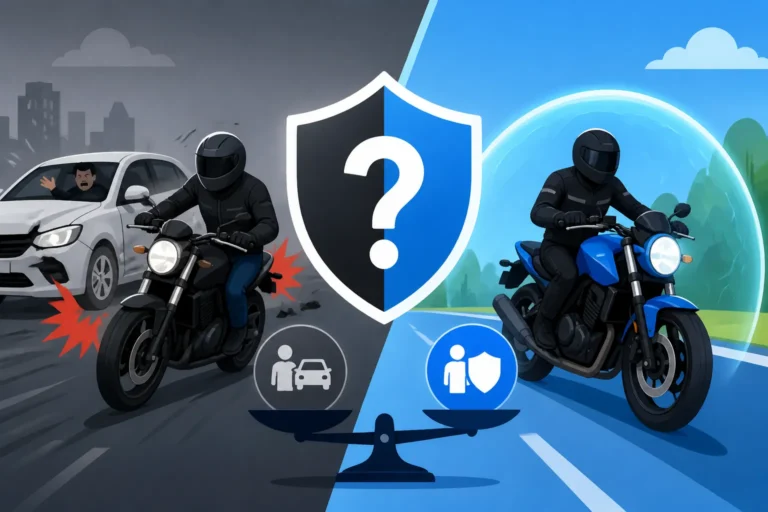
Let's face it, as motorcyclists, we're inherently more vulnerable on the road. There's no steel cage, no airbags, no crumple zones protecting us. When a collision occurs, even a minor one, the potential for serious injury is significantly higher for a rider than for someone in a car. Now, imagine that accident is caused by a driver who has no insurance whatsoever. The financial burden can be crushing. According to recent data, a significant percentage of drivers nationwide operate without proper insurance – estimates vary by state but can be as high as 28% in some areas. That's a huge gamble every time you swing a leg over your bike.
These uninsured drivers often have no substantial assets to seize in a lawsuit, meaning that even if you win a judgment against them, collecting any significant amount of money for your mounting medical bills, lost wages, and pain and suffering can be an impossible task. It’s not just about the immediate costs, either. Long-term rehabilitation, specialized medical care, and the inability to work for extended periods can quickly drain your savings and impact your family's financial stability for years. It's a cruel twist of fate when you've done everything right, worn your gear, and ridden defensively, only to be left in a dire situation by someone else's irresponsibility.
Why Standard Liability Isn't Enough
Many riders understand the importance of having liability insurance, which is almost universally required by law. You diligently pay your premiums, ensuring that if you accidentally cause a crash, your insurance will cover the damages and injuries sustained by other people and their property. It's a crucial protection for yourself from potential lawsuits. However, here's the kicker: your liability coverage does absolutely nothing for you or your motorcycle if someone else is at fault.
Think about it this way: your liability coverage is like a shield for other people from your mistakes. It's not a shield for you from their mistakes. If an uninsured driver slams into you, their lack of insurance means there's no pool of money to draw from to pay for your broken bones, your totaled bike, or your lost income while you recover. Without specific additional coverage, you'd be entirely on your own to cover these astronomical costs. This is precisely the critical gap that Uninsured and Underinsured Motorist coverage is designed to fill, turning what could be a catastrophic personal loss into a manageable insurance claim.
Understanding Uninsured and Underinsured Motorist Coverage (UM/UIM)
This type of coverage often gets overlooked or minimized, but it truly acts as a lifeline for motorcyclists in one of the most common and devastating accident scenarios. Don't let the legal jargon scare you; it's quite straightforward once you break it down.
Uninsured Motorist (UM) Coverage: Your Safety Net
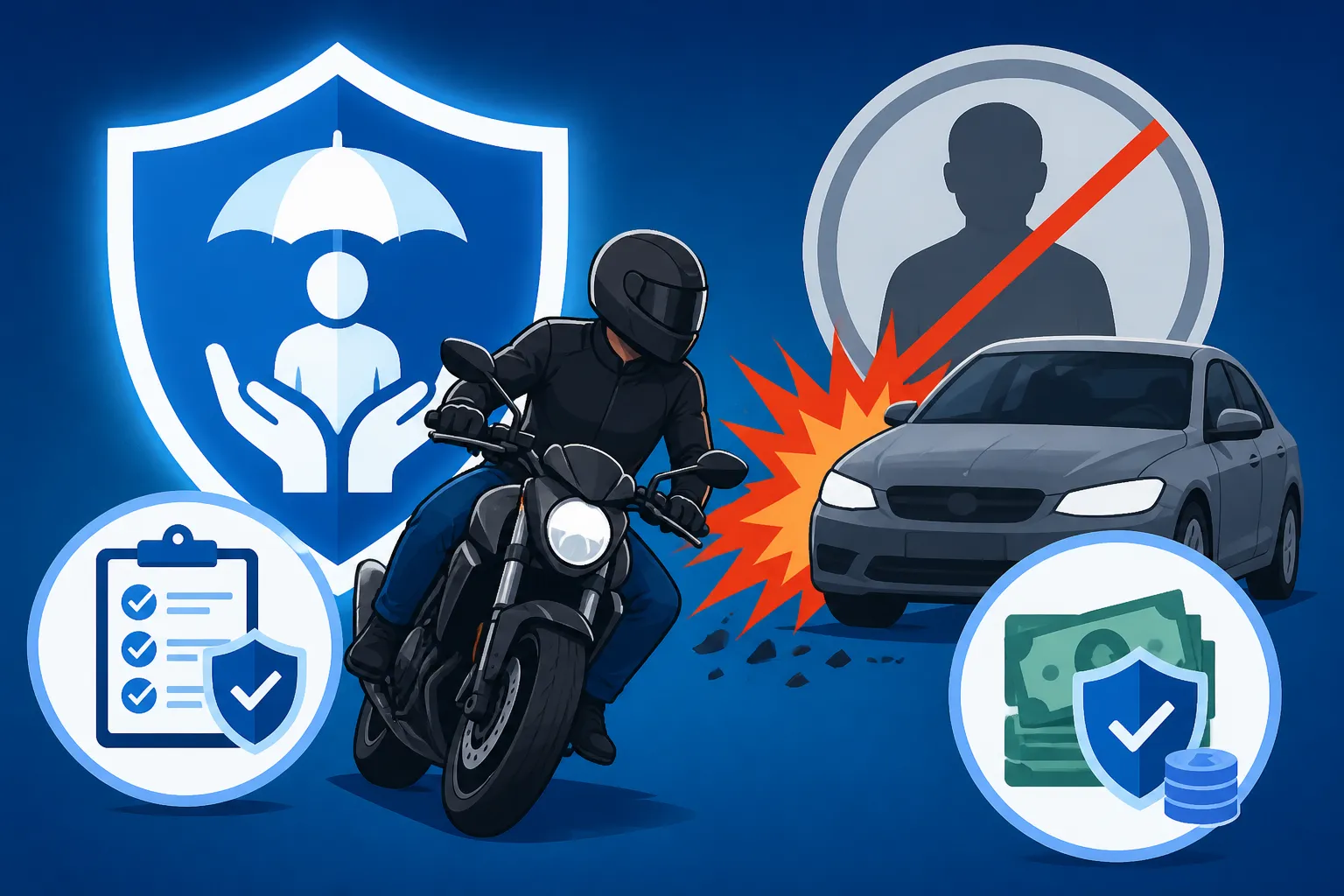
Uninsured Motorist (UM) coverage is your primary safeguard when the at-fault driver has absolutely no liability insurance. It steps in to cover your expenses that the responsible party simply cannot pay. This isn't just for accidents with drivers you know are uninsured; it also typically covers you in the frustrating and often terrifying event of a hit-and-run, where the at-fault driver flees the scene and cannot be identified.
When we talk about what UM covers, it's pretty comprehensive regarding personal damages. This can include your medical bills, which, as any rider knows, can skyrocket after even a moderate incident. It also covers lost wages if your injuries prevent you from working, as well as compensation for your pain and suffering, which is a very real, non-economic cost of an accident. Some states even offer Uninsured Motorist Property Damage (UMPD) which can cover the costs to repair or replace your motorcycle, your helmet, and your riding gear. It's critical to know if your state's UM coverage includes property damage or if that's a separate add-on. Without UM, you'd be stuck suing a driver who likely has no assets, or simply eating the costs yourself.
Underinsured Motorist (UIM) Coverage: Closing the Gap
While UM coverage protects you from drivers with no insurance, Underinsured Motorist (UIM) coverage is there for the all-too-common situation where the at-fault driver does have insurance, but their policy limits are ridiculously low and completely insufficient to cover your significant injuries and damages. This is especially prevalent in states with very low minimum liability requirements. For instance, imagine a driver with the absolute minimum 25/50/25 coverage (meaning $25,000 for bodily injury per person, $50,000 per accident, and $25,000 for property damage) hits you. If your medical bills alone exceed $25,000, their policy maxes out, leaving a huge deficit.
This is where UIM swoops in. It essentially acts as a secondary layer of protection, kicking in after the at-fault driver's insurance has paid its maximum. Your UIM coverage will then pay the difference up to your own policy limits. So, if your medical bills are $75,000, and the at-fault driver's insurance pays its $25,000 limit, your UIM coverage could potentially cover the remaining $50,000 (assuming you have sufficient UIM limits). It’s about ensuring that even when the other party is insured, their minimal coverage doesn't leave you holding the bag for massive expenses, which is a common scenario given the severe injuries often sustained by motorcyclists.
The Difference Between UM/UIM and Other Coverage Types
It's easy to get lost in the alphabet soup of insurance acronyms, but understanding how UM/UIM stands apart from other common coverages is vital. While policies like Medical Payments (MedPay) or Personal Injury Protection (PIP) can help cover your medical expenses regardless of who is at fault, these usually have their own, often lower, limits and don't address other damages like lost wages or property damage. They also don't rely on proving the other driver's fault or lack of insurance. Similarly, your Collision coverage is fantastic for fixing your bike after an accident, regardless of fault (minus your deductible), but it won't pay for your medical bills or lost income if the other driver is uninsured.
The key distinction for UM/UIM is that it specifically addresses the other driver's financial irresponsibility. It’s not about your fault, or simply fixing your bike. It’s about protecting your personal well-being and financial future when the person who caused the damage either can't or won't pay for it through their own insurance. This makes it a unique and indispensable part of a robust motorcycle insurance policy, especially when you consider the sheer number of uninsured motorists on the road. For a more comprehensive look at all the protections available, you might want to check out our guide on Types of Motorcycle Insurance Coverage Explained.
How UM/UIM Coverage Actually Pays Out
When you're reeling from an accident, the last thing you want is a complicated insurance dance. Knowing the process for UM/UIM payouts can alleviate some stress during an already difficult time.
Navigating the Claim Process After an Accident
The steps you take immediately after a motorcycle accident are crucial, especially when dealing with a potentially uninsured or underinsured driver. First and foremost, ensure your safety and that of any others involved. Seek medical attention immediately, even if you feel fine, as adrenaline can mask injuries. Next, if possible and safe, gather as much information as you can at the scene: the other driver’s contact information, license plate, vehicle description, and most importantly, their insurance details. If they claim to have no insurance, or if it's a hit-and-run, call the police immediately to file a report. This official report is absolutely essential for any UM/UIM claim.
Once you’ve addressed immediate safety and gathered initial information, you'll need to contact your own insurance company as soon as possible to report the accident and initiate a claim. Be clear that the other driver is uninsured or underinsured. Your insurer will then assign a claims adjuster to investigate the accident. This investigation will include reviewing the police report, speaking with witnesses, assessing your injuries, and determining the extent of your bike's damage. Remember, even though you're dealing with your own insurer, you'll need to prove the other driver's negligence and your damages, just as if you were dealing with their insurance company. For a more detailed walkthrough, our article on How to File a Motorcycle Insurance Claim is an excellent resource.
What Damages UM/UIM Typically Covers
When your UM/UIM coverage kicks in, it's designed to cover a broad spectrum of damages, aiming to put you in a similar financial position as if the at-fault driver had adequate insurance. The most immediate and often largest payout category is medical expenses. This includes everything from emergency room visits, ambulance rides, surgeries, specialist consultations, prescriptions, and any ongoing physical therapy or rehabilitation. If you suffer severe, long-term injuries, it can also cover future medical care.
Beyond medical costs, UM/UIM typically covers lost wages or loss of earning capacity if your injuries prevent you from working. This can be a significant amount, especially if you're out of commission for an extended period. Perhaps one of the most vital, yet often intangible, coverages is for pain and suffering. This compensates you for the physical pain, emotional distress, and overall impact the accident has had on your quality of life. Finally, if your policy includes Uninsured Motorist Property Damage (UMPD), it will cover the cost of repairing or replacing your motorcycle and any damaged gear, up to your policy limits. Without this, you might have to rely solely on your standard collision coverage, which comes with its own deductible.
State Variations and Important Considerations
It’s crucial to understand that UM/UIM coverage isn't a one-size-fits-all solution across the United States. State laws vary significantly regarding whether this coverage is mandatory or optional. For example, some states, like Maryland and Virginia, require drivers to carry UM/UIM coverage, while in others, like Florida, it's optional, though highly recommended. Knowing your state's specific requirements is the first step in ensuring you’re adequately protected. You can always use resources like The Zebra to quickly compare state laws and available policies.
Another key aspect to consider is "stacking." In some states, you can "stack" UM/UIM coverage, which means you can combine coverage limits from multiple vehicles on your policy or even from different policies you own (e.g., if you have both a car and a motorcycle policy). This can significantly increase your available payout. However, not all states allow stacking, and some insurers offer non-stacking policies even where stacking is generally permitted. Always clarify this with your insurance provider. Furthermore, remember your policy limits. Just like liability coverage, you choose the limits for your UM/UIM. If your limits are low, say $25,000 per person, and your medical bills hit $100,000, you're still facing a substantial gap. This highlights why purchasing higher limits for UM/UIM, often mirroring your liability limits, is a smart move for any rider. For more information on requirements, check out Motorcycle Insurance Requirements by State (2026 Guide).
Maximizing Your Protection and Choosing Wisely
Choosing the right UM/UIM limits and understanding your options can make a world of difference if you ever find yourself in an accident with an uninsured driver. Don't leave your financial future to chance.
Determining Adequate UM/UIM Limits
Deciding how much UM/UIM coverage to carry is one of the most important decisions you'll make when purchasing motorcycle insurance. Most state minimums, if UM/UIM is even required, are often woefully inadequate, especially for motorcyclists who face a higher risk of severe injury. Instead of simply opting for the minimum, think about your own financial situation and potential worst-case scenarios. Consider your annual income – how much would you lose if you couldn't work for six months or a year? What about your assets? Would a catastrophic accident force you into bankruptcy if you couldn't cover medical bills beyond minimal coverage?
A good rule of thumb is to purchase UM/UIM limits that match your own bodily injury liability limits. If you have $100,000/$300,000 in liability, you should ideally have the same for UM/UIM. This ensures that you’re protected to the same degree that you protect others. Don't forget about property damage either; if your state offers Uninsured Motorist Property Damage (UMPD), make sure you have enough to repair or replace your cherished ride. While adding more coverage might slightly increase your premiums, the peace of mind and financial security it offers in the face of an uninsured accident are truly priceless.
Shopping for the Right Policy
Finding the right motorcycle insurance policy isn't just about getting the cheapest rate; it's about getting the right coverage at a competitive price. You need to proactively compare quotes from multiple providers to truly understand your options and ensure you're getting comprehensive protection. Look beyond just the basic liability and delve into the specifics of their UM/UIM offerings. Ask about stacking options, deductibles for UM/UIM, and whether property damage is included.
Online comparison tools, such as those offered by The Zebra, can be incredibly helpful here. They allow you to input your details once and get multiple quotes back, making it easier to compare apples to apples. Don't shy away from asking questions directly to agents – they can clarify policy nuances and help you tailor coverage to your specific needs. Companies like Progressive, Geico, and Dairyland are often popular among motorcyclists, but their offerings for UM/UIM might vary, so always compare. When you're ready to start comparing, consider our guide on How to Compare Motorcycle Insurance Quotes for a strategic approach.
Legal Assistance and Advocacy
While UM/UIM coverage is designed to protect you, the process of receiving a payout isn't always smooth sailing. Dealing with your own insurance company can sometimes feel like an uphill battle, especially when significant damages like lost wages and pain and suffering are involved. Insurance companies, even your own, are businesses, and they have an interest in minimizing payouts. In complex cases, or if your injuries are severe and long-lasting, it might be wise to consult with a personal injury attorney experienced in motorcycle accidents.
An attorney can help you navigate the intricate claims process, gather necessary documentation, negotiate with the insurance adjuster on your behalf, and ensure you receive fair compensation for all your damages, not just the easily quantifiable ones. They understand the legal nuances of UM/UIM claims, including proving the other driver's fault and substantiating the full extent of your injuries and losses. While it's an added expense, the expertise of a good lawyer can often result in a much higher settlement than you might achieve on your own, ensuring you're truly made whole after a devastating accident. It's an important consideration for truly maximizing the protection your UM/UIM coverage is meant to provide.
| Coverage Type | What It Covers (Focus on You & Your Bike) | If At-Fault Driver is Uninsured/Underinsured |
|---|---|---|
| Liability | Damages/injuries you cause to others | Doesn't apply (covers your fault) |
| Collision | Damage to your motorcycle from an accident, regardless of fault | Yes (minus deductible) |
| Comprehensive | Damage to your motorcycle from non-collision events (theft, fire, vandalism, animal strike) | Doesn't apply |
| Uninsured Motorist (UM) | Your medical bills, lost wages, pain/suffering if hit by uninsured/hit-and-run driver | YES (Primary Protection) |
| Underinsured Motorist (UIM) | Your medical bills, lost wages, pain/suffering if at-fault driver's insurance isn't enough | YES (Secondary Protection) |
| Medical Payments (MedPay) | Your and your passenger's medical expenses, regardless of fault | Yes (up to limits) |
Disclaimer
This article is for general informational purposes only and does not constitute professional advice. Laws, prices and regulations vary by location and change over time. Consult a qualified professional for guidance on your specific situation.