Helmet Laws: Universal vs Partial States
It's a familiar scenario for many riders: you're planning an epic cross-country trip or even just a weekend jaunt a few states over, and suddenly a wave of anxiety hits. What are the helmet laws in that next state? Do I need one? Does my passenger? The patchwork of motorcycle helmet laws across the United States can feel like a confusing maze, leaving riders frustrated and sometimes even risking hefty fines or worse. This guide is here to clear the fog, breaking down the crucial differences between universal and partial helmet law states so you can ride confidently and legally, no matter where the road takes you.
Understanding Motorcycle Helmet Laws in the US
Riding a motorcycle is an exhilarating experience, a true sense of freedom on two wheels. But with that freedom comes a significant responsibility, not just for your own safety but also for understanding the legal landscape you're navigating. One of the most talked-about and often debated aspects of motorcycle riding is helmet laws. These aren't just arbitrary rules; they're designed with safety in mind, yet they spark passionate discussions among riders about personal liberty versus public welfare.
Why Helmet Laws Exist and the Debates Around Them
At its core, the existence of motorcycle helmet laws is rooted in public safety and health. Medical and scientific communities, as well as traffic safety organizations, overwhelmingly agree that helmets significantly reduce the risk of head injury and death in motorcycle crashes. When a rider is involved in an accident, the head is one of the most vulnerable parts of the body. A helmet acts as a crucial barrier, absorbing impact and preventing severe trauma. For instance, the National Highway Traffic Safety Administration (NHTSA) consistently highlights statistics showing that helmets are about 37% effective in preventing fatalities for motorcycle riders and 41% for motorcycle passengers. They save countless lives each year and reduce the severity of injuries, which in turn alleviates the burden on emergency services and healthcare systems.
However, the conversation isn't one-sided. Many riders express strong opinions about personal freedom and the right to choose whether or not to wear a helmet, especially when they are adults. Arguments often center on the idea that an adult should be able to assess and accept their own risks, and that the government shouldn't mandate personal safety choices. This perspective often clashes with the public health argument, which points out that society as a whole bears some of the costs associated with severe injuries, regardless of personal choice. Hospital bills, long-term care, and lost productivity all have broader economic impacts, which proponents of universal helmet laws frequently cite. This ongoing debate is precisely why you see such varied laws from one state to the next.
The Spectrum of Helmet Legislation: Universal vs. Partial
When we talk about motorcycle helmet laws in the U.S., it generally boils down to two main categories: universal helmet laws and partial helmet laws. These categories dictate who is required to wear a helmet, under what circumstances, and often, what type of helmet is acceptable. It's not just a matter of "yes" or "no"; there's a nuanced spectrum that affects millions of riders daily.
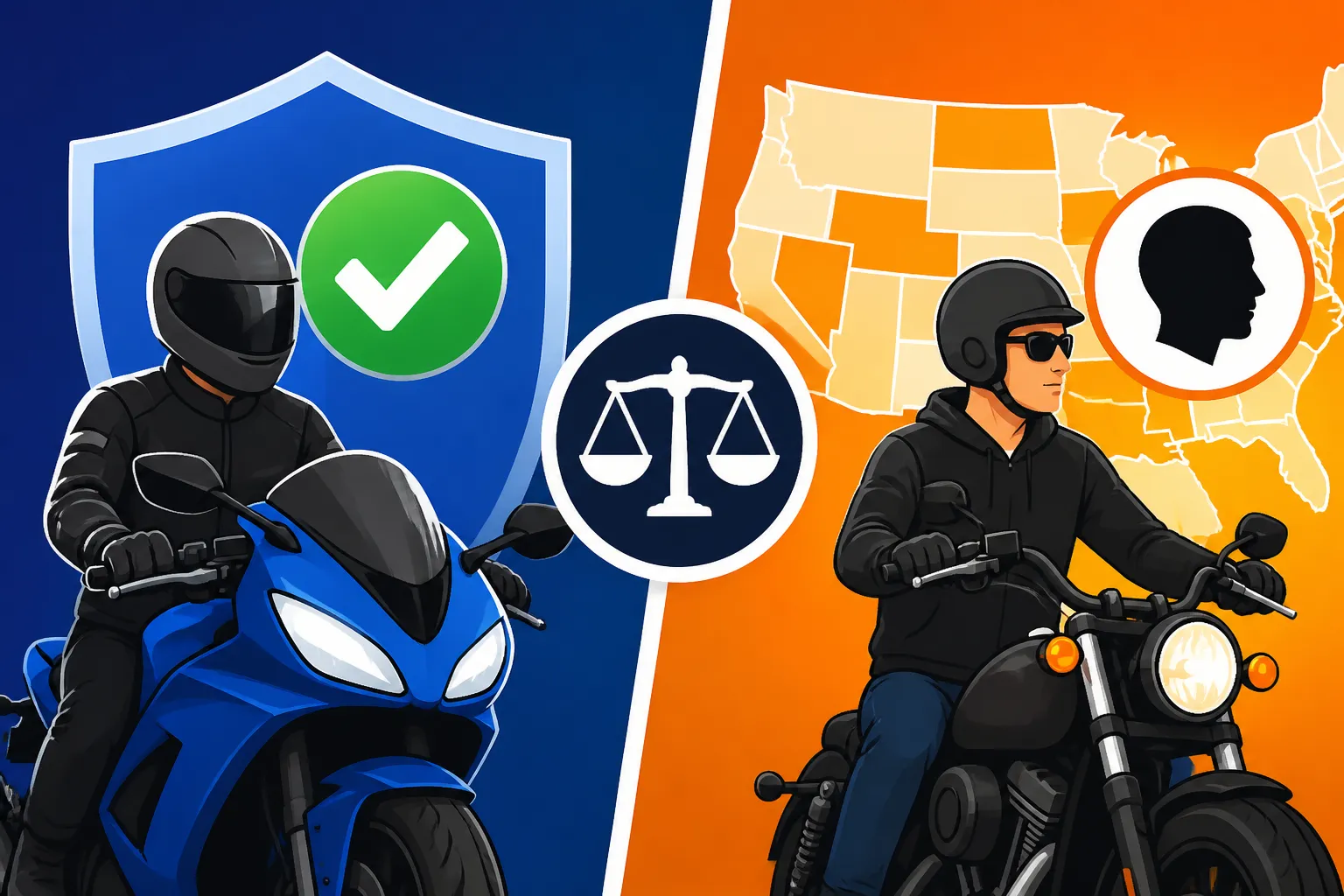
A state with a "universal" helmet law mandates that all motorcycle riders and passengers, regardless of age or experience, must wear a helmet. These are often considered the most straightforward and safest regulations by safety advocates. On the other end of the spectrum are "partial" helmet laws. These states typically require specific groups of riders to wear helmets, most commonly those under a certain age (e.g., 18 or 21) or riders with limited experience. Some partial law states might also have other stipulations, such as requiring helmets if you don't carry a certain amount of medical insurance or if you have a learner's permit. Understanding which type of law applies in a given state is the first step to ensuring you're compliant and safe.
Universal Helmet Laws: What They Mean for Riders
Stepping into a state with universal helmet laws means one thing: if you're on a motorcycle, you're wearing a helmet. There are no exceptions based on your age, how long you've been riding, or whether you prefer the wind in your hair. For riders traveling from a partial-law state, this can be a significant adjustment, but it's a non-negotiable legal requirement.
States with Universal Helmet Requirements
Currently, there are a number of states that enforce universal helmet laws. These states have made the decision that the safety benefits of helmet use outweigh any arguments for personal choice in this regard. States like California, Georgia, Maryland, Massachusetts, Mississippi, Nebraska, Nevada, New Jersey, New York, North Carolina, Oregon, Tennessee, Vermont, Virginia, Washington, West Virginia, and the District of Columbia are among those with universal helmet requirements.
In these states, every single person on a motorcycle, whether operating it or riding as a passenger, must wear a DOT-compliant helmet. This means the helmet must meet the safety standards set by the U.S. Department of Transportation, signified by a DOT sticker on the back. It's not enough to just wear any helmet; it has to be one that's certified to offer adequate protection. The rules here are clear and consistent, aiming for maximum safety for all riders. Even if you're just cruising down a quiet backroad, the law still applies.
Implications for Riders in Universal States
The consequences of not complying with universal helmet laws can range from inconvenient to severe. First and foremost, if you're pulled over without a helmet in a universal law state, you're likely facing a traffic citation. These tickets can come with fines that vary by jurisdiction, but they are often substantial enough to make you think twice about riding without one. Beyond the immediate financial hit, there might be points added to your driving record, which can then impact your motorcycle insurance rates. An accumulation of points can lead to higher premiums or even, in some extreme cases, difficulties in renewing your policy.
But the implications don't stop at legal penalties. Consider the scenario of an accident. Even if you're not at fault, riding without a helmet in a universal law state could complicate your insurance claim. While your liability coverage would still typically pay for damages or injuries you caused to others, your own medical claims or even damage to your bike under collision coverage could be scrutinized. Some insurance companies might argue that your injuries were exacerbated by not wearing a helmet, potentially reducing your payout for medical expenses or even affecting how a total loss is handled if it's determined your choices contributed to the severity of the outcome. It's a risk that most riders find isn't worth taking. To learn more about how this might impact you, check out our guide on Helmet Law & Insurance: Does Not Wearing One Affect Claims?.
Partial Helmet Laws: Age-Based and Exceptions
Now, let's talk about the states that offer a bit more flexibility, or perhaps, a bit more complexity, when it comes to helmet requirements. Partial helmet laws are the norm in a significant portion of the country, reflecting a different balance between safety mandates and individual freedom.
How Partial Helmet Laws Work
In states with partial helmet laws, the requirement to wear a helmet typically hinges on specific criteria, most commonly age. Many of these states mandate helmet use only for riders and passengers under the age of 18 or 21. For instance, in a state like Florida, all riders and passengers under 21 are required to wear a helmet. Once you hit that magic age, you might have the option to ride without one, provided you meet other specific conditions. These conditions often involve carrying a certain amount of personal injury protection (PIP) or medical payments (MedPay) insurance coverage. The idea here is that if you choose not to wear a helmet, you should at least have adequate insurance to cover your potential medical expenses in case of an accident, reducing the burden on public resources.
Other common exemptions or specific stipulations might include requirements for riders with learner's permits to always wear a helmet, regardless of age, or for those who are still undergoing rider training. Some states might also have requirements that are tied to your insurance status, where if you don't carry a certain level of medical coverage, you are still mandated to wear a helmet. This layered approach means that "partial" doesn't necessarily mean "optional" for everyone; it simply means the rules aren't universal.
Common States with Partial Helmet Laws
The list of states with partial helmet laws is extensive, and each one can have its own subtle differences. For example, in Texas, riders and passengers under 21 must wear a helmet, but riders 21 and older can ride without one if they have completed an approved motorcycle operator training course or are covered by an insurance policy providing at least $10,000 in medical benefits for injuries incurred in a motorcycle accident. Similarly, Florida requires helmets for riders and passengers under 21, and those 21 and older must carry at least $10,000 in medical benefits.
Pennsylvania and Illinois are other examples where riders 21 and older may ride without a helmet if they have been licensed for at least two years or have completed an approved motorcycle safety course. Arizona, Kansas, Kentucky, Louisiana, Maine, Montana, New Hampshire, New Mexico, Ohio, Oklahoma, Rhode Island, South Carolina, South Dakota, and Wisconsin also operate under various forms of partial helmet laws, each with unique age cutoffs and additional stipulations like mandatory insurance coverage or motorcycle endorsement requirements. It's crucial to remember that these laws are subject to change, so what was true last year might not be true today.
The Impact on Rider Choices and Safety
The existence of partial helmet laws places a greater emphasis on individual rider choice and, consequently, personal responsibility. For those who opt not to wear a helmet when legally permitted, it's a decision that carries inherent risks. While the sensation of riding with the wind truly in your face is undeniable, the potential consequences of a crash are significantly higher for unhelmeted riders. Head injuries can be catastrophic, leading to permanent disability, long-term care needs, and a drastically reduced quality of life.
From a safety perspective, accident data consistently shows higher rates of severe head injuries and fatalities among unhelmeted riders in states with partial laws, compared to those in universal law states. This is not to say that riders who choose not to wear helmets are inherently unsafe, but rather that the protective equipment undeniably plays a critical role in mitigating injury severity during an incident. Each rider must weigh that personal freedom against the very real and sometimes devastating risks involved.
Navigating State-Specific Helmet Rules
Riding a motorcycle often means exploring new territories, but those state lines aren't just geographical markers; they can represent significant shifts in legal requirements. What's perfectly legal in one state might land you in hot water just a few miles down the road.
Riding Across State Lines: What You Need to Know
This is where things can get tricky, and where many riders find themselves unintentionally non-compliant. Imagine starting your journey in Texas, where, if you're over 21 and have the right insurance, you might legally ride without a helmet. You then plan to ride through Oklahoma, which also has a partial law (helmets for under 18), but your destination is New Mexico, a universal helmet law state. The moment you cross that border into New Mexico, you must have a DOT-compliant helmet on, regardless of your age or how much medical insurance you carry back home.
The rule of thumb is always to adhere to the laws of the state you are currently riding in. Ignorance of the law is generally not considered a valid defense. Before embarking on any road trip that crosses state lines, it is absolutely essential to research the specific motorcycle helmet laws for every state on your route. This includes not just the states you're riding through, but also any states you might cut across even for a short distance. Apps, state DMV websites, and motorcycle clubs are excellent resources for this kind of information. For a deeper dive into this, consult our comprehensive guide on Riding Across State Lines: Insurance & Helmet Rules.
Penalties and Enforcement for Non-Compliance
Getting caught riding without a helmet when one is required can result in more than just a stern talking-to. The penalties vary widely by state, but you can typically expect a fine, which can range from under $100 to several hundred dollars. In some states, particularly if it's a repeat offense, the fine could be higher. Beyond the financial penalty, you might also accrue points on your driving record, which as mentioned before, can lead to increased insurance premiums. Some states may even have provisions for impounding your motorcycle if you're found in serious non-compliance, forcing you to resolve the issue before you can reclaim your bike.
Enforcement also varies. While some states might have more relaxed enforcement, others are very strict, especially in areas with high motorcycle traffic or where accident rates are a concern. Police officers are generally aware of the helmet laws in their jurisdiction and will enforce them. It’s not uncommon for officers to set up checkpoints or to specifically look for helmet violations. The bottom line is that the consequences are real, and they can significantly dampen your riding experience, not to mention the potential legal troubles. If you're curious about broader implications, our article on What Happens If You Ride Without Insurance? touches on related penalties.
Motorcycle Insurance and Helmet Laws
While helmet laws are primarily about safety and legal compliance, they also have a direct, albeit sometimes subtle, relationship with your motorcycle insurance policy. It's not just about getting a ticket; it's about how your choices might affect your financial protection when you need it most.
Does Helmet Use Affect Your Insurance Coverage?
This is a really important question that often gets overlooked until an accident happens. In universal helmet law states, if you are involved in an accident and weren't wearing a helmet, your insurance company could potentially use your non-compliance as grounds to reduce or deny certain payouts, especially for medical expenses. While they generally can't deny a claim altogether if you have coverage, they might argue that your injuries were made worse because you weren't following the law. This concept is sometimes referred to as "contributory negligence" or "comparative negligence" depending on the state's laws. For example, if your medical bills are $50,000 and the insurance company successfully argues that 20% of your injuries were due to not wearing a helmet, they might only pay 80% of your medical claim.
Even in partial helmet law states, where you might legally choose not to wear a helmet, your insurance company could still factor this into a claim. While it's not a legal violation if you're over the age limit, an insurer might still argue that not wearing a helmet increased the severity of your injuries, potentially impacting your medical benefits or personal injury protection (PIP) payouts. It’s always best to review your specific policy documents and even speak with your insurance agent about how helmet use—or the lack thereof—could impact your coverage in an accident scenario. For a detailed breakdown, please see our post on Helmet Law & Insurance: Does Not Wearing One Affect Claims?.
Beyond Legal Minimums: The Case for Wearing a Helmet Always
Regardless of what the law in your particular state or the state you're riding through dictates, the overwhelming evidence points to the fact that wearing a DOT-compliant helmet always offers the best protection. The statistics from organizations like the Centers for Disease Control and Prevention (CDC) are stark: helmets are highly effective in preventing serious head injuries and fatalities. A crash can happen to anyone, anytime, and often when you least expect it. It doesn't matter if you're a seasoned rider or a beginner, whether you're on a cruiser, a sport bike, or a touring model. The impact on your head during a collision with the ground or another vehicle can be devastating.
Choosing to wear a helmet, even when it's not legally mandated, is a proactive step toward safeguarding your life and your future. It's about personal responsibility not just to avoid fines, but to protect yourself from potentially life-altering injuries. Many riders who've been in accidents, even minor ones, will tell you their helmet saved their life or prevented a much worse outcome. It's not just a piece of gear; it's a critical safety device that every rider should consider part of their essential riding ensemble.
Helmet Laws by State: A Quick Overview
To help you visualize the landscape of helmet laws across the country, here’s a simplified table outlining examples of states and their general requirements. Please remember this is a summary and individual state laws can have additional nuances, conditions, or exceptions. Always verify the most current regulations for your specific situation.
| State | Helmet Law Type | General Requirement (as of 2024-2026) | Common Exceptions/Notes |
|---|---|---|---|
| California | Universal | All riders & passengers must wear DOT-compliant helmets. | No exceptions. |
| Florida | Partial | Riders & passengers under 21 must wear helmets. | Riders 21+ may ride without a helmet if they have an insurance policy providing at least $10,000 in medical benefits. |
| Georgia | Universal | All riders & passengers must wear DOT-compliant helmets. | No exceptions. |
| Illinois | Partial | Riders & passengers under 18 must wear helmets. | Riders 18+ may ride without a helmet if they have an insurance policy providing at least $10,000 in medical benefits. |
| New York | Universal | All riders & passengers must wear DOT-compliant helmets. | No exceptions. |
| Ohio | Partial | Riders & passengers under 18 must wear helmets. | Riders 18+ may ride without a helmet. |
| Pennsylvania | Partial | Riders & passengers under 21 must wear helmets. | Riders 21+ may ride without a helmet if they have two years riding experience or completed a motorcycle safety course. |
| Texas | Partial | Riders & passengers under 21 must wear helmets. | Riders 21+ may ride without a helmet if they completed a motorcycle safety course or have at least $10,000 in medical insurance. |
| Washington | Universal | All riders & passengers must wear DOT-compliant helmets. | No exceptions. |
| Wisconsin | Partial | Riders & passengers under 18 must wear helmets. | Riders 18+ may ride without a helmet if they have two years riding experience or completed a motorcycle safety course. |
Staying Informed and Riding Safely
The journey of motorcycle ownership and riding is a continuous learning experience. From mastering new riding techniques to staying updated on maintenance, there's always something to know. And keeping abreast of helmet laws is just as vital for your safety and peace of mind.
Resources for Checking Current Laws
With laws constantly subject to change, relying on outdated information is a gamble you don't want to take. The most reliable sources for current motorcycle helmet laws are typically the official government websites of each state. The Department of Motor Vehicles (DMV) or equivalent transportation department for the state you plan to visit or reside in will have the most accurate and up-to-date statutes. Many states also offer a rider's handbook or manual online that details all pertinent motorcycle laws, including helmet requirements.
Beyond official government sites, reputable motorcycle safety organizations like the Motorcycle Safety Foundation (MSF) or the American Motorcyclist Association (AMA) often provide summaries or links to state-specific laws. However, always use these as a starting point and cross-reference with official state sources to ensure you have the very latest information. A quick search for "Motorcycle Helmet Laws [State Name]" usually brings up the official pages you need.
Personal Responsibility and Rider Safety Courses
Ultimately, whether a state mandates helmet use for all riders or provides exemptions, the choice to prioritize safety rests with each individual. While it's great to enjoy the freedom of the open road, it's equally important to acknowledge the inherent risks of motorcycling. Embracing personal responsibility means not just adhering to the law, but also making informed decisions that protect your well-being.
Consider enrolling in a motorcycle safety course, even if you're an experienced rider. Courses like those offered by the MSF can sharpen your skills, enhance your defensive riding techniques, and remind you of best practices. Many partial helmet law states even offer exemptions for helmet use to riders who have completed such courses, highlighting the value placed on rider education. Beyond helmets, remember that proper riding gear—including durable jackets, pants, gloves, and boots—provides crucial protection for the rest of your body. Investing in your safety through education and gear is perhaps the best insurance policy of all.
Disclaimer
This article is for general informational purposes only and does not constitute professional advice. Laws, prices and regulations vary by location and change over time. Consult a qualified professional for guidance on your specific situation.