What Is Custom Parts Coverage on a Motorcycle?
You've poured your heart, soul, and hard-earned cash into making your motorcycle truly yours. Maybe it's a custom paint job that turns heads, a roaring aftermarket exhaust, or performance upgrades that transform how it rides. But there's a nagging worry in the back of your mind: if something happens, will your insurance company understand the true value of those modifications? It's a frustrating thought, knowing a standard policy might only see a stock bike, leaving you completely out of pocket for the unique touches that define your ride. This guide is here to unravel the mystery of custom parts coverage and help you protect every single personalized piece of your beloved machine.
Why Standard Coverage Falls Short for Your Custom Ride
It's a common misconception that your regular motorcycle insurance policy, even if it's "full coverage," automatically protects every dollar you've invested in customizing your bike. Unfortunately, that's often not the case. Many riders discover this the hard way after an accident or theft, finding themselves deeply disappointed when the payout barely covers the factory parts, let alone their unique additions.
The "Actual Cash Value" Dilemma
Most standard motorcycle insurance policies operate on what's called Actual Cash Value (ACV). In simple terms, ACV means that in the event of a total loss or significant damage, the insurance company will pay you the value of your motorcycle minus depreciation. Think about it like this: if you crash a five-year-old Harley-Davidson Street Glide, the insurer will look at what a similar five-year-old, stock Street Glide would sell for today, not what you paid for it originally, and certainly not the value of the custom chrome package, upgraded audio system, or performance tuner you installed last year.
This approach becomes a real nightmare for owners of custom bikes. Let's say you spent $5,000 on a new paint job, custom wheels, and an engine tuning kit for your Honda Rebel. If your bike is totaled, a standard ACV policy might only offer you the depreciated value of a stock Honda Rebel. That $5,000 investment you made? It's often completely ignored because those weren't factory-installed parts, and without specific custom parts coverage, the insurer isn't obligated to account for their added value. It's a huge financial hit and a disheartening experience for any rider who has poured their passion into their machine. Understanding what your policy means by "Actual Cash Value vs Stated Value vs Agreed Value" can be crucial here.
The Hidden Value of Aftermarket Additions
The truth is, many riders don't just buy a motorcycle; they buy a canvas. The moment you start adding those personal touches, whether it's a new exhaust that gives it that distinct growl, a custom seat that makes long rides genuinely comfortable, or specialized fairings that redefine its look, you're not just adding parts – you're adding value. This isn't merely about aesthetics; sometimes, it's about performance and safety, like upgraded brakes, suspension, or advanced lighting systems.
Consider the sheer variety of aftermarket additions: you might have invested in a Vance & Hines exhaust, a Corbin seat, LED lighting kits, a Kuryakyn chrome package, upgraded handlebars, custom mirrors, a premium GPS unit, or even a detachable sidecar. Each of these items represents a significant investment of both money and time. For instance, a quality aftermarket exhaust system can easily cost over $1,000, and a custom paint job can run into several thousands of dollars. Standard insurance policies simply aren't designed to recognize this personalized, added value. They see "motorcycle," not "your meticulously crafted, one-of-a-kind machine." This is why a simple search on comparison sites like The Zebra often reveals a specific option for custom parts coverage, because the industry recognizes this glaring gap in standard protection.
Understanding Custom Parts and Accessories Coverage
This is where custom parts and accessories (CPE) coverage comes into play. It's the critical difference between getting pennies on the dollar for your personalized ride and actually recouping the value of your investments after an incident. It’s an essential add-on for anyone who has invested in making their motorcycle stand out from the crowd.
What "CPE" or "Accessory Coverage" Really Means
Custom Parts and Equipment (CPE) coverage, often simply called "accessories coverage" by many insurers, is an optional add-on to your standard comprehensive and collision motorcycle insurance policies. What does it actually do? It extends the protection of your comprehensive and collision coverages to include the custom parts, equipment, and accessories that you've added to your motorcycle. Without it, these items are often severely underinsured or not covered at all beyond a very minimal, basic amount, usually only a few hundred dollars.
This coverage is specifically designed for items that are permanently attached to your motorcycle and were not part of the original factory build. It ensures that if your custom exhaust system is damaged in an accident, or your upgraded audio system is stolen, the insurance company will consider the actual value of those specific parts, rather than just replacing them with the cheapest, most basic factory equivalent. You usually choose a specific coverage limit for your CPE, perhaps $3,000, $5,000, $10,000, or even more, depending on the total value of your customizations. This limit is separate from the base value of the motorcycle itself, providing a crucial layer of financial protection for your unique investments.
How It Protects Your Investment
Imagine this scenario: you’re cruising down the Pacific Coast Highway in California, enjoying the ride on your custom Honda Gold Wing with a state-of-the-art navigation system, upgraded seat, and custom saddlebags. Suddenly, you're involved in an accident, and your bike suffers significant damage, including to many of those valuable additions. If you only had standard "Collision vs Comprehensive Motorcycle Coverage", the payout for the bike itself would be based on its depreciated, stock value. The advanced navigation, the ergonomic seat, and those expensive saddlebags might be written off as mere "accessories" with little to no compensation.
However, with custom parts coverage, your policy would kick in to cover the actual cost of repairing or replacing those specific custom items, up to your chosen coverage limit. This means if your custom exhaust is bent, the insurer would pay to replace it with a similar aftermarket exhaust, not just a cheap stock pipe. If your custom paint is ruined, they'll cover the cost of a professional repaint. This coverage steps in precisely where standard ACV coverage falls short, ensuring that the passion and money you’ve invested aren’t simply lost when disaster strikes. It works in conjunction with your comprehensive and collision deductibles; if you have a $500 deductible, you'd pay that amount, and the insurer would cover the rest, up to your custom parts limit. This level of protection gives you genuine peace of mind, knowing your unique motorcycle is truly safeguarded.
What's Covered and What's Not: The Fine Print
Navigating insurance policies can feel like reading ancient hieroglyphics, especially when it comes to specific add-ons like custom parts coverage. It’s vital to understand the nuances, so you don't find any nasty surprises when you need to file a claim.
Covered Items and Limits
Generally, custom parts coverage is quite broad, covering most items that are permanently attached to your motorcycle and enhance its appearance, performance, or function, but weren't factory original. This can include a vast array of modifications:
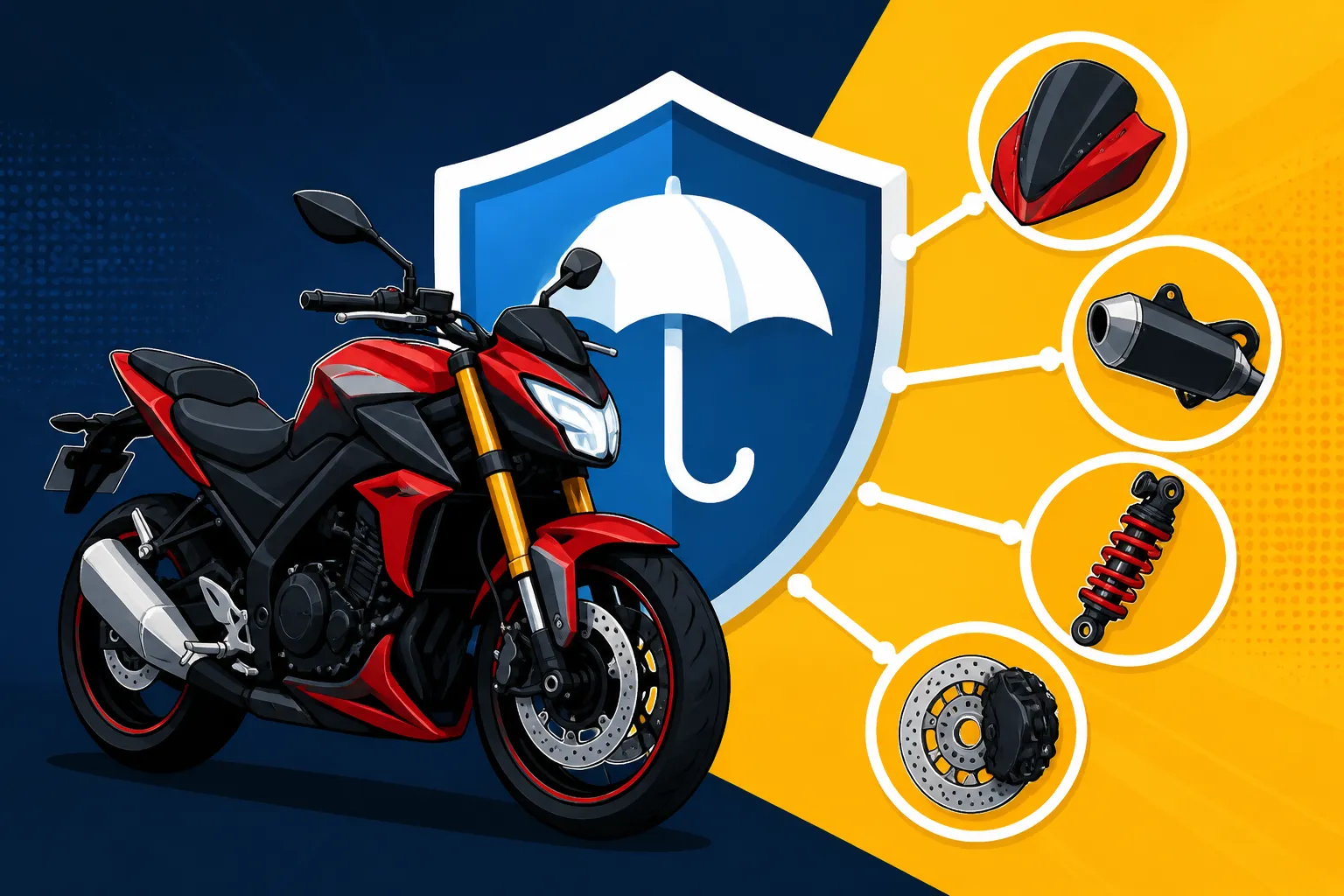
- Aesthetic upgrades: Custom paint, special chrome plating, unique fairings, custom fenders, aftermarket lighting (LEDs, HID kits), custom mirrors, and specialty decals.
- Performance enhancements: Aftermarket exhaust systems (like those from Akrapovič or Two Brothers Racing), engine tuning modifications, upgraded suspension (Öhlins, Progressive Suspension), performance air filters, and specialized brake components.
- Comfort and convenience: Custom seats (Mustang, Saddlemen), heated grips, GPS navigation units, advanced audio systems, custom handlebars, backrests, sissy bars, saddlebags, luggage racks, and even small, permanently attached trailers or sidecars.
Most policies offer a base amount of custom parts coverage automatically, often around $1,000 to $3,000, but this is usually far from enough for a truly customized bike. The real benefit comes from increasing this limit. You can typically increase your custom parts coverage to $10,000, $20,000, or even more, depending on your insurer and the value of your modifications. Insurers like Progressive and Dairyland are well-known for offering robust and easily customizable options for this type of coverage, often starting with a decent base and allowing for significant increases.
To ensure a smooth claims process, it's absolutely crucial to meticulously document all your custom parts. Keep original purchase receipts, installation invoices, detailed photos of your motorcycle before and after modifications, and even professional appraisals for particularly expensive or unique custom work. This evidence will be invaluable in proving the value of your customizations if you ever need to file a claim. Without proper documentation, it can be incredibly difficult to convince an adjuster of the true cost of your personalized features. This is also why understanding "How to Prove Your Bike's Value in a Total Loss Claim" is so important.
Exclusions and Important Considerations
While custom parts coverage is incredibly beneficial, it's not a blanket solution for everything. There are always exclusions and important considerations you need to be aware of:
- Wear and Tear/Mechanical Breakdown: This coverage won't pay for parts that simply wear out over time, require routine maintenance, or fail due to mechanical issues. It's for damage from covered perils like accidents, theft, fire, or vandalism. For example, if your custom engine modification fails due to a manufacturing defect, that’s not a custom parts claim.
- Items Not Permanently Attached: Generally, items that are easily removed or not permanently affixed to the motorcycle might not be covered. This could include things like a jacket in your saddlebag (though some insurers offer personal belongings coverage as an add-on) or a phone mounted in a non-permanent holder. You'll want to check if "Does Motorcycle Insurance Cover Riding Gear?" is an option you need.
- Track Use: If you use your motorcycle for racing or track days, custom parts coverage (and often your entire policy) might be voided for incidents that occur during those activities. Most standard policies explicitly exclude competitive riding.
- Stated Value vs. Agreed Value: For truly unique, high-dollar custom builds, especially those that are meticulously handcrafted or vintage, custom parts coverage might still fall short. In such cases, you might need to explore "Stated Value" or, even better, "Agreed Value" coverage. Agreed Value coverage means you and the insurer agree on a specific value for your bike before the policy is issued, and that's what you'll receive if it's totaled, regardless of depreciation. This is typically reserved for very high-value, rare, or professionally customized motorcycles, and it's different from standard custom parts coverage which is an add-on to ACV policies. Many insurance comparison platforms like The Zebra can help you understand these differences and find providers that offer these specialized coverages, such as Harley-Davidson Insurance for custom Harleys or Markel for various custom builds.
- OEM Parts Coverage: Some policies offer "OEM Parts Coverage," which ensures that if your factory original parts are damaged, they're replaced with brand-new Original Equipment Manufacturer parts, rather than aftermarket equivalents. This is different from custom parts coverage, which is specifically for items you've added after the factory build.
Getting the Right Coverage for Your Unique Bike
Securing the right custom parts coverage isn't just about adding a line item to your policy; it's about accurately valuing your investment and finding an insurer that truly understands and respects the individuality of your machine. It requires a bit of homework, but the peace of mind is absolutely worth it.
Assessing Your Customization Value
The first and most critical step is to get a realistic handle on exactly how much your custom parts are worth. This isn't just about what you paid for them initially, but what it would cost to replace them today. It's easy to lose track of expenses when you're adding bits and pieces over time, but this is one area where thoroughness pays off.
Start by creating a detailed inventory. Go through your bike section by section, listing every single modification and accessory. For each item, record:
- Purchase Date: When did you buy it?
- Purchase Price: How much did it cost, including shipping and installation?
- Receipts/Invoices: Keep digital and physical copies of everything.
- Photos: Take clear, close-up pictures of each custom part installed on your bike.
- Description: Be specific (e.g., "Vance & Hines Shortshots Staggered Exhaust System, Black" not just "new exhaust").
Add up these costs. You'll likely be surprised by the grand total! If you've had significant custom work done, like an extensive paint job or bespoke fabrication, consider getting a professional appraisal. A specialized motorcycle appraiser can provide an official document detailing the value of your customizations, which holds a lot of weight with insurance companies.
A common pitfall riders fall into is underinsuring their custom parts. They might think $5,000 sounds like a lot, but after adding up a new exhaust ($1,000+), custom paint ($2,000-$5,000+), upgraded suspension ($1,000-$2,500), and other accessories, that $5,000 limit can be quickly exhausted. Always err on the side of overestimating rather than underestimating, because once a claim is filed, you can't magically increase your coverage limit.
Here's a quick comparison of how a hypothetical claim might play out with and without custom parts coverage:
| Feature | Standard ACV Coverage Only | With Custom Parts Coverage ($10,000 Limit) |
|---|---|---|
| Bike Value | Depreciated value of a stock bike (e.g., $8,000 for a 5-year-old cruiser) | Depreciated value of a stock bike (e.g., $8,000) |
| Custom Paint | Not covered beyond minor touch-up, if any. | Covered up to cost of professional repaint (e.g., $3,000) |
| Aftermarket Exhaust | Replaced with cheapest stock equivalent or not covered. | Covered up to cost of new aftermarket exhaust (e.g., $1,200) |
| Custom Seat | Not covered. | Covered up to cost of new custom seat (e.g., $600) |
| Chrome Package | Not covered. | Covered up to cost of new chrome parts (e.g., $800) |
| Engine Mods | Not covered, might even void parts of original bike warranty. | Covered up to cost of replacement/repair (e.g., $2,500) |
| Total Payout (Estimate) | ~ $7,500 (bike less deductible) | ~ $8,000 (bike) + $8,100 (custom parts) = $16,100 (less deductible) |
Note: These are illustrative figures and depend on specific policy terms, deductibles, and actual damage.
Shopping for the Best Custom Parts Coverage
Once you have a solid estimate of your customization value, it's time to shop around. Don't just stick with your current insurer, especially if they don't seem to specialize in motorcycles. The world of motorcycle insurance is diverse, and some companies are far better equipped to handle custom bikes than others.
When getting quotes, be upfront and clear about your customizations. Ask specifically about "Custom Parts and Equipment" (CPE) coverage or "accessories coverage." You'll want to:
- Request Quotes from Multiple Providers: Don't settle for the first quote. Companies like Progressive, Dairyland, Markel, and even specialized insurers like Harley-Davidson Insurance often have excellent options for custom bikes. Using an online comparison tool like The Zebra can save you a ton of time by getting multiple quotes with this specific coverage in mind.
- Compare Coverage Limits and Costs: How much custom parts coverage can they offer? What's the additional premium for, say, $10,000 vs. $5,000 in coverage? Sometimes the cost difference for a significantly higher limit is surprisingly small.
- Understand Deductibles: Your custom parts coverage will typically have the same deductible as your comprehensive and collision coverage. Make sure you're comfortable with that amount.
- Inquire About Specifics: If you have very unique items (like a custom-built sidecar or antique modifications), ask detailed questions about whether those specific items are covered and if any special documentation is required.
- Review the Policy Document: Before signing on the dotted line, get a copy of the actual policy and read the sections pertaining to "Custom Parts and Equipment," "Accessories," or "Modifications." Confirm that your understanding matches the policy language. Don't be afraid to ask your agent for clarification on anything that's unclear. They are there to help you understand "What Your Motorcycle Coverage Do You Actually Need?"
Remember, your motorcycle is more than just transportation; it's an extension of your personality and a significant investment. Taking the time to secure adequate custom parts coverage ensures that every dollar, every hour, and every ounce of passion you've put into it is truly protected. This way, if the unthinkable happens, you won't face the double blow of losing your beloved ride and your financial investment in its unique identity.
Disclaimer
This article is for general informational purposes only and does not constitute professional advice. Laws, prices and regulations vary by location and change over time. Consult a qualified professional for guidance on your specific situation.