What Is Comprehensive Coverage on a Motorcycle?
You've just invested in your dream motorcycle, or perhaps you've been riding for years, and now you're faced with the often-confusing world of insurance. One term that pops up frequently is "comprehensive coverage," and it leaves many riders scratching their heads, wondering if it's truly necessary or just another expensive add-on. This guide is here to demystify comprehensive coverage, explaining exactly what it is, what it protects, and why it might be the peace of mind you need on and off the road.
What Exactly is Comprehensive Coverage for Your Motorcycle?
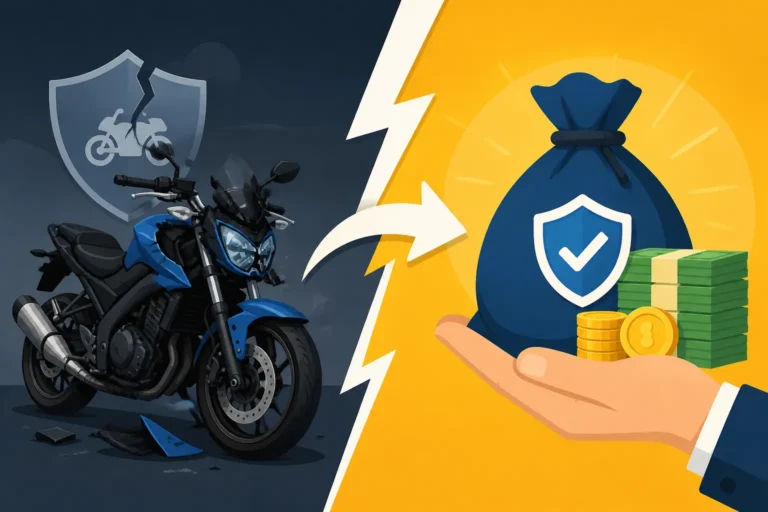
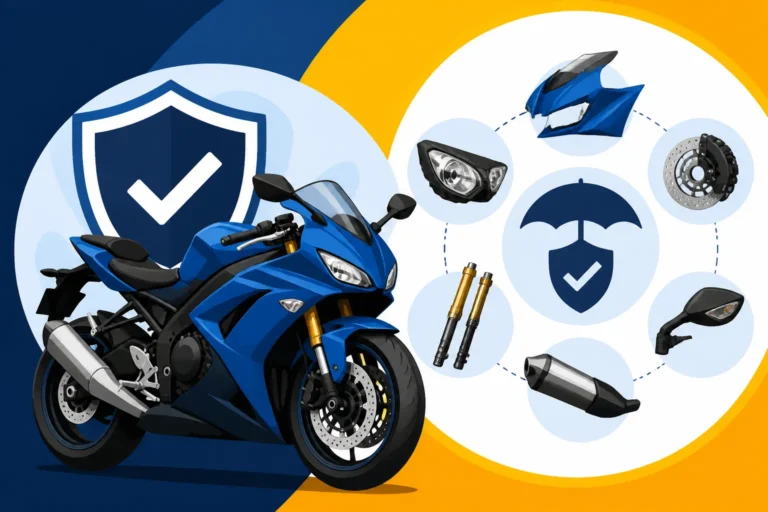
When you hear "motorcycle insurance," your mind probably jumps to accidents on the road. But what about all the other scary stuff that can happen when your bike isn't even moving, or when a collision isn't involved? That's precisely where comprehensive coverage steps in. Think of it as a safety net for everything other than a crash with another vehicle or object. It's designed to protect your financial investment in your motorcycle from a whole host of unpredictable, non-collision events that can still cause significant damage or even lead to total loss.
This type of coverage is often misunderstood, but for many riders, it’s a non-negotiable part of their policy. It’s about safeguarding your motorcycle from the 'what ifs' that keep you up at night, the perils that aren't tied to your riding skills or another driver's negligence. From the moment you park your bike at home after a long ride, to when it's tucked away for the winter, comprehensive coverage is quietly working in the background to provide a layer of protection that basic liability simply can't.
Beyond the Road: When Collisions Aren't the Cause
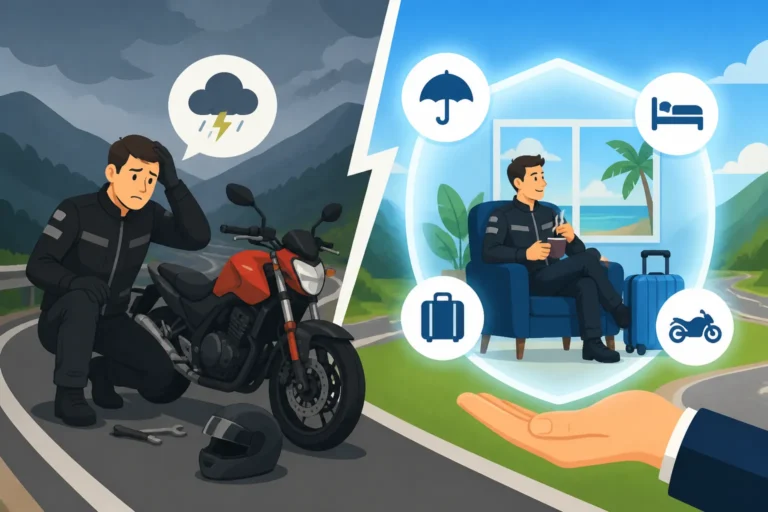
Imagine this scenario: You wake up one morning, eager to hit the twisties, only to find your motorcycle gone from your garage. Or perhaps a severe hailstorm suddenly rolls through, leaving dents and shattered fairings. These aren't scenarios where you've collided with another vehicle or even scraped a guardrail. These are events that happen completely outside of a traditional riding accident, and yet the financial impact can be just as devastating, if not more so, than a minor fender bender.
Standard collision coverage would address the damage if you crashed into another car or an inanimate object like a tree. But for these other, often equally costly, incidents, you need something different. Comprehensive coverage is specifically designed for these "other than collision" events. It's the type of protection that acknowledges that your motorcycle faces risks even when it's parked, stored, or simply minding its own business. Without it, you could be left footing the entire bill for a stolen bike or extensive weather damage, a financial hit no rider wants to face.
The Peace of Mind Factor: Why It's More Than Just a Requirement
While comprehensive coverage isn't typically required by state law, unlike liability coverage, it's often a requirement if you've financed your motorcycle. Lenders want to protect their asset, and they know that a bike can be stolen or totaled by a fire just as easily as in a crash. Beyond legal or lender mandates, however, the real value of comprehensive coverage often comes down to pure peace of mind.
Think about the investment you've made in your motorcycle – not just the upfront cost, but the accessories, the modifications, and the sheer joy it brings. Knowing that a sudden flood, a fire in your garage, or even a runaway shopping cart in a parking lot won't leave you with a gaping hole in your wallet provides an incredible sense of security. It frees you up to enjoy the ride, knowing that many of life's unpredictable misfortunes won't derail your passion. For many, this coverage isn't just a policy; it's a critical component of enjoying their motorcycle lifestyle without constant worry.
What Types of Incidents Does Comprehensive Coverage Typically Handle?
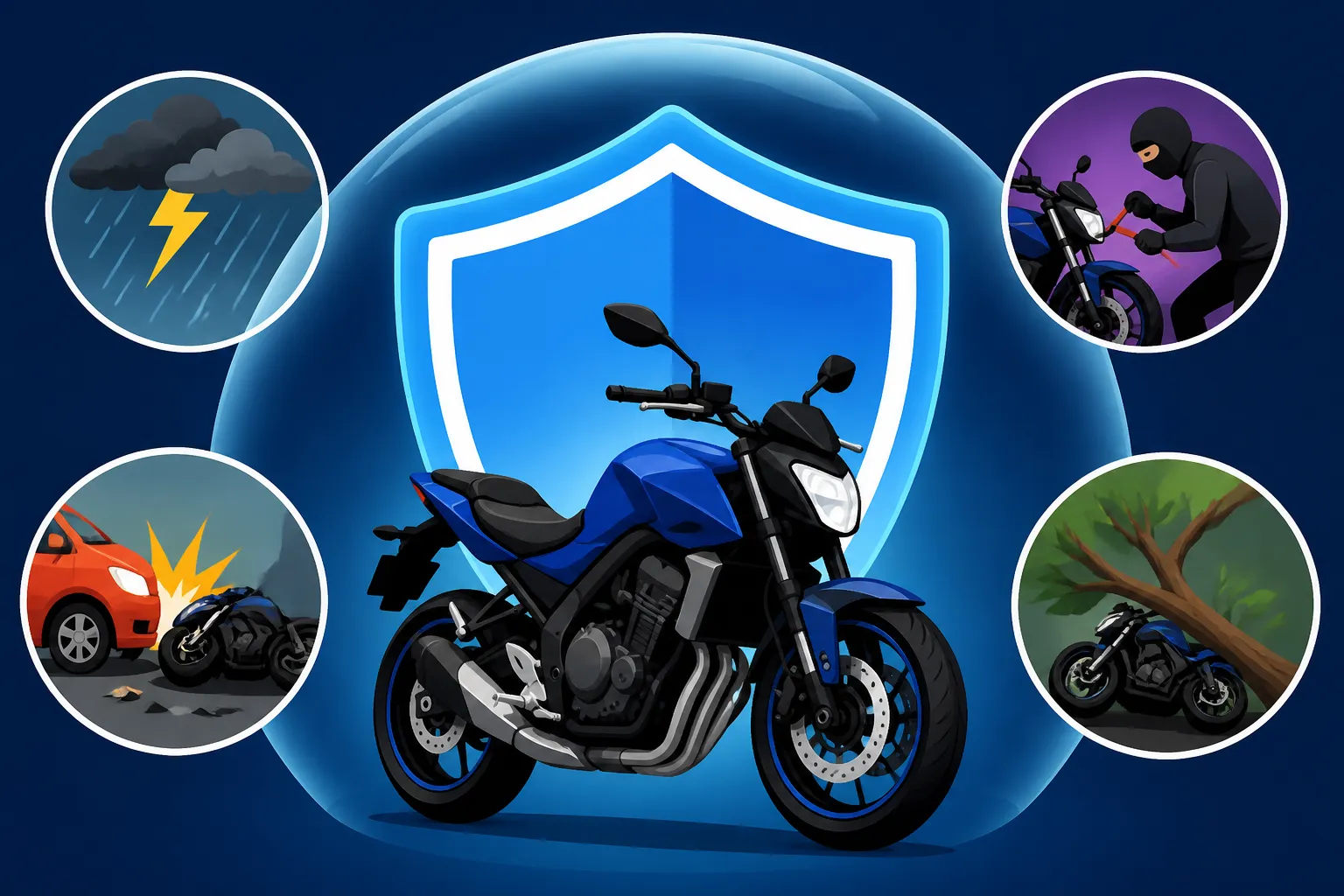
Comprehensive coverage is like your bike's personal bodyguard against a range of misfortunes that aren't related to hitting another vehicle or object. While the exact wording of policies can vary slightly between insurers like Progressive or Dairyland, the core types of perils covered remain fairly consistent across the board. This isn't about proving fault in an accident; it's about covering the cost of damage or loss from events that are largely out of your control. Understanding these common scenarios can help you see just how broad and beneficial this coverage can be.
Theft and Vandalism: Protecting Your Prized Possession
Few things sting a rider more than the discovery that their beloved machine has been stolen or maliciously damaged. Theft is a grim reality for motorcyclists, especially those with popular models or custom builds. If your motorcycle is stolen from your driveway in Phoenix or a public parking garage in Miami, comprehensive coverage is what will kick in to help reimburse you for its value, up to your policy's limits. It covers the actual cash value of your bike at the time of the theft, less your deductible. This can be a huge relief, allowing you to move forward and eventually get back on two wheels.
Similarly, if your bike is vandalized—say, someone scratches your paint job, slashes your tires, or breaks off mirrors while it's parked—comprehensive coverage will help pay for the repairs. This applies whether your bike is parked at a street festival in Austin or tucked away in a less-than-secure common garage. The emotional impact of such an incident is tough enough; comprehensive coverage ensures the financial burden doesn't add insult to injury. Without it, you'd be looking at potentially thousands in repair costs for something completely unprovoked.
Natural Disasters and Acts of God: Mother Nature's Fury
Mother Nature can be beautiful, but she can also be incredibly destructive. Comprehensive coverage offers a vital shield against the elements. If your motorcycle is damaged by a hail storm, like the fierce ones seen in parts of Colorado, comprehensive coverage will typically cover the cost of dent removal and fairing replacement. The same goes for flood damage, whether it's from a hurricane in Florida or a burst pipe in your basement. Fire, regardless of its source (e.g., a garage fire, wildfire, or even a sudden electrical fire not caused by a collision), is also usually covered.
Imagine your motorcycle parked safely in your garage, only for a severe windstorm to rip through your neighborhood, sending a tree branch crashing down on it. Or a wildfire erupts nearby, threatening everything in its path. These "acts of God" are entirely out of human control, yet they can reduce your meticulously cared-for machine to a write-off. Having comprehensive coverage means you won't have to shoulder the financial burden of these catastrophic events alone. This protection extends to events like earthquakes (though sometimes earthquake coverage is a separate add-on, it's often included or can be bundled).
Animal Collisions and Falling Objects: The Unexpected Hazards
Riding can be full of surprises, and not always the good kind. Encountering wildlife on the road is a common, and often terrifying, experience for motorcyclists. Hitting a deer in rural Pennsylvania, for example, can result in severe damage to your bike, not to mention potential injury to yourself. While it involves a "collision," hitting an animal is almost universally categorized under comprehensive coverage, not collision coverage. This distinction is crucial because the circumstances are different from colliding with another vehicle or stationary object. It's often viewed as an unavoidable hazard.
Beyond animals, comprehensive coverage also protects against damage from falling objects. Picture a scenario where a rock slides down a hill and strikes your bike, or even something as mundane as debris falling from a truck on the highway (if it doesn't involve a collision with the truck itself). Even if a tree branch falls on your parked bike, as mentioned earlier, that's a comprehensive claim. These are the kinds of unforeseen events that comprehensive coverage is designed to address, ensuring that the unexpected doesn't turn into a crushing financial burden.
How Comprehensive Differs from Other Key Motorcycle Coverages
Navigating the world of motorcycle insurance can feel like learning a new language. You hear terms like "comprehensive," "collision," and "liability," and it's easy to get them mixed up. But understanding the core distinctions between these types of coverage is paramount to building a policy that truly protects you and your ride. While they might all sound like they cover "accidents," they each tackle very specific kinds of incidents and financial responsibilities.
For a broader understanding of what different policies entail, you might find our guide on Types of Motorcycle Insurance Coverage Explained helpful. Knowing the subtle differences can literally save you thousands of dollars and countless headaches down the line, ensuring you have the right protection for every scenario.
Comprehensive vs. Collision: Knowing the Core Distinction
This is probably the most common point of confusion for riders. Both comprehensive and collision cover damage to your motorcycle, but the cause of the damage is where they diverge entirely.
Collision Coverage is pretty straightforward: it pays for damage to your motorcycle if it collides with another vehicle (like a car, another motorcycle, or even a bicycle) or an inanimate object (like a fence, a guardrail, a tree, or a light pole). If you're riding down a busy street in Los Angeles and rear-end someone, or if you accidentally scrape your bike against a mailbox while pulling out of your driveway, that's a collision claim. It's about direct impact with something else. It also covers damages if your bike overturns. Essentially, if you crash and something gets hit (or you hit something), collision coverage is your go-to.
Comprehensive Coverage, as we've discussed, covers pretty much everything else. Think of it as your "Acts of God and Misfortune" coverage. If your bike is stolen, vandalized, catches fire, is damaged by a flood, hurricane, or falling object, or even if you hit an animal, comprehensive coverage is what you'll use. The key here is that there's no "collision" with another vehicle or stationary object involved in the typical sense of the word. It’s the protection for your bike when the unexpected happens, but not necessarily because of a road accident involving impact with another vehicle or structure.
Here's a quick table to clarify:
| Scenario | Covered by Collision? | Covered by Comprehensive? |
|---|---|---|
| Hit another car | Yes | No |
| Hit a deer | No | Yes |
| Your bike is stolen | No | Yes |
| You hit a tree | Yes | No |
| Hail damage | No | Yes |
| Vandalism | No | Yes |
| Fire damage | No | Yes |
| Motorcycle overturns | Yes | No |
| Flood damage | No | Yes |
| Falling object damages bike | No | Yes |
Comprehensive vs. Liability: Protecting Yourself vs. Others
This distinction is even more fundamental. While comprehensive and collision coverage protect your motorcycle, liability coverage exists to protect other people and their property if you are at fault in an accident.
Liability Coverage is the minimum coverage required by most states, like what's needed for Motorcycle Insurance Requirements by State (2026 Guide). It consists of two main parts:
- Bodily Injury Liability: This pays for medical expenses, lost wages, and pain and suffering for anyone you injure in an accident where you are at fault.
- Property Damage Liability: This pays for damage to other people's property, such as their vehicles, fences, or buildings, if you cause an accident.
If you're involved in a crash and it's determined you were at fault, your liability coverage will step in to cover the costs for the other party, up to your policy limits. It does absolutely nothing to repair your own bike or cover your own medical bills. For example, if you cause an accident in Texas and damage another driver's car, your property damage liability would cover the repairs to their vehicle.
Comprehensive Coverage, in stark contrast, is entirely focused on your motorcycle and its value. It has nothing to do with whether you are at fault for an accident or with covering damages to other people. It's a first-party coverage, meaning it pays out to you (the policyholder) for specific types of damage or loss to your insured vehicle. It’s about protecting your asset, not your legal responsibility to others.
When You Might Need All Three: A Holistic Approach
For many riders, especially those with newer, more valuable, or financed motorcycles, a "full coverage" policy is the sensible choice. And what does "full coverage" actually mean? It typically means carrying a combination of liability, collision, and comprehensive coverage. This creates a robust shield of protection, covering:
- Your responsibility to others: With liability coverage, you're protected financially if you cause an accident.
- Damage to your bike in a crash: Collision coverage handles the repairs or replacement of your motorcycle if you hit something.
- Damage/loss to your bike from non-collision events: Comprehensive coverage takes care of theft, vandalism, natural disasters, and other unforeseen incidents.
This holistic approach means that regardless of how an incident occurs—whether it's a multi-vehicle pile-up on the highway, a hit-and-run in a parking lot, or your bike being stolen from outside your favorite diner—you have a specific type of coverage designed to address the damage or loss to your motorcycle and the financial repercussions to others. This comprehensive package gives you maximum protection and peace of mind. It’s why many recommend exploring What Does Full Coverage Motorcycle Insurance Mean? to ensure you're adequately covered.
Is Comprehensive Coverage Right for Your Ride? Factors to Consider
Deciding whether to add comprehensive coverage to your motorcycle insurance policy isn't a one-size-fits-all answer. It largely depends on a few key factors about your bike, your environment, and your personal financial situation. While it offers immense protection, it also adds to your premium, so it's a balance of risk and cost. Don't just blindly add it because someone said it's good; consider your specific circumstances to make an informed decision.
Many riders, when looking for the best policy, might use comparison sites like The Zebra to see how comprehensive coverage impacts their overall rates from various providers. This can give you a clear picture of the costs involved and help you weigh it against the potential benefits.
The Age and Value of Your Motorcycle
The most significant factor in deciding on comprehensive coverage is the value of your motorcycle.
- Newer, High-Value Bikes: If you've just bought a brand-new Harley-Davidson Softail or a high-performance sport bike like a Yamaha R1, comprehensive coverage is almost always a smart investment. These bikes represent a significant financial outlay, and losing one to theft or totaling it due to a fire would be a devastating financial blow. The cost of replacing parts, let alone the entire bike, can quickly climb into the tens of thousands. For financed bikes, as mentioned, it's typically required by the lender, and for good reason—they want to protect their investment.
- Older, Lower-Value Bikes: For older motorcycles that have significantly depreciated in value, the decision becomes a bit trickier. If your bike is only worth a couple of thousand dollars, paying a couple of hundred dollars a year for comprehensive coverage might not make financial sense. If the annual premium plus your deductible (say, $500) approaches or exceeds the bike's actual cash value, it might be more cost-effective to self-insure against these non-collision losses. However, remember that "value" can also include sentimental value and the cost of finding a comparable replacement.
- Custom and Vintage Motorcycles: This is a special category. For custom builds or vintage bikes, standard comprehensive coverage might not fully capture their unique value. You might need to explore options like Agreed Value vs Stated Value vs Actual Cash Value to ensure that if your custom chopper is stolen, you're reimbursed for its true worth, not just a depreciated market value. Companies like Markel specialize in these types of bikes and can offer tailored coverage that goes beyond typical comprehensive policies.
Your Riding Environment and Storage Solutions
Where you live, ride, and store your motorcycle plays a huge role in its exposure to comprehensive perils.
- High-Crime Areas: If you live in an area known for high rates of vehicle theft or vandalism, comprehensive coverage becomes extremely important. A bike parked regularly on the street in a busy urban center like Chicago or New York City is at a much higher risk of theft or damage from vandals than one stored in a secured garage in a quiet rural town. Even if you have security measures, comprehensive coverage acts as the ultimate backup.
- Exposure to Natural Disasters: Do you live in an area prone to specific natural disasters? Riders in Florida regularly face hurricane risks and associated flooding. Those in states like Oklahoma or Kansas contend with tornadoes and severe hail. California riders are mindful of earthquakes and wildfires. If your region frequently experiences such events, comprehensive coverage is invaluable protection against potential widespread damage to your motorcycle.
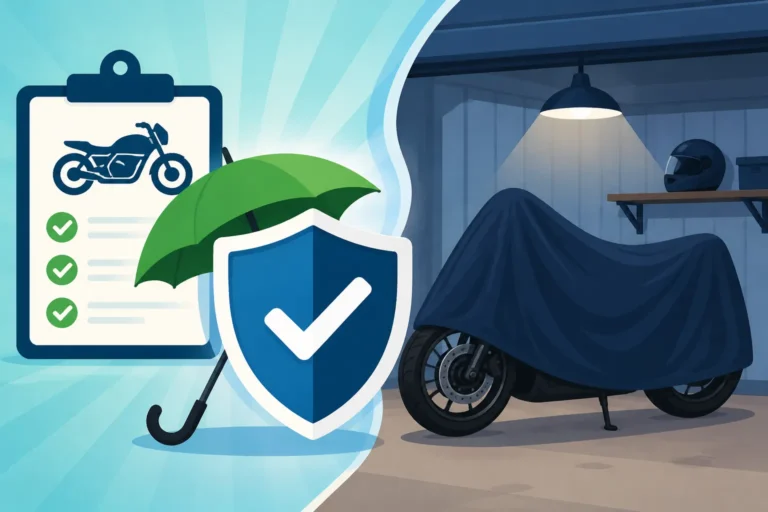
- Storage Conditions: How and where do you store your bike? If it's always in a locked, private garage, the risk of theft and vandalism is lower compared to parking it on the street or in a shared, unsecured parking structure. However, even a locked garage isn't immune to fire, flood, or a tree falling on it. If your bike is exposed to the elements or in a public area frequently, the argument for comprehensive coverage becomes much stronger. Even if you primarily store your bike for winter, having Do You Need Insurance to Store a a Motorcycle? and comprehensive coverage can still protect it from non-riding perils.
Your Financial Comfort Level and Risk Tolerance
Ultimately, your personal financial situation and how much risk you're willing to accept are critical deciding factors.
- High Risk Tolerance, Strong Financial Buffer: If you have a substantial emergency fund and could comfortably afford to repair or replace your motorcycle out-of-pocket if it were stolen, vandalized, or damaged by a natural disaster, you might decide to forgo comprehensive coverage. This is a personal choice, but it requires a realistic assessment of your financial resilience.
- Low Risk Tolerance, Limited Savings: For most riders, however, the financial hit of a stolen or totaled motorcycle would be significant. If replacing your bike would put a strain on your finances or require taking out a loan, comprehensive coverage offers a crucial safety net. The relatively small annual premium is a worthwhile investment to avoid a potentially devastating financial loss. Sites like The Zebra can help you quickly compare different policy options and see how comprehensive coverage affects your premium, allowing you to find a balance that fits your budget.
- Peace of Mind vs. Cost: It truly boils down to how much you value peace of mind. For some, the thought of their beloved motorcycle being stolen and having no financial recourse is enough to justify the cost. For others, particularly those on a tight budget or with very old bikes, the cost might outweigh the perceived benefit. When considering ways to reduce costs, you might also look into How to Get Cheap Motorcycle Insurance which includes exploring discounts, but never compromise essential coverage if it puts your finances at risk.
Remember, comprehensive coverage isn't just about the dollar amount; it's about protecting a significant investment and ensuring that unexpected events don't strip away your ability to enjoy the open road.
Disclaimer
Please remember that insurance policies can be complex and vary by provider and state. This article provides general information and insights into comprehensive motorcycle coverage. For precise details regarding your specific coverage, exclusions, and terms, always refer to your individual policy documents or consult directly with a licensed insurance agent. Laws and regulations are subject to change.