What to Do After Motorcycle a Deer Strike for Insurance
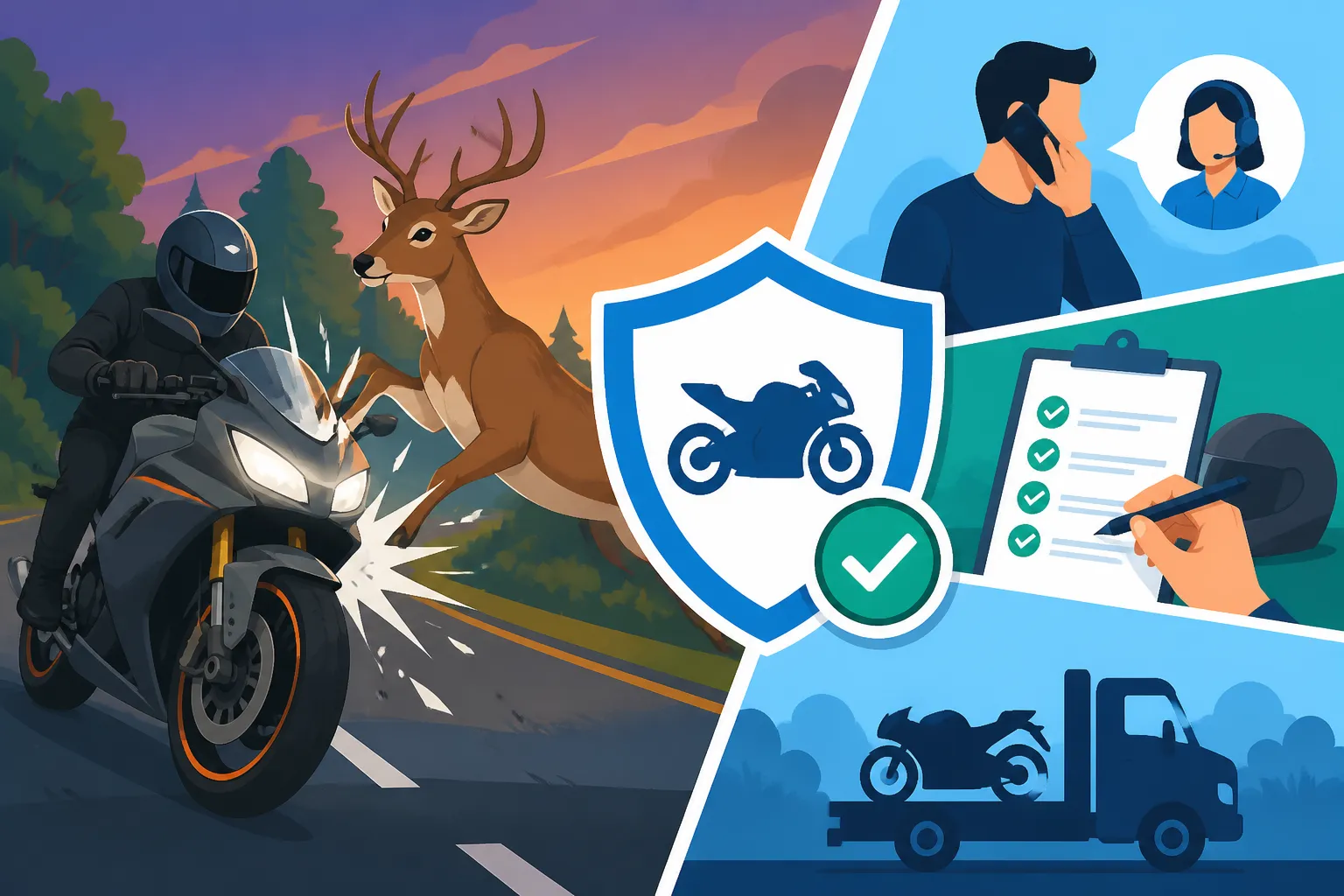
Picture this: you're out on the open road, wind in your face, just cruising, enjoying the ride. Suddenly, a flash of brown, a sickening thud, and before you know it, you and your bike are on the ground. A deer strike is every motorcyclist's nightmare, a terrifying and often unavoidable encounter that leaves you shaken, possibly injured, and definitely wondering what the heck to do next. This guide is here to walk you through the immediate aftermath, the confusing world of insurance claims, and how to pick up the pieces after a collision with wildlife.
Immediate Actions After a Deer Strike
That moment right after impact is a whirlwind of adrenaline, confusion, and possibly pain. It’s hard to think clearly, but taking the right steps immediately can make a massive difference in your safety and the smoothness of your insurance claim. Don't rush anything; focus on your well-being first, then systematically gather what you need.
Prioritizing Safety and Assessing Injuries
The very first thing, before you even think about your bike, is to check yourself and any passenger you might have had. Are you hurt? Are they hurt? Even if you feel fine in the initial shock, adrenaline can mask injuries. This isn't the time to be tough; it's the time to be smart about your health.
If you can safely move, try to get yourself and your bike (if it's not too damaged or blocking traffic) off the main road. If you're on a busy highway, that might mean just getting to the shoulder. Turn on your hazard lights. If you're injured, don't try to move too much. Signal for help if you can. It might seem like overkill if you just feel a bit bruised, but sometimes internal injuries aren't immediately apparent. A minor ache could turn into something more serious later, and having immediate medical attention documented will be invaluable. Remember, your health is non-negotiable. Don't let the stress of the moment prevent you from seeking professional help. Even a seemingly minor crash can lead to neck or back issues, or delayed symptoms of concussion.
Securing the Scene and Contacting Authorities
Once you've done a quick self-assessment, and assuming you're not severely injured, your next move is to call for help. Dial 911 immediately. Report the accident, specifying that it involved a motorcycle and an animal. The police will respond, and a police report is absolutely critical for your insurance claim. Without it, you might face an uphill battle proving the incident happened as you describe.
While waiting for law enforcement, if the deer is still in the roadway and posing a hazard to other drivers, and you can safely do so, you might consider attempting to move it or warn oncoming traffic. However, your safety comes first. Do not put yourself in further danger. If your bike is obstructing traffic, and you can safely move it to the side, do so carefully. Otherwise, leave it where it is until the authorities arrive. Resist the urge to pick up or try to ride your damaged motorcycle. It could have hidden structural damage that makes it unsafe to operate, or you might exacerbate your own injuries. Wait for professionals to assess the situation.
Documenting the Incident Thoroughly
This is where your smartphone becomes your best friend. Start taking pictures and videos. And I mean lots of them. Don't be shy. The more visual evidence you have, the better.
Capture the overall scene: the road conditions, any skid marks, the location of the deer (if it's still there), and the surrounding area. Then, get up close and personal with your bike. Document every angle of the damage – bent levers, scraped fairings, broken headlights, anything that looks out of place. Take photos of your gear too; a torn jacket or scuffed helmet can also be part of your insurance claim. If there are any witnesses, politely ask for their contact information. Their testimony could corroborate your account, especially if the deer disappeared after impact, which happens more often than you'd think. Make a mental note, or even better, jot down the exact time, date, and location of the incident. Note the direction you were traveling and any relevant road signs. These details might seem small, but they paint a clear picture for your insurance company.
Navigating the Insurance Claim Process
Once the immediate shock starts to wear off and you're dealing with injuries and a damaged bike, the next hurdle is the insurance company. This can feel like a daunting task, but understanding your coverage and knowing what to expect can ease the stress significantly.
Understanding Your Coverage Options
When it comes to animal strikes, this is where your comprehensive coverage really shines. Many riders mistakenly believe that if they hit an animal, it falls under their collision coverage. This is a common misconception, and it's super important to know the difference. What Is Comprehensive Coverage on a Motorcycle? provides a much deeper dive, but in short, comprehensive insurance covers damage to your motorcycle from non-collision events, such as theft, vandalism, fire, natural disasters, and yes, impacts with animals like deer. Collision coverage, on the other hand, is for accidents involving other vehicles or objects, or if you simply lay your bike down.
If you only have liability coverage, which only covers damages and injuries you cause to others, you'll unfortunately be on the hook for all repairs to your own bike and any medical bills yourself. This is why many experienced riders will tell you that a bare-bones liability policy isn't enough protection, especially given the unpredictable nature of wildlife. When considering your overall insurance needs, it's wise to think about What Motorcycle Coverage Do You Actually Need? to ensure you're protected against all common risks, including those pesky deer.
Contacting Your Insurance Provider
As soon as you're able, after taking care of your immediate safety and contacting authorities, get in touch with your insurance company. The sooner you report the incident, the better. You can usually do this through their app, website, or a simple phone call. When you call, be prepared to provide all the details you gathered: the date, time, exact location, police report number, and a clear description of what happened.
Don't speculate or admit fault, even if you feel you could have reacted differently. Stick to the facts. The representative will likely open a claim and assign an adjuster to your case. Companies like Progressive are known for their user-friendly claims processes, often allowing you to upload photos and documents directly through their online portal, which speeds things up considerably. If you're thinking about your policy options down the line, remember that using a comparison tool like The Zebra can help you understand how different providers handle claims and what their customer service reputation is like, which can be invaluable when you're in a stressful situation like this.
Working with the Adjuster and Repair Estimates
Once an adjuster is assigned, they'll be your main point of contact. Their job is to investigate the claim, assess the damage, and determine the payout. They might want to inspect your bike in person, or they might ask for detailed photos and repair estimates from approved shops. You'll need to cooperate fully and provide any requested documentation.
It's a good idea to get at least two or three repair estimates from reputable motorcycle repair shops. This helps ensure you're getting a fair price and can be used to negotiate with your adjuster if their initial assessment seems low. Be prepared for the possibility that your motorcycle could be deemed a total loss, especially if it's an older model or the damage is extensive. What Happens When Your Motorcycle Is Totaled? is a comprehensive read on this exact scenario. This decision is usually made when the cost of repairs exceeds a certain percentage of the bike's actual cash value. If your bike is totaled, the insurer will offer you a settlement based on its value immediately before the accident, minus your deductible. This can be a tough pill to swallow, especially if you have a strong emotional attachment to your machine, but it’s a common outcome for significant deer strikes.
Long-Term Recovery and Prevention
A deer strike isn't just a short-term headache; it can have lasting impacts on your riding experience, your wallet, and even your peace of mind. Thinking about the long game — from repairs to future insurance rates and prevention — is crucial for getting back on two wheels confidently.
Repairing Your Bike or Handling a Total Loss
If your bike is repairable, the next step is to get it fixed. Choose a shop you trust, ideally one specializing in motorcycles. They'll work with your insurance company to ensure the repairs are approved and completed to standard. Be proactive in communicating with both the shop and your adjuster to keep the process moving. For some riders, a total loss is an opportunity to upgrade or try a new model. For others, it's a heartbreaking end to their beloved machine. If your bike is declared a total loss, your insurer will issue you a check for its actual cash value, minus your deductible. This amount might not always be enough to buy a brand-new equivalent, especially if you had extensive custom parts or modifications not fully covered by your policy. Understanding things like Accessories & Custom Parts Coverage Explained before an incident occurs can help you ensure you have adequate protection for those cherished add-ons.
Deciding whether to take the payout or potentially buy the salvage title back and repair it yourself is a big decision, often depending on the extent of damage and your mechanical skills. Take your time, weigh the costs, and don't feel pressured into a quick decision.
Dealing with Potential Rate Changes and Future Premiums
One of the biggest anxieties after filing a claim is how it will affect your insurance rates. A comprehensive claim for an animal strike is generally viewed differently than an at-fault collision claim. Since hitting a deer is typically considered an "act of God" or an unavoidable incident, it usually has less impact on your premiums compared to an accident where you were deemed at fault. However, every insurance company is different, and multiple comprehensive claims could still see your rates increase.
It's always a good idea to shop around for insurance, especially after a claim. Don't assume your current provider will still offer the best rate. You might find better deals by comparing quotes from different companies. Tools like The Zebra or directly checking with providers like Progressive can help you see what's out there. Look for discounts you might qualify for, such as those for experienced riders, completing a safety course, or bundling policies. This is also a perfect time to reassess your overall coverage needs and consider if increasing your deductible for a lower premium makes sense, or if you need more coverage in specific areas. Regular review of your policy can save you money and ensure you're getting the best value.
| Action Category | Immediate On-Scene Actions | Post-Accident Insurance Steps |
|---|---|---|
| Safety First | Check yourself and passengers for injuries. | Seek professional medical evaluation for any discomfort. |
| Scene Management | Move to a safe location if possible; activate hazard lights. | No direct action, but police report is critical. |
| Authorities | Call 911 for police and medical assistance. | Provide police report number to your insurer. |
| Documentation | Take extensive photos/videos of bike, scene, deer, injuries. | Submit photos/evidence to insurance company. |
| Witnesses | Collect contact information from any witnesses. | Provide witness details to your insurance adjuster. |
| Initial Report | Note date, time, location, direction of travel. | Report claim to insurer as soon as safely possible. |
| Coverage Check | Mental check if you have comprehensive coverage. | Confirm comprehensive coverage applies with adjuster. |
| Damage Assessment | Initial visual assessment of bike damage. | Work with adjuster for detailed damage assessment and repair quotes. |
| Future Planning | Not primary focus, but thoughts may turn to repairs. | Decide on repairs or total loss settlement; consider future rates. |
Strategies for Deer Strike Prevention
While deer strikes can feel entirely random, there are definitely proactive steps you can take to minimize your risk. Riding defensively is always the name of the game, but when it comes to wildlife, it takes on a whole new dimension. Deer are most active at dawn and dusk, which often coincides with commuting times. Be extra vigilant during these hours, especially on rural roads or areas bordering wooded or open fields. Pay attention to "deer crossing" signs; they're there for a reason!
Scan the shoulders of the road and the treelines, not just the road directly in front of you. Where there's one deer, there are often more. If you see one, assume others are nearby. Be prepared to slow down. High beams can help illuminate the road ahead in dark conditions, but be mindful of blinding oncoming traffic. Some riders swear by deer whistles or other aftermarket devices, but their effectiveness is widely debated and not scientifically proven. The best defense remains attentive, defensive riding and reducing your speed in high-risk areas. Remember, your reaction time is crucial. Maintaining a safe following distance from other vehicles gives you more space and time to react if a deer darts out. While you can't prevent every possibility, being aware and prepared can significantly reduce your chances of a devastating encounter.
Disclaimer
The information provided in this article is intended for general informational purposes only and does not constitute legal or insurance advice. Every accident and insurance policy is unique. It is crucial to consult directly with your insurance provider and, if necessary, legal professionals, to understand the specifics of your coverage and rights following a motorcycle deer strike.