How Do I Handle an Out-of-State Motorcycle Accident Claim?
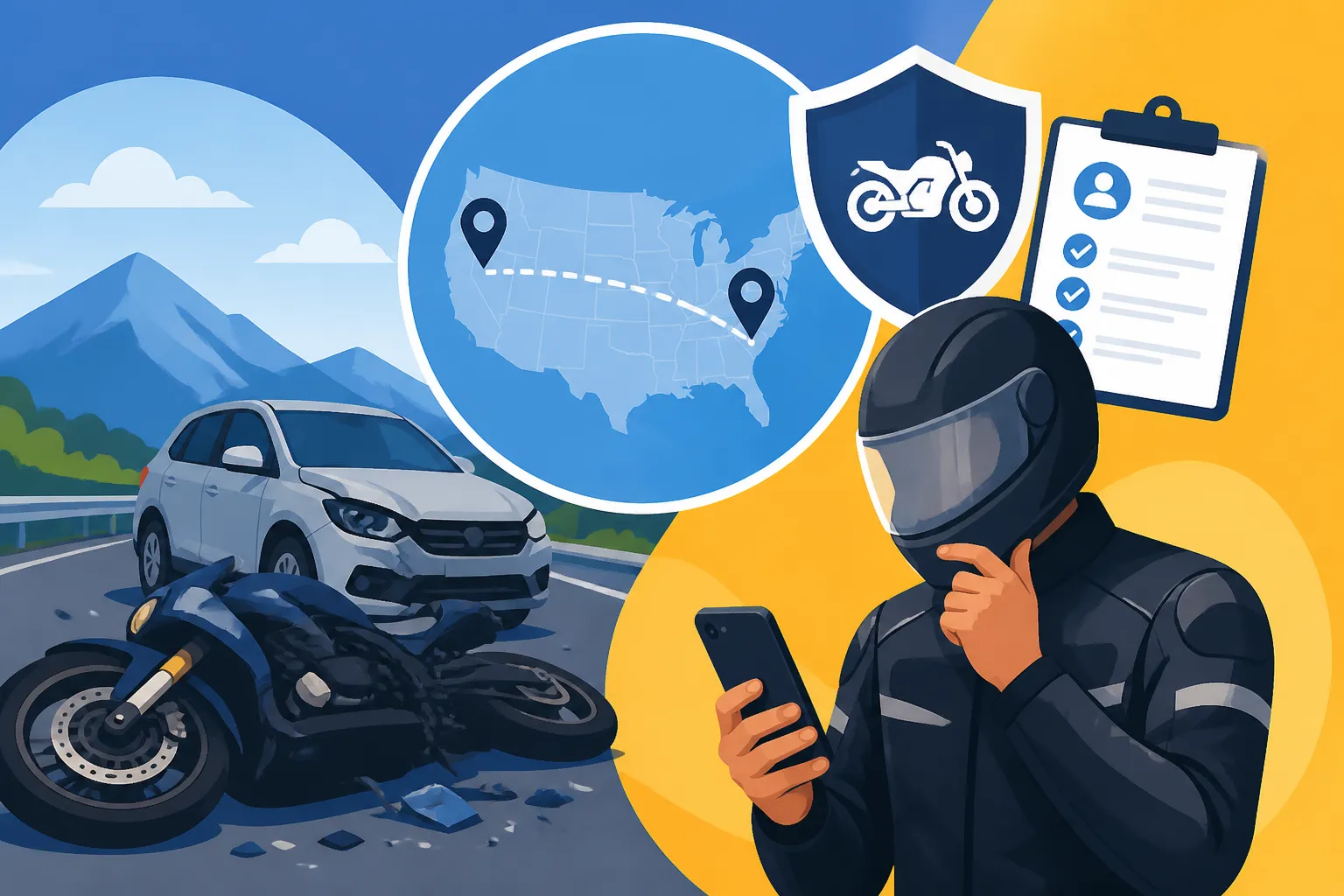
Riding your motorcycle out of state, exploring new roads and landscapes, is one of the greatest joys of being a rider. But let's be honest, the thought of getting into an accident far from home, in an unfamiliar state, can send a shiver down anyone's spine. It adds a whole new layer of stress and confusion to an already terrible situation. This guide is here to walk you through exactly what to do if you find yourself in the challenging position of needing to handle an out-of-state motorcycle accident claim, making sure you know your rights and responsibilities every step of the way.
Immediate Steps After an Out-of-State Motorcycle Accident
When the unthinkable happens, and you're involved in a motorcycle accident while cruising through another state, the immediate aftermath can feel incredibly disorienting. You're hurt, shaken, and suddenly dealing with local laws and procedures you might not understand. It's tough, but keeping a clear head and following these steps can make a huge difference in the long run.
Prioritize Safety and Seek Medical Attention
First and foremost, your safety and well-being are paramount. If you're able to move, get yourself and your bike (if possible and safe) out of the flow of traffic. Roadside assistance can be a lifesaver in these moments, and many insurance policies, like those offered by Progressive, often include it as an add-on. Even if you feel okay, it's crucial to seek medical attention. Adrenaline can mask injuries, and a medical record is vital for any future insurance claim. Don't try to tough it out; get checked by paramedics or at the nearest urgent care center. Your health is not something to gamble with, especially when you're away from your usual doctors.
For a comprehensive checklist of initial actions, you might find our guide on what to do after a motorcycle accident (insurance steps) helpful, even if it's generally aimed at local incidents.
Contact Local Law Enforcement and Gather Information
Even for what seems like a minor fender-bender, always call the police when you're out of state. A police report is an official, unbiased record of the incident and will be invaluable for your insurance claim. When the officers arrive, make sure they document everything, including road conditions, witness statements, and any citations issued.
While waiting for law enforcement, or immediately after they've secured the scene, start gathering information. This includes:
- The other driver's details: Name, contact information, driver's license number, and insurance policy details. Get their insurance company name and policy number.
- Vehicle information: Make, model, license plate number, and VIN of all vehicles involved.
- Witness information: Names and contact details of anyone who saw the accident.
- Photos and videos: Document the scene extensively. Take pictures of your bike's damage, the other vehicle's damage, road conditions, traffic signs, skid marks, and anything else relevant. Capture different angles and distances.
- Police report number: Make sure you get the incident number so you can request a copy of the report later.
This might feel overwhelming, especially if you're injured, but try your best to collect as much as you can. A detailed collection of evidence will strengthen your claim significantly, regardless of which state the accident occurred in.
Navigating the Insurance Claim Process When Out-of-State
This is where things can get a bit murky. You're dealing with your own insurance company, potentially an insurance company from another state, and different sets of rules. It's enough to make your head spin, but understanding the basics can help immensely.
Notifying Your Insurance Company Immediately
As soon as you're safe and have gathered initial information, call your own motorcycle insurance provider. Don't wait until you get home. Many policies require timely notification of an accident. Explain clearly that the accident happened out of state, providing all the details you've collected.
Your insurance company will guide you on the next steps, which may include arranging for your motorcycle to be towed to a repair shop or storage facility in the accident state, or even back to your home state if feasible. They'll also likely assign an adjuster to your case. Be prepared to answer a lot of questions and be as thorough as possible. Remember, your insurer is there to help you, but they also need accurate information to process your claim efficiently.
Understanding Which State's Laws Apply
This is often the most confusing part. Generally, the laws of the state where the accident occurred (the "lex loci delicti" in legal terms) will govern how fault is determined and the types of damages you can recover. This means that if you're from Florida and have an accident in Georgia, Georgia's laws, including its minimum liability insurance requirements, will likely apply to the accident itself.
However, your own insurance policy, issued in your home state, will dictate the coverage available to you. So, while Georgia's laws might determine who was at fault and what compensation is possible, your Florida policy will be the one paying out for your damages (up to your policy limits), potentially through collision or comprehensive coverage, and through bodily injury liability if you were at fault.
This dual-layer system can be tricky. It's why it's so important to have robust coverage, including Uninsured & Underinsured Motorist Coverage (UM/UIM) and Medical Payments (MedPay) for Riders, because you can't control the insurance choices of other drivers on the road, especially in unfamiliar states.
Dealing with Multiple Adjusters and Potential Subrogation
In an out-of-state accident, you might find yourself communicating with multiple insurance adjusters: one from your own company and one from the other driver's company (if they have one and are found at fault). Your adjuster will be your primary point of contact and advocate. They will communicate with the other driver's insurance company on your behalf.
If the other driver is found at fault, their insurance is generally responsible for your damages. However, your own insurance might pay for your repairs first (through your collision coverage) and then seek reimbursement from the at-fault driver's insurer. This process is called subrogation. It means your company essentially steps into your shoes to recover the money they paid out to you, including your deductible. This can be a relief, as it often means you get your bike repaired faster.
Specific Coverages That Are Critical for Out-of-State Riding
Having the right motorcycle insurance coverage isn't just about meeting your home state's Motorcycle Insurance Requirements by State (2026 Guide); it's about protecting yourself no matter where your ride takes you. When you venture out of state, certain coverages become even more critical.
Liability Coverage and Reciprocity
Your liability coverage, which covers damages you cause to others, generally travels with you throughout the United States and Canada. This is a huge relief. However, each state has its own Minimum Liability Insurance Explained (The Three Numbers). If your home state's minimums are lower than the state where the accident occurred, your policy typically automatically adjusts to meet the higher minimums of the accident state. This is known as "reciprocity."
For example, if you live in a state like Washington, where minimums might be 25/50/10, but have an accident in a state like Maine with higher minimums, your policy would cover you up to Maine's minimums. It won't increase your overall policy limits beyond what you purchased, but it ensures you're compliant with local laws. This is a critical detail that many riders overlook until they're in a bind.
Here’s a simplified breakdown of how liability might apply in different scenarios:
| Scenario | Your State's Liability Minimums | Accident State's Liability Minimums | Coverage Applied |
|---|---|---|---|
| Your State's > Accident State's | Higher | Lower | Your purchased higher limits apply. |
| Your State's < Accident State's | Lower | Higher | Your policy automatically adjusts to meet the accident state's minimums for that specific incident, up to your policy's maximum limits. This ensures legal compliance, but you're still bound by your original maximums if damages exceed the accident state's minimum. |
| Your State's = Accident State's | Same | Same | Your purchased limits apply. |
| No-Fault vs. At-Fault State Differences | Varies | Varies | Your policy will adhere to the accident state's fault system for determining who pays for injuries and damages. |
This table highlights why understanding your policy's limits and the laws of any state you plan to ride through is so important.
Uninsured/Underinsured Motorist (UM/UIM) Coverage
This is perhaps the most important coverage for out-of-state travel. You have no control over other drivers, and there are still states that don't require motorcycle insurance or have very low minimums. If you're hit by an uninsured driver, or one whose liability limits are too low to cover your injuries and damages, your UM/UIM coverage can step in.
It pays for your medical bills, lost wages, and pain and suffering up to your policy's limits. Without it, you could be facing substantial out-of-pocket costs or a long, arduous legal battle against someone who simply can't pay. I cannot stress enough how vital this coverage is, especially when riding in areas where you don't know the local driving population or their insurance habits. It's your financial safety net against negligent and uninsured drivers.
Collision and Comprehensive Coverage
While liability protects others, collision and comprehensive coverage protect your motorcycle itself.
- Collision coverage pays for damages to your bike if you hit another vehicle or object, or if you lay your bike down, regardless of who is at fault.
- Comprehensive coverage handles damages not caused by a collision, such as theft, vandalism, fire, natural disasters, or hitting an animal.
When you're out of state, these coverages ensure that your motorcycle can be repaired or replaced. Imagine being hundreds of miles from home with a totaled bike and no way to get it back or fixed. These coverages literally save the day. For more information on what exactly these policies cover, check out our guide to Types of Motorcycle Insurance Coverage Explained.
Potential Challenges and How to Overcome Them
Dealing with an out-of-state motorcycle accident is fraught with unique challenges. It’s not just about the paperwork; it’s about being away from your support system and familiar resources.
Dealing with Unfamiliar Local Systems
Everything feels different when you're away from home. The local police department, the towing companies, the repair shops—none of them are familiar. You might not know which body shops are reputable or how much local towing charges. Your insurance company can often help here, leveraging their network of preferred providers. Companies like Progressive have extensive networks across the country. Don't be afraid to ask your adjuster for recommendations or assistance in finding reliable services.
You might also encounter different legal procedures or timelines for filing claims. While your insurer is handling much of the heavy lifting, staying informed about the accident state's general rules can be beneficial. Resources like The Zebra can help you understand state-specific insurance and accident laws, providing valuable context.
Communication Barriers and Delays
Trying to coordinate medical care, bike repairs, and insurance claims from a distance can be incredibly frustrating. Time zone differences, unfamiliar phone numbers, and simply not being there in person can lead to communication breakdowns and delays.
- Be proactive: Follow up regularly with your insurance adjuster, medical providers, and repair shops.
- Keep detailed records: Document every phone call, email, and conversation. Note down who you spoke with, when, and what was discussed.
- Utilize technology: Use email for written records, and video calls if possible for visual assessments of damage or discussions with local contacts.
Patience is key, but persistence pays off. Don't let your claim fall through the cracks just because you're out of sight.
The Need for Local Legal Counsel
In serious accidents involving significant injuries or disputes over fault, you might need legal representation. While your local attorney might be able to offer some initial advice, it’s often best to find an attorney licensed to practice in the state where the accident occurred. They will be intimately familiar with that state's specific laws, courts, and legal precedents.
Your insurance company may have recommendations for local counsel, or you might need to research attorneys specializing in personal injury or motorcycle accidents in that specific state. A local attorney can help navigate complex legal procedures, negotiate with the other party's insurance, and ensure your rights are protected under the local jurisdiction. This is particularly crucial if you're dealing with a "no-fault" state versus an "at-fault" state, as the legal ramifications can differ significantly.
What to Do if You Get a Ticket or Citation Out-of-State
Receiving a traffic citation after an accident, especially when it's out of state, can be another headache. Not only could it impact your insurance rates, but dealing with an unfamiliar court system is no fun.
Understanding the Implications for Your Record
An out-of-state traffic ticket or citation will almost certainly follow you back to your home state. Most states share driver information through interstate compacts, meaning points could be added to your driving record, and your insurance company will likely be notified. This could lead to an increase in your motorcycle insurance premiums. If the citation is severe enough, it could even trigger an SR-22 requirement, which can significantly drive up your costs.
Options for Handling the Citation
Your options for handling an out-of-state citation are generally similar to those you'd have at home, but with added logistical challenges:
- Pay the fine: If it's a minor infraction and you don't want the hassle, you can often just pay the fine. Be aware this usually means admitting guilt, and it will go on your record.
- Contest the ticket: If you believe you were wrongly cited or want to mitigate the impact, you can contest it. This will likely require you to appear in court in the state where the citation was issued, which means travel and time off work. You might consider hiring a local traffic attorney who can appear on your behalf, or at least advise you on the local court procedures.
- Traffic school: Some states may offer traffic school as an option to dismiss the ticket or prevent points from appearing on your record. Eligibility varies widely, so inquire with the court in the accident state.
Always check with your insurance company to understand how specific citations might affect your rates. Sometimes, even a seemingly small ticket can have ripple effects on your policy.
Documentation and Follow-Up: The Long Game
An out-of-state accident claim isn't a sprint; it's a marathon. Maintaining meticulous records and diligently following up are paramount for a successful resolution.
Keeping Meticulous Records
From the moment the accident happens until your claim is fully resolved, every piece of documentation is important. This includes:
- All correspondence: Emails, letters, and detailed notes from phone calls with insurance adjusters, attorneys, medical providers, and repair shops.
- Medical records: Copies of all doctor's visits, diagnoses, treatment plans, prescriptions, and medical bills.
- Repair estimates and invoices: Any documents related to your motorcycle's damage assessment and repair costs.
- Police reports: The official report from the local law enforcement agency.
- Witness statements: Any written statements from witnesses.
- Proof of expenses: Receipts for anything related to the accident, such as alternative transportation, lodging if stranded, or even specialized riding gear replacement if covered.
Organize these documents in a dedicated folder, either physical or digital. This will make it much easier to refer back to details, track progress, and provide information when requested. Remember, the more organized you are, the smoother the process will be.
Consistent Follow-Up with All Parties
Don't assume everything is moving along without your input. Insurance companies, medical offices, and repair shops all have many cases to handle. It's up to you to be your own advocate and ensure your claim doesn't get lost in the shuffle.
- Schedule regular check-ins: Ask your insurance adjuster for a timeline and schedule follow-up calls or emails.
- Confirm next steps: After every conversation, confirm what the next steps are and who is responsible for them.
- Don't hesitate to escalate: If you feel your claim isn't being handled promptly or fairly, don't be afraid to ask to speak with a supervisor at your insurance company.
While it's a hassle, being actively involved in your claim, even from afar, helps keep it moving forward and ensures your best interests are being represented. Whether you're dealing with Motorcycle Registration Without Insurance: Possible? issues for the other party or simply waiting for repair estimates, proactive communication is your best tool.
Riding across state lines is an adventure, but being prepared for potential pitfalls, like an out-of-state accident, allows you to truly enjoy the journey with peace of mind.
Disclaimer
Please remember that this article provides general information and guidance regarding motorcycle insurance and accident claims. Insurance policies and state laws vary significantly, and the information presented here should not be considered legal or financial advice. Always consult with your insurance provider and, if necessary, a qualified legal professional for advice tailored to your specific situation and the laws of the relevant state.