Triumph Bonneville Insurance Cost
Trying to figure out how much it'll cost to insure that beautiful Triumph Bonneville can feel like you're trying to solve a puzzle with half the pieces missing. You've fallen in love with its classic lines and smooth ride, but the last thing you want is a sky-high insurance premium eating into your riding budget. This guide is all about breaking down the real factors that influence Triumph Bonneville insurance costs and helping you understand what to expect when you go to get a quote.
Understanding Triumph Bonneville Insurance Costs
When you're looking at insuring a Triumph Bonneville, it's not just about the bike itself. Insurance companies look at a whole host of variables, from who you are as a rider to where you live and what kind of coverage you're seeking. It can feel like a labyrinth, but once you understand the key players, it makes a lot more sense why one person pays more or less than another.
Rider Demographics and Experience
Let's be honest, insurance companies love predictability, and your personal profile gives them a lot to predict with. Your age, how long you've been riding, and your driving record are massive factors that can swing your premium significantly. A younger rider, say someone in their early 20s, with only a year or two of riding experience, will almost always face higher rates. This isn't because they're necessarily bad riders, but because statistics show younger, less experienced riders are involved in more accidents. On the flip side, a seasoned rider in their 40s or 50s with decades of clean riding under their belt is seen as a much lower risk, and their premiums often reflect that.
Beyond age and experience, your riding history is scrutinized. Have you had any accidents, even minor ones? Any speeding tickets or other moving violations? These blemishes on your record signal to insurers that you might be a higher risk, and they'll adjust your premium accordingly. Even something as seemingly unrelated as your credit score can play a role in many states, as insurers sometimes use it as a proxy for financial responsibility. Lastly, where you park your Bonneville matters. Living in a high-theft urban area versus a quiet rural town will definitely impact your comprehensive coverage costs.
The Bonneville Itself Model, Year, CC
The specific Triumph Bonneville you own plays a huge role in its insurance cost. While Bonnevilles are generally considered more "standard" or "cruiser-type" bikes than high-performance sport bikes, there's still a range within the family. A classic T100 or T120, for example, might have different risk profiles than a more performance-oriented Speed Twin or a custom Bobber. The engine displacement (CC) is a common metric insurers use; generally, a higher CC can lead to a slightly higher premium because larger engines often imply more power and potentially higher speeds, though the Bonneville range generally doesn't push into extreme sport bike territory.
The year of your Bonneville also matters. A brand-new 2024 model will typically cost more to insure for comprehensive and collision coverage than a 2018 model, simply because a new bike costs more to repair or replace if it's damaged or stolen. Parts for newer models can be more expensive, and the bike's overall value is higher. Customizations and modifications can also significantly increase your premium. If you've put a lot of aftermarket parts, a new exhaust, or custom paint on your Bonneville, you'll need to declare these to your insurer and get specific coverage for them, which naturally adds to the cost. For an even deeper dive into how your bike affects costs, check out our guide on how to determine your Motorcycle Insurance Cost by Bike Type.
Coverage Choices and Deductibles
This is where you have a lot of control over your Bonneville's insurance cost. The types of coverage you choose and your deductible amounts will directly impact your premium. Basic liability coverage, which covers damages and injuries you might cause to others, is almost always the cheapest option but offers no protection for your own bike. Then you have comprehensive and collision coverage, which protect your Bonneville from theft, vandalism, weather damage, and damage from an accident, regardless of fault. These are crucial if your bike is newer or financed.
Beyond the basics, there are a host of optional coverages. Think about things like uninsured and underinsured motorist coverage, which is incredibly important because not everyone on the road carries adequate insurance. Medical payments coverage, roadside assistance, and coverage for custom parts and accessories are also options. The more coverage you add, the higher your premium will be, but it also means greater peace of mind. Your deductible, which is the amount you pay out-of-pocket before your insurance kicks in for comprehensive and collision claims, also affects your premium. A higher deductible means a lower premium, but it also means you'll pay more upfront if you have to file a claim. It's a balancing act between managing your monthly costs and your potential out-of-pocket expenses.
Average Insurance Costs for a Triumph Bonneville
Pinning down an "average" cost for Triumph Bonneville insurance is tricky because, as we've just discussed, so many factors are at play. However, we can talk in generalities and look at how different scenarios might play out. Remember, these are estimates, and your personal quote will vary.
State-by-State Variations
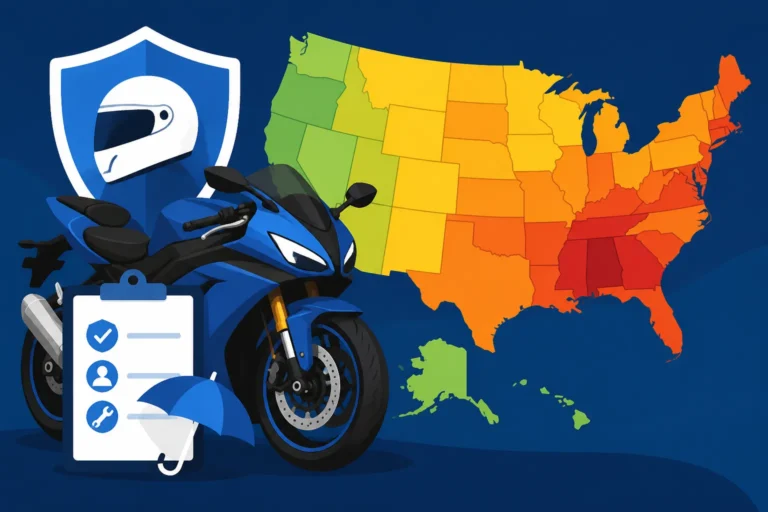
Just like with car insurance, motorcycle insurance costs can vary wildly from state to state, even for the same rider and bike. States like California and Florida, with high populations, dense traffic, and longer riding seasons, tend to have higher average premiums. This is often due to a higher frequency of accidents, higher repair costs, and more theft. For example, insuring a Bonneville in Los Angeles will likely be more expensive than in a quieter part of Kansas. States also have different minimum liability requirements, which can influence the baseline cost. For riders wondering about specific mandates, our article on Motorcycle Insurance Requirements by State (2026 Guide) is a great resource.
On the other hand, states with shorter riding seasons or lower population densities might see lower average costs. The regulatory environment of each state also plays a role, with some states having more stringent insurance regulations than others. For instance, Michigan's no-fault laws for automobiles can sometimes impact how motorcycle policies are structured and priced there, too. It’s always critical to know your specific state's rules, as riding without proper coverage can lead to severe Penalties for Riding Without Insurance.
Impact of Rider Profile on Averages
Let's illustrate how rider profiles can drastically alter the average cost.
Consider two hypothetical Bonneville owners:
- Rider A: A 22-year-old male, newly licensed, with a clean record, riding a 2023 Triumph Bonneville T120 in a suburban area of Texas, with minimum liability, comprehensive, and collision.
- Rider B: A 48-year-old female, 25 years of riding experience, spotless record, riding a 2018 Triumph Bonneville Street Twin in a rural area of Oregon, with full coverage including uninsured motorist and roadside assistance.
Even though Rider B has more comprehensive coverage, her age and extensive experience often make her a lower risk in the eyes of insurers. Rider A, despite having a slightly older model, faces the statistical reality of being a younger, less experienced rider, which often translates to higher premiums, especially for full coverage. It's not uncommon for Rider A's premium to be two or even three times higher than Rider B's, simply due to their respective age and experience profiles. This is why when you see an "average" cost, it's really just a midpoint that rarely applies perfectly to any single individual. Services like The Zebra can help illustrate these differences by providing comparative quotes.
Comparing Different Bonneville Models
Within the Triumph Bonneville family, there are several distinct models, and each carries its own risk assessment. While all are generally not classified as "sport bikes," there are subtle differences:
- Triumph Bonneville T100/T120: These are the quintessential classic cruisers. They typically have a moderate engine size and are often ridden at more relaxed speeds. Insurance costs for these models usually fall into the mid-range for motorcycles, often lower than sport bikes but higher than entry-level cruisers.
- Triumph Street Twin/Speed Twin: The Street Twin is a more modern, accessible take on the Bonneville, often a good choice for newer riders. The Speed Twin, with its more powerful engine and performance-oriented design, might nudge insurance costs slightly higher due to its greater horsepower.
- Triumph Bonneville Bobber/Speedmaster: These models offer a more custom, laid-back cruiser aesthetic. They can sometimes be slightly more expensive to insure if their unique styling or higher price point increases the cost of repairs or theft risk.
Generally, a new Triumph Bonneville T120 might cost a 40-year-old rider in Ohio with a clean record around $400-$800 annually for a solid full coverage policy, while a 20-year-old with the same bike in Florida could see rates upward of $1,500-$2,500. These are wide ranges, but they reflect the vast differences based on individual factors. For a deeper dive into general costs, you might find our article on How Much Is Motorcycle Insurance? 2026 Cost Guide helpful.
Here's a simplified look at how some core factors might impact a hypothetical annual premium for a Triumph Bonneville:
| Factor | Impact on Premium (Relative) | Explanation |
|---|---|---|
| Rider Age 20-25 | Highest | Less experience, higher statistical risk of accidents. |
| Rider Age 40-60 | Lowest | More experience, lower statistical risk, often better driving records. |
| Clean Driving Record | Lower | Indicates responsible riding behavior. |
| Recent Accidents/Tickets | Significantly Higher | Signals increased risk to the insurer. |
| Liability Only Coverage | Lowest | Basic legal protection for others, no coverage for your bike. |
| Full Coverage (Comp + Coll) | Highest | Protects your Bonneville from damage, theft, and other perils, but costs more. |
| High Deductible ($1000+) | Lower | You take on more initial risk, so the insurer charges less for the premium. |
| Low Deductible ($250-$500) | Higher | Insurer pays more upfront if you file a claim, leading to a higher premium. |
| Urban Location | Higher | Increased risk of theft, vandalism, and accidents due to higher traffic density. |
| Rural Location | Lower | Generally lower traffic, less theft, and fewer accidents. |
| Motorcycle Safety Course | Lower | Demonstrates a commitment to safe riding, often qualifies for discounts. For more on this, read Does a Motorcycle Safety Course Lower Insurance? |
| Bundling Policies | Lower | Combining motorcycle with auto or home insurance often results in multi-policy discounts. More on this here: Bundling Motorcycle and Auto Insurance: Worth It? |
Strategies to Lower Your Triumph Bonneville Insurance Premiums
Nobody wants to overpay for insurance, especially when you've got a fantastic bike like a Triumph Bonneville. The good news is there are several proactive steps you can take to bring those premiums down without sacrificing essential protection. It's all about being smart, informed, and a little bit strategic.
Leveraging Discounts
Insurance companies offer a surprising number of discounts, and many riders don't even realize they qualify for them. The first place to look is safety course discounts. Completing an approved motorcycle safety course, like those offered by the Motorcycle Safety Foundation (MSF), often nets you a significant reduction. It shows insurers you're serious about safe riding and have honed your skills. Another major saver is the multi-policy discount (also known as bundling). If you have your car insurance, home insurance, or even renter's insurance with the same company, ask about bundling your Bonneville policy. It can lead to substantial savings.
Beyond that, maintaining a clean riding record is perhaps the most impactful "discount" of all. Avoiding accidents and traffic violations over several years demonstrates you're a responsible rider, and insurers reward that with lower rates. Other potential discounts include: anti-theft device discounts (if your Bonneville has an alarm or GPS tracker), mature rider discounts (for those over a certain age, often 50 or 55), rider group or organization discounts, and even payment discounts (for paying annually or signing up for automatic payments). Always ask your agent, "What discounts am I eligible for?" You might be surprised at what's available. Our article on Motorcycle Insurance Discounts You're Missing can give you even more ideas.
Smart Coverage Choices
While you don't want to under-insure yourself, you also don't want to pay for coverage you genuinely don't need, especially on an older or less valuable Bonneville. This means carefully evaluating your options. If your Bonneville is older, paid off, and its replacement value isn't super high, you might consider dropping collision or comprehensive coverage and opting for a liability-only policy. However, be extremely honest with yourself about the financial risk you'd be taking on if something were to happen to your bike. For many, especially with a cherished Bonneville, full coverage is still the sensible choice.
If you opt for comprehensive and collision, adjusting your deductibles is a powerful lever. Raising your deductibles from, say, $250 to $1,000 can significantly lower your premium. Just make sure you have that deductible amount readily available in case you need to make a claim. Also, consider the necessity of some add-on coverages. While roadside assistance and trip interruption can be fantastic, if you have other ways to handle these situations (like AAA membership or simply not taking long trips), you might save a few bucks by declining them. It's about finding that sweet spot where you're adequately protected without being over-insured for your specific circumstances and riding habits.
Shopping Around and Comparing Quotes
This is arguably the single most effective way to ensure you're getting the best rate for your Triumph Bonneville. Insurance rates are not static; they vary significantly between different providers. One company might specialize in classic bikes or mature riders, offering more competitive rates for your profile, while another might not. Don't just stick with the first quote you get or simply renew with your current provider out of habit. Make it a point to shop around at least once a year, or whenever your policy is up for renewal.
Gathering quotes from multiple insurers can seem daunting, but it doesn't have to be. Online comparison tools can make this process incredibly efficient. Websites like The Zebra allow you to input your information once and receive quotes from a variety of reputable insurance providers in your area, all in one place. This saves you the hassle of going to each company's website individually and ensures you're seeing a broad spectrum of prices. Comparing quotes is the best way to uncover potential savings and make sure you're not leaving money on the table. For a detailed guide on this process, check out our article on How to Compare Motorcycle Insurance Quotes.
What to Expect When Getting a Quote
Getting a motorcycle insurance quote for your Triumph Bonneville should be a straightforward process, but knowing what information you'll need beforehand and what to look for in the quote itself can make it even smoother. Don't be shy about asking questions; a good agent or online tool will guide you through it.
Information You'll Need
When you're ready to get a quote, whether online or over the phone, have the following information handy. It will streamline the process and ensure you get the most accurate estimate possible:
- Your Personal Details: Full name, date of birth, address, driver's license number, and social security number. Insurers use this to check your driving record and, in some states, your credit history.
- Riding History: How long you've been licensed to ride a motorcycle, any completed motorcycle safety courses, and details of any accidents or traffic violations in the last 3-5 years.
- Your Triumph Bonneville's Details: Make (Triumph), model (e.g., Bonneville T120, Street Twin, Bobber), year, VIN (Vehicle Identification Number), engine size (CC), and any significant modifications or aftermarket parts. The VIN is particularly important as it uniquely identifies your specific bike.
- Desired Coverage: Think about the types of coverage you want (liability, comprehensive, collision, UM/UIM, etc.) and your preferred limits and deductibles. It helps to have a general idea of what you're looking for, though the insurer can also guide you. Our article on What Motorcycle Coverage Do You Actually Need? can help you decide.
- Other Policies: Information about any other insurance policies you currently hold (auto, home, renter's) if you're looking to bundle and save.
Having all this ready will help you quickly and accurately fill out online forms or provide information to an agent, ensuring you get precise quotes tailored to your situation.
Deciphering Your Quote
Once you receive your quote, it can look like a jumble of numbers and acronyms. Don't just look at the bottom line! Take the time to understand what you're actually paying for.
Each quote should clearly break down the cost for each type of coverage:
- Liability: This will typically show split limits, like 25/50/25. This means $25,000 for bodily injury per person, $50,000 for bodily injury per accident, and $25,000 for property damage. Understanding these numbers is crucial, as explained in our guide to Motorcycle Insurance Minimums: 25/50/25 Meaning.
- Comprehensive: This covers non-collision events like theft, vandalism, fire, or animal strikes. You'll see the premium cost and your chosen deductible.
- Collision: This covers damage to your Bonneville if you hit another vehicle or object, or if it tips over. Again, look for the premium and deductible.
- Optional Coverages: Any add-ons like Uninsured Motorist, Medical Payments, Roadside Assistance, or Custom Parts coverage will be listed separately with their respective costs.
Also, pay attention to any discounts that have been applied. These should be itemized, so you can see exactly how much you're saving. If you don't see discounts you believe you qualify for (like a multi-policy discount or a safety course discount), ask the provider. Sometimes, an online tool might miss something an agent can catch. Comparing these line items across different quotes, perhaps obtained through a service like The Zebra, will give you the clearest picture of value, rather than just comparing the total price.
Disclaimer
This article is for general informational purposes only and does not constitute professional advice. Laws, prices and regulations vary by location and change over time. Consult a qualified professional for guidance on your specific situation.