Is Motorcycle Insurance Required in Mississippi?
Riding a motorcycle in Mississippi offers some of the most scenic routes, from the Natchez Trace Parkway to the coastal highways. But before you hit the open road, a crucial question often pops into riders' minds: "Is motorcycle insurance required in Mississippi?" It's a question that can be a little confusing, given how various state laws are worded. This comprehensive guide is here to clear up the confusion, lay out the specific requirements in the Magnolia State, and help you understand what you need to do to ride legally and responsibly.
Is Motorcycle Insurance Required in Mississippi? The Short Answer
When it comes to motorcycle insurance in Mississippi, the law doesn't explicitly demand that you purchase an insurance policy in the same way some other states might. Instead, Mississippi operates under a "financial responsibility" law. What this means for you, the rider, is that you must be able to prove you can cover damages if you cause an accident. While there are a few ways to demonstrate this financial responsibility, carrying a motorcycle insurance policy is overwhelmingly the most common, practical, and recommended method.
Understanding Mississippi's Financial Responsibility Law
Mississippi's financial responsibility law mandates that every driver or owner of a motor vehicle, including motorcycles, must be able to satisfy potential claims for bodily injury or property damage that might arise from an at-fault accident. It's not about having insurance for your bike's damage, but about being prepared to pay for the damage or injuries you inflict on others. This legal framework is designed to protect other motorists, passengers, and property from the financial fallout of an accident caused by an uninsured or underinsured driver. Trying to navigate these requirements without proper coverage can lead to significant headaches and financial strain. This is similar to how many states handle their minimum liability insurance explained (The Three Numbers).
Minimum Coverage Requirements for Mississippi Riders
If you opt for the most common route – purchasing a liability insurance policy – Mississippi sets specific minimum coverage limits that you must meet. These are typically expressed as three numbers, representing limits for bodily injury per person, bodily injury per accident, and property damage. As of early 2026, the minimum liability coverage amounts required in Mississippi are:
- $25,000 for bodily injury liability per person. This is the maximum amount your insurance will pay for injuries to one person in an accident you cause.
- $50,000 for total bodily injury liability per accident. This is the maximum amount your insurance will pay for all injuries in an accident you cause, regardless of how many people are hurt.
- $25,000 for property damage liability per accident. This is the maximum amount your insurance will pay for damage to another person's property (like their car, fence, or house) in an accident you cause.
These are often referred to as 25/50/25 limits. While these are the legal minimums, many riders choose to carry higher limits to better protect their assets, as accident costs can quickly exceed these amounts. Remember, if you cause an accident and the damages exceed your policy limits, you are personally responsible for the difference.
What Happens if You Don't Have Motorcycle Insurance in Mississippi?
The state of Mississippi takes its financial responsibility laws seriously, even if the phrasing "motorcycle insurance required" isn't used directly. If you're pulled over or involved in an accident and cannot provide proof of financial responsibility, you could face significant penalties. Many riders mistakenly believe that because they are careful, they won't get caught without insurance, but accidents are unpredictable, and routine traffic stops can reveal non-compliance. This is why understanding the Penalties for Riding Without Insurance is so critical.
Penalties for Non-Compliance
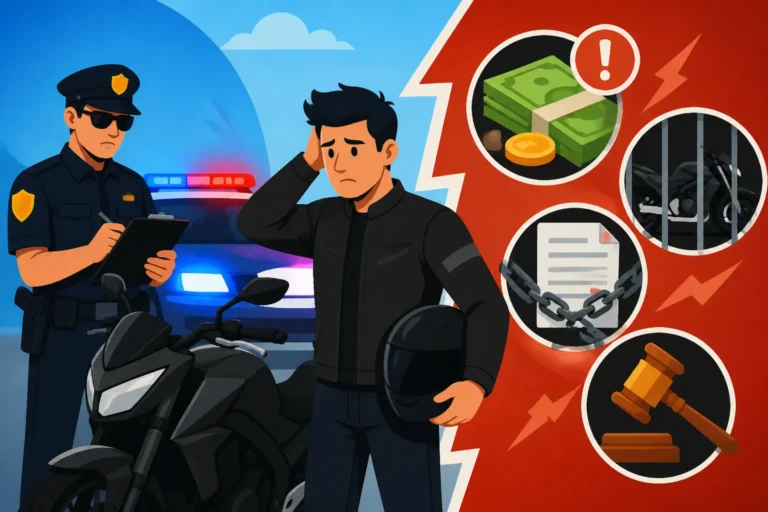
Mississippi law enforcement officers have the authority to request proof of financial responsibility during traffic stops or after an accident. If you're unable to provide it, the consequences can be immediate and severe:
- Fines: For a first offense, you could face a fine of up to $500. Subsequent offenses can lead to even higher fines.
- Suspension of Driver's License: Your driver's license can be suspended until you provide proof of insurance or financial responsibility. This could mean losing your ability to legally operate any motor vehicle, not just your motorcycle.
- Suspension of Vehicle Registration: The registration for your motorcycle (and potentially other vehicles you own) can also be suspended, meaning you can't legally ride it.
- Impoundment of Your Motorcycle: In some cases, your motorcycle might even be impounded, leading to towing and storage fees on top of the fines.
- SR-22 Requirement: After being caught without insurance, you might be required to file an SR-22 form for a period, which is a certificate of financial responsibility that many insurance companies consider high-risk, often leading to significantly higher premiums. This is often required for riders after serious violations.
Imagine getting pulled over for a minor traffic infraction, only to have your bike impounded and your license suspended because you didn't have the necessary proof. It's a headache no rider wants, and it makes the relatively small cost of a policy seem much more reasonable. Understanding what happens if you ride without insurance is vital.
The Risks Beyond Legal Fines
Beyond the immediate legal repercussions, riding without motorcycle insurance in Mississippi carries immense financial risks that can devastate your personal finances.
- Personal Financial Liability: If you cause an accident and don't have liability insurance, you are personally responsible for all damages and medical bills incurred by the other parties. This could include repairs to their vehicle, medical treatment for their injuries, lost wages, and even pain and suffering. These costs can easily run into tens or hundreds of thousands of dollars.
- Lawsuits: The injured parties have every right to sue you to recover their losses. A judgment against you could lead to wage garnishment, liens on your property, and even bankruptcy.
- No Coverage for Your Own Injuries or Damages: Without collision or comprehensive coverage, any damage to your own motorcycle in an accident (whether it's your fault or not) or from other events like theft or vandalism won't be covered by insurance. You'll be paying for repairs or replacement out of pocket. Furthermore, your own medical bills, which can be substantial after a motorcycle accident, would also be your sole responsibility unless you have other health insurance. This is why many riders consider medical payments (MedPay) for riders as an important addition to their policy.
- Difficulty Getting Future Insurance: Having a lapse in coverage or a record of driving without financial responsibility can make it much harder and more expensive to get insurance in the future. Insurers see you as a higher risk, and your premiums will reflect that.
Navigating Mississippi's Unique Motorcycle Insurance Landscape
While Mississippi's laws are somewhat unique in how they define "requirements," the practical takeaway for most riders is clear: Get a good insurance policy. It's the simplest and most reliable way to comply with the law and protect yourself financially.
How to Prove Financial Responsibility
As we've discussed, liability insurance is the most common way to meet Mississippi's financial responsibility requirement. However, other methods exist, though they are far less practical for the average rider:
- Cash Deposit: You can deposit cash or securities in the amount of $75,000 with the Commissioner of Public Safety. This essentially serves as a self-insurance fund.
- Surety Bond: You can obtain a surety bond in the amount of $75,000 from a company authorized to do business in Mississippi. This bond guarantees that the company will pay damages up to the bond amount if you cause an accident.
- Certificate of Self-Insurance: This option is typically reserved for large businesses with many vehicles and a proven ability to cover potential accident costs. It's not a realistic option for individual motorcycle owners.
For the vast majority of motorcyclists, purchasing a standard liability insurance policy is not just the easiest way to meet the state's requirements, but also the most financially prudent. Trying to go without insurance is simply not worth the risk.
Recommended Coverage Beyond the Minimum
While minimum liability coverage gets you legal on the road, it offers very limited protection. Smart riders often consider additional types of coverage to safeguard their bikes, their health, and their financial future. When considering your policy, you might want to look into options like:
- Collision Coverage: This pays for damages to your motorcycle if you're involved in a collision with another vehicle or object, regardless of who is at fault. If you have a financed bike, collision coverage is typically required by your lender.
- Comprehensive Coverage: This protects your motorcycle from non-collision incidents such as theft, vandalism, fire, natural disasters (like hail or floods), or hitting an animal. If your motorcycle is a valuable asset, this coverage is almost always worth it. Understanding what is comprehensive motorcycle insurance is key for full protection.
- Uninsured/Underinsured Motorist (UM/UIM) Coverage: Given that many drivers (and riders) in Mississippi still operate without adequate insurance, UM/UIM coverage is incredibly important. This protects you if you're hit by a driver who either has no insurance or not enough insurance to cover your damages and medical bills. This coverage can save you from huge out-of-pocket expenses. Learning more about uninsured and underinsured motorist coverage (UM/UIM) can help you decide if it's right for you.
- Medical Payments (MedPay): This coverage pays for medical expenses for you and your passengers, regardless of who caused the accident. Motorcycle accidents often result in significant injuries, and MedPay can help cover deductibles, co-pays, and other medical costs.
- Accessories and Custom Parts Coverage: If you've invested in aftermarket parts, custom paint, or expensive gear, standard policies might not cover their full value. This add-on ensures your unique modifications are protected.
- Roadside Assistance and Towing: Breaking down on a motorcycle can be a hassle, especially in remote areas. This coverage ensures you get help when you need it.
Choosing the right combination of coverage gives you peace of mind, knowing you're protected no matter what the road throws at you.
Getting the Right Motorcycle Insurance in Mississippi
Finding the right motorcycle insurance policy in Mississippi doesn't have to be a daunting task. With a little research and comparison, you can secure affordable and comprehensive coverage.
Comparing Quotes and Companies
The best way to find a policy that fits your needs and budget is to shop around. Don't just settle for the first quote you get. Many insurance providers offer motorcycle insurance in Mississippi, including national carriers and specialized motorcycle insurers. It's wise to get quotes from several companies to compare rates and coverage options side-by-side. Some prominent insurers often cited for motorcycle coverage include Progressive, Geico, Dairyland, and Markel, but a local independent agent can also be an excellent resource for finding the best policy for your specific situation. Online comparison tools can also make this process much faster. When comparing, don't just look at the price; make sure you're comparing similar levels of coverage and deductibles.
Discounts and Savings for Mississippi Riders
Insurance companies often offer a variety of discounts that can significantly lower your premiums. When getting quotes, always ask about available discounts. Here are some common ones that Mississippi riders might qualify for:
- Motorcycle Safety Course Discount: Completing an approved motorcycle safety course (like those offered by the Motorcycle Safety Foundation) often earns you a discount, as it shows you're a safer, more experienced rider.
- Multi-Policy Discount: If you bundle your motorcycle insurance with other policies, like car insurance or home insurance, with the same company, you can often receive a discount.
- Good Driver Discount: A clean driving record, free of accidents and violations, can lead to lower rates.
- Experienced Rider Discount: As you gain more years of riding experience, your rates tend to decrease.
- Anti-Theft Device Discount: Installing approved anti-theft devices on your motorcycle can make it less appealing to thieves and lower your comprehensive coverage premium.
- Loyalty Discount: Staying with the same insurance company for several years might earn you a loyalty discount.
- Paid-in-Full Discount: Paying your annual premium in one lump sum, rather than monthly installments, can sometimes save you money.
- Organization Affiliation: Being a member of certain riding clubs or associations might also qualify you for discounts.
Always ask your insurance provider about all available discounts to ensure you're getting the best possible rate. Even small discounts can add up, making your motorcycle insurance much more affordable.
Mississippi Motorcycle Insurance Minimum Requirements
Here’s a quick overview of Mississippi’s minimum financial responsibility requirements as satisfied by liability insurance:
| Coverage Type | Minimum Limit (Per Accident) | What It Covers |
|---|---|---|
| Bodily Injury Liability (Per Person) | $25,000 | Injuries to one person you're at fault for |
| Bodily Injury Liability (Per Accident) | $50,000 | Total injuries to all people you're at fault for |
| Property Damage Liability (Per Accident) | $25,000 | Damage to other people's property you're at fault for |
This table represents the absolute minimum to meet the legal requirements in Mississippi. Most riders opt for higher limits and additional coverages for better protection.
Disclaimer
This article is for general informational purposes only and does not constitute professional advice. Laws, prices and regulations vary by location and change over time. Consult a qualified professional for guidance on your specific situation.