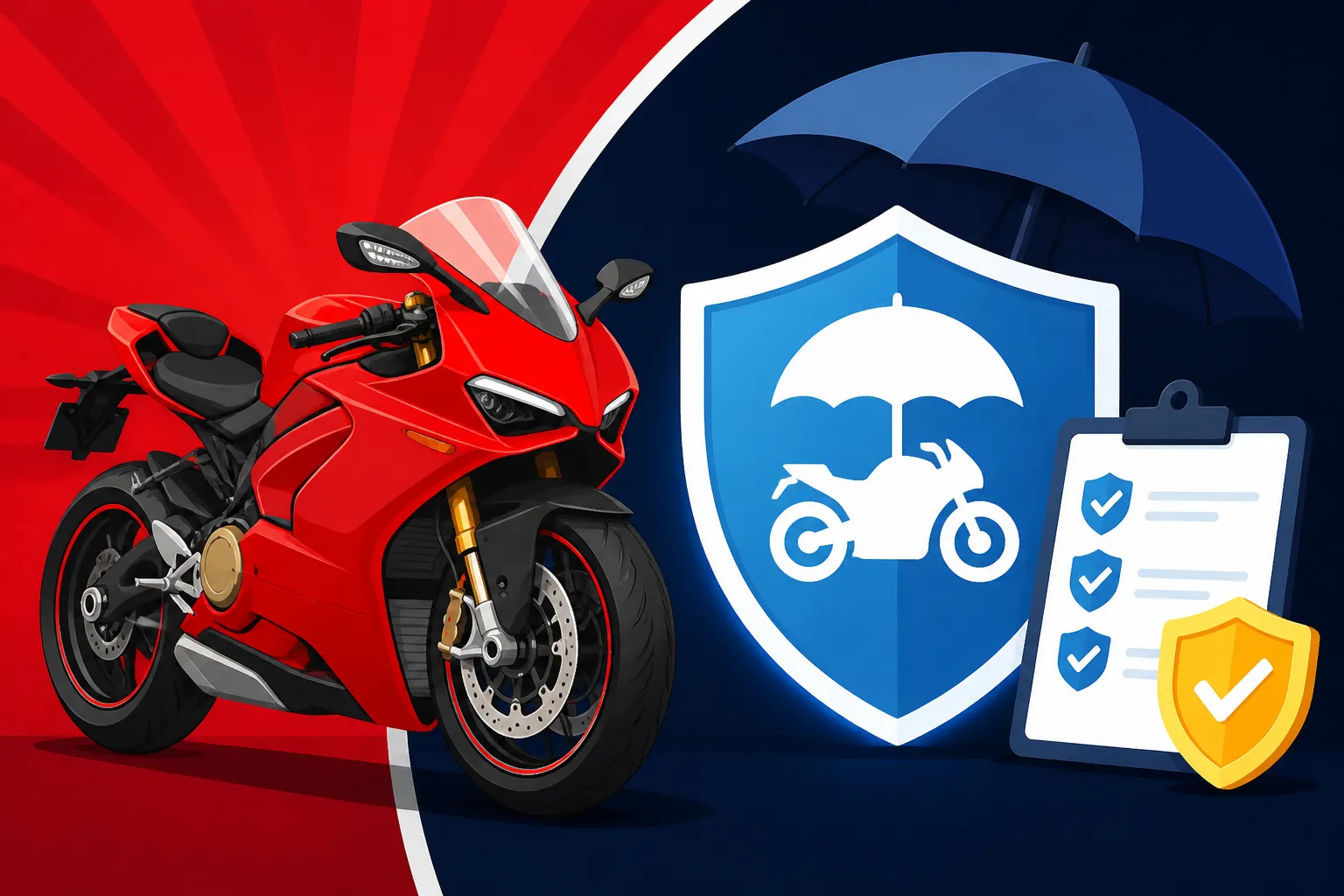
Ducati Panigale Insurance Cost
The dream of owning a Ducati Panigale is often accompanied by the exhilarating thought of hitting the open road, feeling that raw power beneath you. But let's be real, the fantasy can quickly crash into the harsh reality of insurance costs. Many riders get sticker shock when they start looking into what it actually takes to protect such a high-performance machine. This guide is here to unravel the mystery behind Ducati Panigale insurance costs, explain what drives them up, and offer practical ways you might save some cash.
Why Ducati Panigale Insurance Rates Are So High
It’s no secret that insuring a Ducati Panigale can feel like you're paying for two motorcycles instead of one. Riders often wonder if they're being singled out, or if there's some secret tax on Italian performance. The truth is, there are very tangible reasons why these bikes command higher premiums, and it mostly boils down to their design and the risks associated with them.
High Performance and Accident Risk
A Ducati Panigale isn't just a motorcycle; it's a superbike, built for speed and aggressive handling. With engine sizes that often push the 1000cc mark, these machines are powerhouses. Insurance companies view high-performance sport bikes like the Panigale as inherently riskier. The faster a bike can go, the higher the likelihood (in the eyes of an actuary, anyway) of high-speed accidents, which often lead to more severe injuries and greater property damage.
Think about it: a quick blip of the throttle on a Panigale can put you well past legal speed limits. While responsible riders would never do such a thing on public roads, the potential for it exists, and that potential translates directly into a higher risk assessment for insurers. This is a common frustration for riders who know their limits, but the statistics don't lie – sport bikes statistically have a higher accident frequency and severity compared to cruisers or touring bikes. This is why you'll often see distinct categories in insurance pricing, with sport bikes typically at the top. For a deeper dive into this, you might find our article on Sport Bike Insurance Cost Why So High particularly illuminating.
Exorbitant Repair and Replacement Costs
Let's face it, a Ducati isn't a budget-friendly bike when it comes to parts and labor. These are sophisticated machines, often handcrafted with specialized components from Italy. If you get into an accident, even a minor one, the repair bill for a Panigale can quickly skyrocket. Fairings, advanced electronics, suspension components, and even simple engine covers are often proprietary and expensive to replace.
Consider a minor tip-over in a parking lot. On a standard cruiser, you might just scratch a chrome pipe and dent a tank. On a Panigale, that same incident could mean replacing an entire carbon fiber fairing, a mirror with integrated turn signals, and potentially damaging the frame or engine casing. All these parts need to be sourced, often internationally, leading to higher labor costs and longer repair times. When an insurance company is on the hook for these potential costs, they factor that into your premium. If the bike is severely damaged, the cost to replace it outright is also significantly higher than a less expensive model, driving up comprehensive and collision coverage rates.
High Theft Rates
Ducati Panigales are beautiful, desirable, and unfortunately, attractive to thieves. Their high market value makes them prime targets for professional theft rings, either to be sold whole in other markets or to be stripped for their valuable parts. A quick search of stolen motorcycle databases often reveals a disproportionate number of high-end sport bikes.
Insurance companies track theft statistics very closely. If you live in an area with a high rate of motorcycle theft, or if your specific model is frequently reported stolen, your comprehensive coverage (which covers theft) will naturally be higher. Even with top-notch security, the inherent appeal of a Panigale means it carries a higher theft risk premium. It’s a sad reality that while you cherish your bike, others might want to "acquire" it by less than legal means.
Factors Influencing Your Panigale's Insurance Rate
While the Panigale itself is a major driver of cost, it's not the only factor. Your personal profile, where you live, and the kind of coverage you choose all play significant roles. It's like a complex equation where every variable affects the final number you see on your premium statement.
Rider Age, Experience, and Driving Record
This is perhaps one of the most impactful personal factors. Insurers love data, and data shows that younger, less experienced riders are statistically more likely to be involved in accidents. If you're under 25, or if you've only recently gotten your motorcycle endorsement, you can expect to pay more for your Panigale insurance. The steep learning curve of a superbike combined with youthful exuberance is a red flag for insurance companies.
Conversely, mature riders (often over 25 or 30) with years of riding experience and a clean driving record will generally see lower rates. Every ticket, every accident, and especially any serious violations like a DUI, will significantly increase your premiums, regardless of the bike you ride. A Panigale just amplifies that effect. Maintaining a spotless record is one of the best long-term strategies for keeping insurance costs down. Our guide on Motorcycle Insurance Cost by Age dives into this in more detail.
Location and Storage
Where you live and how you store your Panigale are crucial details for insurance companies.
If you reside in a densely populated urban area, particularly one known for higher crime rates or traffic congestion, your insurance will likely be more expensive. More cars on the road mean more opportunities for accidents, and higher crime rates mean increased risk of theft or vandalism. For example, insuring a Panigale in downtown Los Angeles or Miami will almost certainly cost more than in a quiet suburban town in Iowa.
Furthermore, how you store your bike matters. Keeping your Panigale garaged overnight, especially in a locked, secure garage, is a big plus for insurers. It significantly reduces the risk of theft or damage from the elements compared to parking it on the street or in an open driveway. Be honest with your insurance provider about your storage situation; some even offer discounts for specific security measures like alarm systems or GPS trackers.
Coverage Choices and Deductibles
The type and amount of coverage you choose are direct determinants of your premium. If you opt for basic liability-only coverage, you'll pay significantly less upfront. However, this only covers damages you cause to others, not to your beloved Panigale. Given the high cost of the bike, most Panigale owners choose to carry comprehensive and collision coverage, which provides financial protection for damage to your own motorcycle from accidents, theft, fire, and other non-collision incidents.
- Liability Coverage: This is usually the minimum required by law and covers bodily injury and property damage you cause to others.
- Collision Coverage: Pays for damages to your Panigale if you hit another vehicle or object, or if it rolls over.
- Comprehensive Coverage: Covers non-collision damage, such as theft, vandalism, fire, natural disasters, or hitting an animal.
Beyond these basics, you might consider add-ons like roadside assistance, custom parts and accessories coverage (especially critical for a Panigale, which often has aftermarket upgrades), or medical payments coverage. Each additional layer of protection adds to your premium.
Your deductible also plays a role. This is the amount you pay out-of-pocket before your insurance kicks in for collision or comprehensive claims. A higher deductible means a lower premium, but it also means you pay more if you have to file a claim. Conversely, a lower deductible means higher premiums. You'll need to weigh your financial comfort with potential out-of-pocket expenses when choosing your deductibles. To understand what exactly full coverage entails, take a look at our article, What Does Full Coverage Motorcycle Insurance Mean?.
Here's a simplified table illustrating how various factors might influence average Panigale insurance costs:
| Factor | Impact on Premium (Relative) | Example Scenario |
|---|---|---|
| Rider Age | High | 20-year-old: Very High; 45-year-old: Moderate |
| Riding Experience | High | New Rider: Very High; 10+ Years Experience: Moderate |
| Driving Record | High | Recent DUI: Extremely High; Clean Record: Low |
| Location | Moderate to High | Urban, High Theft Rate: High; Rural, Low Crime: Low |
| Storage | Moderate | Street Parking: High; Locked Garage: Lower |
| Coverage Type | High | Liability Only: Low; Full Coverage: High |
| Deductible | Moderate | $1,000 Deductible: Lower; $250 Deductible: Higher |
| Motorcycle Type | High (Fixed for Panigale) | Sport Bike (Panigale): High by default |
| Safety Course | Low to Moderate (Discount) | Completion: Potential Discount |
| Bundling | Low to Moderate (Discount) | Auto/Home + Motorcycle: Potential Discount |
Strategies to Reduce Your Ducati Panigale Insurance Cost
While you can't change the fact that you own a high-performance Ducati Panigale, there are definitely proactive steps you can take to make those insurance premiums a little less painful. It's all about demonstrating to insurers that you're a responsible rider and minimizing perceived risks.
Invest in Rider Safety Courses
One of the most effective ways to show an insurance company you're serious about safety is to complete a certified motorcycle safety course. Programs like those offered by the Motorcycle Safety Foundation (MSF) are widely recognized. Not only do these courses make you a more skilled and confident rider, but many insurance providers offer discounts for their completion.
Even if you're an experienced rider, taking an advanced riding course can sometimes qualify you for a discount. It shows you're committed to continuous improvement and safe riding practices. Always check with your insurance provider to see which courses they recognize for discounts and what percentage off you might receive. Every little bit helps, especially when you're insuring a bike like a Panigale. If you're curious about how much you can save, our article, Does a Motorcycle Safety Course Lower Insurance?, offers more specifics.
Explore Available Discounts
Never assume you're getting the best rate without asking about discounts. Insurance companies offer a wide range of savings opportunities, and many riders leave money on the table simply by not inquiring. For a Ducati Panigale, these can be particularly beneficial.
- Multi-Policy/Bundling Discount: If you have your car insurance, home insurance, or even renter's insurance with the same provider, you can often bundle your motorcycle policy and save. Companies like Progressive or Geico are known for offering significant multi-policy discounts.
- Multi-Bike Discount: If you own more than one motorcycle, insuring them all with the same company can lead to savings.
- Anti-Theft Device Discount: Installing an alarm, a GPS tracking system (like a LoJack), or even using robust disc locks and chain locks can qualify you for a discount on comprehensive coverage, as it reduces the risk of theft.
- Riding Association Discounts: Being a member of certain riding clubs or associations might also grant you a discount.
- Good Driver/Accident-Free Discount: Maintaining a clean driving record for several years often translates into lower premiums.
- Paid-in-Full Discount: Paying your annual premium upfront instead of in monthly installments can often save you a small percentage.
Don't be shy about asking your agent about every potential discount. The worst they can say is no, and you might uncover some significant savings. For a comprehensive list, check out our guide on Motorcycle Insurance Discounts You're Missing.
Strategic Coverage Adjustments
While it's crucial to have adequate coverage for your Panigale, especially if it's financed, there might be areas where you can strategically adjust to save money. This is a delicate balance, as under-insuring such a valuable bike can be a costly mistake.
For instance, if your Panigale is older and completely paid off, you might consider adjusting your collision coverage deductible. Raising it from $500 to $1000 could lower your premium. However, be absolutely sure you have that $1000 readily available if you need to make a claim. For bikes that are many years old, some riders even consider dropping collision coverage entirely, especially if the bike's market value has significantly depreciated, though this is a much riskier move for a high-value Panigale.
Another area to consider is medical payments coverage. If you already have robust health insurance, you might not need as much MedPay, or perhaps none at all, depending on your state's laws and your personal financial situation. Always review your policy annually and discuss these options with your insurance agent to ensure you're adequately protected without overpaying.
Shopping for Panigale Insurance
Finding the right insurance for your Ducati Panigale isn't just about getting the cheapest rate; it's about finding the right balance of coverage and cost. Given the specialized nature of these bikes, it pays to be thorough in your search.
Comparing Quotes from Multiple Providers
This is hands down the most crucial step when insuring any motorcycle, especially a high-value one like a Panigale. Rates can vary wildly between insurance companies for the exact same coverage. One insurer might specialize in sport bikes or have a different risk assessment model that favors your rider profile.
Don't just get one quote; aim for at least three to five. You can do this by contacting individual companies directly, working with an independent insurance agent who can shop multiple carriers for you, or by using online comparison tools. Websites like The Zebra allow you to input your information once and receive multiple quotes from various providers, streamlining the process significantly. This way, you can easily see what companies like Dairyland, Markel, or Progressive might offer for your specific Panigale model and rider profile. Our article on How to Compare Motorcycle Insurance Quotes offers a step-by-step approach to this process.
Understanding Your Policy's Nuances
When you're comparing quotes, don't just look at the bottom line premium. It's vital to understand what each policy actually covers, especially for a bike with specific needs like a Panigale.
- Agreed Value vs. Actual Cash Value: For a high-end or customized Panigale, "agreed value" coverage can be invaluable. This means you and the insurer agree on a specific value for your bike at the start of the policy. If it's totaled, you get that agreed amount, avoiding disputes over depreciation. "Actual cash value" policies, on the other hand, will pay out the depreciated market value at the time of loss, which can be significantly less than what you paid or what it would cost to replace.
- Custom Parts and Accessories Coverage: If you've invested in aftermarket exhausts, racing components, or unique cosmetic upgrades for your Panigale, ensure your policy has sufficient coverage for these. Standard policies often have very limited, if any, coverage for custom parts.
- OEM Parts Coverage: Some policies offer Original Equipment Manufacturer (OEM) parts coverage, ensuring that if your bike needs repairs, it will be fixed with genuine Ducati parts, not cheaper aftermarket alternatives. This is often crucial for maintaining the performance and resale value of a Panigale.
Taking the time to read the fine print and ask questions will ensure there are no unwelcome surprises if you ever need to file a claim. The Zebra, for instance, can help break down these coverage options in plain language as you compare different policies, making it easier to see what truly aligns with your needs for your Panigale.
When to Re-Shop Your Insurance
Your life and your Panigale's circumstances aren't static, so your insurance shouldn't be either. It's a good practice to re-shop your motorcycle insurance every year or two, even if you're happy with your current provider.
- Major Life Changes: Getting married, moving to a new area, or even changing jobs can impact your rates.
- Aging Bike: As your Panigale gets older, its market value depreciates, which might mean you can adjust your comprehensive or collision coverage to save money.
- Clean Record: If you've gone several years without claims or tickets, you might qualify for better rates than your current insurer is automatically giving you.
- New Providers: The insurance market is always changing, with new companies entering or existing ones adjusting their rates. A company that wasn't competitive for your Panigale a few years ago might be the cheapest option today.
Being proactive and regularly reviewing your options ensures you're always getting the best possible rate for your Ducati Panigale, without sacrificing the crucial coverage you need to protect your prized possession.
Disclaimer
Please remember that this information is intended for general guidance only and does not constitute professional financial or insurance advice. Motorcycle insurance requirements and costs vary significantly by state, individual circumstances, and specific policy details. It is crucial to consult with a licensed insurance professional to discuss your unique needs and obtain personalized quotes and advice.