How to File a Motorcycle Insurance Claim in California
Getting into a motorcycle accident in California can be a truly harrowing experience, leaving you shaken, injured, and often wondering what steps to take next regarding your insurance claim. The paperwork, the phone calls, the uncertainty about repairs or medical bills – it’s enough to make anyone’s head spin. This comprehensive guide is here to walk you through the entire process of filing a motorcycle insurance claim in California, ensuring you understand your rights, responsibilities, and how to navigate this complex journey.
Immediate Steps After a Motorcycle Accident in California
The moments immediately following a motorcycle accident are critical, not just for your safety, but also for setting the foundation for a successful insurance claim. It's easy to feel overwhelmed, but taking a few key steps can make a world of difference.
Prioritize Safety and Seek Medical Attention
Your personal safety and well-being should always be the absolute top priority. Even if you feel fine in the immediate aftermath, adrenaline can mask pain and serious injuries.
If you can move safely, get yourself and your motorcycle out of the flow of traffic to prevent further accidents. Activate your hazard lights if your bike is operational. Check on any other parties involved, but avoid moving anyone who appears seriously injured unless there's an immediate danger, such as a fire. Call 911 immediately. Emergency responders will not only provide medical assistance but also create an official accident report, which is invaluable for your insurance claim. Don't refuse medical evaluation at the scene, even if you just have a few scrapes. Sometimes, internal injuries or whiplash symptoms don't manifest until hours or even days later. Getting checked out by paramedics or going to an emergency room ensures your health is monitored and creates a record linking any injuries to the accident, which is crucial for any potential personal injury claim. Remember, your physical recovery is paramount, and these initial medical records will be vital for substantiating any claims for medical expenses down the road.
Document the Scene Thoroughly
Once safety is secured and emergency services are en route, it’s time to start gathering as much information as possible from the accident scene. The more details you can provide, the smoother your claim process will be.
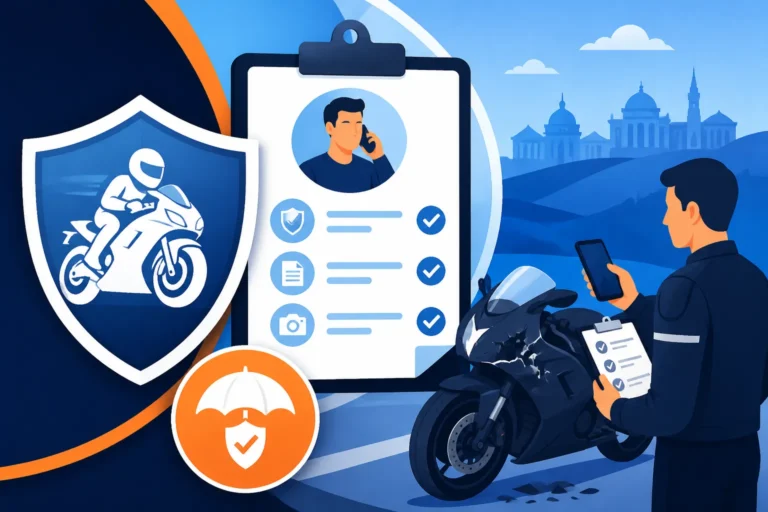
Use your phone to take photographs and videos of everything. This includes damage to all vehicles involved, road conditions, traffic signs, skid marks, debris, relevant landmarks, and the general area from multiple angles. Don't forget to capture close-ups of your motorcycle's damage, including any aftermarket accessories that might have been impacted. Also, take pictures of the other driver's license plate, vehicle registration, and insurance card. If there are any visible injuries on yourself or others, document those too. Make notes about the weather conditions, time of day, and any other factors that might have contributed to the accident. If there are witnesses, ask for their contact information and a brief statement of what they observed. Their unbiased accounts can be incredibly powerful in supporting your claim, especially if there's a dispute about fault. Remember that memory fades, so jotting down details while they're fresh is essential. You might want to refer to our guide on What to Do After a Motorcycle Accident (Insurance Steps) for a more detailed checklist.
Exchange Information Legally
Exchanging information with the other driver(s) involved is a legal requirement in California and a necessary step for your insurance claim.
Gather their full name, contact number, driver's license number, license plate number, and insurance company name and policy number. Provide them with your own information as well. It’s also wise to note the make, model, and color of their vehicle. If the police respond to the scene, they will typically facilitate this exchange and include it in their accident report. When speaking with the other driver, remain calm and polite, but avoid discussing fault or making any statements that could be interpreted as admitting fault, even if you're just being sympathetic. Stick to factual exchanges of information. What you say at the scene can be used later by insurance companies or in court, so it's always best to let the official investigation determine fault. If the other party tries to pressure you into a private settlement or discourages you from involving insurance, politely decline and insist on following the proper channels.
Understanding California's Fault Laws and Insurance Minimums
California operates under specific laws regarding fault and insurance that every rider should be aware of. These laws directly impact how your claim will be handled and how much you might recover.
California's Comparative Negligence Rule
One of the most important aspects of California law concerning accidents is its pure comparative negligence rule. This means that if you're involved in an accident, your financial recovery can be reduced by your percentage of fault.
For example, if a jury determines your total damages are $100,000, but you were 20% at fault for the accident (perhaps you were speeding slightly, even if the other driver made an illegal turn), you would only be able to recover $80,000. This is a crucial distinction, as some states have "modified comparative negligence," where you can't recover anything if you're found to be more than 50% at fault. In California, you can still recover something, even if you are mostly at fault, although your recovery will be significantly reduced. This rule makes the initial investigation and fault determination incredibly important, as even a small percentage of fault attributed to you can reduce your payout. Insurance companies, like Progressive, often employ adjusters who are experts at analyzing accident scenes and applying comparative negligence principles. They will look at every detail to determine each party's contribution to the incident. Understanding this means that during any conversations with insurance adjusters, it’s essential to be truthful but also careful not to admit fault prematurely.
Minimum Liability Requirements for Riders
California mandates specific minimum liability insurance coverage for all registered motorcycles, just as it does for cars. You absolutely need to meet these requirements to legally ride on public roads.
The minimum liability coverage in California is often expressed as "15/30/5":
- $15,000 for bodily injury liability per person
- $30,000 for total bodily injury liability per accident
- $5,000 for property damage liability per accident
This minimum liability coverage is designed to pay for damages you cause to other people or their property in an accident. It does not cover your own medical bills or damage to your motorcycle. Many riders find these minimums to be woefully inadequate given the high cost of medical care and motorcycle repairs, especially in a place like California. If you only carry the minimum, and you cause an accident with significant damages, you could be personally responsible for anything exceeding your policy limits. For this reason, many experienced riders choose to carry much higher liability limits, along with additional coverages like collision, comprehensive, and uninsured/underinsured motorist protection. You can learn more about these numbers in our article on Minimum Liability Insurance Explained (The Three Numbers) or explore Motorcycle Insurance Requirements by State (2026 Guide) for broader context.
Navigating the Claims Process with Your Insurer
Once the immediate aftermath of the accident is handled, the real work of dealing with insurance begins. This phase requires organization, patience, and a clear understanding of your policy.
Contacting Your Insurance Provider
As soon as possible after ensuring your safety and gathering initial information, you need to notify your own insurance company about the accident. Delaying this can sometimes create issues, as policies often have clauses requiring prompt notification.
Call your insurer directly to report the incident. Be prepared to provide the date, time, and location of the accident, as well as the information you collected from the other driver(s) and any witnesses. While you should provide factual details, avoid speculating about fault. Stick to what you know for sure. Your insurer will open a claim and assign a claims adjuster to your case. This person will be your primary contact throughout the process. They will guide you on next steps, such as where to get your motorcycle inspected for damage, how to submit medical bills, and any forms you need to complete. Even if you believe the other driver was 100% at fault, contacting your own insurer is usually a good idea, especially if you have collision coverage or medical payments coverage, which can help get things moving faster. Many insurance companies, including large carriers, have 24/7 claims hotlines or easy online portals to initiate this process. If you’re unsure about what coverage you have, now is the time to review your policy documents or ask your agent.
The Role of the Adjuster and Documentation
Your claims adjuster is the person responsible for investigating your claim, determining fault, and ultimately approving payment for damages and injuries. Their role is to represent the insurance company's interests while also fulfilling the terms of your policy.
The adjuster will likely ask you for a detailed statement about the accident. This is where your thorough documentation from the scene becomes invaluable. Provide them with all the photos, videos, witness contact information, and police report number you gathered. They will also typically inspect your damaged motorcycle to assess the repair costs or determine if it's a total loss. They will review medical records related to your injuries. Be prepared to provide signed medical release forms so they can obtain these records directly. Remember, communication is key. Respond promptly to their requests for information, but always review documents carefully before signing them. If you have full coverage, your adjuster should help coordinate repairs or a payout for your bike. For more on this, check out How to File a Motorcycle Insurance Claim. Companies like The Zebra can also be a useful resource for understanding what documentation is typically required and for comparing how different insurers handle claims.
Understanding Your Coverage and Settlement Options
The type of coverage you have on your policy will dictate what your insurance company can pay for. If the other driver was at fault, their liability insurance should cover your damages and injuries, but sometimes you might need to rely on your own policy.
If you have collision coverage, your own insurer will pay for the damage to your motorcycle, regardless of who was at fault, minus your deductible. They will then typically try to recover that money from the at-fault driver's insurance company through a process called subrogation. If your motorcycle is deemed a total loss, the adjuster will determine its actual cash value (ACV) and offer you a settlement based on that value. This is where understanding concepts like What Happens When Your Motorcycle Is Totaled? becomes critical. For injuries, if the other driver is at fault, their bodily injury liability coverage should pay for your medical expenses, lost wages, and pain and suffering. If you have medical payments (MedPay) coverage, your own policy can help cover your medical bills regardless of fault, up to your policy limits. The settlement offer will often be a negotiation process. It’s important to understand the value of your damages and injuries so you can advocate for a fair settlement.
Common Challenges and How to Overcome Them
The claims process isn't always smooth sailing. Riders often encounter specific hurdles that can complicate their recovery. Knowing what to expect and how to handle these challenges can save you a lot of stress and money.
Dealing with Uninsured/Underinsured Motorists
Despite laws requiring insurance, not everyone on the road carries adequate coverage, or sometimes any coverage at all. California has a significant number of uninsured drivers, which can leave you in a tough spot if they cause an accident.
If you're hit by an uninsured driver in California, your best protection is having Uninsured Motorist (UM) coverage on your own policy. This coverage typically comes in two parts: Uninsured Motorist Bodily Injury (UMBI), which covers your medical expenses, lost wages, and pain and suffering, and Uninsured Motorist Property Damage (UMPD), which covers damage to your motorcycle. Similarly, Underinsured Motorist (UIM) coverage kicks in when the at-fault driver has liability insurance, but their limits aren't enough to cover all your damages. For instance, if their policy only covers $15,000 in bodily injury, but your medical bills total $50,000, your UIM coverage would help make up the difference. While these coverages are not mandatory in California, they are highly recommended, and insurers are required to offer them to you. Waiving them requires a specific signed form. Without UM/UIM, you might be left paying out-of-pocket or having to sue the at-fault driver, which can be a lengthy and often fruitless endeavor if they have no assets. To dive deeper, read our guide on Uninsured & Underinsured Motorist Coverage (UM/UIM) and How to File a Claim When Hit by an Uninsured Driver.
Disputing a Low Settlement Offer
It's not uncommon for an initial settlement offer from an insurance company to feel too low. Insurance adjusters are trained to minimize payouts, and their first offer might not fully reflect the true value of your damages, especially for severe injuries or significant property damage.
If you receive an offer that you believe is unfair, don't immediately accept it. This is where your diligent record-keeping, medical documentation, and repair estimates become crucial. Gather all your evidence: detailed photos of the damage, multiple repair quotes from reputable shops, all medical bills, receipts for prescription medications, records of lost wages, and even a log of your pain and suffering. Present this evidence to the adjuster and clearly explain why you believe their offer is insufficient. Be firm but polite. You might also want to research the value of similar motorcycles if yours was totaled to ensure their Actual Cash Value (ACV) offer is fair. Resources like Kelley Blue Book or NADAguides can help. If negotiations stall, or if the offer remains unreasonably low, it might be time to consider professional help. A personal injury attorney who specializes in motorcycle accidents can be a powerful ally in these situations, as they understand the tactics insurance companies use and can effectively advocate for your rights. You might also find valuable insights in our article on How to Negotiate a Motorcycle Total Loss Settlement.
The Impact of Modifying Your Motorcycle
Many riders customize their bikes, adding performance parts, custom paint, or expensive accessories. While these modifications make your ride unique, they can complicate an insurance claim if you haven't properly insured them.
Standard motorcycle insurance policies typically only cover the factory-original parts of your bike. If you have thousands of dollars invested in aftermarket exhausts, custom wheels, or a high-end infotainment system, and you don't have specific coverage for them, the insurance company may not pay to replace them after an accident or theft. This can be a huge financial hit. To avoid this, you usually need to purchase accessories and custom parts coverage (sometimes called custom equipment coverage) as an add-on to your policy. When getting this coverage, be sure to provide your insurer with a detailed list of all modifications, including receipts and photos. Update your policy whenever you add new custom parts. Without this specific coverage, an adjuster will only value your bike based on its stock condition, potentially leaving you significantly undercompensated. It’s always best to discuss any modifications with your insurance provider, like The Zebra or Progressive, when you first buy or modify your bike, to ensure everything is adequately protected. Understanding this distinction is key to preventing a nasty surprise after an incident. Our article on Accessories & Custom Parts Coverage Explained offers more depth on this important topic.
| Step in Claim Process | Description | Key Action for Rider |
|---|---|---|
| Immediate Scene | Ensure safety, call 911, collect information. | Document everything: photos, witness info. |
| Notify Insurer | Report accident to your insurance company promptly. | Provide factual details, open a claim. |
| Adjuster Investigation | Adjuster assesses damage, reviews reports, determines fault. | Cooperate, provide documentation, avoid admitting fault. |
| Damage Assessment | Motorcycle is inspected for repair costs or total loss. | Get multiple repair estimates, understand ACV. |
| Medical Treatment | Seek and continue medical care for injuries. | Keep all medical records, bills, and receipts. |
| Settlement Negotiation | Insurer offers settlement for damages/injuries. | Review offer, provide counter-evidence if low. |
| Claim Resolution | Claim is paid out or denied. | Ensure all covered damages are addressed. |
Seeking Further Assistance and Legal Guidance
Even with the best preparation, some claims become complicated. Knowing when to reach out for additional help can make all the difference in achieving a fair outcome.
When to Consult a Personal Injury Attorney
While many minor claims can be handled directly with insurance companies, there are specific situations where hiring a personal injury attorney specializing in motorcycle accidents becomes highly advisable.
You should seriously consider legal counsel if:
- You suffered significant injuries: Major injuries, long-term disability, extensive medical bills, or lost wages usually require an attorney to ensure you receive full compensation.
- Fault is disputed: If the other driver's insurance company is trying to place blame on you, an attorney can gather evidence and negotiate on your behalf.
- The insurance company denies your claim or offers a low settlement: Attorneys are experts at negotiating with insurance companies and know how to prove the true value of your claim.
- The at-fault driver is uninsured or underinsured, and your UM/UIM claim is complex: While your own insurance should cover this, an attorney can help ensure they fulfill their obligations.
- There are multiple parties involved: Accidents involving several vehicles or commercial vehicles can be complex, requiring legal expertise.
- The statute of limitations is approaching: In California, you generally have two years from the date of injury to file a personal injury lawsuit, but it's important to act much sooner.
An experienced California motorcycle accident attorney can level the playing field, protect your rights, and often secure a much larger settlement than you could achieve on your own. They typically work on a contingency fee basis, meaning they only get paid if you win your case.
Resources for Riders in California
Beyond legal representation, there are several resources available to California riders who are navigating the aftermath of an accident or just looking to better understand their insurance options.
The California Department of Motor Vehicles (DMV) website provides information on accident reporting requirements and vehicle codes. The California Department of Insurance offers consumer guides and can assist with complaints against insurance companies if you believe you're being treated unfairly. Organizations like the Motorcycle Safety Foundation (MSF) promote rider education, which can sometimes lead to insurance discounts. Online platforms such as The Zebra can help you compare motorcycle insurance quotes from various providers, giving you a better understanding of coverage options and prices. This can be useful even after an accident if you're considering switching providers or want to assess if your current coverage is adequate. Remember, being an informed rider is your best defense, both on the road and when dealing with the administrative complexities of an insurance claim.
Navigating a motorcycle insurance claim in California doesn’t have to be an impossible task. By understanding the immediate steps to take after an accident, familiarizing yourself with California’s unique fault laws and insurance minimums, and knowing how to effectively communicate with your insurance provider, you can navigate the process with greater confidence. Don't hesitate to seek professional legal guidance if your situation warrants it, and always remember that preparation and detailed documentation are your strongest allies.
Disclaimer
Please remember that this article provides general information and is not a substitute for professional legal advice or specific guidance from your insurance provider. Insurance policies and state laws can change, and your individual situation is unique. Always consult with a qualified legal professional or your insurance agent regarding your specific circumstances.