How to File a Claim for a Dropped or Tipped-Over Bike
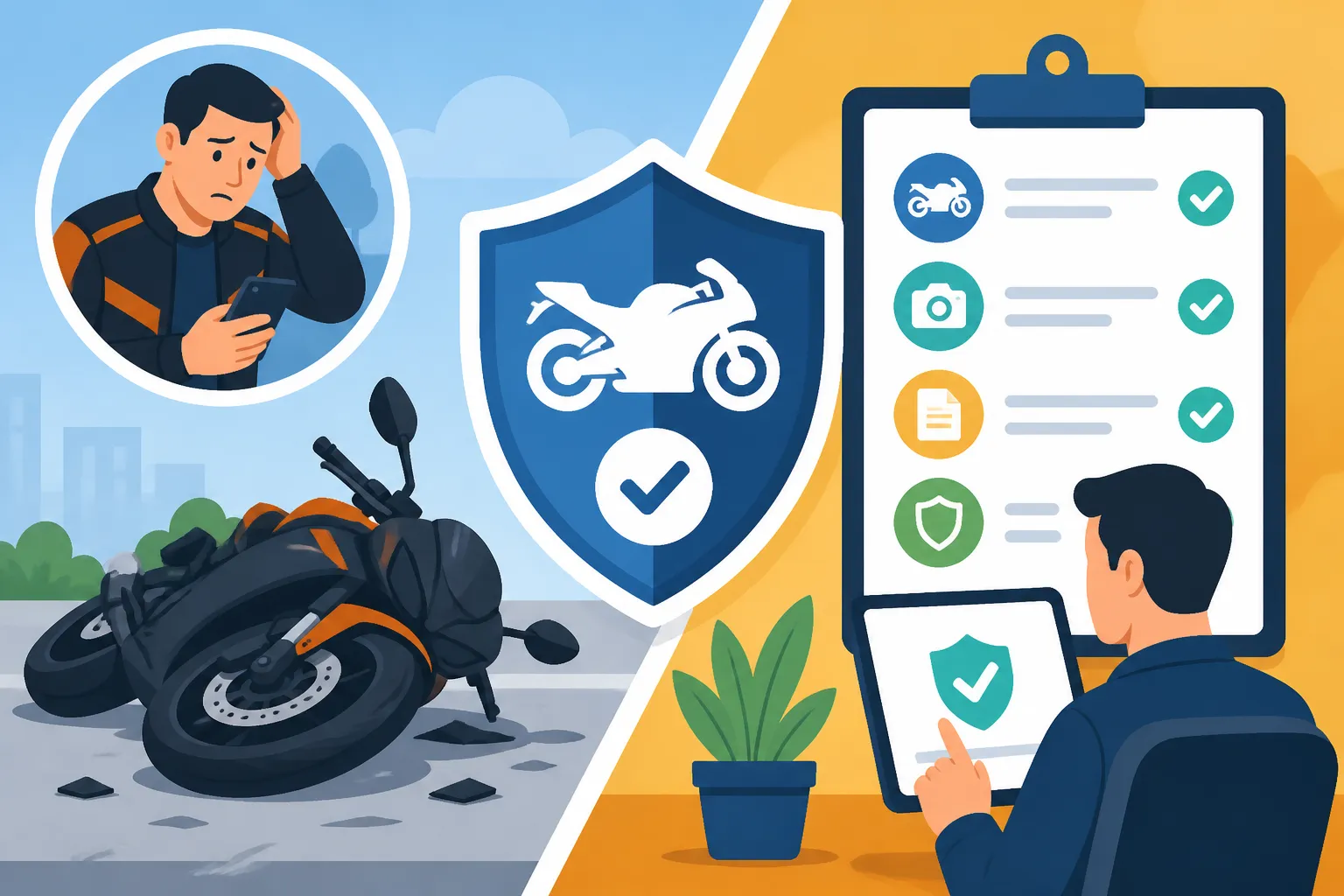
It’s a gut-wrenching moment for any rider: you’re parking, making a tight turn, or maybe just moving your bike in the garage, and suddenly, it goes over. That sickening thud and the sight of your beloved machine resting on its side can send a wave of frustration and panic through you. Beyond the immediate disappointment, the big question looms: should I file a motorcycle insurance claim for this? This comprehensive guide is here to walk you through everything you need to know about navigating the insurance process when your motorcycle takes an unexpected tumble.
Understanding Your Motorcycle Insurance Coverage
Before you even think about dialing your insurance company, it's crucial to understand what kind of coverage you actually have. Not all policies are created equal, and what might cover one type of incident might leave you high and dry for another. When it comes to a dropped or tipped-over bike, two main types of coverage usually come into play: Collision and Comprehensive.
Collision Coverage: The Primary Protector
For most tip-over incidents, especially those where the bike falls due to rider error, an accidental drop, or a mishap while parking, your collision coverage is going to be your best friend. This coverage is designed to pay for damage to your motorcycle resulting from a collision with another object, or, importantly, if it overturns.
Think of it this way: even if your motorcycle doesn't hit another vehicle, person, or static object (like a light pole or guardrail) before it hits the ground, the act of hitting the ground itself is considered a collision for insurance purposes. So, if you're trying to back out of a parking spot, lose your footing, and your bike goes down, collision coverage would typically kick in to cover the repairs, minus your deductible. This is why it's a vital part of what many riders consider "full coverage" motorcycle insurance. Without it, even minor damage from a stationary tip-over could become a hefty out-of-pocket expense.
Comprehensive Coverage: When Other Forces Are at Play
While collision coverage handles most drops where the bike essentially collides with the ground, there are specific scenarios where comprehensive coverage might be relevant. Comprehensive coverage protects against non-collision events. This includes things like theft, vandalism, fire, natural disasters, or hitting an animal.
So, when would comprehensive apply to a tipped-over bike? Imagine this: you've parked your bike perfectly, secured it, and gone inside. Later, a sudden, violent gust of wind — a genuine act of nature, not just a breezy day — sweeps through and knocks your bike off its kickstand. In this case, because the damage wasn't due to your riding or operating the bike, but rather an external force of nature, your comprehensive policy would likely be the one to respond. The same might apply if a tree branch fell onto your parked bike, causing it to tip and sustain damage. It’s all about the cause of the tip-over. Knowing the difference between these can save you a lot of headache (and maybe money) when you're considering how to file a motorcycle insurance claim.
Exclusions and Limitations: What Might Not Be Covered
It's equally important to understand what your policy doesn't cover. Insurance policies have their limits, and it's not always a blanket solution for every ding and scratch. Generally, routine wear and tear is never covered. If your kickstand slowly deteriorated over years of use and finally gave out, causing your bike to drop, that would likely be considered a maintenance issue rather than an insurable event.
Mechanical failures are another common exclusion. If your engine seized and you lost control, causing the bike to drop, the damage from the drop might be covered by collision, but the cost to repair the engine itself would not be, unless you have a separate mechanical breakdown policy (which is rare for motorcycles). Furthermore, if you're using your bike for purposes not covered by your policy, such as racing on a track day, any damage incurred during those activities will almost certainly be excluded. Always check the fine print or speak to your insurer about specific scenarios, as misrepresenting the incident can lead to claim denial.
Immediate Steps After a Dropped or Tipped Bike
The moment your bike hits the ground, a lot of things rush through your mind. It’s important to take a deep breath and follow a clear set of steps to ensure your safety and protect your potential insurance claim. Acting swiftly and methodically can make a world of difference.
Assessing the Damage and Ensuring Safety
First things first: prioritize safety. Is there any immediate danger to yourself or others? Check for fluid leaks (oil, gas, brake fluid). If there's a fuel leak, turn off the ignition immediately to reduce fire risk. If you're in traffic or a public area, try to safely move yourself and the bike to a more secure location if possible, or at least set up some kind of warning if the bike is blocking a path.
Once you’re safe, thoroughly inspect your motorcycle. Look for obvious signs of damage:
- Handlebars and levers: Are they bent, broken, or scraped?
- Mirrors: Are they intact and still functional?
- Fairings and bodywork: Look for cracks, scrapes, or shattered plastic.
- Engine casings and exhaust: Check for scratches, dents, or holes.
- Footpegs and shifter/brake pedals: Are they bent or broken?
- Tires and wheels: Inspect for any structural damage, punctures, or bent rims.
- Suspension: Is anything bent or leaking?
- Kickstand: Is it still sturdy? Sometimes a hard drop can bend the kickstand or its mounting.
Even if the bike seems okay, internal damage isn't always visible. Sometimes a hard impact can bend a fork or crack a frame that isn't immediately obvious. If you suspect structural damage or are unsure if it's safe to ride, do not attempt to ride it. Call for a tow, which might be covered by your roadside assistance policy if you have one.
Documenting the Incident Thoroughly
This step is absolutely critical, whether you decide to file a claim or not. Documentation provides undeniable evidence of the damage and the circumstances under which it occurred. Don't skip this, even for a seemingly minor drop.
- Take Photos and Videos: Use your smartphone to take as many pictures and videos as possible.
- Wide shots: Show the bike's position relative to its surroundings (e.g., the specific incline, uneven ground, or tight parking spot where it fell).
- Close-up shots: Capture every angle of the damage. Scrapes, cracks, dents, bent parts – zoom in on all of them. Don't forget to photograph undamaged areas too, to establish a baseline.
- License plate and VIN: Include clear photos of your bike's license plate and Vehicle Identification Number (VIN).
- Time and Date: Many phone cameras automatically timestamp photos, which is helpful.
- Write Down Details: While the incident is fresh in your mind, jot down:
- The exact date and time it happened.
- The precise location (street address, specific spot in a parking lot, etc.).
- A detailed description of how the bike fell. Was it operator error? A strong gust of wind? A faulty kickstand?
- Any external factors that might have contributed (e.g., loose gravel, an unseen pothole, another person's actions).
- A list of all visible damage.
- Gather Witness Information: If anyone saw the incident, get their name, phone number, and a brief statement of what they observed. This can be invaluable, especially if the cause isn't straightforward (e.g., someone bumped your parked bike).
This detailed documentation will serve as your primary evidence when you eventually speak with your insurance company or an adjuster.
Notifying Your Insurance Company
Once you've ensured safety and thoroughly documented the incident, it’s time to consider notifying your insurance provider. Even if you're leaning towards not filing a claim, informing them of the incident can sometimes be a good idea, as some policies have time limits for reporting.
When you call, be prepared to provide all the details you've collected. Be honest and factual about what happened. Avoid speculating or exaggerating. Simply describe the events as they unfolded and the damage you observed. They will likely ask about the date, time, location, and cause of the drop. They’ll also want to know which parts of the bike sustained damage.
Don't feel pressured to make a decision about filing a claim on this initial call. You can simply report the incident and ask about your coverage options and how the claims process works for a dropped bike. This initial notification opens a file, giving you time to gather repair estimates and weigh your options without being rushed. Companies like Progressive or those you might find through comparison sites like The Zebra generally have dedicated claims lines that operate 24/7. They understand that accidents don't just happen during business hours.
The Claims Process: A Step-by-Step Guide
Deciding to file a claim for a dropped or tipped-over bike can feel daunting, but breaking it down into manageable steps makes the process much smoother. Remember, your insurance company is there to help, but you also need to be an active participant in protecting your interests.
Initiating the Claim: First Contact
After you've assessed the damage and taken plenty of photos, the next official step is to actually initiate the claim. This usually involves a more detailed conversation with your insurance provider than your initial notification. You'll formally state that you wish to open a claim for the damage to your motorcycle.
When you call, you'll provide the details of the incident, including the date, time, location, and how the bike was dropped. They will also ask you about the specific damages your bike sustained. This is where all those detailed notes, photos, and videos you took immediately after the incident become invaluable. Be clear, concise, and honest in your description. The insurer will assign a claim number and an adjuster to your case. This adjuster will be your main point of contact throughout the process, responsible for evaluating the damage and determining the payout. Don't hesitate to ask questions about the next steps, the timeline, and what documents they might require from you. For example, you might want to ask about your deductible and how it applies to this specific type of claim, which is covered under your What Is the Deductible on Motorcycle Insurance?.
Working with the Adjuster and Estimates
Once an adjuster is assigned, they will reach out to you to discuss the claim further. Their role is to investigate the incident, verify the damage, and determine the cost of repairs. They might want to see your bike in person, or they may ask you to take it to a preferred repair shop for an estimate.
It's a smart move to get at least one, if not two or three, independent repair estimates from reputable motorcycle shops. This provides a good benchmark for the actual cost of repairs. Share these estimates with your adjuster. Be aware that adjusters often use their own network of preferred shops or independent appraisers. While you are generally free to choose your repair shop, your insurer may only pay up to the amount they deem reasonable based on their own estimates.
During this stage, the adjuster will also verify your coverage limits and the type of coverage applicable. They will consider factors like the actual cash value (ACV) of your bike versus the cost of repair. If the cost of repairing the damage exceeds a certain percentage of your bike's ACV (often 70-80%, depending on the state and insurer), your motorcycle might be declared a total loss. This can be a tough pill to swallow, especially for a bike you cherish, but it's a standard part of the process. Understanding the difference between Agreed Value vs Stated Value vs Actual Cash Value is particularly important if your bike is custom or vintage, as ACV might not reflect its true worth.
Repair or Settlement: Getting Your Bike Fixed
After the adjuster has evaluated the damage and approved the repair estimates, your insurance company will either authorize the repairs directly with your chosen shop or issue you a settlement check. The check will typically be for the approved repair amount, minus your deductible. For instance, if repairs are estimated at $2,000 and your deductible is $500, you would receive a $1,500 payout, and you would be responsible for paying the $500 deductible to the repair shop.
If your bike is deemed a total loss, the settlement will be based on its Actual Cash Value (or Agreed Value/Stated Value, if you have those specific coverages), minus your deductible. The insurer will then take possession of your totaled motorcycle. It’s important to negotiate this settlement if you feel the offer is too low, providing documentation of your bike's condition, mileage, and any customizations. Remember, you’re not obligated to accept the first offer. This part of the process can be emotionally draining, but persistence and solid evidence can make a difference in your final payout.
Factors Affecting Your Claim and Rates
Filing a motorcycle insurance claim isn't just about getting your bike fixed; it also has implications for your future insurance costs and your standing with your insurer. It's important to weigh these factors carefully before deciding whether or not to proceed with a claim, especially for smaller incidents.
Deductibles and Payouts
One of the first things you'll consider is your deductible. This is the amount of money you are responsible for paying out-of-pocket before your insurance coverage kicks in. For example, if your deductible is $500 and the damage to your dropped bike is $700, your insurance will only pay $200, and you'll pay the remaining $500 to the repair shop.
If the estimated cost to repair the damage is only slightly more than your deductible, or even less, it might not be financially sensible to file a claim. For instance, if your repair estimate is $450 and your deductible is $500, filing a claim means you pay the full $450 yourself and likely gain nothing from the insurance company. Moreover, you could still face a potential rate increase for simply initiating the claim, even if no payout is made by the insurer. This is a common dilemma, and a crucial point when considering "How to file a claim for a dropped or tipped-over bike" versus handling it yourself.
Impact on Future Premiums
This is often the biggest concern for riders: will filing a claim cause my insurance rates to skyrocket? The honest answer is, it might. Insurance companies use a complex formula to calculate premiums, and your claims history is a significant factor. A single claim, especially if it's considered "at-fault" (like dropping your own bike due to rider error), can lead to an increase in your renewal premium.
The extent of the rate hike can vary depending on several factors:
- Severity of the claim: A minor scrape is generally less impactful than a total loss.
- Your claims history: If this is your first claim in many years, the impact might be less severe than if you've filed multiple claims recently.
- Your insurer's policies: Some companies are more forgiving than others. Some might offer "accident forgiveness" programs, though these often come at an additional cost or are reserved for long-term, claim-free customers.
- State regulations: Insurance rate changes are also subject to state laws.
Many riders find that after filing a claim, their What Happens to My Rate After a Motorcycle Claim? can increase by 10-20% or even more. This increase can last for several years, meaning that over time, you could end up paying more in increased premiums than the actual payout you received for a minor claim.
Claim History and Your Driving Record
Every claim you file, regardless of fault, becomes part of your insurance claim history, which is tracked by industry databases like C.L.U.E. (Comprehensive Loss Underwriting Exchange). This information is accessible to other insurance companies when you shop for new policies. Even if one insurer doesn't raise your rates significantly, a history of multiple claims (even minor ones) can make you appear "high-risk" to other providers, potentially leading to higher quotes or even difficulty securing coverage in the future.
This history can affect not just your motorcycle insurance, but sometimes your auto insurance as well if you bundle policies. A clean driving record and claims history are valuable assets for keeping your premiums low. That's why carefully considering whether a small claim is truly worth the long-term impact on your rates and record is a crucial step in managing your overall insurance costs. Ultimately, understanding What Affects Your Motorcycle Insurance Rate? can empower you to make more informed decisions.
When (and When Not) to File a Claim
Making the decision to file an insurance claim after your motorcycle has been dropped or tipped over isn't always straightforward. It involves a careful cost-benefit analysis, weighing the immediate financial relief against the potential long-term implications for your insurance premiums and history.
Weighing the Cost of Repair vs. Your Deductible
This is the most direct financial consideration. You absolutely need to get an accurate estimate for the repairs. Don't guess. Take your bike to a reputable mechanic or body shop and get a detailed quote for all the damaged parts and labor.
Once you have that figure, compare it directly to your collision or comprehensive deductible.
- If the repair cost is significantly less than your deductible: It's almost certainly not worth filing a claim. You'd pay the full repair cost yourself anyway, and filing a claim could still affect your rates without providing any financial benefit. For example, if your deductible is $1,000 and the repair is $600, you pay the entire $600. The insurance company pays nothing.
- If the repair cost is close to or slightly more than your deductible: This is where it gets tricky. If the repair is $1,200 and your deductible is $1,000, the insurance company would only pay $200. Is saving $200 worth a potential increase in your premium for the next few years? This often depends on your personal financial situation and your tolerance for risk.
- If the repair cost is substantially more than your deductible: In these cases, filing a claim usually makes sense. If the damage is $5,000 and your deductible is $500, receiving $4,500 from your insurer is a significant financial help that most riders wouldn't want to pass up. This is precisely why having comprehensive and collision coverage is so important, as highlighted in "Types of Motorcycle Insurance Coverage Explained".
Considering the Long-Term Impact on Premiums
As discussed, filing a claim, particularly an at-fault collision claim, can lead to increased premiums at renewal time. This isn't just a one-time hit; these increases can persist for three to five years. It's easy to look at a $200 payout from your insurer and think it's a good deal, but if your premium goes up by $50 per year for the next three years, you've essentially paid $150 of that $200 back through higher rates.
For very minor damage like a scuffed mirror or a few scrapes on a fairing that you might be able to repair yourself with a touch-up kit, the potential long-term cost of a rate increase often outweighs the benefit of a small claim payout. On the other hand, if your motorcycle suffered significant damage, such as a bent frame or shattered fairings requiring professional repair, the long-term premium increase is usually an acceptable trade-off for the substantial financial assistance a claim provides. Always think beyond the immediate future when making this decision.
Self-Funding Minor Repairs
For many experienced riders, self-funding minor repairs is often the preferred route for small tip-overs. If the damage is purely cosmetic, or involves parts that are relatively inexpensive and easy to replace, paying out of pocket can save you the hassle of the claims process and protect your claims history.
For example, if you just scraped a crash bar, bent a brake lever, or cracked a turn signal, these parts might cost a few hundred dollars to replace. Compared to a $500-$1000 deductible and the risk of a premium hike, simply buying the parts yourself and doing the repair is often the most cost-effective and stress-free solution. You can often find aftermarket parts that are cheaper than OEM parts, or even used parts online, further reducing the out-of-pocket cost. This strategy helps you maintain a clean claims record, which is a key factor in how to get cheap motorcycle insurance. It also means you won't have the incident logged on your C.L.U.E. report, which can be beneficial when shopping for insurance with other carriers in the future.
Tips for Preventing Future Drops and Protecting Your Investment
Even with the best insurance coverage, preventing a drop in the first place is always the best strategy. The heartache of seeing your bike on the ground, the potential cost, and the inconvenience of repairs are things every rider wants to avoid. Fortunately, there are many proactive steps you can take to minimize the risk of your motorcycle tipping over.
Parking Smarter and Safer
Most dropped bikes happen at low speeds or while stationary, often due to parking mishaps. Developing smart parking habits can significantly reduce this risk:
- Avoid Inclines (if possible): Parking uphill or downhill can make it challenging to get off and on your bike safely, and increases the chance of a roll-away or tip-over if the kickstand isn't fully engaged. If you must park on an incline, aim the front wheel towards the curb if parking facing downhill, or use first gear for extra security.
- Check the Surface: Always ensure the ground beneath your kickstand is firm and level. Soft asphalt on a hot day, loose gravel, mud, or uneven patches of grass are notorious for causing kickstands to sink or slip, leading to an unexpected tip-over. A kickstand puck (a small plastic or metal disc) is a simple, inexpensive tool that distributes the weight of the bike over a larger area, preventing the kickstand from sinking.
- Mind Your Surroundings: Avoid parking in high-traffic areas where other vehicles or pedestrians might accidentally bump your bike. Be especially wary of cars backing out of spots; a careless driver might not see your motorcycle. If you have to park on a street, try to position your bike so it's less vulnerable.
- Kickstand First: Always put the kickstand down and ensure it’s fully extended and stable before dismounting. A moment of distraction can lead to your bike leaning past the point of no return.
Protective Gear for Your Bike
Just as you wear protective gear for yourself, investing in some "armor" for your motorcycle can dramatically reduce damage in the event of a tip-over, making the difference between minor scrapes and costly repairs.
- Frame Sliders: These are small pucks or cylinders that bolt onto your bike's frame. In a drop, they're designed to make contact with the ground first, lifting critical parts like fairings, engine casings, and handlebars off the pavement. They sacrifice themselves to save your bike.
- Crash Bars (Engine Guards): Common on cruisers and touring bikes, these sturdy metal bars encircle the engine or saddlebags. They offer a much larger protection zone than frame sliders and are excellent at protecting major components during a tip-over. Brands like Harley-Davidson Insurance Review often emphasize the value of these accessories.
- Axle Sliders: Similar to frame sliders but mounted on the front and rear axles, these protect your fork legs, swingarm, brake calipers, and wheel components from scraping the ground.
- Handguards: Often found on adventure and dual-sport bikes, handguards can protect your levers and handlebars from bending or breaking in a drop, which can be surprisingly expensive to replace.
While these accessories won't prevent your bike from tipping over, they can significantly mitigate the damage, potentially turning a costly repair into a minor cosmetic issue, allowing you to self-fund and avoid filing a claim altogether.
Rider Skills and Awareness
Sometimes, a drop occurs at very low speeds, often during maneuvering in a tight space or an unexpected stop. Improving your riding skills and maintaining constant awareness can help prevent these incidents.
- Practice Low-Speed Maneuvers: Many rider safety courses, like those offered by the Motorcycle Safety Foundation (MSF), focus on low-speed handling, u-turns, and emergency braking. Practicing these skills in a safe, open area can build confidence and improve your ability to recover from a wobble or prevent a low-speed tip-over.
- Proper Lifting Technique: If your bike does go down, knowing how to pick it up correctly can prevent further injury to yourself and damage to the bike. Never try to lift with your back; instead, squat, use your legs, and roll the bike up against your body. Many online tutorials and rider courses demonstrate safe lifting techniques.
- Be Mindful of Your Feet: Ensure your feet are firmly on the ground when stopped or slowly maneuvering. If you're on uneven terrain, don't let your feet dangle; anticipate where you'll plant them. For new riders or those returning to riding, this is a crucial skill. You might even find resources on this topic if you're looking for Motorcycle Insurance for Beginner Riders.
By combining smarter parking, protective accessories, and refined riding skills, you'll not only enhance your safety but also protect your valuable motorcycle from the frustrating and potentially costly experience of a tip-over.
Disclaimer
Please remember that this guide provides general information about motorcycle insurance and claims. Your specific coverage and the claims process will always be subject to the terms and conditions of your individual insurance policy. State laws and regulations can also vary. It's always best to consult directly with your insurance provider or a qualified legal professional for advice tailored to your personal situation.