How Much Do You Save With a Motorcycle Safety Course?
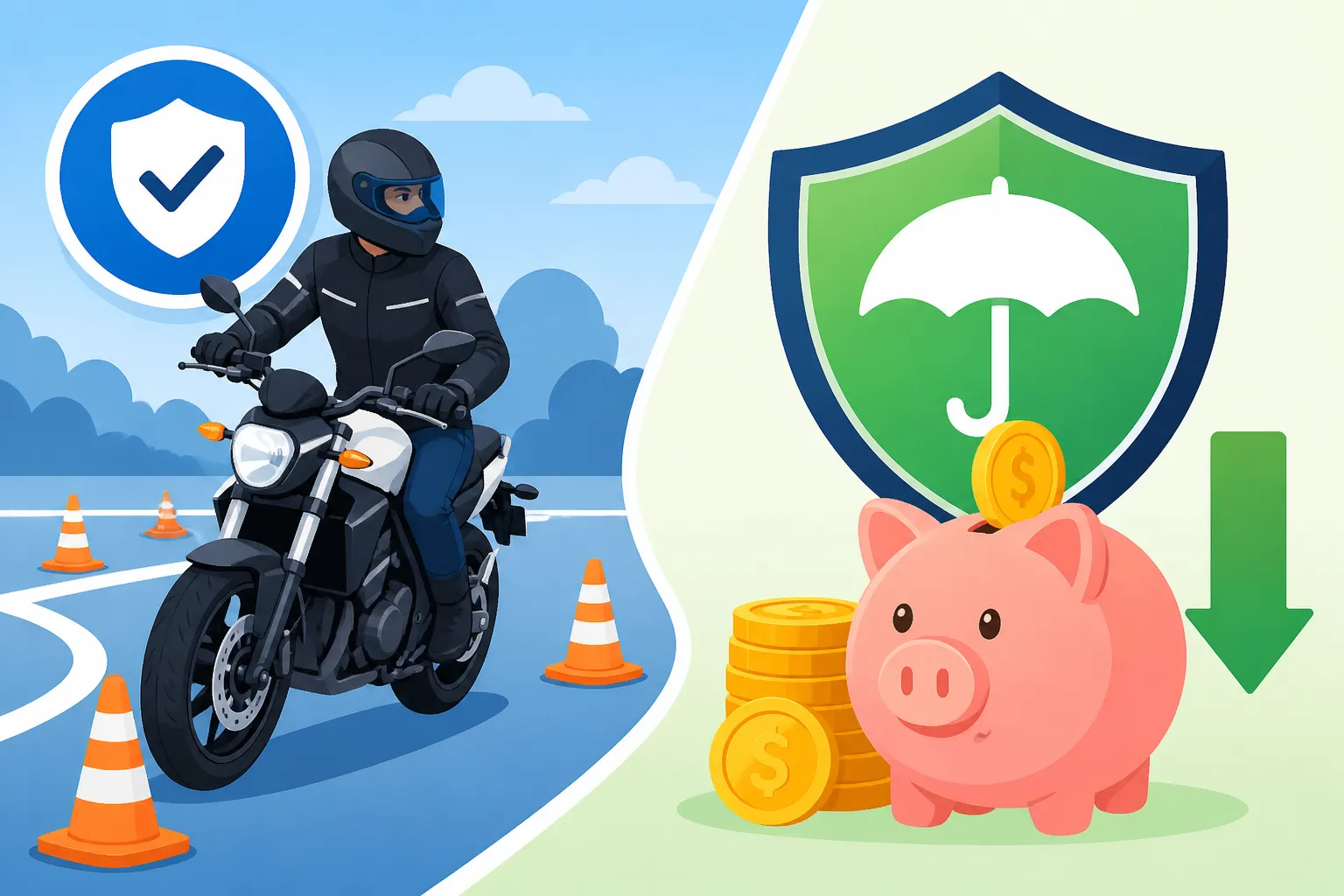
Let's be real: the cost of motorcycle insurance can feel like a real kick in the teeth, especially when you’re trying to budget for all the other expenses that come with owning a bike. Many riders wonder if there’s a secret handshake or a magic bullet to bring those premiums down without sacrificing essential coverage. Well, one of the most reliable and genuinely impactful ways to save some cash is by completing a motorcycle safety course. This guide will deep dive into exactly how much you can expect to save and why these courses are such a win-win for your wallet and your riding skills.
Why Motorcycle Safety Courses Are a Smart Move for Riders
Taking a motorcycle safety course isn't just about ticking a box for a discount; it's genuinely about becoming a better, safer, and more confident rider. For many new riders, it's a requirement to get their endorsement, but even seasoned vets can benefit immensely. Insurance companies see these courses not just as a piece of paper, but as a tangible effort you're making to reduce your risk on the road, which directly translates to fewer potential claims for them. That's why they're often so willing to reward you with lower rates.
Understanding Different Course Types and Their Benefits
When we talk about motorcycle safety courses, most people immediately think of the Motorcycle Safety Foundation (MSF) Basic RiderCourse (BRC). This is often the go-to course for beginners looking to get their license or endorsement, and it's widely recognized across the country for its comprehensive curriculum. You'll learn everything from basic controls and clutch manipulation to emergency braking and evasive maneuvers, all in a controlled, safe environment. Many states even waive the riding portion of your license test if you pass the BRC.
Beyond the basic course, there are also intermediate and advanced courses for riders who want to sharpen their skills. For instance, the MSF Advanced RiderCourse (ARC) is designed for experienced riders already holding a license. It focuses on more complex techniques like cornering strategies, advanced braking, and hazard avoidance at higher speeds. Some local riding clubs or dealerships might also offer their own specialized training sessions, often focusing on specific bike types like dirt bikes or cruisers. Each course type builds on fundamental skills, reinforcing good habits and introducing new ones, which is precisely what insurance carriers appreciate. They see continuous learning as a commitment to safety.
How Insurers View Your Commitment to Safety
Insurance providers are all about risk assessment. The less risky they perceive you to be, the lower your premium. Think about it: a rider who has invested time and money in formal training is generally considered less likely to be involved in an accident than someone who hasn't. This isn't just a hunch; actuarial data often supports the fact that trained riders have a lower incident rate. When you complete a safety course, especially a recognized one like the MSF Basic RiderCourse or even a subsequent advanced course, you're essentially providing proof that you've been educated in best practices for safe motorcycling.
This proof tells insurers like Progressive, Geico, or Dairyland that you're proactive about mitigating risks. It also shows a level of maturity and responsibility that translates directly into their risk calculations. It's not just about learning how to ride; it's about learning how to ride safely and predictably, making you a more desirable customer. Some insurance companies even specifically market discounts for these certifications, highlighting their value. This recognition is why this discount is often one of the most substantial ones available to motorcycle riders.
The Real Numbers: How Much You Can Actually Save
The big question, of course, is "how much?" While there's no single, universal answer that applies to every rider and every policy, completing a motorcycle safety course almost always results in a noticeable discount on your insurance premiums. This isn't just pocket change; it can be a significant chunk that makes your policy much more affordable.
Average Discount Percentages
Typically, riders can expect to see a discount ranging from 5% to 15% on their motorcycle insurance premiums after completing an approved safety course. However, some providers might offer even higher percentages, especially if you're a new rider or considered high-risk due to other factors. For example, a young rider purchasing their first sport bike might see a more substantial percentage discount because their initial rates are often much higher, so the safety course offers a greater perceived risk reduction for the insurer.
The exact percentage often depends on several factors:
- Your insurance provider: Some companies are more generous with this discount than others. It always pays to shop around and compare different quotes.
- Your state: Insurance regulations vary by state. What might be a standard discount in, say, California, might differ slightly in Texas. You can learn more about specific requirements in articles like Motorcycle Insurance Requirements by State (2026 Guide).
- Your age and riding experience: Younger riders or those with less experience often benefit from higher percentage discounts, as they represent a higher initial risk.
- The type of motorcycle: A discount on a powerful sport bike, which generally has higher premiums, might equate to more dollar savings than the same percentage discount on a smaller, less powerful cruiser.
Let's look at a hypothetical example. If your annual full coverage policy is $1,200, a 10% discount means you save $120 each year. Over five years, that's $600 back in your pocket! When you consider that many basic safety courses cost between $150 and $300, the savings can quickly offset the cost of the course itself, making it a sound financial investment.
Factors Influencing Your Specific Savings
While the average discount is a good starting point, several individual factors will ultimately determine your precise savings. It’s never a one-size-fits-all scenario, and the nuances of your personal profile play a huge role.
For starters, your driving record is paramount. A rider with a clean record and no recent accidents or tickets will likely already enjoy lower rates. The safety course discount will still apply, but it might stack differently compared to someone with a few blemishes on their record. On the flip side, if you've recently had a minor infraction, demonstrating proactive safety measures like a course could soften the impact on your rates, making the discount even more valuable in keeping costs manageable.
The type of motorcycle you ride also heavily influences both your base premium and the potential discount. A high-performance sport bike like a Yamaha R6 or a Suzuki GSX-R is statistically associated with higher risks and thus higher premiums. A safety course discount on such a bike can lead to significant dollar savings, even if the percentage is similar to that on a more sedate cruiser. Insurers factor in the bike's horsepower, top speed, and even its theft rate. If you're wondering How Much Is Motorcycle Insurance? 2026 Cost Guide, bike type is a huge variable.
Finally, where you live and store your bike also matters. Riders in urban areas with higher traffic density and theft rates typically face higher premiums. A safety course discount can help mitigate some of these geographical influences. Similarly, if you store your bike in a secure, locked garage versus parking it on the street, that already helps your rates, and the safety course further reinforces your responsible attitude toward your motorcycle.
Here's a simple breakdown of how a safety course can impact different premium levels:
| Annual Premium (Before Discount) | 5% Discount (Annual Savings) | 10% Discount (Annual Savings) | 15% Discount (Annual Savings) |
|---|---|---|---|
| $600 | $30 | $60 | $90 |
| $900 | $45 | $90 | $135 |
| $1,200 | $60 | $120 | $180 |
| $1,500 | $75 | $150 | $225 |
| $2,000 | $100 | $200 | $300 |
As you can see, the higher your starting premium, the more substantial the dollar savings become, making the safety course an even more compelling investment.
Finding and Choosing a Motorcycle Safety Course
So, you're convinced that a safety course is worth it (and it totally is!). The next step is finding one that fits your schedule, skill level, and budget. It’s easier than you might think, and the benefits go far beyond just the insurance discount.
Where to Find Approved Courses
The most common and widely recognized motorcycle safety courses are offered through the Motorcycle Safety Foundation (MSF). Their Basic RiderCourse (BRC) and Advanced RiderCourse (ARC) are the industry standards and are accepted by almost all insurance companies for discounts. You can find MSF-approved training centers by visiting the MSF website and using their locator tool, which allows you to search by zip code. These courses are typically run by authorized providers, often at local community colleges, dealerships, or dedicated riding schools.
Many states also have their own state-sponsored rider education programs that follow the MSF curriculum or a similar approved standard. For example, in Florida, you'd look for programs approved by the Florida Rider Training Program (FRTP), while in Maryland, it's the Maryland Motorcycle Safety Program. Checking your state's Department of Motor Vehicles (DMV) or equivalent agency website is a great place to start. They often list approved schools and schedules, and can even offer subsidies that reduce the cost of the course.
Another option is to check with local motorcycle dealerships. Many larger dealerships, especially those specializing in brands like Harley-Davidson, offer their own rider training courses. While these might not always be MSF-certified, they are often recognized by insurance companies for discounts. It’s always wise to confirm with your insurance provider before enrolling to ensure the course you choose qualifies for a discount. For more on what influences your rates, check out What Affects Your Motorcycle Insurance Rate?.
What to Expect and Course Costs
The MSF Basic RiderCourse typically involves about 15-20 hours of instruction, split between classroom time and practical riding exercises. You'll learn essential skills like starting, stopping, shifting, turning, and emergency maneuvers. The best part? They often provide the motorcycle for the basic course, so you don't even need to own one yet! This is particularly great for beginners who aren’t ready to commit to a purchase. Advanced courses usually require you to bring your own motorcycle, as they focus on refining skills on a machine you're familiar with.
The cost of a motorcycle safety course can vary widely depending on your location and the specific program. Generally, you can expect to pay anywhere from $150 to $400. Some states offer subsidized courses, which can significantly lower the out-of-pocket expense. For example, some community colleges in states like Pennsylvania or Ohio offer courses at the lower end of that spectrum, making it incredibly accessible.
Remember, this is an investment not just in your insurance savings, but in your own safety and enjoyment of riding. Many riders find the confidence gained from a structured course invaluable, far outweighing the initial cost. Plus, as a comprehensive comparison site, The Zebra highlights how these courses can be a game-changer for insurance rates, offering clarity on potential savings across different providers.
Beyond the Safety Course: More Ways to Trim Your Premiums
While a motorcycle safety course is an excellent way to reduce your insurance costs, it's certainly not the only one. Smart riders know that a combination of discounts and strategic choices can make a significant difference to their annual premiums. Think of it as building a robust financial defense for your riding habit!
Other Key Discounts to Explore
Insurance companies love to reward responsible behavior and loyal customers. Once you've completed your safety course, make sure you're taking advantage of every other discount you qualify for. One of the most common is the multi-policy discount, often called bundling. If you have your car insurance, home insurance, or even renters insurance with the same provider, combining your motorcycle policy can lead to substantial savings. Companies like State Farm and Allstate are well-known for offering attractive bundling options. This is covered in more detail in our guide on How to Get Cheap Motorcycle Insurance.
Another significant one is the good rider discount. If you maintain a clean driving record with no accidents or violations for a certain period (usually 3-5 years), your insurer will often reward you. This goes hand-in-hand with the safety course, showing a sustained commitment to safe riding. Don't forget the anti-theft device discount if your bike has an alarm, GPS tracker, or even a heavy-duty chain lock. These deterrents reduce the risk of theft, which saves the insurer money, so they pass some of those savings back to you.
For our more seasoned riders, there's often a senior rider discount available, usually starting around age 55 or 60, recognizing years of riding experience. And if you're a member of a motorcycle club like the H.O.G. (Harley Owners Group) or a professional organization, some insurers offer affinity discounts. Always ask your agent about all available discounts; you might be surprised what you qualify for! Many riders find resources like The Zebra helpful in uncovering all potential discounts across various providers.
Strategic Policy Choices for Lower Rates
Beyond discounts, making smart choices about your coverage itself can significantly impact your premiums. It's about finding that sweet spot between adequate protection and affordability. One crucial decision is choosing your deductible. This is the amount you pay out-of-pocket before your insurance kicks in for a claim. Opting for a higher deductible (e.g., $1,000 instead of $250) will almost always lower your premium, but make sure you can comfortably afford that higher amount if you do need to make a claim.
Consider your coverage limits. While you absolutely need to meet your state's minimum liability requirements, you might not need the absolute highest limits on all types of coverage, especially for an older, less valuable bike. For example, if your motorcycle is a classic that's mostly stored or only ridden seasonally, you might explore options like Do You Need Insurance to Store a Motorcycle? or even comprehensive-only coverage during the off-season to save money. For specific types of coverage, consult our article What Motorcycle Coverage Do You Actually Need?.
Finally, don't be afraid to shop around periodically. Insurance rates are dynamic and change based on market conditions, your personal profile, and even the competitive landscape among insurers. Every year or two, it’s a good practice to get multiple quotes from different providers, including major players like Progressive, Geico, and Dairyland, but also specialized carriers like Markel or Harley-Davidson Insurance. Tools like The Zebra make it simple to compare options side-by-side, ensuring you're getting the best possible rate for the coverage you need, including accounting for those hard-earned safety course discounts.
Disclaimer
Please remember that insurance policies and discounts can vary significantly based on your individual circumstances, location, and the specific insurance provider. The information provided here is for general guidance only and does not constitute professional financial or legal advice. Always consult with a qualified insurance agent to discuss your specific needs and options.