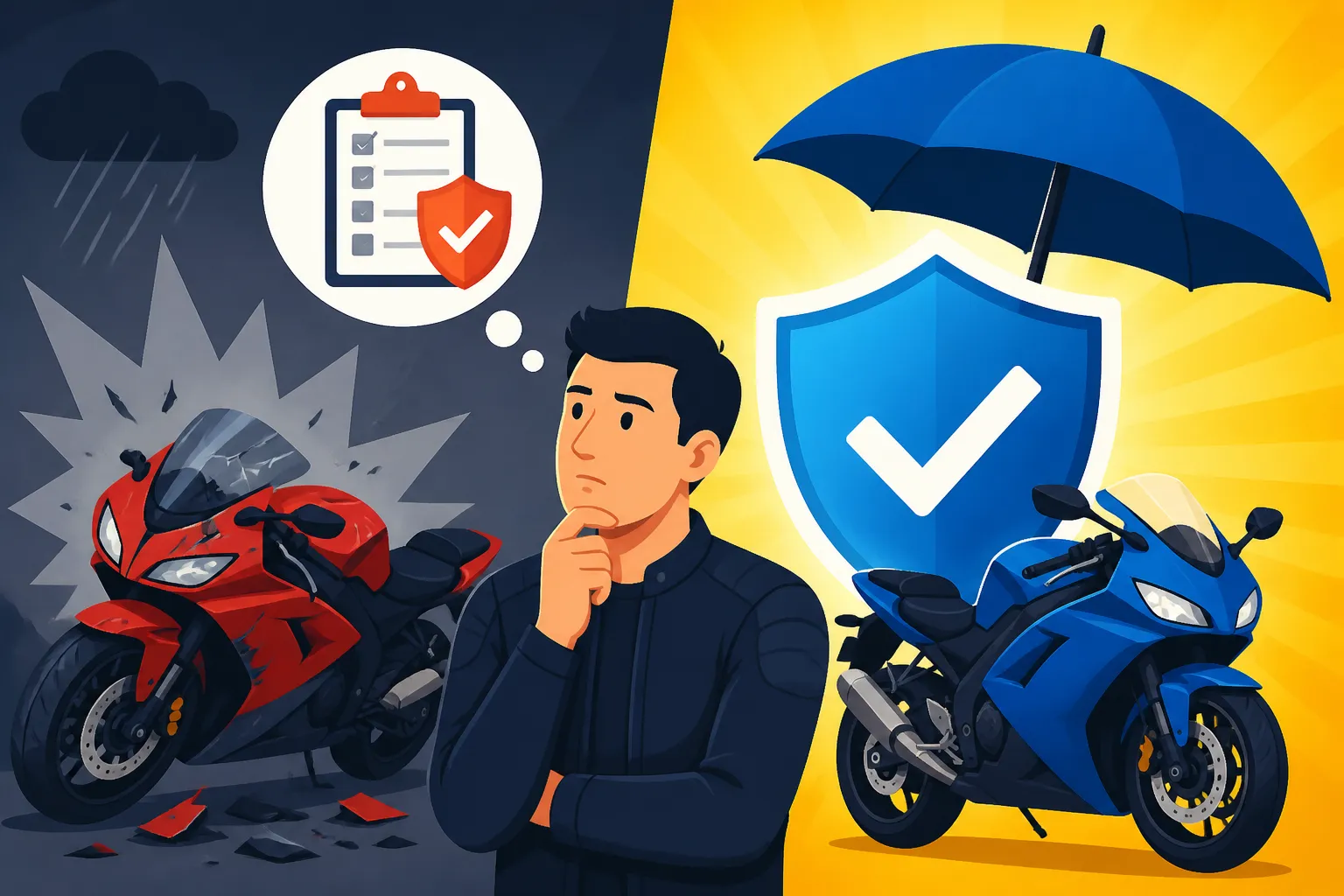
How Much Is Motorcycle Insurance After an Accident?
Riding a motorcycle offers unparalleled freedom, but that freedom comes with inherent risks. One of the most common worries after an unfortunate incident on the road is what will happen to your insurance rates. It’s a gut-wrenching feeling to know you've been in an accident, even a minor one, and then have to grapple with the looming question of how much more you'll have to pay just to keep your bike legally insured. This guide is here to shed light on exactly how an accident can impact your motorcycle insurance premiums and, more importantly, what you can do about it.
The Harsh Reality: Why Your Rates Jump After an Accident
Let's be real: no one wants to see their insurance premiums increase, especially not after the stress of an accident. But from an insurer's perspective, an accident signals an increased risk. You've demonstrated a higher probability of needing their services, which means they'll likely adjust your rate to reflect that perceived risk. It's a purely actuarial calculation, often feeling impersonal, but it's how the system works.
Underwriting Risk Assessment Changes
When you first apply for motorcycle insurance, the company assesses you based on a multitude of factors: your age, riding experience, the type of bike you ride, where you live, and your driving record. This is called underwriting. After an accident, especially one where you are found to be at fault, that risk profile changes significantly. You're no longer the same rider they initially assessed; you've now got a "loss" event attached to your record. Insurers use sophisticated algorithms to predict future claims, and a recent accident is a strong predictor of future incidents. They see you as a higher liability, and higher liability translates directly into higher premiums.
Imagine you've been a meticulous rider for years, never so much as a fender bender. You're cruising along, enjoying the ride, when suddenly a car cuts you off, and you have to lay your bike down to avoid a worse collision. Even if it feels like a freak accident to you, your insurer now has to re-evaluate your risk profile. They might factor in the cost of the claim they just paid out for your bike or medical expenses, and project that you're statistically more likely to be involved in another incident. It's not personal, it's just business, as they say. This adjustment often happens at your policy renewal, though some insurers might re-rate sooner depending on the severity and their specific policy terms.
Loss History Impact
Your "loss history" is essentially a record of all the insurance claims you've ever filed. Every time you make a claim, whether it's for a minor tip-over or a significant collision, it goes onto this record. When insurance companies calculate your premium, they pull this history. A clean loss history is golden, leading to lower rates. Conversely, a history peppered with claims, particularly at-fault accidents, is a red flag. Insurers will often refer to industry databases like CLUE (Comprehensive Loss Underwriting Exchange) to see this history, regardless of which company you were with at the time.
The impact isn't just about the number of claims, but also their type and cost. A single, high-cost at-fault accident will typically have a much more dramatic effect than, say, a comprehensive claim for a stolen motorcycle if you had proper anti-theft measures in place. While the latter might still nudge your rates up, the former signals a direct risk to others and property on the road, which is often considered more severe. Understanding your loss history and what goes into it is crucial for anticipating rate changes, which can be a real headache, especially if you're trying to figure out how to continue riding without breaking the bank. You might be surprised at what affects your motorcycle insurance rate.
Key Factors Determining Your Rate Increase
It's not a one-size-fits-all situation when it comes to rate increases after an accident. Several variables come into play, each weighing differently on your final premium. Understanding these factors can help you anticipate the financial hit and potentially mitigate some of the damage.
Fault and Severity of the Accident
This is probably the biggest piece of the puzzle. Were you at fault for the accident, or was another driver to blame? If you were deemed primarily at fault, your rates are almost certainly going to increase. Why? Because you're seen as the primary contributor to the "loss" incurred by the insurance company. The severity of the accident also plays a huge role. A minor fender-bender with minimal damage and no injuries will likely result in a smaller rate hike than a multi-vehicle collision involving significant property damage and medical claims.
For instance, let's say you misjudged a turn and scraped a parked car. The damage is cosmetic, costing a few hundred dollars to fix. Your rate might see a modest increase, perhaps 10-20%. Now, consider a scenario where you're at fault in an intersection collision, totaling your bike and causing serious injury to a third party. The claim could easily run into tens or even hundreds of thousands of dollars. In this case, your rates could skyrocket by 50% or more, and you might even find yourself in a high-risk category needing an SR-22 for motorcycles, which comes with its own set of increased costs. If you're not at fault, your rates are generally less likely to increase significantly, but even a not-at-fault accident can sometimes have a minor impact, as some insurers see any involvement in an accident as a slight increase in risk.
Your Driving Record and Claims History
Beyond the immediate accident, your overall driving and claims history is paramount. If this is your first accident in a decade and you have a spotless record otherwise, the impact might be less severe than for a rider who's had multiple tickets or previous at-fault accidents within a shorter timeframe. Insurers look for patterns. A single isolated incident is one thing; a series of incidents, however minor, paints a picture of a consistently high-risk driver.
For example, a rider with a recent speeding ticket and a prior minor accident might see a larger rate increase from a new at-fault accident compared to a rider with the same new accident but an otherwise perfect record. Some insurance companies even offer "accident forgiveness" for long-term, loyal customers with clean records, which could prevent a rate hike after a first at-fault incident. However, this is usually an add-on coverage or a perk for preferred customers, not a standard feature. Additionally, other factors like a DUI or other serious violations will definitely lead to higher premiums, often requiring specialized coverage or a filing like an SR-22 for a motorcycle.
State Regulations and Financial Responsibility
Every state has its own insurance laws and regulations, which can influence how much your rates are allowed to increase. Some states, like California, have specific rules about how long an accident can impact your rates and to what extent. Other states might be more lenient or stricter. For instance, in "no-fault" states, the system for handling personal injuries can differ greatly from "at-fault" states, potentially influencing liability claims and subsequent rate adjustments. Understanding your state's particular requirements for motorcycle insurance is crucial.
Furthermore, states have financial responsibility laws that mandate how much liability coverage you must carry. If an accident results in damages exceeding your minimum liability insurance explained (the three numbers) requirements, you could be personally responsible for the difference, adding another layer of financial stress on top of rising premiums. This also influences how severely insurers view future risk. A history of claims close to or exceeding minimum state limits often leads to higher rate hikes because it suggests a higher potential for uninsured losses in the future, which is a big concern for insurers.
Here's a simplified look at how an at-fault accident might impact rates:
| Accident Scenario | Typical Rate Increase Range (Approx.) | Notes |
|---|---|---|
| Minor, at-fault, under $2,000 damage | 10-25% | May be less with accident forgiveness. |
| Moderate, at-fault, $2,000-$5,000 damage | 25-50% | Significant impact, especially if first incident. |
| Major, at-fault, over $5,000 damage + injuries | 50-100%+ | Could result in high-risk designation, SR-22 requirement. |
| Not-at-fault accident | 0-10% | Minor impact possible, depending on insurer and state. |
| Comprehensive claim (theft, vandalism) | 5-20% | Often less impactful than collision, but still a loss event. |
Note: These are estimates and actual increases can vary widely based on your insurer, state, driving history, and specific policy details.
Navigating the Aftermath: How to Manage Higher Premiums
Seeing your insurance premium jump after an accident can be disheartening, but it's not the end of the road. There are proactive steps you can take to try and manage these increased costs and get your rates back on track over time.
Reviewing Your Policy and Deductibles
The first thing to do is carefully review your current policy. Understand exactly what coverage you have and what you're paying for. Sometimes, after an accident, the natural inclination is to cut coverage to save money, but you need to be strategic. While dropping comprehensive or collision coverage on an older, fully paid-off bike might make sense, doing so on a newer or financed bike could leave you financially vulnerable. You should always ensure you have the proper types of motorcycle insurance coverage explained before making drastic changes.
One immediate way to potentially offset a rate hike is to increase your deductibles. Your deductible is the amount you pay out-of-pocket before your insurance kicks in for a claim. A higher deductible usually means a lower premium. For example, if you increase your collision deductible from $500 to $1,000, you could see a noticeable reduction in your premium. Just be sure you have enough in your emergency fund to cover that higher deductible if you need to file another claim. It’s a balancing act, and it’s important to find what works for your personal financial situation and comfort level with risk.
Seeking Discounts and Safety Courses
Even after an accident, you might still qualify for various discounts that can help reduce your overall premium. Don't assume your insurer will automatically apply every discount you're eligible for; sometimes you have to ask. Have you recently installed an anti-theft device? That could qualify you for a discount. Are you a member of a motorcycle club or association? Many insurers offer affinity discounts. Even something as simple as paying your premium in full or opting for paperless billing can sometimes lead to small savings.
Perhaps one of the most impactful ways to lower your rates, especially after an incident, is to complete a motorcycle safety course. Most insurers view riders who complete approved safety courses, like those offered by the Motorcycle Safety Foundation (MSF), as lower risk. This isn't just about saving money; it genuinely makes you a safer rider. The skills you learn in these courses can help you avoid future accidents, which is the best way to keep your rates down in the long run. Many states even require these courses for new riders or for those trying to get their endorsement, and they can often lead to a 5-15% discount on your premium. It's a win-win situation, enhancing your skills and helping your wallet.
Shopping for New Coverage
After an accident and a rate increase, one of the most powerful tools at your disposal is to shop around for new motorcycle insurance quotes. Don't feel obligated to stick with your current insurer, especially if their new rates are no longer competitive. Different companies have different underwriting models and risk tolerances, so one insurer might penalize an accident more heavily than another. This is where comparing motorcycle insurance quotes becomes invaluable.
Websites like The Zebra can be a real game-changer here. They allow you to input your information once and get quotes from multiple providers, simplifying the comparison process. You might find that while your existing insurer hiked your rates significantly, another company is willing to offer you a much more reasonable premium, even with the accident on your record. Be transparent about your accident when getting quotes; hiding it will only lead to problems down the road. While you're shopping, consider calling up some of the best motorcycle insurance companies directly to discuss your situation and see what they can offer. You might be surprised at the difference you find. Sometimes, switching motorcycle insurance companies is the best financial decision you can make, but always ensure there's no lapse in coverage.
Even if you don't switch immediately, making it a habit to regularly review and compare your rates every year or two can ensure you're always getting the best deal. Your rates can go down as the accident ages on your record and if you maintain a clean driving history moving forward. Most at-fault accidents impact your rates for about three to five years, though the exact timeframe can vary by insurer and state. Stay diligent, ride safe, and keep an eye on those premiums!
Disclaimer
Please remember that the information provided in this article is for general informational purposes only and does not constitute financial, legal, or insurance advice. Motorcycle insurance laws and rates vary significantly by state, insurer, individual history, and policy specifics. Always consult with a qualified insurance professional to discuss your unique needs and to obtain accurate quotes and policy details.