How Much Is Motorcycle Insurance With Bad Credit?
It’s a frustrating reality for many of us: you're eager to hit the open road on your motorcycle, but you're worried your credit history might slam the brakes on getting affordable insurance. Many riders feel judged and penalized for past financial hiccups, even when those don't reflect their roadworthiness. This guide is here to shed light on how bad credit affects your motorcycle insurance rates and, more importantly, what you can realistically do about it to get back in the saddle.
The Unseen Hand: How Credit Scores Influence Insurance Rates
Let's be honest, it feels unfair. You’re a safe rider, you’ve never had an accident, but a couple of late bill payments from years ago might hike up your insurance premium. Many motorcyclists wonder why their financial history has any bearing on their riding habits, and it's a valid question. However, from an insurer's perspective, credit scores (or, more accurately, credit-based insurance scores) are a significant predictor of risk. They believe that individuals with lower credit scores are statistically more likely to file claims, or even just be less responsible with their payments, making them a higher risk to insure. It’s not about judging your character, but about managing their financial exposure.
How Insurers Utilize Credit Information
Insurance companies don't typically pull your FICO score, the one lenders use for mortgages or car loans. Instead, they use proprietary credit-based insurance scores. These scores are derived from elements within your credit report, such as payment history, outstanding debt, the length of your credit history, and new credit applications. While the exact algorithms are a trade secret for each insurer, they are designed to predict the likelihood of you filing a claim in the future.
For instance, if your credit report shows a history of missed payments or high credit utilization, an insurer might see that as an indicator of financial instability. This perceived instability, in their models, correlates with a higher chance of needing to make a claim or even letting your policy lapse due to missed payments. This isn't just for motorcycle insurance; it affects auto insurance, too. States like California, Hawaii, Massachusetts, and Michigan have actually banned the use of credit scores in determining insurance premiums, acknowledging the potential for unfair bias. But for most of the country, it's a very real factor.
The Direct Impact on Your Premiums
The most direct impact of a low credit score is a higher premium. It’s not a subtle nudge; it can be a significant jump in what you pay monthly or annually. Imagine two riders, both with the same age, riding experience, bike type, and even living in the same neighborhood. If one has excellent credit and the other has poor credit, the rider with poor credit could easily pay hundreds, or even thousands, more per year for the same coverage.
This isn't to say your credit is the only factor, but it's a powerful one. For a rider in, say, Texas, who is already dealing with potentially higher base rates, a poor credit score can compound the problem. It can feel like you're stuck in a cycle: trying to save money but being forced to pay more for essential services like insurance because of past financial struggles. Understanding this impact is the first step toward navigating the system and finding ways to mitigate the damage.
Unpacking What Else Affects Your Motorcycle Insurance Rate
While your credit score undeniably plays a role, it’s far from the only variable influencing your motorcycle insurance premiums. The good news is that many other factors are within your control, or at least understandable, which can help offset the impact of less-than-perfect credit. Thinking about your overall risk profile, rather than just one data point, can empower you to find more favorable rates. You really have to look at the whole picture to understand What Affects Your Motorcycle Insurance Rate?.
Your Riding History and Experience
One of the biggest factors insurers consider is your personal history on two wheels. A rider with a clean driving record – no accidents, no tickets, no DUIs – will almost always pay less than someone with a spotty history. This is pure common sense from an insurance perspective: safe riders present less risk. The longer you've been licensed and riding without incident, the better.
Additionally, completing a certified motorcycle safety course, like those offered by the Motorcycle Safety Foundation (MSF), can often net you a discount. These courses don't just make you a better rider; they signal to insurers that you are proactive about safety and reducing risk. This is a powerful counter-argument to a low credit score. Even if you're a relatively new rider with bad credit, investing in a safety course could be one of the smartest moves you make to lower your rates. Your age also plays a part, with older, more experienced riders typically paying less than younger, newer riders.
Your Bike Type and Where You Live
The kind of motorcycle you ride and where you store or ride it frequently are also critical. A high-performance sport bike, for example, is statistically more expensive to insure than a modest cruiser or a touring motorcycle. Sport bikes are often associated with higher speeds, greater accident rates, and more expensive repair costs, pushing premiums sky-high regardless of credit. The cost of insuring a Harley-Davidson will be very different from a Kawasaki Ninja, and insurers know this.
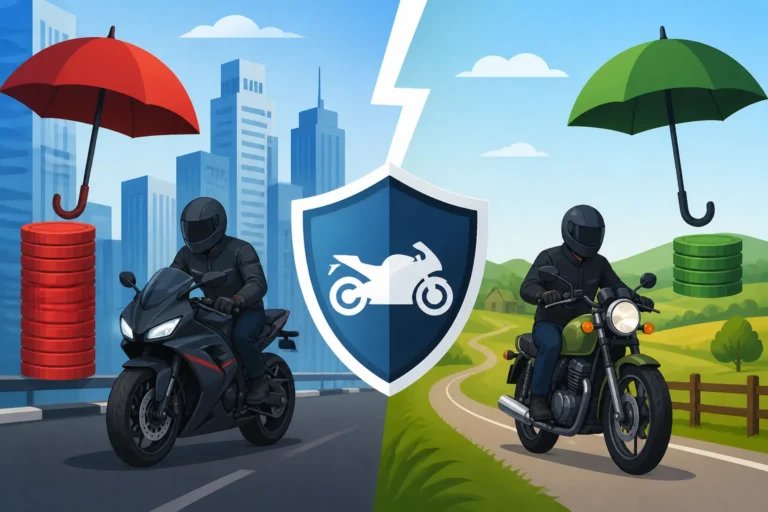
Your location matters, too. If you live in a densely populated urban area, like Los Angeles or Miami, where traffic is heavy and theft rates might be higher, your insurance rates will generally be more expensive than if you reside in a rural town in Montana. Even within the same city, specific zip codes can have vastly different rates based on local accident and crime statistics. So, if you've got bad credit and a sport bike and live in a busy city, you're looking at a triple whammy.
Coverage Choices and Deductibles
What kind of coverage you choose is another massive determinant of your premium. States typically require at least minimum liability insurance, which covers damage or injury you cause to others. But if you opt for "full coverage" – which usually includes collision and comprehensive – your premiums will be considerably higher. While full coverage is often a wise choice to protect your investment, especially if your bike is newer or financed, it might be an area where you have to make tough decisions if you're dealing with bad credit.
Adjusting your deductibles can also impact your rate. A higher deductible (the amount you pay out of pocket before insurance kicks in) usually means a lower premium. This is a trade-off: you save money upfront but take on more financial risk in the event of a claim. For someone with bad credit, finding the right balance between affordability and adequate protection is crucial. It’s about being strategic with your choices to mitigate the overall cost.
Actionable Strategies to Reduce Your Rates
Dealing with higher motorcycle insurance costs due to bad credit isn't a death sentence for your riding dreams. While you can't magically erase your credit history overnight, there are concrete steps you can take to make your premiums more manageable. It requires a proactive approach, but many riders successfully navigate this challenge every day. One crucial step is to be diligent about finding the Cheapest Motorcycle Insurance Companies.
Shop Around Aggressively
This is, hands down, the most important piece of advice for anyone seeking to lower their insurance costs, especially with bad credit. Don't settle for the first quote you receive. Different insurance companies weigh factors like credit history differently. One insurer might see your credit score as a major red flag, while another might place more emphasis on your clean riding record or the specific type of bike you ride.
Websites like The Zebra can be incredibly helpful here. They allow you to compare multiple quotes from various providers side-by-side, quickly showing you which companies offer the most competitive rates for your unique situation. You might be surprised to find a significant difference in pricing between companies like Progressive, Geico, Dairyland, and even smaller, regional providers. Dedicate an afternoon to gathering at least 5-10 quotes. This process will not only save you money but will also give you a better understanding of the market and which insurers are more forgiving of past credit issues.
Improve Your Credit Score Over Time
While improving your credit isn't an instant fix for your insurance premiums, it's a long-term strategy that will benefit every aspect of your financial life. Start by getting a copy of your credit report (you can do this for free annually from each of the three major credit bureaus) and checking for errors. Dispute any inaccuracies immediately.
Then, focus on consistent, positive financial habits. Pay all your bills on time, every time, even if it's just the minimum payment. Try to reduce your credit card balances to keep your credit utilization low (ideally below 30% of your available credit). Avoid opening too many new credit accounts at once. As your credit score gradually improves over months and years, your insurance rates will likely reflect that improvement when you renew your policy or shop for new coverage. This is a marathon, not a sprint, but the payoff is substantial.
Maximize Available Discounts
Most insurance companies offer a variety of discounts that can help chip away at your premium. Make sure you're asking about and taking advantage of every single one you qualify for. Some common motorcycle insurance discounts include:
- Multi-policy discount: Bundling your motorcycle insurance with your car insurance, home insurance, or renter's insurance with the same provider can lead to significant savings.
- Motorcycle safety course discount: As mentioned, completing an approved rider safety course.
- Anti-theft device discount: Installing an alarm or tracking device on your motorcycle.
- Good rider/safe driver discount: For maintaining a clean riding record over a certain period.
- Paid-in-full discount: Paying your annual premium upfront instead of in monthly installments.
- Loyalty discount: For sticking with the same insurer for multiple years.
- Organizational discounts: Sometimes available for members of certain motorcycle clubs or associations.
Don't assume your insurer will automatically apply every discount. Be proactive and ask your agent or check your policy details. Each discount might seem small, but they can add up to noticeable savings, helping to offset the higher rates imposed by your credit score.
Strategic Coverage Adjustments
If your credit situation makes comprehensive coverage prohibitively expensive, you might need to make some tough choices. For older, lower-value bikes that are fully paid off, you could consider opting for Liability Coverage for Motorcycles Explained only. This means you're only covered for damages you cause to others, and you'd be responsible for repairs or replacement of your own bike after an accident or theft. This is a significant risk, but it will be the cheapest option.
Another strategy is to increase your deductibles for collision and comprehensive coverage. By agreeing to pay a higher amount out-of-pocket if you need to file a claim, you signal to the insurer that you're taking on more of the immediate risk, which often translates to a lower premium. However, ensure you have the funds readily available to cover that deductible if something happens. This is a delicate balance, especially with bad credit, but it can be a temporary solution while you work to improve your financial standing and eventually afford more robust coverage.
Real-World Scenarios and Expectations
Navigating motorcycle insurance with bad credit means setting realistic expectations. You likely won't get the rock-bottom rates advertised, but you're not entirely out of luck either. The key is understanding the range of possibilities and being prepared to put in the effort to find the best possible outcome for your situation.
The Cost Difference: A Practical Look
Let's consider a hypothetical rider, Alex, in Phoenix, Arizona. Alex is 30, rides a 2020 Honda Rebel 500, and has completed a basic rider safety course.
| Credit Tier | Annual Premium (Hypothetical) | Difference from Excellent Credit |
|---|---|---|
| Excellent Credit | $600 | N/A |
| Good Credit | $750 | +$150 |
| Fair Credit | $1,000 | +$400 |
| Poor Credit | $1,500+ | +$900 or more |
Note: These are purely illustrative figures. Actual rates vary significantly based on numerous factors including specific insurer, location, bike model, coverage limits, and individual driving history.
As you can see, the difference can be substantial. For Alex, having poor credit might mean paying more than double what a rider with excellent credit pays for the same coverage. This isn't pocket change; it's a significant portion of a tight budget. This table highlights why shopping around aggressively, using comparison tools like The Zebra, is so critical. An insurer known for How to Get Cheap Motorcycle Insurance might still give you a better deal, even with bad credit.
Insurers Who Might Be More Forgiving
While no insurer will openly advertise "great rates for bad credit," some companies might be more competitive or have different underwriting models that weigh credit less heavily than others. Larger national carriers like Progressive, Geico, and Dairyland often have a wider range of risk appetites and may offer more options, even for riders with credit challenges. They have the volume to absorb more diverse risk profiles.
Sometimes, smaller, regional insurers might also surprise you. They might operate with different localized data or have a more personal approach to risk assessment. It's always worth getting quotes from a broad spectrum of companies. Don't assume that a major brand will automatically be more expensive or cheaper; their algorithms and discount structures can vary wildly. The goal is to find an insurer who sees enough positive factors in your profile (like a clean riding record or safety course completion) to offset the negative impact of your credit score. This is where comparing multiple quotes really shines, as it exposes these differences in pricing and risk assessment.
In summary, having bad credit can make motorcycle insurance more expensive, but it doesn't have to be a permanent roadblock. By understanding how insurers use credit information, leveraging other favorable aspects of your rider profile, and diligently shopping for quotes and discounts, you can find coverage that allows you to enjoy the freedom of the open road without breaking the bank. Remember that improving your credit over time is the most sustainable solution, but there are plenty of strategies you can employ in the short term. Always compare options, especially when dealing with unique situations like this.
Disclaimer
Please remember that insurance policies, laws, and rates can vary significantly by state and individual circumstances. This guide provides general information and recommendations. Always consult with a licensed insurance professional to discuss your specific needs and to obtain personalized quotes and advice tailored to your situation. The information provided herein is not a substitute for professional legal or financial advice.