Motorcycle Insurance Cost for a Sport Bike vs Cruiser
The moment you sign the papers on a new bike, the excitement is palpable. But then you call your agent and the mood shifts. You might find that insuring a sleek, 600cc sport bike costs three times as much as a 1200cc cruiser. This guide breaks down the massive price gap between these two classes, explaining the "why" behind the numbers and helping you budget accurately for your next ride.
Why Insurance Companies View Sport Bikes and Cruisers Differently
If you have ever sat at a dealership in Austin or Daytona, looking back and forth between a Kawasaki Ninja and a Harley-Davidson Softail, you might think the larger engine on the cruiser would mean a higher insurance bill. On paper, that logic holds up for cars, where a V8 usually costs more to insure than a four-cylinder. However, in the world of two wheels, the math is flipped on its head. Actuaries—the folks who calculate risk for insurance companies—don't just look at the engine size; they look at how that bike is typically ridden and who is usually in the saddle.
The Statistics of Speed and Risk
Insurance is entirely a game of probabilities. When a company looks at a sport bike, they see a machine designed for the track. These bikes are built for high-speed cornering, rapid acceleration, and aggressive lean angles. Statistically, sport bikes are involved in more single-vehicle accidents and high-speed crashes than any other class. Because of this, Sport Bike Insurance Cost (Why So High) remains a frequent point of frustration for younger riders.
In contrast, cruisers are designed for the open road. Their geometry—long wheelbases and low centers of gravity—encourages a more relaxed riding style. Someone riding a cruiser through the winding roads of the Blue Ridge Parkway is statistically less likely to be pushing the limits of the bike's traction than someone on a supersport in the same location. This behavioral difference is baked into your premium from day one.
Repair Costs: Fairings vs. Chrome
There is also the "tip-over" factor. If you drop a cruiser in your driveway in Columbus, you might scratch a crash bar or scuff some chrome. It’s annoying, but often purely cosmetic. If you drop a sport bike, the expensive plastic fairings often crack or shatter. Replacing a full set of OEM fairings on a modern sport bike can easily cost $2,000 to $4,000, not including labor.
Furthermore, sport bikes are built with lightweight, high-performance materials like magnesium and carbon fiber. While these materials make the bike fast, they are incredibly expensive to replace after an accident. This makes Motorcycle Insurance Cost by Bike Type vary wildly even when the MSRP of the two bikes is nearly identical. An insurance company knows that even a "minor" slide on a sport bike could lead to a total loss claim because the cost of those plastics and the labor to install them often exceeds the bike's value.
Average Cost Comparison: Sport Bikes vs. Cruisers
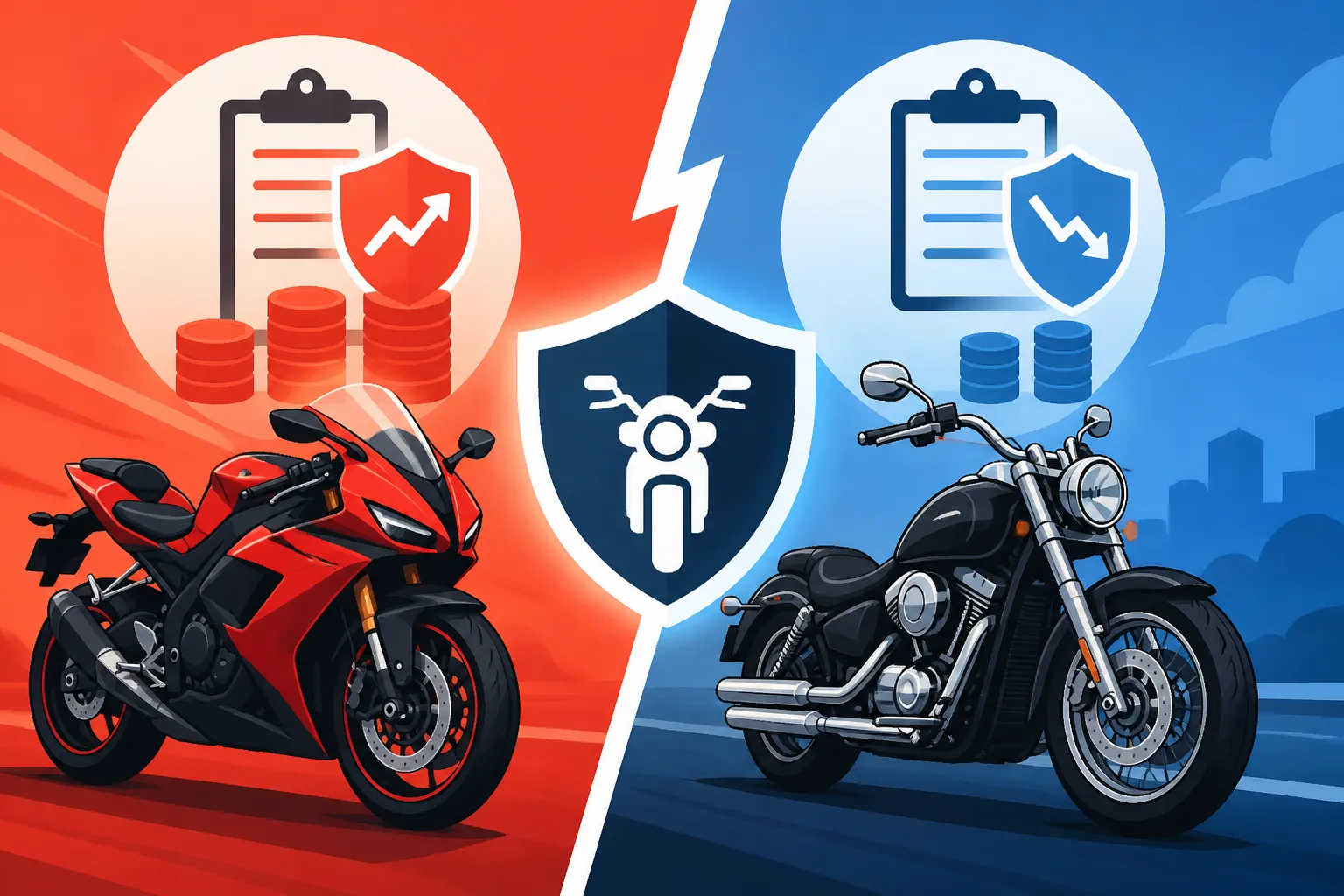
Trying to pin down a single "average" is tough because rates in California differ wildly from rates in Ohio, but we can look at the ratios. Generally, you can expect to pay anywhere from 50% to 200% more for a sport bike than you would for a cruiser of similar value. This is where using a comparison tool like The Zebra can really save your sanity, as it allows you to see these price gaps across different carriers in real-time.
Cruisers: The Lower-Premium Standard
For many riders, the Cruiser Motorcycle Insurance Cost is the gold standard for affordability. Because these bikes are often owned by older, more experienced riders, they benefit from a "mature rider" discount implicitly built into the bike's risk profile. If you are a 45-year-old rider in Florida with a clean record, you might find that liability and comprehensive coverage for a mid-sized cruiser costs less than your monthly cell phone bill.
Cruisers also tend to have lower theft rates in certain regions compared to high-demand sport bikes. While a high-end CVO Harley is certainly a target, the "parts" market for stolen cruisers is often less volatile than the market for sport bike engines and fairings, which are frequently used in amateur racing or "stunt" riding circles.
Sport Bikes: The High-Risk Premium
On the flip side, the sport bike premium is driven by a trifecta of high accident frequency, high repair costs, and high theft rates. In metropolitan areas like Los Angeles or Miami, sport bikes are prime targets for professional thieves because they can be stripped down in minutes. This means your comprehensive coverage—the part of your policy that covers theft—will be significantly higher than it would be for a cruiser.
Riders often ask Does Engine Size (CC) Affect Insurance Cost? and the answer is a resounding "yes" for sport bikes. A 600cc "supersport" is often more expensive to insure than a 1000cc "standard" or "naked" bike because the supersport is classified as a race-replica. The insurance company assumes that if you bought a bike with a clip-on handlebar and rear-set footpegs, you intend to ride it at speeds that increase the likelihood of a claim.
Key Factors Influencing Rates for Both Classes
While the bike type is the biggest "bucket" your premium falls into, several other levers can move the price up or down. Whether you’re leaning toward a Ninja or a Shadow, these factors will dictate the final number on your quote.
Rider Demographics and Experience
This is the one that hurts the most for new enthusiasts. If you are under 25, the insurance industry views you as a high-risk entity regardless of what you ride, but the penalty for choosing a sport bike is compounded. When looking at How Much Is Motorcycle Insurance for an 18 Year Old?, the numbers for a sport bike can sometimes exceed the actual value of the bike over just two or three years of premiums.
For cruiser riders, the age curve is much gentler. A 20-year-old on a Honda Rebel 500 will almost always pay less than a 20-year-old on a Kawasaki Ninja 400, despite the bikes having similar power outputs. The industry simply assumes the Rebel rider is less likely to engage in "hooning" or high-speed lane splitting.
Geographic Location and Storage
Where you park your bike matters as much as what you ride. If you live in a high-crime zip code or an area prone to severe weather (like hail in Texas or flooding in Louisiana), your comprehensive rates will skyrocket. Sport bikes suffer more in urban environments where theft is rampant. Cruisers, while still targets, sometimes benefit from being stored in garages or behind gates, and insurance companies often ask about storage during the quote process.
If you find yourself in a high-rate area, using The Zebra to compare how different companies weight your zip code can be an eye-opener. Some companies might penalize you heavily for living in a certain part of Chicago, while others might be more lenient if you have a recorded history of using anti-theft devices.
Detailed Comparative Breakdown: Sport Bike vs. Cruiser
To give you a better idea of the financial landscape, let's look at how two popular "entry-level" to "mid-tier" bikes might compare in a typical suburban environment. Note that these are estimates based on a rider with a clean record and average coverage limits.
| Feature | Sport Bike (e.g., Yamaha R6) | Cruiser (e.g., Honda Shadow 750) |
|---|---|---|
| Typical Annual Premium | $1,200 – $2,500+ | $400 – $800 |
| Primary Risk Factor | High-speed accidents / Theft | Low-speed drops / Custom parts |
| Repair Complexity | High (fairings, specialized parts) | Moderate (chrome, paint) |
| Theft Rating | Extremely High | Moderate |
| Typical Rider Age | 18 – 35 | 30 – 65+ |
| Liability Impact | High (potential for high-speed damage) | Moderate |
As you can see, the Average Motorcycle Insurance Cost by State will fluctuate, but the gap between these two categories remains relatively consistent. You aren't just paying for the bike; you're paying for the "average" behavior of every other person who owns that same model.
Hidden Costs and Coverage Add-ons
Beyond the base premium, cruisers and sport bikes often require different types of specialized coverage that can add to the total cost of ownership.
Custom Parts and Accessories Coverage
Cruiser owners are famous for "making the bike their own." Whether it’s Vance & Hines pipes, a custom Mustang seat, or $5,000 worth of extra chrome, standard insurance policies usually only cover about $1,000 in modifications. If you have a highly customized cruiser, you will need to buy additional "Accessory Coverage." This can add a few hundred dollars to your annual bill, but it’s essential if you want to be reimbursed for that expensive custom paint job after a wreck.
Safety Gear and Helmet Coverage
Sport bike riders often invest heavily in high-performance gear. A quality racing suit, a Carbon Fiber Shoei or Arai helmet, and specialized boots can easily total $2,500. Many sport-bike-heavy insurance policies offer specific "Gear Coverage" as an add-on. Given how often sport bikes are involved in slides where the gear is destroyed while protecting the rider, this is a cost that many riders find worth the extra premium. It’s a hidden layer of What Does Full Coverage Motorcycle Insurance Mean? that most people don't consider until they are sliding down the asphalt.
How to Lower Your Premiums Regardless of Your Bike Type
No matter which side of the sport-vs-cruiser fence you land on, you don't have to just accept the first quote you get. There are proven ways to shave 10% to 30% off your bill if you're willing to do a little legwork.
Education and Safety Courses
The single best thing a new rider can do for their wallet is to take a Motorcycle Safety Foundation (MSF) course. Not only does it teach you how to stay alive, but most insurers offer a permanent discount (often 10%) just for showing your completion card. This is particularly effective if you are a younger rider looking for How to Get Cheap Motorcycle Insurance while owning a sport bike.
Strategic Policy Management
Bundling is your friend. If you already have car or renters insurance, adding your bike to that existing policy is usually cheaper than starting a standalone policy. We often discuss Bundling Motorcycle and Auto Insurance: Worth It? and the answer is almost always yes.
Additionally, consider your deductible. If you have a sport bike with a $250 deductible, your premium will be massive because the insurer knows they will likely have to pay out for every small scratch. Raising that deductible to $500 or $1,000 can significantly drop your monthly payment. Just make sure you actually have that $1,000 sitting in a savings account in case the bike goes down.
Finally, don't be afraid to shop around every single year. The market changes, and companies that were "sport bike friendly" last year might change their underwriting rules this year. Using a platform like The Zebra allows you to quickly check if your current company is still the best deal or if you're leaving money on the table.
Final Considerations Before Buying
Before you head to the dealership, call your insurance agent with the VIN or at least the exact model name of the bike you’re considering. Don't assume that because a bike has a smaller engine, it will be cheaper. A 600cc sport bike is almost always more expensive to insure than a 1200cc cruiser.
If you are on a tight budget, the "Standard" or "Naked" bike category often provides a middle ground. Bikes like the Yamaha MT-07 or the Kawasaki Z650 offer sport-like performance but are often classified differently by insurers, leading to lower rates than their fairing-clad siblings. This is a great way to get the thrills of a sport bike without the "sport bike tax."
The reality of the road is that the bike you choose defines your financial relationship with your insurance company for as long as you own it. Whether you choose the rumble of a cruiser or the scream of a sport bike, knowing the costs upfront will ensure you spend more time enjoying the ride and less time stressing over the bill.
Motorcycle Insurance Disclaimer
This guide is intended for informational purposes only and does not constitute legal, financial, or professional insurance advice. Insurance laws, coverage requirements, and premium rating factors vary significantly by state and individual provider. Always consult with a licensed insurance agent or broker to discuss your specific needs and to obtain an accurate quote based on your personal riding history and location. Minimum coverage requirements are subject to change, and it is the rider's responsibility to ensure they remain in compliance with all local and state regulations regarding motorcycle operation and financial responsibility.