Does Your Credit Score Affect Motorcycle Insurance?
You have spent years maintaining a spotless riding record, never dropping your bike or catching a speeding ticket, yet your latest insurance quote comes back surprisingly high. It feels like a punch in the gut when you realize that your financial history might be the silent culprit behind those soaring premiums. This guide explores exactly how credit scores impact your motorcycle insurance and what you can do to fix it.
Understanding the Link Between Credit and Motorcycle Insurance
It might seem entirely unrelated—how you handle a credit card versus how you handle a 600-pound machine on the highway—but to insurance companies, these two worlds are inextricably linked. For decades, actuarial scientists have poured over data, finding a strong statistical correlation between financial responsibility and physical risk on the road. It is not about whether you are a "good person," but rather about the likelihood of you filing a claim.
Insurance companies are essentially in the business of predicting the future. They want to know the probability of an accident before it happens. Their data suggests that individuals who manage their credit effectively tend to be more cautious in other areas of their lives, including their driving habits. This does not mean a low credit score makes you a bad rider, but it does place you in a different risk pool. Validating this frustration is important because many riders feel their skill on the bike should be the only factor that matters, yet the financial side of the equation often carries just as much weight.
What is a Credit-Based Insurance Score
When you apply for coverage, insurers rarely look at your raw FICO score. Instead, they use something called a credit-based insurance score. While your FICO score is designed to tell a lender how likely you are to repay a loan, an insurance score is designed to predict the likelihood of you being involved in an accident or filing a claim. It is a subtle but significant distinction that many riders overlook when they see their premiums fluctuate.
This score is calculated using various elements of your credit report, such as your payment history, the length of your credit history, and your total outstanding debt. However, it weighs these factors differently than a traditional lender would. For instance, a long history of on-time payments might be weighted more heavily in an insurance score than in a mortgage application. Understanding What Affects Your Motorcycle Insurance Rate? is the first step in realizing that your financial footprint is just as visible as your riding record.
Why Insurers Use Credit Data
The primary reason insurers lean on credit data is its predictive power. Large-scale studies by organizations like the Federal Trade Commission have shown that credit history is an incredibly accurate predictor of insurance losses. From the insurer's perspective, a rider who is stressed by financial instability might be more prone to distractions, or perhaps they are less likely to perform the necessary preventative maintenance on their bike, leading to mechanical failures on the road.
This is often a hard pill for the riding community to swallow. You might be a master of low-speed maneuvers and emergency braking, but if your credit utilization is at 90%, the algorithm sees a higher risk. It is a cold, calculated approach to risk management that often ignores the individual nuances of a rider's life. However, by acknowledging this reality, you can begin to navigate the system more effectively and find ways to lower your costs.
The Accuracy of the Correlation
Critics often argue that using credit scores is a "proxy" for income and can unfairly penalize certain demographics. While the debate continues in state legislatures, the reality for most riders today is that the correlation remains a cornerstone of the industry. Insurers argue that the data is objective; it doesn't care about your age, race, or gender—only your financial patterns.
If you find yourself in a situation where your credit is less than ideal, it is crucial to look for companies that specialize in different risk profiles. Using comparison platforms like The Zebra can help you see which companies weigh credit less heavily than others. Not every insurer uses the same algorithm, and some are much more "forgiving" of a rocky financial past than the legacy carriers.
How Your Credit Score Influences Your Premiums
The financial impact of a credit score on your motorcycle insurance can be staggering. We aren't just talking about a few dollars a month; in some cases, a rider with poor credit might pay twice as much as a rider with excellent credit for the exact same coverage on the exact same bike. This creates a "poverty penalty" where those who can least afford high premiums are forced to pay the most.
When you receive a quote, the credit-based insurance score acts as a multiplier. If the base rate for a certain bike is $500 a year, a "perfect" credit score might apply a 0.8x multiplier, bringing the cost down to $400. Conversely, a poor score might apply a 1.5x multiplier, spiking the cost to $750. This is why it is so important to check the Average Motorcycle Insurance Cost by State to see how your local regulations might influence these multipliers.
The Price Gap Between Credit Tiers
To give you a realistic idea of the stakes, consider a middle-aged rider on a standard cruiser. With an "Excellent" credit score (above 800), they might see a premium that feels like a bargain. As that score drops into the "Fair" or "Poor" categories, the premium rises in tiers. It is not a linear progression; the jumps between "Fair" and "Poor" are often much more aggressive than the jump between "Good" and "Excellent."
This discrepancy is why so many riders spend time looking for How to Get Cheap Motorcycle Insurance. They realize that their riding ability hasn't changed, but their financial situation has, and they need to find a way to mitigate that impact. The Zebra often highlights that the difference between the highest and lowest quotes for a rider with poor credit can be hundreds of dollars, making the "comparison shop" an absolute necessity rather than a suggestion.
| Credit Tier | Estimated Premium Impact | Probability of Claim (Insurers View) |
|---|---|---|
| Excellent (800+) | 15% to 20% Discount | Very Low |
| Good (670-739) | Standard Base Rate | Average |
| Fair (580-669) | 20% to 40% Increase | Above Average |
| Poor (Below 580) | 50% to 100%+ Increase | High |
State Regulations and Restrictions
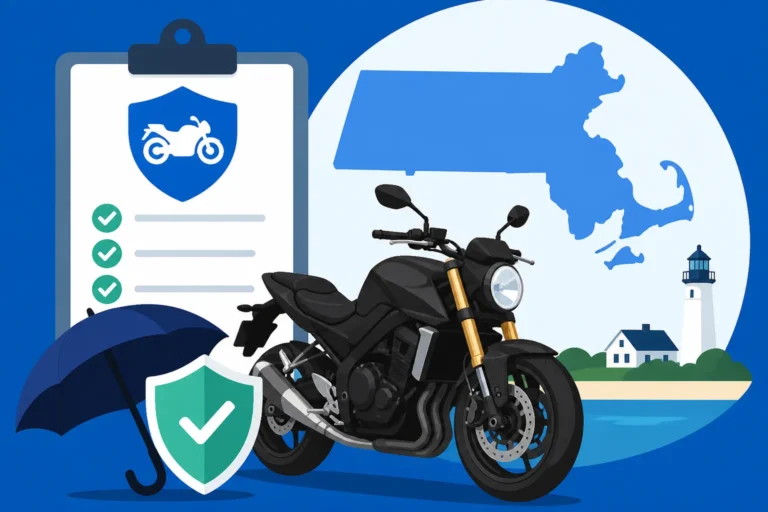
It is vital to note that not all states allow this practice. If you live in California, Hawaii, or Massachusetts, state laws prohibit insurance companies from using your credit score to determine your auto or motorcycle insurance rates. In these states, your premium is based much more heavily on your years of riding experience, your accident history, and the number of miles you ride annually.
In Michigan, the laws are a bit more complex due to the "No-Fault" system, but there are still significant protections regarding how credit can be used. If you are lucky enough to live in one of these states, your financial struggles won't follow you to the bike shop. For everyone else, understanding the local landscape is key. You should look into Best Motorcycle Insurance for Riders With Bad Credit to see which carriers have the best rates in "credit-permitted" states.
Impact on New vs Experienced Riders
The impact of credit is often felt most acutely by younger riders. When you combine the statistically higher risk of being a novice with a thin credit file, the resulting premiums can be astronomical. A 19-year-old on a sportbike with no credit history is often the most expensive individual to insure. They are fighting a two-front war against their age and their financial "newness."
For these riders, looking into the Motorcycle Insurance Cost for Young Riders Under 25 is a sobering but necessary exercise. Often, the best strategy for a younger rider with no credit is to stay on a parent's policy or to focus on bikes that are inherently cheaper to insure, regardless of the rider's financial standing.
Breaking Down the Components of Your Insurance Quote
While credit is a massive factor, it does not exist in a vacuum. Your insurance quote is a complex recipe of data points, and credit is just one of the spices. To truly understand why you are paying a certain amount, you have to look at the other ingredients. Insurers look at your "garaging location" (where you park the bike), the type of bike you ride, and even your marital status.
Each of these factors is weighed against the others. For example, if you have poor credit but you have 20 years of riding experience and no accidents, your experience might "cancel out" some of the negative impact of your credit score. Conversely, if you have perfect credit but you are a brand-new rider on a 1000cc supersport, your "perfect" score won't save you from a high premium. You can find more details on this in our guide on How Much Is Motorcycle Insurance for a Beginner?.
Beyond Credit: Other Rating Factors
Your zip code is arguably the second most important factor after your riding record and credit. If you live in an area with high rates of motorcycle theft or a high density of traffic accidents, your rates will reflect that reality. Insurers use massive databases to track every incident down to the neighborhood level. Even if you have a 850 credit score, living in a high-crime area of a major city will drive your rates up because the likelihood of a "comprehensive" claim (like theft) is simply higher.
Furthermore, the "use case" of your motorcycle matters. Do you use it for a daily commute into a busy downtown area, or is it a "weekend warrior" that only sees backroads on Sunday mornings? The more time you spend in high-traffic environments, the higher your risk profile. The Zebra and other comparison tools allow you to tweak these variables to see how much of an impact they actually have on your bottom line.
Comparative Analysis: Credit vs Age vs Bike Type
If we were to rank the factors that influence your rate, the hierarchy usually looks like this:
- Riding/Driving Record (Accidents and Tickets)
- Credit-Based Insurance Score
- Age and Years of Experience
- Type of Motorcycle (Sportbike vs. Cruiser)
- Location
It is interesting to see how these fight for dominance. A sportbike is almost always more expensive to insure than a cruiser of the same engine size because the "loss frequency" is higher for sportbikes. If you have poor credit and you choose a sportbike, you are essentially doubling down on high-risk categories. This is why veteran riders often suggest starting on a smaller, more "sensible" bike to keep costs low while you build both your riding skills and your credit file.
How Different Companies Weight Credit
Not all insurance companies value credit equally. Some "non-standard" insurers specialize in high-risk riders. These companies might focus more on your recent driving history and less on a bankruptcy from five years ago. On the other hand, "preferred" carriers might have very strict credit requirements and may even decline to offer a quote if your score falls below a certain threshold.
This is where the value of a platform like The Zebra becomes apparent. Instead of calling ten different agents and explaining your financial history ten times, you can see at a glance which companies are willing to work with your specific profile. You might find that a company you've never heard of offers a rate 30% lower than the "big name" brands simply because their algorithm treats credit differently.
Practical Steps to Lower Your Rates Regardless of Credit
If your credit score is currently a hurdle, don't despair. You are not trapped in high-premium purgatory forever. There are several levers you can pull right now to bring those costs down while you work on improving your financial standing. The goal is to maximize every possible discount and optimize your coverage to fit your actual needs rather than a "one-size-fits-all" policy.
One of the most effective ways to offset a poor credit score is to demonstrate a commitment to safety. Taking a certified safety course is a tangible way to show an insurer that you are a lower risk, regardless of what your credit card balance says. Many companies offer a significant discount for riders who have recently completed a course. We've detailed how much you can save in our article on Does a Motorcycle Safety Course Lower Insurance?.
Shopping Around and Comparing Quotes
The single most impactful thing you can do is shop around. It sounds like a cliché, but the variance in motorcycle insurance pricing is wider than almost any other type of insurance. Because each company uses its own proprietary "black box" to calculate risk, the "price of admission" for a rider with your specific credit score will vary wildly from one carrier to the next.
When you use The Zebra, you are essentially forcing these companies to compete for your business. It allows you to see the "market rate" for your risk profile. If you find a company that doesn't penalize your credit score as heavily, you can save hundreds of dollars instantly. Remember to check for Motorcycle Insurance Discounts You're Missing during this process, as bundling or multi-policy discounts can further erode the "credit penalty."
Adjusting Your Deductibles and Coverage
If you are facing a high premium due to credit, you might consider taking on more of the "first-dollar" risk yourself. By raising your deductible—the amount you pay out of pocket before insurance kicks in—you can significantly lower your monthly or annual premium. For example, moving from a $250 deductible to a $1,000 deductible can sometimes slash your collision and comprehensive costs by 20% or more.
However, this is a calculated risk. You must ensure that you actually have that $1,000 set aside in case of an accident. If you are already struggling with credit, a high deductible might put you in a tough spot if the bike is damaged. It is a balancing act between immediate monthly savings and long-term financial protection. You should also evaluate if you need "full coverage" or if liability-only is a better fit for an older bike.
Leveraging Professional Associations and Groups
Many riders don't realize that being a member of certain groups can trigger automatic discounts. Whether it is the American Motorcyclist Association (AMA), a specific riding club, or even your college alumni association, these affiliations can sometimes provide a 5% to 10% discount. These "affinity discounts" are often applied after the credit-based scoring, helping to chip away at that higher base rate.
Additionally, some insurers offer discounts for "mature riders" or for those who have a commercial driver's license (CDL). The logic is that anyone who drives for a living or has decades of experience is statistically safer. If you have been riding since the 80s, make sure your insurer knows that; don't let a recent dip in your credit score overshadow twenty years of safe riding.
How to Improve Your Credit-Based Insurance Score
The good news is that credit-based insurance scores are not permanent. They are living, breathing data points that can be improved with consistent effort. Unlike a criminal record or a major accident, which might stay on your insurance file for three to seven years, your credit-related impact can begin to fade much faster as your financial habits change.
Improving your score is a marathon, not a sprint, but the rewards are double: you'll save money on your bike insurance and you'll have easier access to loans and better interest rates elsewhere. The Zebra often provides resources for riders looking to understand the intersection of finance and insurance, helping you prioritize which debts to pay down first to see the biggest impact on your premiums.
Long-term Financial Habits for Riders
The biggest factor in your insurance score is your payment history. If you have late payments on your record, the best thing you can do is start a streak of on-time payments today. After 12 months of perfect payment history, many of the "predictive" models will start to see you as a stabilizing risk. Even if your total debt is still high, the "reliability" factor of consistent payments is a huge green flag for insurance algorithms.
Another major factor is "credit utilization"—the ratio of how much credit you are using compared to your total limits. If you have a $5,000 limit and you are carrying a $4,500 balance, you are at 90% utilization, which looks like "financial distress" to an insurer. Aiming to get that below 30% can result in a significant jump in your insurance score over six months to a year.
Quick Fixes and Dispute Strategies
Check your credit report for errors. It sounds simple, but a staggering number of reports contain mistakes—duplicate debts, accounts that aren't yours, or late payments that were actually made on time. If you can get an error removed from your report, your score can jump almost overnight. This is the "low hanging fruit" of premium reduction.
You should also avoid opening too many new accounts at once. Every "hard inquiry" on your credit report can dings your score slightly. While getting an insurance quote is usually a "soft pull" and doesn't hurt your score, applying for three new credit cards in a month certainly will. If you are planning to shop for a new bike and new insurance, try to keep your credit file as "quiet" as possible in the months leading up to the purchase.
The Role of Credit Mix
Insurers also look at the "mix" of credit you have. Having a variety of credit types—a car loan, a credit card, and perhaps a small personal loan—can actually be better than just having one type of debt. It shows the insurer that you can manage different kinds of financial obligations simultaneously. If you are a young rider, simply having an established credit card that you pay off in full every month can help build that "thin file" into something more substantial.
For those riding under high-risk conditions, you might also need to look into Best Motorcycle Insurance for SR-22/High-Risk policies. These companies are accustomed to dealing with complex financial and legal backgrounds and can often provide a path back to standard "preferred" rates as your credit and driving record improve over time.
Frequently Asked Questions About Credit and Riding
We hear the same concerns from the riding community over and over again. There is a lot of misinformation out there, and when you are already stressed about a high premium, the last thing you need is bad advice from a "guy at the bike night." Clearing up these common misconceptions can help you approach your next insurance renewal with confidence.
Many riders worry that just by "looking" for insurance, they are hurting their credit. It is important to distinguish between "hard" and "soft" credit pulls. When you use a comparison tool like The Zebra, it is a soft pull. It does not show up on your credit report to other lenders and it does not lower your score. You can shop as much as you want without fear of financial repercussion.
What if I Have No Credit History
If you are a "credit invisible" person—someone with no credit cards, no loans, and no history—insurers will typically treat you as "Average" or "Neutral," but some may default you to a higher-risk category because they simply don't have enough data to prove you are safe. In this case, your riding record and the type of bike you choose will be the primary drivers of your cost.
For these individuals, the strategy should be to find How to Get Motorcycle Insurance Quotes Online and look for companies that allow for manual underwriting or those that focus heavily on "telematics." Telematics programs involve using an app or a plug-in device to track your actual riding habits. If you have no credit but you ride like a pro—no hard braking, no speeding, and no late-night riding—your "actual" data can override your "lack of" credit data.
Can My Spouse's Credit Help Me
In many states, if you are married and on a joint policy, the insurer will use the credit score of the person with the better history to determine the rate for the entire household. This is one of the most effective "hacks" for riders with poor credit. By bundling your bike with your spouse's vehicle and using their (presumably better) credit score, you can often save 30% or more compared to having a standalone policy.
This is part of the broader strategy of Should You Bundle Motorcycle Insurance?. Beyond just the multi-policy discount, bundling allows you to "hide" your individual risk factors behind the collective strength of the household. It is a perfectly legal and highly effective way to navigate the credit-based insurance system.
Does Credit Matter for Liability Only
Yes, credit typically affects all portions of your premium, including liability. Even if you aren't asking the insurance company to pay for your bike (Collision/Comprehensive), they still use credit to predict how likely you are to cause an accident that hurts someone else or damages their property. The "predictive" nature of the score applies to your behavior as a human, not just the value of the machine.
Even if you are riding a $1,500 vintage bike and only want the bare minimum coverage to be legal, your credit score will still play a role in that "minimum" price. If the cost seems too high for such a basic policy, it is worth exploring Best Motorcycle Insurance for Vintage Bikes to see if a specialty carrier offers a better deal for your specific niche.
Important Disclaimer
The information provided in this guide is for educational and informational purposes only and does not constitute professional financial, legal, or insurance advice. Insurance laws and credit scoring regulations vary significantly by state and are subject to change. Always consult with a licensed insurance agent or financial advisor to understand the specific factors affecting your rates and to ensure you are meeting all legal requirements in your jurisdiction. This content is not a substitute for professional advice from a qualified provider who understands your unique situation.