New Jersey Motorcycle Helmet Law
Riding through the Garden State offers a stunning variety of scenery, from the bustling streets of Jersey City to the serene pine barrens and the iconic Jersey Shore. However, the legal landscape for riders is far from simple, and a single oversight regarding gear can lead to hefty fines or complicated legal battles. This guide dives deep into the New Jersey Motorcycle Helmet Law, clarifying exactly what is required to keep you legal, safe, and protected on the road.
Understanding New Jersey’s Universal Helmet Mandate
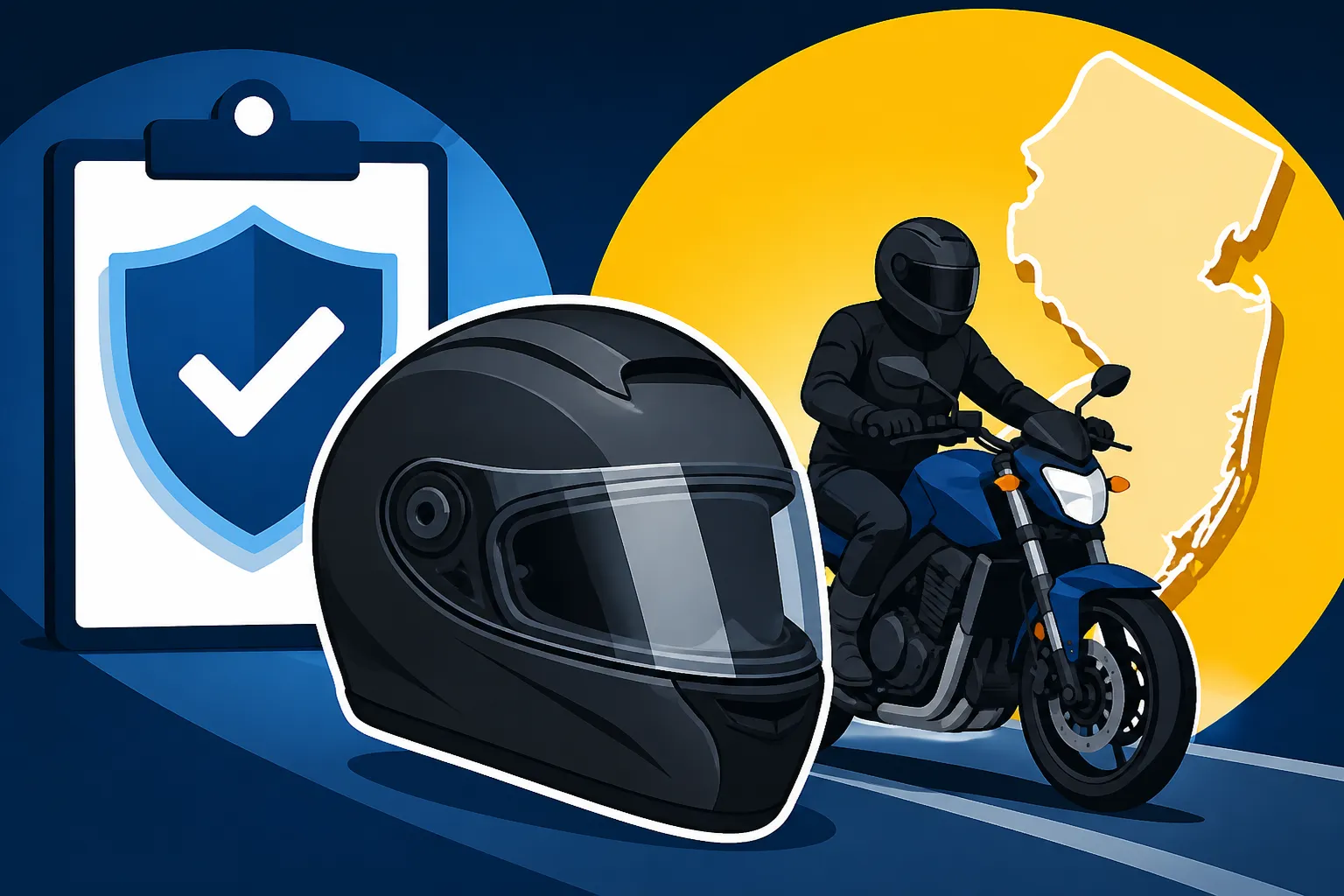
New Jersey is strictly a "universal" helmet law state. Unlike some neighboring states where age or insurance status might grant you an exemption, the Garden State requires every single person on a motorcycle—whether they are the operator or a passenger—to wear a legally compliant helmet. This mandate is non-negotiable and applies the moment you kick up the kickstand on any public roadway.
If you are traveling from a state with more relaxed rules, such as Pennsylvania, you must be aware of the transition. Many riders enjoy the freedom of riding lid-less across the border, only to find themselves pulled over minutes after crossing into New Jersey. Understanding Riding Across State Lines: Insurance & Helmet Rules is essential for any touring enthusiast who plans to navigate the Northeast corridor. The universal mandate exists primarily to reduce the severity of head injuries in the event of a crash, but it also serves as a baseline for law enforcement to ensure all riders are adhering to the state's safety standards.
Who Exactly Needs to Wear a Helmet
The law is clear: N.J.S.A. 39:3-76.7 states that "no person shall operate or ride upon a motorcycle unless he wears a securely fitted protective helmet." This phrasing leaves no room for ambiguity. It does not matter if you have thirty years of riding experience, if you are just "going down the block" to grab a coffee, or if you are riding a low-speed scooter. If it is a motorcycle registered for the road, the helmet must be on.
This rule also extends to passengers of all ages. If you are taking a friend for a ride or bringing a family member along, you are legally responsible for ensuring they have a compliant helmet. Failure to do so can result in tickets for both the rider and the passenger. This is particularly important when considering Motorcycle Insurance Requirements for Passengers, as a lack of proper safety gear can significantly complicate medical claims if an accident occurs.
The Specifics of DOT Approval and Standards
In New Jersey, simply wearing "a helmet" is not enough. The helmet must meet the standards established by the United States Department of Transportation (DOT). You can typically identify these by the "DOT" sticker on the back of the helmet, but be wary of "novelty" helmets. Many of these thin, "beanie" style helmets look like they might pass, but they lack the internal EPS foam necessary to absorb impact.
A legal helmet in New Jersey must have a sturdy outer shell, a shock-absorbing liner, and a secure chin strap. The state requires that the helmet be "securely fitted," meaning the chin strap must be buckled. If you are caught riding with an unbuckled helmet, you are technically in violation of the law just as much as if you weren't wearing one at all. For those new to the state, checking the new Jersey motorcycle insurance requirements can provide additional context on how these safety standards integrate with your overall legal obligations as a rider.
The Unique Reflective Tape Requirement
One of the most specific and frequently overlooked aspects of the New Jersey Motorcycle Helmet Law is the requirement for reflective material. According to New Jersey Administrative Code 13:20-24.3, helmets must have at least four square inches of reflective material on each side. This is a quirk that catches many out-of-state riders off guard, as most helmets do not come from the factory with this specific addition.
While many modern helmets have reflective elements integrated into the design, they often do not meet the "four square inches per side" threshold. Many riders opt to buy adhesive reflective strips to stay compliant. While it might seem like a minor aesthetic frustration, it is a point of pride for New Jersey traffic officers to enforce. Being compliant here doesn't just save you from a ticket; it increases your visibility during those foggy mornings on the Garden State Parkway.
Beyond the Helmet: Eye Protection and Other Safety Laws
While the helmet is the centerpiece of New Jersey's safety legislation, it is not the only piece of gear you need to worry about. The state is equally concerned with your ability to see the road clearly and avoid debris. If your vision is compromised by wind, bugs, or road grit, you become a hazard to yourself and everyone else on the road.
Mandatory Eye Protection Regulations
N.J.S.A. 39:3-76.8 dictates that no person shall operate a motorcycle unless they wear goggles or a face shield, unless the motorcycle is equipped with a wind screen. The quality of this eye protection is also regulated; it must be shatterproof and provide a clear, unobstructed view of the road.
If you prefer an open-face helmet, you must ensure you have high-quality goggles or a snap-on shield. Even if you have a windshield, many veteran riders suggest wearing eye protection regardless, as a windshield doesn't always stop a stray pebble from swirling into your field of vision at 65 mph. These small details are often discussed when riders ask Is Motorcycle Insurance Required in New Jersey?, as safety compliance is frequently linked to insurance liability.
Windshield Height and Requirements
If you are relying on a windshield to bypass the eye protection requirement, New Jersey law specifies that the windshield must be of a type approved by the Chief Administrator of the MVC. It must be high enough to provide actual protection to the rider’s face in a normal seating position.
However, many riders find that the "windshield exception" is a bit of a gray area during traffic stops. To avoid any hassle, it is almost always better to have a pair of glasses or a shield handy. Not only does this keep the police happy, but it also protects you from the intense wind fatigue that comes with long-distance riding through the flatter parts of South Jersey.
Comparing Safety Laws Across State Lines
If you frequently ride through the Tri-State area, you know that the rules change the moment you cross a bridge. To help you stay organized, here is a quick comparison of the helmet and eye protection laws for New Jersey and its neighbors.
| State | Helmet Law | Eye Protection | Reflective Tape Required? |
|---|---|---|---|
| New Jersey | Universal (All Riders) | Required (Unless Windshield) | Yes (4 Sq. In. per side) |
| New York | Universal (All Riders) | Required | No |
| Pennsylvania | Partial (Optional for 21+) | Required | No |
| Delaware | Partial (Required under 19) | Required | No |
| Maryland | Universal (All Riders) | Required | No |
As the table shows, New Jersey has some of the most stringent requirements in the region. This is a key reason why riders in this state often pay close attention to Motorcycle Insurance Requirements by State (2026 Guide) to ensure they are fully covered across all jurisdictions.
Legal Consequences and Insurance Implications
Violating the helmet law in New Jersey isn't just about the immediate fine. There are cascading effects that can impact your driving record and your financial stability. The state views these safety mandates as a core part of your "contract" as a licensed operator on public roads.
Fines and Penalties for Non-Compliance
If you are pulled over for a helmet violation in New Jersey, you can expect a fine. While the initial fine might seem manageable—usually ranging from $100 to $200—the costs rarely stop there. Court costs and administrative fees can easily double that amount. Furthermore, repeat offenders may face higher fines or even the temporary impoundment of their motorcycle if the officer deems it unsafe for you to continue your journey without proper gear.
Beyond the cash out of pocket, a helmet violation can sometimes lead to points on your license, depending on the specific circumstances of the stop and the officer's discretion. Accumulating points leads to higher premiums, making the search for How Much Is Motorcycle Insurance in New Jersey? a much more depressing task. It is always cheaper and easier to just wear the gear.
Impact on Insurance Claims and Liability
This is where things get truly complicated. New Jersey operates under a "comparative negligence" system. This means that if you are in an accident and you are found to be partially at fault for your own injuries, your compensation can be reduced by your percentage of fault.
If you are involved in a crash while not wearing a helmet, the insurance company for the other driver will almost certainly argue that your injuries (specifically head or neck injuries) would have been less severe if you had been compliant with the law. Even if the other driver was 100% at fault for the collision, your medical payout could be slashed significantly because you "contributed" to the severity of your injuries by breaking the helmet law. For a deeper look at this, read about Helmet Law & Insurance: Does Not Wearing One Affect Claims?. This legal nuance is why many riders opt for more than just the Minimum Liability Insurance Explained (The Three Numbers) to protect themselves from gaps in medical coverage.
Medical Payments and PIP Coverage
New Jersey is a "no-fault" state for auto insurance, but motorcycles are treated differently. Most riders have to rely on their own health insurance or specific Medical Payments (MedPay) coverage within their motorcycle policy. If you are found in violation of the state's helmet mandate at the time of an accident, your insurer might have grounds to dispute or delay your MedPay claim.
Navigating these claims requires a clear understanding of your policy's fine print. Many riders find themselves in a lurch when they realize their health insurance has a "motorcycle exclusion" and their motorcycle policy's MedPay is limited. Ensuring you have the right coverage in place is as vital as the helmet on your head. This is a common topic in the California Motorcycle Insurance Requirements discussions, as riders often look for cross-state comparisons on how medical claims are handled.
Tips for Choosing a NJ-Compliant Helmet
Buying a helmet shouldn't just be about the graphics or the brand. In New Jersey, you need to ensure the helmet is a tool that satisfies both the law and your personal safety needs. With so many options on the market, it helps to know exactly what to look for.
Understanding DOT, SNELL, and ECE Ratings
As mentioned, the DOT rating is the legal minimum in New Jersey. However, many riders prefer helmets that also carry SNELL or ECE 22.06 certifications. These are third-party testing standards that are often more rigorous than the DOT's basic requirements.
- DOT: The mandatory legal standard in the US. It focuses on impact attenuation and penetration resistance.
- ECE 22.06: The European standard, which is widely considered more modern and comprehensive, testing for rotational forces and different impact speeds.
- SNELL: A voluntary racing-grade standard that many sportbike riders look for, though it results in a slightly stiffer helmet.
Choosing a helmet with multiple ratings ensures you are not just "legal" but exceptionally well-protected. If you are an experienced rider looking for high-end gear, you might also be interested in how this affects your overall Average Motorcycle Insurance Cost by State, as some insurers offer small discounts for riders who complete safety courses and wear high-rated gear.
Maintenance and Replacement Cycles
A helmet is not a "buy it once and keep it forever" item. Most manufacturers recommend replacing your helmet every five years, or immediately after any impact. The EPS foam inside the helmet degrades over time and loses its ability to crush and absorb energy.
In the humid New Jersey climate, the liners can also wear down due to sweat and hair oils. A loose helmet is an unsafe helmet. If your helmet moves around when you shake your head, it won't be "securely fitted" according to N.J.S.A. 39:3-76.7. Regularly check your chin strap for fraying and ensure your visor is free of scratches that could cause glare during sunset rides.
Factoring Gear Into Your Budget
When budgeting for a bike, many new riders forget to set aside money for a high-quality helmet and reflective tape. A good, NJ-compliant helmet will usually run between $200 and $600. While it might seem expensive, it is a pittance compared to the cost of a neurosurgery bill or the long-term increase in your insurance rates following a violation.
If you are still in the process of getting on the road, don't forget to check Motorcycle License, Endorsement & Insurance requirements to ensure your paperwork is as ready as your gear. Riding in New Jersey is an incredible experience, but it requires a level of discipline and attention to detail that sets Garden State riders apart from the rest.
Disclaimer
This guide is provided for informational purposes only and does not constitute legal or professional insurance advice. Laws regarding motorcycle safety and insurance can change frequently. You should always consult with the New Jersey Motor Vehicle Commission or a licensed legal professional to ensure you are in full compliance with current statutes.