What to Look for in a Motorcycle Insurance Policy
Navigating the world of motorcycle insurance can feel like trying to find your way through a dense fog without a GPS. With so many terms, coverages, and state-specific rules, it’s easy to feel overwhelmed and just pick the cheapest option, hoping for the best. But when you’re out on two wheels, "hoping for the best" isn't a strategy, it's a gamble. This guide will cut through the confusion, helping you understand exactly what to look for in a motorcycle insurance policy so you can ride with genuine peace of mind, knowing you're truly protected.
Understanding the Foundation: State Minimums and Liability Coverage
Before you even think about custom parts or roadside assistance, you need to grasp the absolute bedrock of any motorcycle insurance policy: liability coverage. This isn't just a suggestion; it's a legal requirement in almost every state, and for good reason. It's the coverage that protects other people when an accident is deemed your fault.
Decoding State-Mandated Minimums
Every state sets a minimum amount of liability coverage that motorcyclists (and all drivers) must carry. These minimums are often expressed as a series of three numbers, like 25/50/25. What do these numbers actually mean? Well, let's break it down. The first number, for instance, "$25,000," typically refers to the maximum amount your insurance will pay for bodily injury to one person in an accident where you are at fault. The second number, "$50,000," represents the maximum for all bodily injuries in that same accident, regardless of how many people were hurt. Finally, the third number, "$25,000," is the maximum payout for property damage. So, in our 25/50/25 example, your policy would cover up to $25,000 for one person's medical bills, up to $50,000 for all injured parties, and up to $25,000 for repairs to someone else's vehicle or property.
The frustrating truth is that these state minimums are almost always far too low to adequately protect you in a serious accident. Imagine causing an accident where multiple vehicles are involved, and the occupants of another car require extensive medical treatment, or perhaps a luxury vehicle needs significant body work. That $25,000 or $50,000 could be eaten up in a heartbeat, leaving you personally responsible for the rest. This isn't just theoretical; it's a real financial threat that can derail your life. Many riders have faced bankruptcy or had their assets seized because they only carried the bare minimum required by law.
It’s crucial to research your specific state's requirements. For example, you might want to look into the Motorcycle Insurance Requirements by State (2026 Guide) to get a clear picture of what's legally mandated where you live or plan to ride. While it's tempting to opt for the cheapest legal option, remember that "cheapest" often means "least protected" when it comes to insurance.
Beyond the Basics: Why More Liability is Crucial
Given the limitations of state minimums, most experienced riders and financial advisors will strongly recommend carrying significantly higher liability limits. Instead of 25/50/25, consider limits like 100/300/100 or even 250/500/250. Yes, this will increase your premium, but the added cost is a drop in the bucket compared to the potential out-of-pocket expenses, legal fees, and garnished wages you could face if you're ever involved in a serious at-fault accident. Higher liability limits act as a much stronger financial shield, protecting your savings, your home, and your future earnings from being claimed by someone you've injured or whose property you've damaged.
Think about it this way: your motorcycle is a source of joy and freedom, but it's also a powerful machine that, even through no malicious intent, can cause significant damage. Investing in robust liability coverage isn't just about adhering to the law; it's about responsible riding and protecting your own financial well-being from unforeseen circumstances. It's truly one of the smartest investments you can make in your policy, giving you peace of mind that goes far beyond the initial cost.
Protecting Your Ride: Physical Damage Coverage
While liability protects others, physical damage coverage is all about protecting your beloved motorcycle. This is where you get into the nitty-gritty of covering repairs or even replacement costs for your own bike, whether it’s a minor fender-bender or a catastrophic loss.
Collision Coverage: When You Hit Something (Or Something Hits You)
Collision coverage is exactly what it sounds like: it pays for damage to your motorcycle resulting from a collision with another vehicle or object, regardless of who was at fault. This could be anything from a minor parking lot mishap where you clip a parked car, to a more serious incident where another driver pulls out in front of you, or even a solo accident where you misjudge a curve and lay the bike down. The key here is "collision" – an impact that damages your ride.
For instance, if you're riding through a busy downtown area like Nashville, Tennessee, and a distracted driver suddenly changes lanes, sideswiping your bike, collision coverage would step in to pay for the repairs to your motorcycle. Or, if you accidentally hit a deer on a scenic rural road outside of Portland, Oregon, it would also typically fall under collision. Remember, there will be a deductible that you'll need to pay out-of-pocket before your insurance kicks in. Choosing a higher deductible can lower your premium, but it means you'll pay more upfront if you need to file a claim. You might want to explore the differences in more detail by reading about Collision vs Comprehensive Motorcycle Coverage.
Comprehensive Coverage: Beyond the Crash
Comprehensive coverage, often misunderstood, is designed to protect your motorcycle from almost everything except a collision with another vehicle or object. Think of it as your "act of God" or "unforeseen circumstance" coverage. This includes events like theft, vandalism, fire, natural disasters (hail, floods, wind), falling objects (like a tree branch), and even hitting an animal.
Let's say you park your beautiful Harley-Davidson in a garage in Miami, Florida, and a sudden hurricane floods the area, damaging your engine and electrical system. Comprehensive coverage would handle those repairs. Or perhaps you wake up one morning in your apartment in Phoenix, Arizona, to find your parked motorcycle has been vandalized overnight, or worse, stolen outright. This is where comprehensive coverage becomes your saving grace. It’s an incredibly important part of a robust policy, especially given the rising rates of motorcycle theft and the unpredictable nature of weather.
Agreed Value vs. Actual Cash Value: Knowing Your Bike's Worth
This is a critical distinction that many riders overlook, but it can significantly impact your payout if your motorcycle is ever totaled or stolen.
-
Actual Cash Value (ACV): Most standard insurance policies offer Actual Cash Value. This means that if your motorcycle is declared a total loss, the insurance company will pay you the fair market value of your bike at the time of the loss, minus your deductible. This value takes into account depreciation due to age, mileage, and wear and tear. While seemingly straightforward, ACV can be a painful surprise for many riders, especially those with custom bikes or older models that might have sentimental value or unique modifications not reflected in a standard market valuation. You might end up getting significantly less than you believe your bike is worth or what you paid for it.
-
Agreed Value: For many riders, especially those with vintage bikes, highly customized machines, or new, expensive models, Agreed Value coverage is the gold standard. With an Agreed Value policy, you and the insurance company agree upon a specific value for your motorcycle at the time you purchase the policy. If your bike is then declared a total loss, the insurer pays you that agreed-upon amount, minus your deductible, without factoring in depreciation. This removes the guesswork and potential disappointment of an ACV payout. It gives you true peace of mind, knowing exactly how much you'll receive if the worst happens. Companies like Markel are known for offering agreed value policies, which can be a huge benefit for specialized bikes. When you're looking for what to look for in a motorcycle insurance policy, especially for a unique bike, make sure to ask about this distinction. For more on this, check out our guide on Agreed Value vs Stated Value vs Actual Cash Value.
Safeguarding Yourself and Others: Essential Personal Coverages
Beyond protecting your physical bike, a truly comprehensive motorcycle insurance policy needs to focus on the people involved – you, your passenger, and anyone else who might be injured. These coverages are about mitigating the personal and financial fallout of accidents.
Uninsured/Underinsured Motorist Coverage: The Silent Threat
This is arguably one of the most vital, yet often overlooked, components of a motorcycle insurance policy, especially for riders. Think about it: you can be the safest, most skilled rider on the road, but you can't control what other drivers do. What happens if you're involved in an accident that isn't your fault, but the other driver either has no insurance at all (uninsured) or doesn't have enough insurance to cover your injuries and damages (underinsured)? Unfortunately, this is a shockingly common scenario.
Uninsured Motorist (UM) coverage steps in to pay for your medical expenses, lost wages, and potentially pain and suffering if you're hit by a driver who has no insurance. Underinsured Motorist (UIM) coverage kicks in when the at-fault driver's liability limits are too low to cover the full extent of your damages. Both are critical for motorcyclists because injuries on a bike can be far more severe and costly than in a car. Even if you have excellent health insurance, UM/UIM can cover deductibles, co-pays, and long-term care that your health plan might not fully address. It's a proactive measure against the financial irresponsibility of others, and honestly, you shouldn't ride without it. Dive deeper into why this is so important with our guide on Uninsured & Underinsured Motorist Coverage (UM/UIM).
Medical Payments Coverage: Your Health on the Road
Medical Payments (MedPay) coverage, or Personal Injury Protection (PIP) in some no-fault states, is a fantastic addition to any motorcycle policy. This coverage pays for your (and your passenger's) medical expenses resulting from a motorcycle accident, regardless of who was at fault. This includes things like ambulance rides, hospital stays, doctor visits, and even funeral expenses in the tragic event of a fatality.
The beauty of MedPay is that it provides immediate funds for necessary medical treatment, often without a deductible, which can be incredibly helpful in the chaotic aftermath of an accident. While it might have lower limits than your health insurance, it can serve as primary coverage, or fill in gaps by paying for deductibles or co-pays that your regular health insurance might leave you with. For motorcyclists, who are inherently more exposed on the road, having this immediate financial cushion for medical care is an invaluable peace of mind.
Tailoring Your Policy: Specialized Add-Ons for Riders
Beyond the core coverages, there are numerous add-ons designed specifically for the unique needs of motorcyclists. These can transform a basic policy into a truly bespoke protection plan that covers every aspect of your riding life.
Accessories and Custom Parts Coverage: Protecting Your Investment
For many riders, a motorcycle is more than just a mode of transport; it's a canvas for personal expression. From custom paint jobs and chrome exhaust pipes to upgraded suspension, aftermarket fairings, and premium saddlebags, the money spent on accessories and modifications can quickly add up, often exceeding the value of the stock bike itself.
Standard motorcycle insurance policies typically offer only a very limited amount of coverage for accessories and custom parts – sometimes as little as $1,000 or $2,000. If you've invested significantly in customizing your ride, this meager amount won't even begin to cover the cost of replacing those parts after an accident or theft. This is why dedicated Accessories & Custom Parts Coverage Explained is so important. This optional add-on allows you to increase the coverage limit to match the true value of your modifications, often up to $30,000 or more, depending on the insurer and your specific bike. When comparing policies, ensure the company you choose, like Progressive or Dairyland, offers robust custom parts coverage and that you accurately declare the value of your upgrades. Don't let your passion project become a financial liability if something goes wrong.
Roadside Assistance and Trip Interruption: Peace of Mind on Long Hauls
Imagine you're on a long-distance tour, miles from the nearest town, and your tire blows out, or you run into an unexpected mechanical issue. Without roadside assistance, you're looking at a hefty towing bill and the headache of finding a repair shop. Roadside assistance coverage, a common add-on, provides invaluable help in these situations. It covers the cost of towing your disabled motorcycle to the nearest qualified repair shop, and sometimes even offers services like fuel delivery if you run out of gas or a battery jump-start.
Even better, some policies also offer Trip Interruption coverage. This is especially useful for riders who love to travel. If your bike breaks down far from home and you need to pay for lodging, alternative transportation, or meals while your motorcycle is being repaired, trip interruption coverage can help reimburse you for these unexpected expenses. It transforms a potentially disastrous situation into a minor inconvenience, ensuring your road trip doesn't completely derail your budget or your spirits.
Gap Insurance: Bridging the Loan Value Gap
If you financed your motorcycle, especially a new one, Gap Insurance (Guaranteed Asset Protection) is a coverage you absolutely need to consider. Here's why: as soon as you drive a new motorcycle off the dealership lot, it begins to depreciate. In the event your motorcycle is stolen or totaled shortly after purchase, the actual cash value (ACV) your standard comprehensive and collision coverage pays out might be less than the amount you still owe on your loan. This creates a "gap" – you'd be responsible for paying the difference out of pocket for a motorcycle you no longer own.
Gap insurance specifically covers this difference between your motorcycle's depreciated value (what your insurer pays) and the outstanding balance on your loan. It prevents you from being upside down on your loan, saving you from a significant financial burden. While it's an extra cost, it's a small price to pay for such vital protection, particularly if you're financing a new, expensive model. It’s worth checking if you Do You Need Gap Insurance on a Motorcycle? if you’ve recently purchased a bike.
The "Fine Print" That Matters: Policy Details and Rider-Specific Factors
Beyond the specific coverages, the devil is often in the details of how your policy operates. Understanding these finer points and how your individual rider profile impacts your rates and coverage is essential for making an informed choice.
Deductibles: How They Impact Your Wallet
A deductible is the amount of money you agree to pay out-of-pocket before your insurance company starts paying for a covered claim. When you choose collision or comprehensive coverage, you'll select a deductible amount, often ranging from $100 up to $2,500 or more.
The relationship between your deductible and your premium is an inverse one:
- Higher Deductible: Choosing a higher deductible (e.g., $1,000) will generally result in a lower monthly or annual premium. This is because you're taking on more of the financial risk yourself, and the insurance company is less likely to pay out for smaller claims. This can be a good strategy if you have a solid emergency fund and are confident you can cover that higher amount if you need to file a claim.
- Lower Deductible: Opting for a lower deductible (e.g., $250 or $500) will mean a higher premium. While you'll pay more upfront for your policy, you'll pay less out-of-pocket if you need to file a claim. This might be preferable if you want to minimize immediate costs after an accident or theft.
It's a balancing act, and the right deductible for you depends on your financial situation and risk tolerance. When looking at what to look for in a motorcycle insurance policy, make sure the deductibles are manageable for you.
Rider Discounts and Eligibility: Saving Where You Can
Insurance companies love to reward safe riders and those who take steps to mitigate risk. Many offer a wide array of discounts that can significantly reduce your premium, so it's absolutely crucial to ask about every possible discount you might qualify for. Common discounts include:
- Motorcycle Safety Course Discount: Taking an approved motorcycle safety course (like those offered by the Motorcycle Safety Foundation) often earns you a significant discount. It shows insurers you're committed to safe riding.
- Multi-Policy Discount: If you bundle your motorcycle insurance with other policies, like car insurance, home insurance, or renters insurance, with the same provider, you can often save money on all of them.
- Multi-Bike Discount: If you own and insure more than one motorcycle with the same company, you'll likely receive a discount.
- Experienced Rider/Clean Record Discount: The longer you've been riding without accidents or tickets, the better your rates will be.
- Anti-Theft Device Discount: Installing alarms, GPS trackers, or other anti-theft devices can qualify you for a discount on your comprehensive coverage.
- Homeownership Discount: Some insurers offer discounts to homeowners, as they are often perceived as more financially stable.
When you're getting quotes, don't be shy about asking about every single discount. Sometimes, even small things can add up to noticeable savings. Platforms like The Zebra are excellent for comparing various quotes and seeing which discounts different providers offer, allowing you to maximize your savings. For more comprehensive insights, check out Motorcycle Insurance Discounts You're Missing.
Policy Limits and Exclusions: What's Covered (and What's Not)
Understanding your policy's limits – the maximum amount your insurer will pay for a covered loss – is as important as understanding the coverage types themselves. For instance, while you might have excellent liability coverage, your comprehensive coverage might have a lower limit for a vintage bike if you chose Actual Cash Value and its market value is low. Always review the specific limits for each type of coverage on your policy.
Equally important are the exclusions. These are specific situations or types of damage that your policy will not cover. Common exclusions for motorcycle insurance might include:
- Damage incurred during competitive racing or track events (unless you have specific track-day coverage).
- Intentional damage.
- Damage from general wear and tear or mechanical breakdown.
- Riders not listed or approved on the policy (though some policies offer permissive use for occasional riders).
- Damage that occurs when operating the motorcycle illegally (e.g., without a valid endorsement or under the influence).
Always read your policy document carefully, especially the sections on limits and exclusions. If you have questions or specific concerns (e.g., "Does my policy cover me if I let a friend ride?" or "What about riding in another state?"), contact your agent directly. Ignorance of an exclusion is not an excuse when it comes to filing a claim. Knowing what's covered and what isn't is fundamental to choosing the right policy.
Comparing Your Options: Getting the Right Fit
Once you have a handle on the various types of coverage and what they mean, the next step is to actually compare policies from different providers. This isn't just about finding the cheapest rate; it's about finding the best value that combines robust coverage with a competitive price and reliable service.
Shopping Around for Quotes
Never settle for the first quote you receive. Insurance rates can vary wildly between companies for the exact same coverage. Factors like a company's financial stability, its risk assessment models, and its target demographics can all influence pricing. It’s highly recommended to get quotes from at least three to five different insurance providers.
Look at major players like Progressive, Dairyland, Geico, and Harley-Davidson Insurance, but also consider smaller, specialized motorcycle insurers that might offer more tailored coverages or better rates for specific bike types or rider profiles. Websites like The Zebra can be incredibly useful for this process, allowing you to input your information once and receive multiple quotes from various providers, streamlining the comparison process. Don’t forget to explore How to Compare Motorcycle Insurance Quotes effectively.
Evaluating Insurance Companies: Beyond the Price Tag
While price is a major factor, it shouldn't be the only factor. A cheap policy is useless if the company won't be there for you when you need them most. Consider these aspects when evaluating an insurance provider:
- Financial Strength: Check ratings from independent agencies like A.M. Best. A strong financial rating indicates the company has the resources to pay out claims, even large ones.
- Customer Service and Claims Handling: Research customer reviews and ratings regarding their claims process. Was it fair? Was it efficient? Did they communicate well? This is paramount because the true test of your insurance policy comes during a claim.
- Specific Rider Needs: Does the company understand motorcyclists? Some insurers specialize in motorcycles and offer unique coverages or discounts that broader auto insurers might not. For example, some might have better options for classic bikes, sport bikes, or custom builds.
- Local Agent vs. Online: Do you prefer working with a local agent who can offer personalized advice, or are you comfortable managing your policy entirely online or over the phone? Both have their pros and cons.
By taking a holistic approach to comparison, you can find a policy that not only fits your budget but also provides the comprehensive protection and peace of mind you deserve as a rider.
Motorcycle Insurance Policy Checklist
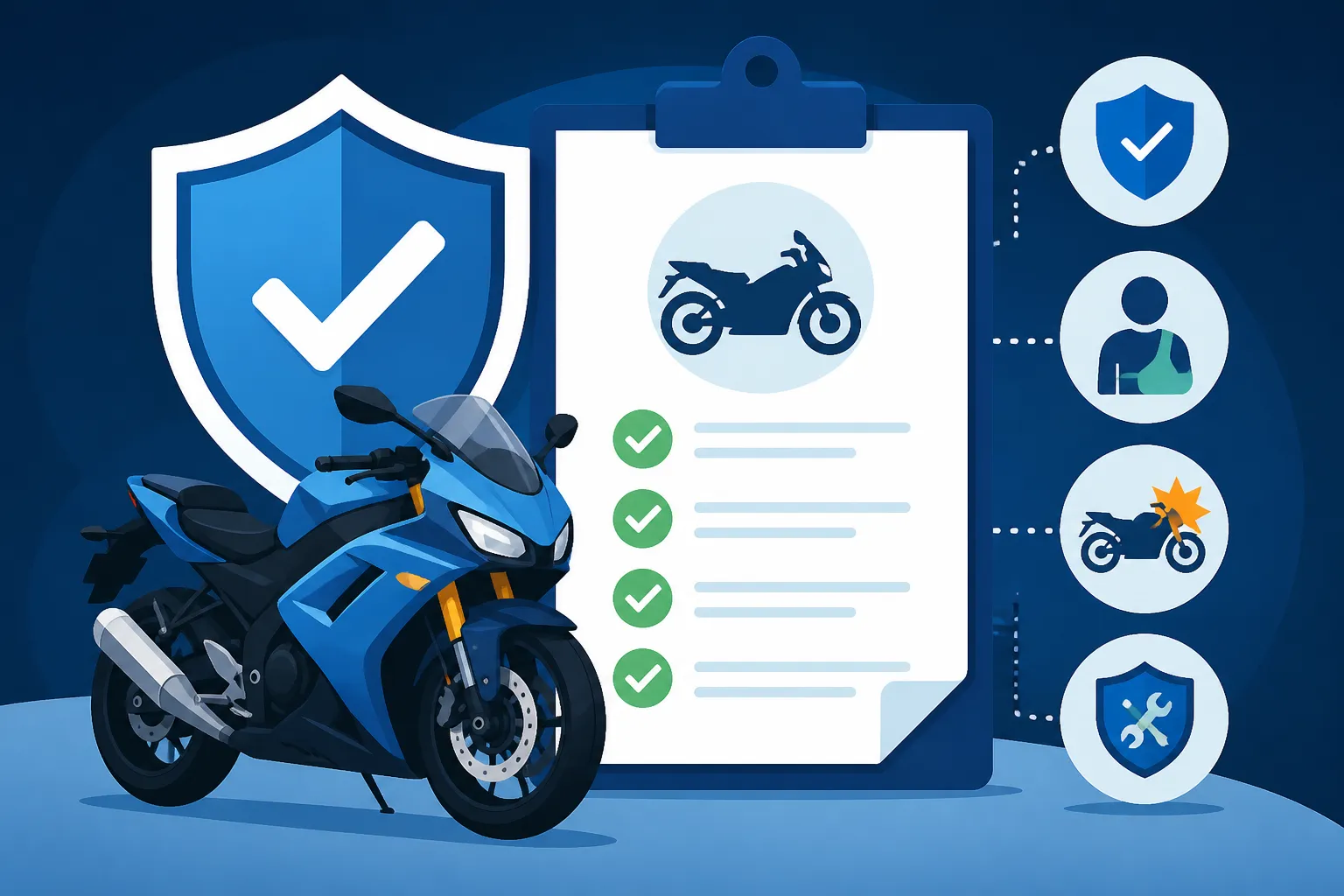
To make things easier, here's a quick checklist of what to look for in a motorcycle insurance policy:
| Coverage Type | What it Does | Why It's Important for Riders |
|---|---|---|
| Bodily Injury Liability | Pays for injuries to others if you're at fault. | Protects your assets from lawsuits and medical bills of others. State-mandated minimum. |
| Property Damage Liability | Pays for damage to others' property if you're at fault. | Covers repair/replacement of other vehicles/property. State-mandated minimum. |
| Collision | Pays for damage to your motorcycle from hitting another vehicle or object. | Essential for covering repairs to your bike, regardless of fault (minus deductible). |
| Comprehensive | Pays for damage to your motorcycle from non-collision events (theft, fire). | Crucial for protecting against theft, vandalism, weather damage, and hitting animals. |
| Uninsured/Underinsured Motorist | Pays for your injuries/damage if hit by an uninsured/underinsured driver. | Vital protection against others' lack of insurance, common and potentially very costly for riders. |
| Medical Payments/PIP | Pays for your (and passenger's) medical bills, regardless of fault. | Provides immediate funds for medical care, covers deductibles/co-pays not covered by health ins. |
| Accessories & Custom Parts | Covers modifications, custom paint, chrome, and aftermarket parts. | Protects the often significant investment in customizing your bike beyond stock value. |
| Roadside Assistance | Covers towing, jump-starts, fuel delivery if your bike breaks down. | Peace of mind for breakdowns, especially on long trips or in remote areas. |
| Trip Interruption | Reimburses for lodging, food, transport if your bike breaks down far from home. | Minimizes financial disruption when travel plans are unexpectedly derailed. |
| Gap Insurance | Covers the difference between ACV and loan balance if bike is totaled. | Prevents you from being "upside down" on a financed bike if it's totaled early on. |
| Agreed Value (vs. ACV) | Insurer pays a pre-agreed amount for total loss, not depreciated value. | Best for custom, vintage, or high-value bikes to ensure adequate payout in a total loss. |
Disclaimer
This article is for general informational purposes only and does not constitute professional advice. Laws, prices and regulations vary by location and change over time. Consult a qualified professional for guidance on your specific situation.