Best Pay-Per-Mile Motorcycle Insurance
Riding a motorcycle is about freedom, open roads, and that unique connection with the machine. But for many riders, especially those who only get out on weekends, during specific seasons, or for short commutes, the idea of paying a hefty, flat-rate insurance premium can feel incredibly frustrating. You’re shelling out for full-year coverage when your bike might spend half that time tucked away in the garage. This guide is here to shed light on pay-per-mile motorcycle insurance and similar usage-based options, explaining how they work, who they’re best for, and how you might finally align your insurance costs with your actual time on two wheels.
What is Usage-Based Motorcycle Insurance and How Does It Relate to Pay-Per-Mile?
When we talk about "pay-per-mile" insurance for motorcycles, it's important to understand a slight nuance compared to car insurance. While true pay-per-mile policies (where you pay a base rate plus a fixed amount per mile driven) are more prevalent for cars, the motorcycle world often sees this concept manifest through what's called usage-based insurance (UBI). The goal is the same: to reward riders who ride less or ride more safely, ultimately lowering their premiums by more accurately reflecting their risk.
How Usage-Based Programs Work for Riders
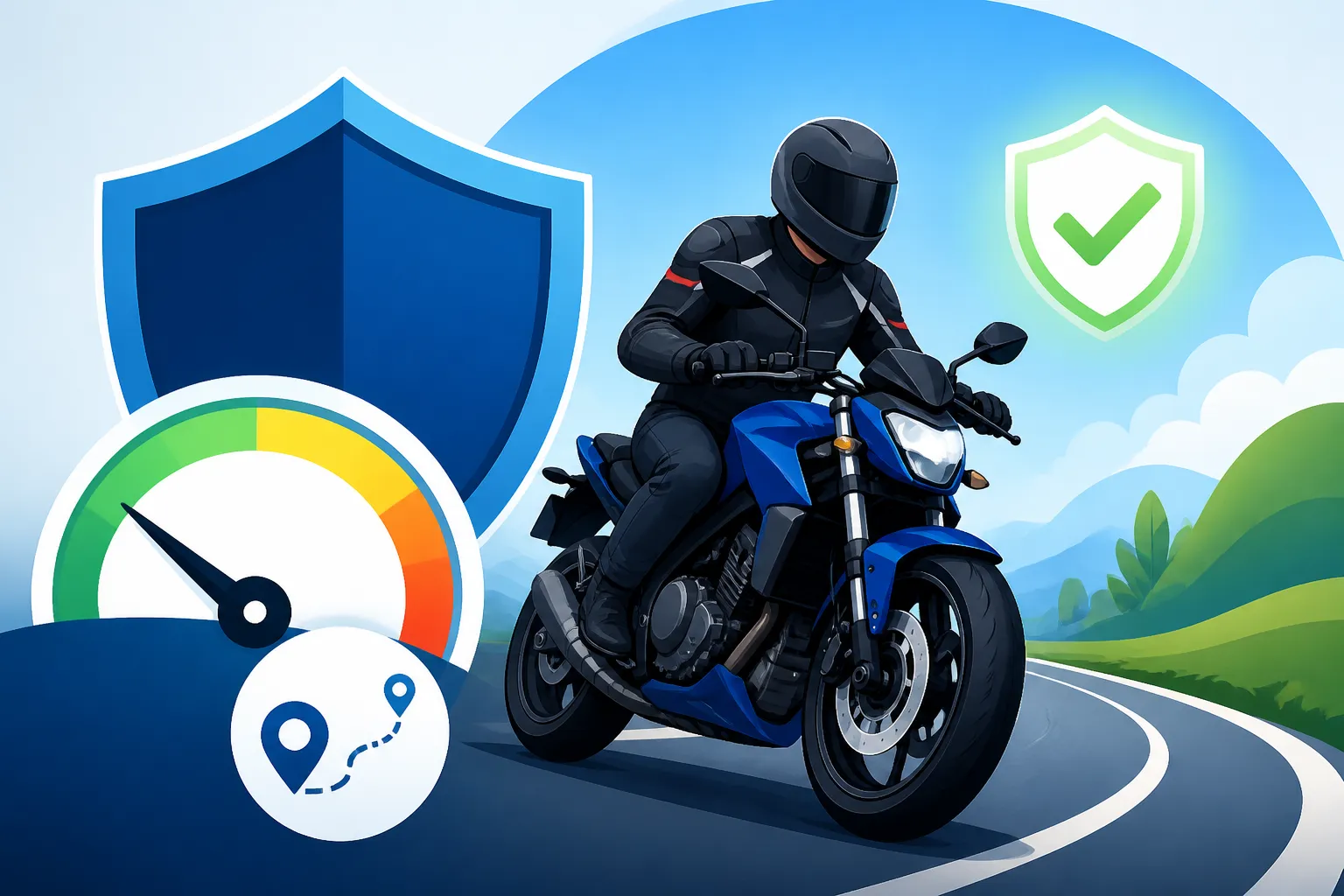
Unlike traditional insurance, which estimates your risk based on demographics, riding history, and bike type, usage-based insurance utilizes technology to monitor your actual riding habits. For motorcycles, this typically involves a small telematics device that plugs into your bike's diagnostic port (if available, which is less common on older bikes) or, more frequently, a smartphone app. This app connects to your bike or uses your phone's GPS and accelerometers.
The data collected can include various factors, depending on the insurer. Some programs, like Progressive’s Snapshot or Dairyland’s Ride Safe program, might focus on things like total mileage, the time of day you ride, how often you brake hard, or your acceleration patterns. The idea is that if you ride less, particularly during high-risk times, or if your riding style is consistently smooth and cautious, you present a lower risk to the insurance company. This data is then used to calculate a discount on your premium, effectively allowing you to pay less if your usage patterns align with the program's criteria. It's not always a direct "per mile" charge after a base rate, but rather a discount derived from your mileage and habits, making it a very attractive option for those who don't log many miles.
Traditional vs. Usage-Based Coverage Comparison
Let's be real, the world of motorcycle insurance has largely been a one-size-fits-all approach for a long time. You get a quote, pay your premium, and it covers you whether you ride 500 miles a year or 15,000. Traditional policies operate on broad actuarial tables, lumping riders into categories and setting rates based on averages. This means if you're an infrequent rider, you could be subsidizing the costs of those who are on the road every single day.
| Feature | Traditional Motorcycle Insurance | Usage-Based (Pay-Per-Mile Equivalent) Insurance |
|---|---|---|
| Premium Calculation | Based on demographics, bike type, riding history, location. | Based on actual riding behavior, mileage, time of day, braking, acceleration. |
| Cost Alignment | Fixed premium, regardless of actual usage during policy term. | Variable or discount-based premium, often lower for low-mileage/safe riders. |
| Technology Used | None, relies on self-reported data and historical records. | Telematics device (if applicable) or smartphone app for data collection. |
| Data Privacy | Minimal concern, as no real-time data is collected. | Data collection raises privacy questions; understanding terms is crucial. |
| Best For | High-mileage riders, those who prefer predictable costs. | Low-mileage riders, seasonal riders, safe riders seeking discounts. |
| Availability | Widely available from all insurers. | Offered by fewer, specific insurers, and program details vary widely. |
Usage-based insurance, while not universally available for motorcycles from every single carrier, flips this script. It’s designed to reward you for how and how much you ride. If you're someone who uses your bike sparingly, maybe only for pleasure on sunny weekends or for a short trip to the local coffee shop once a week, these programs can be a game-changer. You're effectively shifting from paying for theoretical risk to paying for actual risk, or at least being rewarded for lower-risk behavior. It really puts the power back in your hands to influence your premium beyond just having a clean driving record or taking a safety course.
Who Benefits Most from Usage-Based Motorcycle Coverage?
The appeal of only paying for what you use, or getting discounts based on less usage, is pretty strong, especially for a passion like motorcycling where usage can vary wildly from rider to rider. This type of insurance isn't for everyone, but there are definitely a few groups of riders who stand to gain the most from exploring these options.
Low-Mileage Riders
This is probably the most obvious group. If your motorcycle spends more time admired in the garage than tearing up the asphalt, you're likely overpaying for traditional insurance. Think about it: you might ride your classic Harley-Davidson on average 1,000 miles a year, but your friend with the same model bikes 10,000 miles. With traditional insurance, the difference in your premiums might not reflect that huge disparity in exposure to risk.
For the rider who only pulls out their beloved machine for annual rallies, a few scenic autumn rides, or short jaunts around town, a usage-based program can translate directly into significant savings. Instead of paying for potential incidents over thousands of miles you'll never ride, you're paying for the few hundred or thousand you actually put on the odometer. This is especially true if you live in a state where the riding season is short, like Minnesota or Wisconsin, and your bike is stored away for several months. Why pay full freight for a period you can't even ride?
Seasonal and Weekend Riders
Just like low-mileage riders, those who limit their riding to specific seasons or only on weekends will find usage-based policies extremely attractive. Many riders in northern states, for example, garage their motorcycles for the winter months. While you can often get specific Seasonal Lay-Up & Winter Storage Insurance to reduce costs during this time, a year-round usage-based policy that tracks mileage can essentially achieve a similar effect by lowering your overall annual premium due to the reduced mileage during the colder months.
Imagine living in Florida, where the weather is great for riding almost year-round, but your personal preference is to only hit the coastal highways on Saturdays and Sundays. Or maybe you're in California and only ride your Ducati for canyon carving on sunny days. These riders typically have a lower overall mileage count compared to daily commuters. A usage-based program acknowledges this limited exposure to risk. If the system sees your bike isn't being ridden during peak traffic hours or during the week, it correctly identifies you as a lower-risk policyholder, and that can translate to real money back in your pocket or a lower bill to begin with. It's about fair pricing for how you use your bike, not how an average rider might.
Multi-Bike Owners
If you're like many enthusiasts, you might have a stable of motorcycles: a nimble sportbike for track days, a comfortable cruiser for long tours, and maybe a classic vintage model for show or occasional Sunday rides. Juggling insurance for multiple bikes can quickly become expensive, especially if some of those bikes see very limited use.
For a multi-bike owner, usage-based insurance becomes particularly appealing. While you'll still need coverage for each machine, a program that factors in actual usage can lead to considerable savings on the bikes that aren't your daily drivers. Your classic Triumph that only comes out for specific events, or the off-road bike you only take to designated trails a few times a year, could benefit immensely from this model. Instead of paying a full premium for that rarely-ridden bike, its actual limited usage is recognized, potentially reducing the cost significantly. Some insurers even offer a Multi-Bike Discount: Insuring More Than One Motorcycle, and combining that with a usage-based discount could result in even greater savings across your entire collection. It's about optimizing your costs across your whole fleet, ensuring you're not paying for ghost miles on bikes that are largely stationary.
Key Factors to Consider Before Choosing Usage-Based Insurance
Deciding if usage-based insurance is right for your motorcycle involves more than just looking at potential savings. It requires a deeper dive into how these programs operate, what they actually measure, and how that data is handled. Don't jump in without understanding the full picture!
Understanding the Technology and Data Collection
The core of any usage-based insurance policy lies in its ability to collect data about your riding. For cars, this often means plugging a telematics device into the OBD-II port. For motorcycles, it's a bit different. While some newer bikes might have similar diagnostic ports, many do not, especially older or custom models. Because of this, many motorcycle UBI programs rely on smartphone apps. These apps use your phone's GPS, accelerometer, and gyroscope to track mileage, speed, hard braking, rapid acceleration, and even the time of day you ride.
This technological aspect raises a few important questions. First, are you comfortable with an app constantly tracking your movements while you ride? While insurers promise data security and anonymity, it's still your personal riding data being collected. Second, consider the accuracy. GPS signals can sometimes be spotty, and phone sensors can occasionally misinterpret movements. Make sure you understand how the data is verified and if there's a mechanism to dispute inaccurate readings. Third, what happens if your phone battery dies mid-ride or you forget to activate the app? Understanding these operational details is crucial. Some riders might find the constant tracking intrusive, while others see it as a small trade-off for potential savings.
Pricing Structure and Potential Savings
This is where the rubber meets the road. The whole point of usage-based insurance is to save money, right? But how exactly do these programs translate your riding data into a lower premium? It's usually not a straightforward "cents per mile" charge like some car policies. Instead, most motorcycle UBI programs offer discounts based on your riding behavior and mileage.
For example, a program might offer an initial enrollment discount just for signing up and then apply further discounts at renewal based on your tracked mileage or safe riding score. If the data shows you ride fewer miles than average, or consistently exhibit safe riding habits (smooth braking, gentle acceleration, avoiding late-night rides), you could see a significant reduction in your premium. Conversely, consistently unsafe riding or high mileage could mean smaller discounts, or even no discount at all. It's vital to get a clear understanding from the insurer about:
- What percentage discount can I realistically expect?
- How often are discounts applied or recalculated (e.g., annually, semi-annually)?
- Are there any penalties for "poor" driving, or only rewards for good? (Most are designed as discount programs, not surcharge programs, but it’s always good to confirm).
Online comparison tools, like those offered by The Zebra, can be a great starting point. While they might not directly show pay-per-mile options (since they're less common for bikes than cars), they can help you compare traditional policies and then ask specific insurers about their usage-based programs. This allows you to see how your potential savings from a UBI program stack up against baseline quotes.
Coverage Options and Limitations
Don't let the promise of lower premiums distract you from the essential need for comprehensive coverage. Usage-based insurance programs typically apply to the pricing of your policy, not the types of coverage you receive. You'll still need to ensure you have adequate Liability Coverage for Motorcycles Explained, Collision vs Comprehensive Motorcycle Coverage, and potentially Uninsured & Underinsured Motorist Coverage (UM/UIM).
It's absolutely critical to confirm that the usage-based program doesn't compromise on the quality or extent of your coverage. For instance, if you have a financed bike, your lender will almost certainly require Motorcycle Insurance Requirements for Financed Bikes, which usually means full coverage. Make sure the UBI program is compatible with maintaining these required coverages. Additionally, if you have valuable customizations, ensure your Accessories & Custom Parts Coverage Explained isn't impacted. You don't want to save a few bucks on your premium only to find out you're underinsured if something goes wrong. Always review the policy documents carefully to understand what specific coverages are included and what your deductibles are, regardless of how your premium is calculated.
Top Providers Offering Usage-Based Motorcycle Insurance
While true "pay-per-mile" where you pay a flat rate plus cents per mile is a rarer bird for motorcycles than for cars, many prominent insurers offer usage-based programs that reward low-mileage and safe riders with significant discounts. These programs aim to achieve the same goal: aligning your insurance cost with your actual riding habits.
Comparing Major Players
Several major insurance carriers have robust usage-based programs that can be applied to motorcycle policies, or at least offer features that greatly benefit low-mileage riders. It's worth noting that the specifics of these programs can vary by state, so always check what's available where you live.
- Progressive: Known for its innovation, Progressive offers Snapshot for motorcycles. This program typically involves a mobile app that monitors your riding behavior, including mileage, time of day you ride, hard braking, and rapid acceleration. Riders who demonstrate safe habits and lower mileage often see substantial discounts upon renewal. Progressive is a strong contender for those looking to leverage their cautious riding for savings.
- Dairyland: A specialized motorcycle insurer, Dairyland offers the "Ride Safe" program. Similar to Snapshot, it uses a smartphone app to track riding data. This program specifically targets riders who want to prove their safe riding habits, which often correlates with lower mileage. They are known for their flexible coverage options and focus on motorcycle riders, making their UBI offering particularly relevant.
- Nationwide: While Nationwide's SmartMiles program is more explicitly pay-per-mile for cars, they also offer other usage-based discounts for motorcycles that can reward responsible riding and lower annual mileage. It's essential to inquire directly about their specific motorcycle programs and how they can benefit infrequent riders.
- Other Insurers: Companies like Geico and Allstate, while not always having a named "pay-per-mile" or "usage-based" program specifically for motorcycles, often provide discounts for low annual mileage or for completing approved motorcycle safety courses. While not strictly UBI, these indirectly help low-mileage riders reduce their premiums by acknowledging reduced risk.
When comparing, look beyond just the discount percentage. Consider the ease of using their app or device, the transparency of their data collection, and critically, how their standard coverage options stack up. A platform like The Zebra can help you get quotes from multiple carriers, allowing you to then delve into the specifics of each insurer's usage-based offerings for motorcycles. You can easily compare Cheapest Motorcycle Insurance Companies side-by-side and then ask about UBI options.
Emerging Options and Niche Insurers
The insurance landscape is always evolving, and we're seeing more specialized options emerge that cater to niche needs, including variations of usage-based models for motorcycles.
- Local and Regional Carriers: Don't overlook smaller, regional insurance companies. Sometimes these insurers are more flexible and might offer bespoke programs or larger discounts for specific types of riders, including those with very low annual mileage. They might be able to offer more personalized plans if you ride only during specific times of the year or use your bike very sparingly.
- Brokerage Firms: Working with an independent insurance broker can be incredibly beneficial. They have access to multiple carriers, including those not always found through direct online searches. A good broker understands the nuances of different policies and can help you find a carrier that truly values your low-mileage riding habits, even if it's through a combination of traditional discounts and specific UBI programs. They can help navigate the complexities of How to Compare Motorcycle Insurance Quotes across many providers.
- Future Trends: As technology advances, we might see more direct "pay-per-mile" motorcycle policies become available. Telematics is getting more sophisticated, and the demand for personalized insurance is growing. Keep an eye on the market for new players or updated offerings from existing ones that might more closely resemble the true pay-per-mile model seen in auto insurance. The goal is to always find a policy that best reflects your individual riding style and frequency.
The Pros and Cons of Usage-Based Motorcycle Insurance
Like any insurance product, usage-based or pay-per-mile equivalent programs come with their own set of advantages and disadvantages. It’s important to weigh these carefully against your personal riding habits, financial situation, and comfort level with technology before making a decision.
The Advantages for Riders
For many motorcyclists, especially those who find themselves paying for coverage they don't fully utilize, the benefits of usage-based insurance can be compelling.
- Potentially Lower Premiums: This is the big one, the main reason most riders consider these programs. If you consistently ride fewer miles than the average rider or maintain a safe riding style, you stand to receive significant discounts on your insurance premium. This means more money in your pocket for gear, maintenance, or that next road trip. Imagine saving hundreds of dollars a year simply by demonstrating what you already know – you're a responsible, low-mileage rider. These savings can be especially noticeable if you also take advantage of other available discounts, such as those for completing a motorcycle safety course or bundling your policies.
- Fairer Pricing Based on Actual Usage: Traditional insurance models often feel unfair to riders who don't log many miles. With usage-based insurance, your premium is more directly tied to your actual exposure to risk. If your bike is garaged all winter and only comes out for sunny Sunday rides, the insurance company can see that you're less likely to be involved in an accident than someone who commutes daily in all weather conditions. This means you're not subsidizing the higher-risk activities of others; you're paying for your risk. This transparency can lead to a sense of greater equity in your insurance costs.
- Encourages Safer Riding Habits: Knowing that your riding behavior is being monitored can be a powerful motivator to ride more safely. If hard braking and rapid acceleration can lead to higher premiums (or smaller discounts), you might find yourself consciously riding more smoothly and defensively. This isn't just good for your wallet; it's good for your safety on the road. Many riders find that these programs naturally reinforce good habits they already practice, leading to a win-win situation where they save money and reduce their risk of accidents.
Potential Drawbacks and Hidden Costs
While the benefits are clear, it's also crucial to be aware of the potential downsides that come with usage-based insurance, particularly for motorcycles.
- Privacy Concerns: This is often the biggest hurdle for riders. Participating in a usage-based program means allowing an insurer to track your movements, speed, and riding habits. While companies typically promise data anonymity and explain how the data is used, some riders are simply uncomfortable with the idea of being constantly monitored. You have to decide if the potential savings are worth sacrificing some degree of privacy. Understand exactly what data is collected, how it's used, who has access to it, and for how long it's stored. Always review the privacy policy of any UBI program carefully.
- Technology Reliance and Potential Glitches: These programs rely on technology – either a plug-in device or a smartphone app. What happens if the app crashes, your phone battery dies, or the device malfunctions? Inaccurate data could potentially penalize you by reducing your discount or, in the worst case, misrepresenting your riding habits. Some riders might find the constant need to ensure their phone is charged and the app is running smoothly to be an annoyance. It adds another layer of complexity to your riding routine that traditional insurance doesn't have.
- Not Ideal for All Riders: Usage-based insurance programs are explicitly designed to benefit low-mileage and safe riders. If you're a high-mileage rider, someone who frequently takes long road trips, or if your riding style is more aggressive, these programs might not offer you any savings at all. In fact, if the program is designed to only offer discounts for "good" behavior without surcharging for "bad," then at worst, you simply won't get a discount. But if the program can increase your rate or reduce potential discounts based on aggressive riding, it might end up costing you more than a traditional policy. Riders who put a lot of miles on their bikes may find that these programs offer little to no benefit, and the privacy trade-off isn't worth it. Furthermore, certain Motorcycle Insurance Requirements by State (2026 Guide) might not always align perfectly with all UBI offerings.
How to Get the Best Usage-Based Quote for Your Motorcycle
Finding the right motorcycle insurance, especially when you're trying to leverage usage-based options, can feel like a maze. But with a strategic approach, you can navigate it effectively and secure a policy that truly fits your riding lifestyle and budget.
Gathering Your Information for Accurate Quotes
Before you even start talking to insurers, have all your ducks in a row. The more accurate information you provide upfront, the more precise your quotes will be, and the less likely you are to encounter surprises later.
- Personal Details: Your full name, date of birth, address, occupation, and marital status. These are standard and play a role in calculating your base risk profile.
- Riding History: How long have you been riding? Do you have a clean driving record, or any past accidents, tickets, or claims? Have you completed a motorcycle safety course? Many insurers offer discounts for experienced riders and those who've undergone formal training. In fact, knowing What Affects Your Motorcycle Insurance Rate? can help you prepare this information.
- Motorcycle Details: The make, model, year, VIN (Vehicle Identification Number), engine size (CCs), and any modifications or aftermarket parts. Custom bikes, high-performance sportbikes, or those with significant modifications might have different insurance needs and costs.
- Anticipated Usage: This is where usage-based options really come into play. Be ready to honestly estimate your annual mileage. How often do you ride? Is it daily, weekly, seasonally, or only on special occasions? What times of day do you typically ride? The more specific you can be, the better an insurer can tailor a usage-based offer.
- Current Insurance Details: If you currently have insurance, be ready to provide your policy number and current coverage limits. This can help inform your new policy and potentially qualify you for loyalty or bundling discounts if you're switching. Don't forget to inquire if Bundling Motorcycle and Auto Insurance: Worth It? with a UBI motorcycle policy can offer additional savings.
Shopping Around and Comparing Offers
Once you have your information ready, it's time to hit the market. Don't settle for the first quote you get; comparison shopping is key to finding the best rates and the most suitable usage-based program.
- Use Online Comparison Tools: Websites like The Zebra are incredibly valuable resources. You can input your information once and receive multiple quotes from various carriers quickly. While these tools might not always immediately display usage-based discounts, they provide a solid baseline for traditional policy costs. You can then use these initial quotes to identify which insurers offer competitive rates and then follow up directly to inquire about their specific usage-based motorcycle programs, like Progressive Snapshot or Dairyland Ride Safe.
- Contact Insurers Directly: Even after using comparison sites, it's a good idea to contact a few top contenders directly. This allows you to ask specific questions about their usage-based programs for motorcycles. Inquire about the technology used (app vs. device), what data they track, how discounts are calculated, and any privacy considerations. This direct conversation can often reveal nuances not available through online quoting engines.
- Consult Independent Agents: An independent insurance agent works with multiple carriers and can offer unbiased advice. They understand the different programs available and can often find a tailored solution that combines a competitive base rate with a suitable usage-based discount. They can also explain the nitty-gritty details of various policies and help you understand specific coverages, such as What Does Full Coverage Motorcycle Insurance Mean? and how it applies with UBI.
- Don't Just Look at Price: While saving money is the primary goal, remember that the cheapest policy isn't always the best. Evaluate the insurer's reputation for customer service, how they handle claims, and the overall breadth of their coverage options. A good deal on your premium won't feel like a good deal if you have a terrible experience after an accident. Read reviews and consider what other riders say about their experiences with a particular company and their usage-based programs.
By being diligent in your information gathering and thorough in your comparison shopping, you can confidently find a usage-based motorcycle insurance policy that rewards your low-mileage, safe riding habits and saves you money in the long run.
Disclaimer
Please note that insurance policies, coverage options, and state requirements can change. The information provided in this article is intended for general informational purposes only and does not constitute professional insurance advice. You should always consult with a licensed insurance professional to discuss your specific needs and obtain the most accurate and up-to-date information for your individual situation.