Do You Need a Separate Policy for Each Motorcycle?
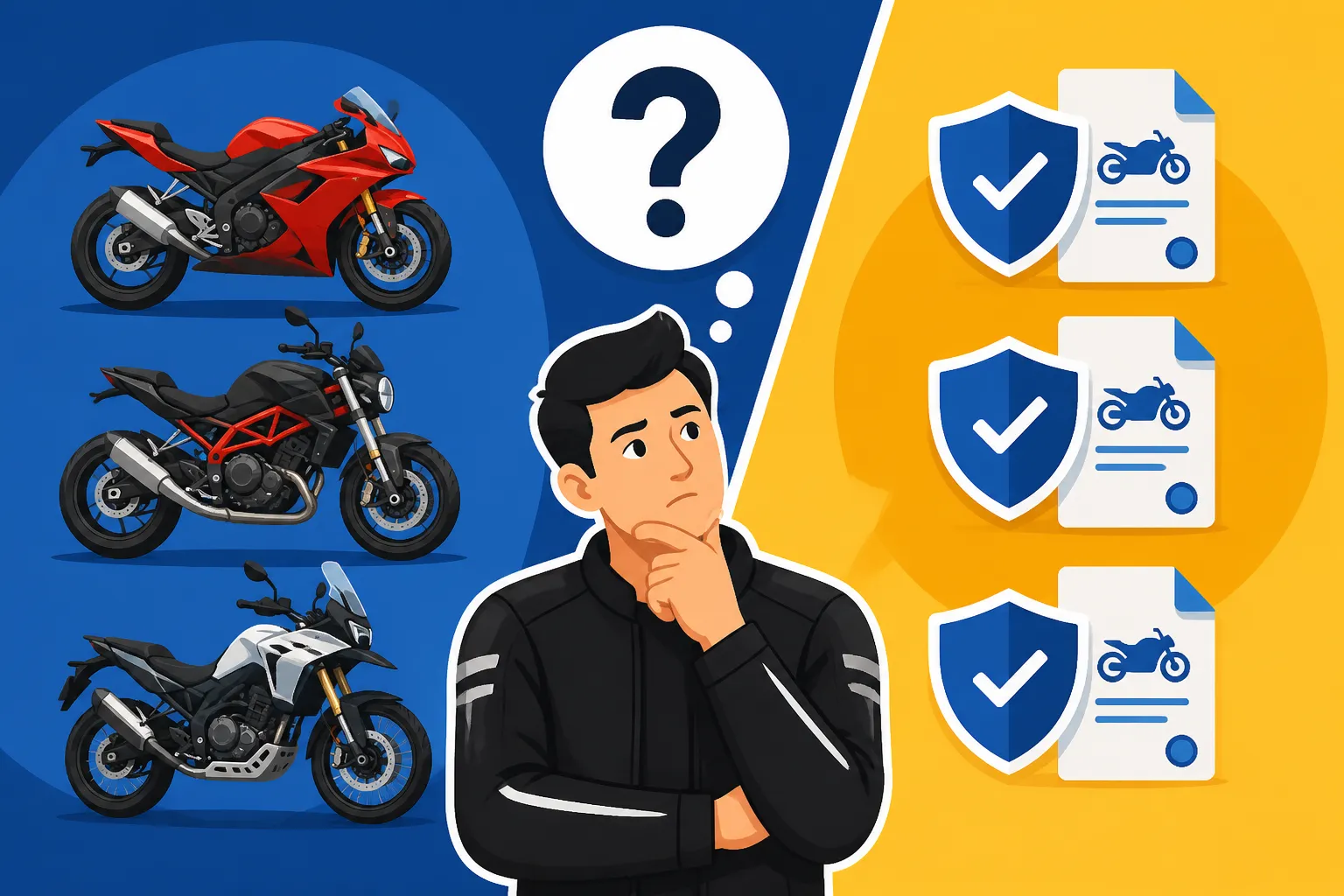
It’s a common scenario for many of us who love motorcycles: you start with one bike, maybe a trusty cruiser, and before you know it, there's a sleek sportbike or a rugged adventure bike sitting next to it in the garage. This often leads to a head-scratching moment: do you need a completely separate insurance policy for each of your beloved two-wheeled machines, or is there a smarter, more integrated way to handle it? It’s a valid question that can feel overwhelming, especially when you're trying to balance adequate coverage with keeping costs in check. This guide aims to demystify motorcycle insurance for multiple bikes, helping you understand your options and make informed decisions.
Understanding Your Multi-Bike Insurance Options
Navigating insurance when you own more than one motorcycle can feel like solving a puzzle. Many riders assume that each bike demands its own standalone policy, just like separate car insurance policies. While that's always an option, it's not always the most practical or cost-effective. Insurance providers recognize that many enthusiasts collect bikes, and they've developed options to cater to this.
Single Policy, Multiple Bikes (The "Multi-Bike Discount")
For most riders with multiple motorcycles, bundling them under a single insurance policy is often the most logical and beneficial approach. This is usually what insurance companies refer to when they talk about a "multi-bike" or "multi-vehicle" discount. Instead of having separate policy numbers, renewal dates, and premium statements for each bike, you'll have one overarching policy document listing all your motorcycles.
Imagine you have a classic Harley-Davidson you take out on weekends and a reliable Honda commuter bike for daily errands. Instead of juggling two separate policies, you can list both on one policy. Each bike will still have its own specific coverage details – for instance, your classic Harley might have stated value coverage for its modifications, while your Honda might just need standard comprehensive and collision. The key benefit here is convenience and potential cost savings. Insurance providers often offer a percentage discount on the overall premium when you insure multiple vehicles with them. This isn't just a marketing gimmick; it reflects a lower risk profile for the insurer. A rider who owns multiple bikes is often seen as more experienced and responsible, and also, you can only ride one bike at a time, so the collective risk exposure is reduced.
Separate Policies for Each Bike
While bundling is generally recommended, there are specific situations where taking out separate insurance policies for each motorcycle might actually make sense. This isn't the most common choice, but it's worth considering if your circumstances are a bit unique.
One primary reason might be if your motorcycles are vastly different in type and usage, and you find a specialty insurer that offers exceptional rates for one specific type of bike that your main insurer can't match. For example, if you own a high-performance sportbike and an antique cruiser, one insurer might specialize in vintage bikes with very specific coverage like agreed value, while another might offer competitive rates for sportbikes. In such a scenario, the savings from separate specialized policies could outweigh a multi-bike discount from a single provider. Another instance could be if you have a motorcycle that you only ride seasonally and want to put it on a laid-up policy, while your other bike is ridden year-round. Some insurers might not be flexible enough to handle these nuanced coverage differences within a single policy effectively, making separate policies a better fit. You can read more about options like Seasonal Lay-Up & Winter Storage Insurance if you're considering this. It’s all about finding the right balance between convenience, coverage, and cost for your individual fleet.
How Multi-Bike Policies Work
When you opt for a multi-bike policy, it’s not just a simple matter of adding more names to a list. Each motorcycle on the policy will typically have its own set of coverage options and limits, which means you can tailor the protection to suit each bike’s individual needs and value. This flexibility is incredibly valuable, allowing you to optimize your insurance spend.
Common Coverages and Endorsements for Multiple Motorcycles
With a multi-bike policy, each motorcycle will generally have its own set of basic coverages, such as liability, comprehensive, and collision. For instance, you might have high liability limits on your primary touring bike because you ride it often and far, while your vintage dirt bike, which only sees occasional trail use, might have lower liability and focus more on comprehensive coverage for theft protection.
Beyond the standard offerings, you can often add specific endorsements tailored to each bike. For example, your custom chopper might benefit greatly from Accessories & Custom Parts Coverage Explained, ensuring that expensive paint jobs, chrome, and performance upgrades are protected. Meanwhile, a financed sportbike might absolutely require Do You Need Gap Insurance on a Motorcycle? to cover the difference between its actual cash value and your loan balance if it’s totaled. You'll work with your insurer to assign these coverages individually. This level of customization ensures that you're not over-insuring a low-value bike or under-insuring a high-value one, allowing you to create a comprehensive safety net for your entire fleet. Understanding these nuances is crucial to choosing the right level of protection for each of your rides, and it can significantly impact your overall premium.
Discounts and Savings for Multiple Motorcycles
One of the biggest draws of bundling your motorcycles under one policy is the potential for significant discounts. Insurance companies love customers who bring them more business, and they often reward loyalty and reduced administrative costs with attractive savings.
The most obvious is the multi-bike discount itself, which typically ranges from 10-20% off your overall premium. But the savings don't stop there. Many insurers also offer additional discounts that can stack up, making a bundled policy even more appealing. For instance, if you also have your car insurance with the same company, you might qualify for a multi-policy or Bundling Motorcycle and Auto Insurance: Worth It? discount. Taking a motorcycle safety course can earn you a discount, and this discount often applies across all bikes on your policy, not just the one you rode during the course. Good rider discounts, homeowner discounts, anti-theft device discounts, and even payment discounts (like paying in full or setting up auto-pay) can further reduce your costs. These accumulated savings can make a substantial difference in your annual insurance expenditure. It's truly worth asking your insurance provider about all available discounts when you're getting a quote for multiple bikes; you'd be surprised how much you can shave off the total. This means you can get better coverage across all your bikes without breaking the bank.
Factors Influencing Your Multi-Bike Insurance Choice
Deciding between a single multi-bike policy and separate policies isn't a one-size-fits-all answer. Several factors play a crucial role in determining which approach is best for you and your unique collection of motorcycles. Thinking through these elements will help you align your insurance strategy with your specific needs and priorities.
Types of Motorcycles and Their Values
The kind of motorcycles you own is a huge factor in how they're insured. A high-performance sportbike, known for its speed and higher risk of theft, will almost always have a different premium profile than a classic cruiser or a low-displacement standard bike. Insurance companies assess risk based on factors like engine size, make, model, and even the general profile of riders who typically purchase such bikes.
For instance, if you have a Kawasaki Ninja alongside an older Honda Rebel, the Ninja's insurance cost will likely be significantly higher, especially if it's a newer model with advanced electronics and powerful acceleration. If you have a custom chopper with thousands of dollars in aftermarket parts, you'll want to ensure those modifications are covered, perhaps with Agreed Value vs Stated Value vs Actual Cash Value insurance, which is different from how you'd insure a stock touring bike. When all your bikes are on one policy, the insurer can see the full scope of your collection and may offer more flexible or discounted rates across the board. However, if you have one extremely high-value or high-risk bike and several low-value bikes, sometimes a specialized insurer might offer a better deal for that single expensive bike, making separate policies a consideration. The key is to compare how different insurers price each of your bikes both individually and as a bundle to see where the best value lies.
Rider Experience and Usage
Your riding experience, driving record, and how you use each motorcycle also heavily influence your insurance options and rates. Insurers consider experienced riders less risky, which translates to lower premiums.
If you’ve been riding for decades with a clean record, you’re in a good position to receive favorable rates, regardless of how many bikes you own. However, if you're a newer rider, say under 25, or have a recent accident or traffic violation on your record, your rates will generally be higher for all your bikes. You can learn more about how age impacts costs in our guide, Motorcycle Insurance Cost by Age. Furthermore, how you use each bike matters. Is one a daily commuter, accumulating high mileage? Is another a weekend toy that only sees a few hundred miles a year? Insurance companies will ask about annual mileage for each vehicle, as lower mileage often correlates with lower risk. Some policies even offer a "lay-up" option for bikes stored during winter, suspending certain coverages like collision, which can save money if you're not riding them. The more information you provide about your usage patterns, the better an insurer can tailor a policy and potentially offer more discounts, especially for those bikes that aren't constantly on the road.
State-Specific Regulations and Minimums
Every state has its own unique set of rules when it comes to motorcycle insurance. These regulations dictate the minimum amount of liability coverage you must carry, and some states have additional requirements like uninsured/underinsured motorist coverage or personal injury protection. It's never a bad idea to review your state's specific laws, especially if you're like me and enjoy riding across state lines. A good starting point is our comprehensive guide on Motorcycle Insurance Requirements by State (2026 Guide).
For instance, in states like Florida, known for its large riding population, the minimum requirements might differ significantly from a less populated state. In Florida, while liability insurance is not technically mandatory for motorcycles, riders are still subject to financial responsibility laws, meaning they are personally liable for damages in an at-fault accident. This might push a rider to carry higher liability limits voluntarily. Conversely, a state like Michigan, with its no-fault car insurance system, has unique aspects that can influence motorcycle insurance, even though motorcycles operate under a modified tort system there. When you have multiple bikes, ensuring each one meets the minimum legal requirements in your state of residence is paramount. A multi-bike policy simplifies this by keeping all regulatory compliance under one umbrella, making it easier to manage proof of insurance for all your bikes.
Pros and Cons of Combining vs. Separating Policies
Making the choice between a single multi-bike policy and individual policies is a decision that impacts not just your wallet, but also your peace of mind and administrative burden. Let’s break down the advantages of bundling and the specific situations where separate policies might actually be the better route.
Advantages of a Unified Policy
The benefits of a single, unified policy for all your motorcycles are often quite compelling for most riders. The most immediately noticeable advantage is the streamlined administration. Instead of receiving multiple bills, renewal notices, and policy documents, everything is consolidated into one easy-to-manage package. This saves time, reduces paperwork, and minimizes the chances of missing a payment or renewal deadline for one of your bikes.
Beyond convenience, the financial advantages are significant. As mentioned, multi-bike discounts are a real perk, potentially saving you a substantial percentage on your overall premium. Furthermore, many insurers offer additional discounts for customer loyalty, multi-policy bundles (if you also insure your car or home with them), and even for having a long-standing, clean record. These savings can compound, making a single policy a much more economical choice in the long run. Imagine the ease of making one phone call to update your address or change a coverage option, and it applies to all your bikes, rather than repeating the process for each individual policy. This simplification means less hassle and more time for what you really love: riding.
Disadvantages and When Separate Policies are Better
While bundling usually shines, there are specific scenarios where a unified policy might not be ideal, or where separate policies offer a distinct advantage. It's not about being stubborn; it's about being strategic.
One potential disadvantage of a unified policy could be if one of your motorcycles is significantly higher risk than the others, and its presence on the same policy inflates the overall premium for all bikes. For example, if you have a brand-new, high-performance sportbike that an insurer rates very highly for risk, that elevated premium could somewhat negate the multi-bike discount you'd get for your other, more sedate bikes. In such a case, exploring a specialty insurer for that single high-risk bike might yield better rates, even if you lose a small multi-bike discount on your others. Another situation where separate policies might be considered is if you have a bike that you rarely ride and wish to put on a bare-bones storage-only policy, while another is ridden year-round and requires full comprehensive coverage. Some major insurers might not offer the granular flexibility to completely separate coverage types for bikes within the same policy without some form of basic liability, making a completely separate policy (or even just a temporary suspension of certain coverages) more cost-effective.
Getting Quotes for Multiple Motorcycles
Once you understand the different ways to insure your fleet, the next step is to actually get some quotes. This is where the rubber meets the road, and you'll really see how different insurers price their policies for multiple motorcycles. Don't rush this step; a little homework here can save you a lot of money and ensure you get the right coverage.
Gathering Information for Multiple Bikes
Before you start contacting insurance providers, be prepared. The more accurate and detailed information you have for each of your motorcycles, the faster and more precise your quotes will be. You'll need to gather some basic details for every bike you intend to insure.
This includes the year, make, and model of each motorcycle, along with its Vehicle Identification Number (VIN). Be ready to provide information about any aftermarket parts, modifications, or accessories, as these often require special coverage. For instance, if you've added a custom exhaust or expensive saddlebags to your Harley, you'll want to ensure they're covered beyond the standard policy limits. You should also know the approximate annual mileage for each bike and its primary usage (e.g., commuting, recreational, off-road). Your personal information, such as your riding experience, driver's license number, and any past accidents or violations, will also be required. Having this data organized for each motorcycle will make the quoting process much smoother and ensure you get an accurate comparison of rates. Remember, transparency is key to getting the best and most appropriate coverage.
Leveraging Online Comparison Tools
In today’s digital age, comparing insurance quotes has never been easier, even for multiple motorcycles. Online comparison tools are fantastic resources that can save you hours of calling individual insurance companies. Platforms like The Zebra allow you to enter your information once and receive multiple quotes from various providers, all in one place. This makes it incredibly simple to see how different companies stack up against each other for your specific multi-bike needs.
Using a tool like The Zebra, you can input the details for all your motorcycles and your personal rider information. The system then queries various insurance carriers like Progressive, Dairyland, and Markel, presenting you with a range of options from different companies. This side-by-side comparison is invaluable for identifying the cheapest motorcycle insurance options and understanding the differences in coverage and pricing. You might discover that one insurer offers a significantly better multi-bike discount, or that another provides more robust What Does Full Coverage Motorcycle Insurance Mean? options for one of your specific bike types. Don't underestimate the power of these tools; they're designed to empower consumers to make the most informed decisions without the pressure of speaking directly to a sales agent right away. It's an efficient way to start your search and narrow down your best options.
Common Misconceptions and FAQs
When it comes to insuring multiple motorcycles, riders often come across unique situations or hold onto common beliefs that aren't entirely accurate. Clearing up these misconceptions can help you avoid gaps in coverage and unnecessary expenses.
What if One Bike is for Off-Road Use?
This is a common question, especially for riders who enjoy both street and trail. Many people assume that an off-road or dirt bike doesn't need insurance if it's never ridden on public roads. While it's true that most states don't require liability insurance for vehicles exclusively used on private property or designated off-road trails, this doesn't mean it shouldn't be insured. You can explore this further in our guide, Off-Road & Dirt Bike Insurance Requirements.
Even if your dirt bike never touches pavement, it's still susceptible to theft, fire, vandalism, or damage from accidents on the trail. Comprehensive coverage can protect your investment against non-collision incidents like theft or fire, which is a real concern for expensive off-road machines. Collision coverage would protect it against damage from accidents, even if those accidents occur on private land. Moreover, consider your liability. If you're riding on someone else's property and cause damage, or if someone is injured by your off-road bike, your personal liability could be enormous. Some homeowner's policies might offer limited coverage, but a specific off-road motorcycle policy or an endorsement on your multi-bike policy would offer more robust protection. It's about protecting your assets and your financial well-being, regardless of where you ride.
Does Storage Insurance Count?
Another frequent query revolves around bikes that are put away for the season or simply stored long-term. Many riders wonder if they still need to maintain full coverage on a motorcycle that isn't actively being ridden. The short answer is, it depends on what you want to protect.
If your bike is truly off the road for an extended period, such as during winter in colder climates, you can often switch to what's known as "storage insurance" or "comprehensive-only" coverage. This dramatically reduces your premium because it removes collision and liability coverage, which are unnecessary if the bike isn't being operated. However, it retains comprehensive coverage, protecting your motorcycle from risks like theft, vandalism, fire, natural disasters (like floods or hail), and other non-collision damages that can occur even when the bike is parked in your garage. This is particularly valuable for protecting expensive bikes or custom builds from unforeseen circumstances. If you've financed your motorcycle, your lender will likely still require you to carry comprehensive and collision coverage, even if it's stored, so always check your loan agreement. For more details, you can look into Do You Need Insurance to Store a Motorcycle?. It's a smart way to save money while still safeguarding your investment during periods of inactivity.
| Policy Type | Pros | Cons | Best For |
|---|---|---|---|
| Unified Multi-Bike Policy | – Multi-bike discounts & other bundles | – Higher-risk bikes might slightly inflate overall premium | – Most riders with 2+ bikes, especially similar types |
| – Single bill, renewal, point of contact | – Less flexibility for highly specialized coverage on one specific bike | – Seeking convenience and maximum overall savings | |
| – Consistent coverage limits & options | |||
| Separate Policies | – Allows for specialized insurers for each bike | – No multi-bike discount; potentially higher overall cost | – Riders with a vastly different collection (e.g., custom vs. dirt bike) |
| – Can tailor unique coverage precisely | – Juggling multiple bills, renewals, and insurers | – Finding niche coverage or the absolute cheapest rate for a single bike | |
| – Ideal for highly varied risk profiles | – When one bike has unique requirements not met by a primary insurer |
Disclaimer
Please remember that insurance policies and state regulations can change. The information provided in this article is intended for general guidance only and should not be considered legal or financial advice. Always consult with a licensed insurance professional to discuss your specific needs and ensure you have the appropriate coverage for your motorcycles. It's crucial to review your policy documents thoroughly and understand your coverage limits and exclusions.