Do You Need Comprehensive Coverage on a Motorcycle?
One of the biggest head-scratchers for us motorcycle riders is figuring out exactly what kind of insurance coverage we truly need. It’s easy to feel overwhelmed by all the jargon, and sometimes, the cost alone can make you question how much protection is really necessary. This guide is all about cutting through that confusion, helping you understand comprehensive motorcycle coverage, and deciding if it’s the right shield for your two-wheeled passion.
What Exactly Is Comprehensive Motorcycle Coverage?
Let's be honest, insurance terms can feel like a foreign language, and "comprehensive" is one of those words that sounds important but often leaves us wondering, "What does it actually cover?" Think of comprehensive coverage as your motorcycle's bodyguard for all those unpredictable, non-collision disasters that life throws its way. It's designed to protect your bike when it's not involved in an accident with another vehicle, or when you aren't the one who crashed it into something.
It's a critical piece of the puzzle, especially when you consider that motorcycles are unfortunately prime targets for theft and can be surprisingly vulnerable to things like hailstorms or a rogue deer jumping out into your path. Without comprehensive, these "Acts of God" or "Acts of Bad Luck" could leave you footing a hefty bill for repairs or replacement.
What Perils It Protects Against
Comprehensive coverage steps in for a surprisingly wide array of incidents that fall outside the realm of typical traffic accidents. Imagine pulling into your garage one evening, only to find an empty space where your beloved Harley-Davidson once sat. Or maybe a tree branch decided to redecorate your Kawasaki Ninja during a wild thunderstorm. These are exactly the kinds of scenarios where comprehensive coverage earns its keep.
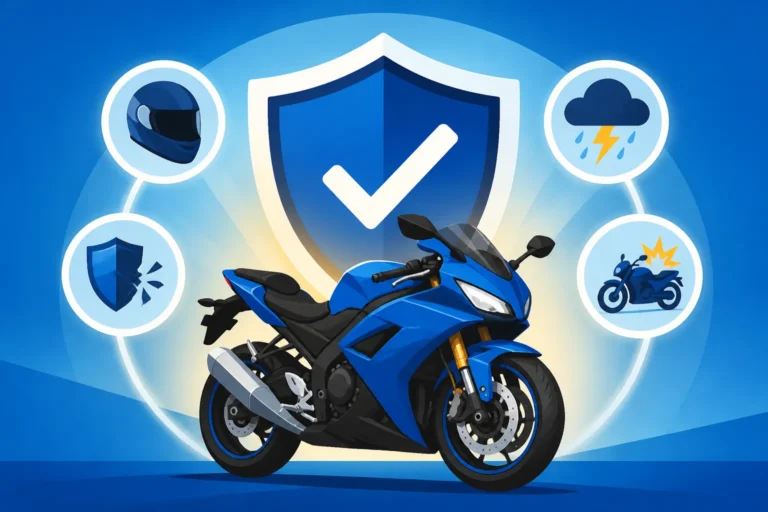
It typically covers damage from events like theft, vandalism, fire, natural disasters (think floods, hurricanes, hailstorms, earthquakes), and even contact with animals. If a deer darts out in front of you on a backroad in upstate New York and causes damage to your bike, comprehensive is the coverage that will help you pay for those repairs. It’s about protecting your investment from everything but a crash with another vehicle or an object you collide with while riding.
How It Differs from Other Coverages
To really grasp what comprehensive offers, it helps to see how it fits into the broader landscape of motorcycle insurance. You've got your basic liability coverage, which is often legally required and covers damages or injuries you cause to others. Then there's collision coverage, which is your financial safety net if you hit another vehicle, a tree, a guardrail, or if your bike gets damaged in an accident where you're at fault. These are the big three, and each plays a distinct role.
Comprehensive coverage, on the other hand, fills in the gaps that liability and collision don't touch. It's the silent protector for those moments when Mother Nature or malicious intent strikes. For instance, if your bike is stolen, your collision policy won't cover it, and your liability policy certainly won't help you replace it. That's where comprehensive shines. It’s about securing your peace of mind against the unpredictable, rather than just covering the fallout from riding incidents. This distinction is vital for understanding what Types of Motorcycle Insurance Coverage Explained means for your specific needs.
When Comprehensive Coverage Becomes a Lifesaver
While no one likes paying for insurance, there are specific situations where comprehensive coverage on your motorcycle isn't just a nice-to-have, but an absolute necessity. These are the moments that can turn from minor headaches into major financial burdens without the right protection in place. It's about being prepared for life's curveballs, especially when you're deeply invested in your ride.
Think about the sheer number of variables that are out of your control as a rider. You can be the safest, most skilled motorcyclist on the road, but that doesn't stop a rogue storm, a brazen thief, or a sudden animal encounter from wreaking havoc on your bike. Comprehensive coverage acts as a robust financial barrier against these non-collision related mishaps, offering a much-needed layer of protection.
Theft and Vandalism Worries
Few things are as sickening as discovering your motorcycle has been stolen or vandalized. Motorcycles, especially popular models like Harley-Davidsons or high-performance sport bikes, are unfortunately common targets for thieves. In metropolitan areas like Los Angeles or Miami, motorcycle theft rates can be particularly high. Even if you take every precaution – chaining it up, parking in a secure garage, using alarms – a determined thief can still make off with your prized possession.
Vandalism is another heartbreaking reality. Imagine finding your tank scratched, tires slashed, or mirrors broken just because someone decided to cause trouble. Without comprehensive coverage, the cost of replacing your motorcycle or repairing extensive damage from vandalism would fall squarely on your shoulders. This can mean thousands of dollars out of pocket, a sum that many riders simply aren't prepared to absorb. It's worth exploring in more detail what happens if Your Motorcycle Was Stolen: Will Insurance Pay?
Natural Disasters and Environmental Damage
We often think of insurance as protecting us from other drivers, but nature itself can be a formidable foe. Whether you live in an area prone to hurricanes like Florida, tornadoes in the Midwest, or even just heavy hailstorms that can suddenly sweep through Texas, your motorcycle is vulnerable. Hail can dent fuel tanks, crack fairings, and shatter windshields. Flooding can cause catastrophic damage to engines and electrical systems. Even a fallen tree limb during a strong gust of wind can flatten a parked bike.
These aren't hypothetical scenarios; they happen to riders every day. If your bike is parked outside during an unexpected severe weather event, or even securely stored in a garage that succumbs to a natural disaster, comprehensive coverage is what will help cover the repairs or replacement costs. It takes the sting out of these unavoidable, often devastating events, allowing you to focus on recovery rather than financial ruin.
Hitting Animals or Falling Objects
Riding on scenic country roads, you might encounter wildlife – a deer, a stray dog, or even a flock of birds. Hitting an animal can be incredibly dangerous for a motorcyclist, often leading to a crash and significant damage to the bike, not to mention potential injuries to the rider. Many riders mistakenly believe that collision coverage will protect them in this scenario. However, collision coverage is specifically for impacts with other vehicles or objects. An animal is typically considered a non-collision event for insurance purposes.
Similarly, objects can fall from other vehicles (like debris on the highway), or even from the sky (like ice from an airplane or even a meteor, though rare!). If a rock flies up and cracks your headlight, or a piece of cargo tumbles from a truck in front of you, comprehensive coverage is usually what steps in to cover the damage to your motorcycle. It's designed for those "things fell on my bike" or "things ran into my bike that weren't another car" situations, providing a vital layer of protection for unexpected road hazards.
Factors to Consider When Deciding on Comprehensive Coverage
Deciding whether to add comprehensive coverage isn't a one-size-fits-all answer. What's right for one rider might be completely unnecessary for another. It really comes down to a blend of your personal circumstances, the value of your bike, and your comfort level with risk. Before you commit to those extra premiums, take a moment to honestly evaluate these key factors. It's about making an informed choice that truly fits your lifestyle and financial situation, rather than just defaulting to what everyone else does. Remember, knowledge is power when it comes to protecting your ride.
Companies like The Zebra can help you compare different policies and see how these factors influence your quotes, allowing you to tailor your coverage to your specific situation. They can lay out options from various providers so you can make a choice that balances cost and robust protection.
Your Motorcycle's Value and Age
One of the most significant factors influencing your decision should be the actual market value of your motorcycle. If you're cruising on a brand-new Ducati Panigale worth $25,000, then comprehensive coverage is almost certainly a wise investment. The cost of replacing such a high-value bike out of pocket due to theft or fire would be crippling for most people. On the other hand, if you're riding a vintage 1980s Honda Rebel that you picked up for $1,500 and can easily repair yourself, the added premium for comprehensive might not make financial sense.
The age of your motorcycle also plays a role. Newer bikes generally command higher premiums for comprehensive coverage because their replacement parts are more expensive and their market value is higher. As bikes age, their value depreciates, and at some point, the cost of comprehensive coverage might outweigh the potential payout if the bike is totaled. It's a calculation of risk versus reward: how much are you willing to pay to protect a rapidly depreciating asset?
Your Financial Situation and Risk Tolerance
Let's get real about money. Your personal financial health is a huge part of this decision. Could you comfortably afford to replace your motorcycle if it were stolen tomorrow, or repair it if a tree fell on it? If the answer is a resounding "no," then comprehensive coverage offers invaluable peace of mind. For some, the monthly premium is a small price to pay to avoid a potentially devastating financial hit.
Your risk tolerance also comes into play. Are you the type of rider who can shrug off a potential loss, or would the thought of your bike being stolen keep you up at night? Some individuals are comfortable self-insuring for these types of incidents, especially if they have a healthy emergency fund. Others prefer to offload that risk to an insurance company, even if it means a higher monthly payment. There's no right or wrong answer here, only what feels right for you. Understanding How Much Is Motorcycle Insurance? 2026 Cost Guide can help you budget.
Where and How You Ride
The environment in which you ride and store your motorcycle significantly impacts the likelihood of comprehensive claims. If you live in a dense urban environment with higher crime rates, the risk of theft or vandalism is inherently greater than if you live in a quiet rural area. Similarly, if you frequently park your motorcycle on the street in a busy city like Chicago, it's exposed to more potential threats than if it's always tucked away in a locked garage in a quiet suburb.
Furthermore, consider the natural elements. Riders in parts of Arizona might worry less about floods but more about desert critters or intense sun damage, while those in Oregon might be more concerned with heavy rains and falling debris. If your commute takes you through areas with significant wildlife crossings, the risk of an animal strike increases. These geographical and lifestyle factors should heavily influence your decision. For riders who store their bikes during the colder months, considering Do You Need Insurance to Store a Motorcycle? is also a relevant question.
Lender Requirements
This is often the most straightforward factor. If you financed your motorcycle, your lender will almost certainly require you to carry comprehensive and collision coverage until the loan is paid off. Why? Because the bank has a financial stake in your motorcycle. If it gets stolen or totaled, they want to ensure their investment is protected, regardless of whether you’re at fault or if an act of nature caused the damage.
Ignoring these requirements isn't an option; failing to maintain comprehensive coverage could put you in breach of your loan agreement, potentially leading to the lender repossessing the bike or forcing expensive coverage upon you. So, if you're still making payments, this decision is largely made for you. For more insights on this, you might want to read up on Motorcycle Insurance Requirements for Financed Bikes.
Cost vs. Benefit: Is It Worth the Premium?
After understanding what comprehensive coverage entails and when it's most beneficial, the million-dollar question for most riders inevitably boils down to this: Is the added cost worth it? We all want protection, but we also don't want to feel like we're throwing money away on something we might never use. It's a constant balancing act between securing your asset and managing your budget. This section dives into the practical financial considerations, helping you weigh the monetary commitment against the peace of mind and protection it offers.
Comparing quotes from different providers is key here. Reputable comparison sites, such as The Zebra, can show you how comprehensive coverage impacts your overall premium across multiple insurers, helping you see the real cost in an apples-to-apples comparison. This way, you can clearly see what you're paying for and if it aligns with your financial comfort zone.
Understanding Deductibles and Premiums
When you opt for comprehensive coverage, you'll encounter two primary financial components: the premium and the deductible. The premium is the regular payment you make to your insurance company—monthly, quarterly, or annually—to maintain the coverage. This is the ongoing cost of your peace of mind. The deductible, on the other hand, is the amount you agree to pay out of pocket before your insurance coverage kicks in for a claim. For example, if you have a $500 deductible and your bike suffers $2,000 in comprehensive damage, you’d pay the first $500, and your insurer would cover the remaining $1,500.
There's a direct relationship between these two: generally, a higher deductible means a lower premium, and a lower deductible means a higher premium. It's a trade-off. Can you comfortably afford a $1,000 deductible if something happens to your bike? If so, you could save on your monthly premium. But if a grand out of pocket would sting, a lower deductible might be worth the slightly higher premium. This is a crucial consideration when figuring out if the cost truly fits your budget.
Comparing Quotes and Finding the Right Fit
The world of motorcycle insurance is competitive, and prices for comprehensive coverage can vary significantly from one provider to another, even for the exact same bike and rider profile. This is why shopping around is not just a good idea—it’s essential. Don't settle for the first quote you receive. Gather quotes from at least three to five different insurance companies. You might be surprised by the range of prices for similar coverage levels.
When comparing, make sure you're looking at apples to apples. Ensure the deductibles are the same, the coverage limits are consistent, and you're comparing policies that include comprehensive coverage. Websites that specialize in comparing insurance, like The Zebra, can be incredibly helpful for this, allowing you to quickly get multiple quotes without having to fill out the same information repeatedly. This helps you identify the Cheapest Motorcycle Insurance Companies that offer comprehensive coverage. Beyond just the price, consider customer service, claim processing reputation, and overall satisfaction reviews. Sometimes, paying a little more for an insurer with a stellar reputation can save you headaches down the line.
| Scenario | Covered by Comprehensive? | Covered by Collision? | Covered by Liability? |
|---|---|---|---|
| Motorcycle stolen | Yes | No | No |
| Vandalism (e.g., scratched paint) | Yes | No | No |
| Damage from hail, flood, fire | Yes | No | No |
| Hitting a deer or other animal | Yes | No | No |
| Tree branch falls on parked bike | Yes | No | No |
| Accident with another vehicle (at-fault) | No | Yes | Yes (for other party) |
| Accident with another vehicle (not-at-fault) | No | Yes (often deductible applies) | No |
| Dropping your bike in a parking lot (self-damage) | No | Yes | No |
When It Makes Sense to Skip It
While comprehensive coverage is invaluable for many, there are situations where you might decide to forgo it. If your motorcycle is very old, has a low market value, and you could easily replace it out of pocket, the premiums might not be worth it. For example, if you have a beat-up dirt bike that's rarely ridden on public roads and is easily replaceable for a few hundred dollars, the cost of comprehensive insurance might quickly exceed its actual value. In these cases, you might prefer to carry only the legally required minimum liability coverage, understanding you’re taking on the full financial risk for non-collision damage.
Another scenario is if you've paid off your motorcycle and have substantial savings dedicated to unexpected expenses. If you're financially secure enough to absorb the cost of a full replacement or major repair without breaking a sweat, you might choose to self-insure against these risks. This is a personal financial decision, but for most riders, the peace of mind comprehensive coverage offers is well worth the investment, especially considering factors that What Affects Your Motorcycle Insurance Rate can present.
Disclaimer
This article is for general informational purposes only and does not constitute professional advice. Laws, prices and regulations vary by location and change over time. Consult a qualified professional for guidance on your specific situation.