Penalty for No Motorcycle Insurance in Texas
Riding a motorcycle in Texas is an exhilarating experience, a true taste of freedom on the open road. But that freedom comes with significant responsibilities, and one of the most critical is carrying proper motorcycle insurance. It's a common misconception that because you might be a safe, experienced rider, you can skirt the rules, but being caught without the right coverage in the Lone Star State can lead to some seriously unpleasant, and costly, penalties. This comprehensive guide will walk you through exactly what those penalties entail, from immediate fines to long-term financial and legal headaches, so you can avoid trouble and ride with peace of mind.
Is Motorcycle Insurance Required in Texas?
It’s a question many new and even seasoned riders ponder, especially when weighing the cost of premiums against their perceived risk. The simple, unequivocal answer in Texas is yes, absolutely. Just like driving a car, operating a motorcycle on public roads in Texas mandates that you carry minimum liability insurance. This isn’t just a suggestion; it’s a non-negotiable legal requirement designed to protect everyone on the road.
The Lone Star State’s Mandate
Texas operates under an “at-fault” insurance system. This means that if you cause an accident, you are financially responsible for the damages and injuries that result. Your liability insurance is there to cover those costs for the other party involved. Without it, the burden falls directly on your shoulders, and that’s where the real trouble begins. The state isn’t trying to be difficult; it’s trying to ensure that victims of accidents caused by negligent drivers or riders have a means of recovery. Texas law is pretty clear: if you’re riding, you need to be insured. This applies whether you’re cruising through the Hill Country, navigating Houston traffic, or hitting the beach roads in Galveston. There’s no escaping this fundamental requirement.
Minimum Liability Requirements
So, what kind of coverage are we actually talking about? Texas mandates specific minimum liability limits, often referred to as 30/60/25. Understanding these numbers is crucial, as they define the bare minimum you need to carry to be legal.
- $30,000 for bodily injury per person: This is the maximum your insurance company will pay for injuries to any single person you injure in an accident where you are at fault.
- $60,000 for total bodily injury per accident: This is the maximum your insurance company will pay for all injuries in an accident you cause, regardless of how many people are hurt. So, if three people are injured, your policy would pay up to $60,000 total, with no single person receiving more than $30,000.
- $25,000 for property damage per accident: This is the maximum your insurance company will pay for damage to other people's property (like their vehicle, a fence, or a building) in an accident you cause.
While these are the minimums, many experienced riders will tell you that it’s often a good idea to carry more coverage. An accident can easily exceed these limits, leaving you personally responsible for the rest. For instance, if you cause an accident that totals a new pickup truck, the $25,000 property damage limit might not even scratch the surface of the repair or replacement cost. In such cases, the difference would come straight out of your pocket. Understanding these numbers is vital, and you can dive deeper into "Minimum Liability Insurance Explained (The Three Numbers)" to get a clearer picture of how these work.
What Happens if You’re Caught Without Insurance?
You’re out for a ride, enjoying the Texas sunshine, and suddenly you see flashing lights in your rearview mirror. Your heart sinks. You know your registration is good, your helmet is on, but then it hits you: you let your motorcycle insurance lapse. What now? Getting caught without insurance isn’t a minor slap on the wrist; it’s a serious traffic violation with immediate, tangible consequences that can quickly drain your wallet and complicate your life.
Initial Traffic Stop Penalties
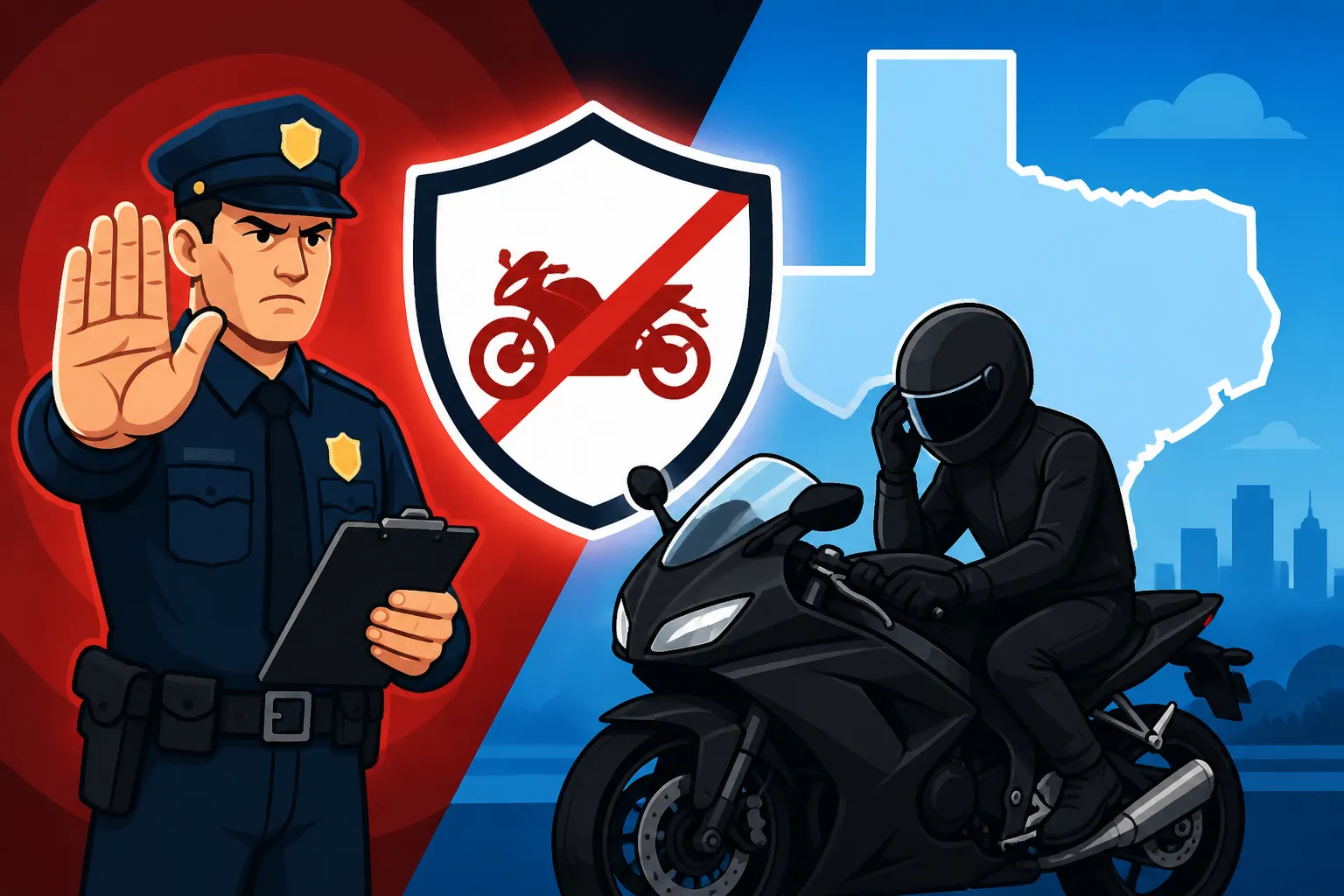
The moment a Texas law enforcement officer pulls you over and discovers you don’t have valid motorcycle insurance, you’re looking at a Class C misdemeanor. This isn’t just a warning; it’s a formal charge.
- Fines: For a first offense, the fine can range from $175 to $350. While that might not sound astronomical, remember that these numbers are just the base fine. When court costs, administrative fees, and state surcharges are tacked on, that initial $175 can easily balloon to several hundred dollars. Imagine budgeting for a new exhaust system or a weekend trip, only to have that money wiped out by an unexpected fine. It's a tough pill to swallow, especially when a few hundred dollars for insurance could have prevented it entirely.
- Impoundment Risk: While not always immediate for a first offense, officers can impound your motorcycle if they deem it necessary, especially if you can't provide proof of insurance or an immediate way to secure it. This means not only a fine but also towing fees and daily storage fees that quickly add up. You'll then need to show proof of valid insurance before you can even get your bike back, adding another layer of hassle and expense. It's a scenario no rider wants to face – your beloved bike locked away in an impound lot.
- Driver's License Issues: Beyond the immediate fine, a conviction for no insurance goes on your driving record. This can have ripple effects, especially when it comes to future interactions with the DMV and insurance providers. It signals you as a higher risk, which has its own set of financial consequences down the line.
Financial Ramifications Beyond Fines
The penalties extend far beyond the ticket itself. If you’re involved in an accident and don’t have insurance, even if it’s not your fault, things get incredibly complicated. Texas’s financial responsibility laws come heavily into play here.
- Paying Out of Pocket: If you are at fault in an accident and uninsured, you are personally responsible for all damages and injuries. This means hospital bills, repair costs for other vehicles, lost wages for the injured party, and potentially legal fees if they decide to sue. We're not talking about a couple hundred dollars anymore; we're talking about tens of thousands, or even hundreds of thousands, of dollars. Imagine being on the hook for a totaled Mercedes and someone's emergency room visit and physical therapy. Your savings, your assets, even your future earnings could be at risk. This is the grim reality of riding without coverage.
- Judgment and Wage Garnishment: If you can't pay these costs, the injured party can sue you. If they win, they'll get a judgment against you, which can lead to wage garnishment, liens on your property, and a severely damaged credit score. This isn't just a temporary setback; it can impact your ability to rent an apartment, get a loan, or even secure certain jobs for years to come. This is why "Financial Responsibility Laws for Riders" are so important to understand.
- SR-22 Requirement: Even if you avoid an accident, simply being caught without insurance can trigger an SR-22 requirement. An SR-22 is not insurance itself, but a certificate of financial responsibility that your insurance company files with the state, proving you have coverage. It marks you as a "high-risk" driver or rider, and maintaining it for several years is usually required after certain violations. This little piece of paper can make your insurance premiums skyrocket, often doubling or tripling your rates. This makes it crucial to understand "SR-22 for Motorcycles: When It's Required" and how it impacts your future.
The Escalating Consequences of Repeat Offenses
Texas doesn’t just issue a warning and hope you learn your lesson. The penalties for riding without motorcycle insurance escalate significantly with each subsequent offense. The state is serious about its financial responsibility laws, and repeat offenders face increasingly harsh measures designed to get them off the road or compel them to comply. It’s a clear message: get insured or face severe consequences.
Enhanced Fines and Surcharges
If you thought the first fine was a headache, subsequent offenses are designed to be a financial nightmare. Texas law states that for a second or subsequent conviction of riding without insurance, the fines increase considerably.
- Steeper Fines: The base fine for a second offense typically jumps to a range of $350 to $1,000. But again, this is just the starting point. When court costs, processing fees, and state surcharges are added, you're looking at a bill that could easily hit well over a thousand dollars. For example, some jurisdictions might add a $250 surcharge annually for three years on top of the initial fine and court costs, pushing the total financial burden much higher. This isn't pocket change; it's a significant financial hit that could force you to make tough choices, like putting off essential repairs to your bike or dipping into savings.
- Annual Surcharges: Beyond the direct fines, Texas implements an annual surcharge system for specific traffic violations. Being convicted of driving without insurance is often one of them. You might face an annual surcharge of $250 for three years if you receive certain convictions, regardless of whether you have insurance at the time of future incidents. This means you could be paying off the mistake for years, even if you secure insurance immediately after the conviction. It's a lingering financial penalty that serves as a constant reminder of the consequences of non-compliance.
License Suspension and Vehicle Impoundment
For repeat offenders, the state moves beyond just financial penalties and starts to directly impact your ability to ride. Your privilege to operate a motorcycle, and even a car, can be revoked, and your vehicle is at a much higher risk of immediate impoundment.
- Driver's License Suspension: This is where things get truly serious. A second or subsequent conviction for operating without insurance can lead to the suspension of your driver's license. The length of the suspension can vary but typically ranges from six months to two years. This means you cannot legally operate any motor vehicle, including your motorcycle, on Texas roads. If you're caught riding during a suspension, you face even more severe penalties, including higher fines, extended suspension periods, and even jail time. For many riders, losing their license means losing their primary mode of transportation, affecting their commute to work, their ability to run errands, and their overall independence. It's a monumental inconvenience that disrupts daily life.
- Mandatory SR-22 and Filing Fees: As with a first offense, a repeat offense almost certainly mandates an SR-22 filing, but the duration might be longer, and the impact on your insurance rates will be even more pronounced. Insurers view repeat offenders as extremely high risk, leading to significantly higher premiums, sometimes two to five times the average cost. In addition to the increased premiums, there are usually filing fees associated with the SR-22 itself. You might also find fewer insurance companies willing to cover you, limiting your options and potentially forcing you to accept very expensive policies. Understanding "SR-22 for Motorcycles: When It's Required" becomes even more critical for repeat offenders.
- Vehicle Impoundment: While impoundment can happen on a first offense, it becomes much more likely for repeat offenders. Law enforcement has less discretion and is more inclined to seize your motorcycle on the spot. This means you'll deal with immediate towing, impound lot fees, and the hurdle of proving future financial responsibility before you can get your bike back. The fees can quickly escalate; a few days in an impound lot can easily cost hundreds of dollars, adding to the financial burden and logistical nightmare.
Need to know more about the penalties for not having insurance? Check out our article on What Happens If You Ride Without Insurance?
Long-Term Repercussions for Uninsured Riders
Beyond the immediate fines and potential license suspensions, the decision to ride without motorcycle insurance in Texas can cast a long shadow over your financial and legal standing for years to come. These aren’t just one-time inconveniences; they are persistent problems that can impact your future ability to get affordable insurance, borrow money, and even recover from an accident, regardless of who was at fault.
Increased Future Insurance Rates and SR-22
One of the most enduring consequences of being caught without insurance is the dramatic impact it has on your future insurance premiums. Once you have a conviction for riding uninsured on your record, you are flagged as a high-risk rider.
- High-Risk Status: Insurance companies use your driving history to assess your risk profile. A conviction for driving without insurance, especially a repeat offense, signals to them that you are a risky individual to insure. They see you as more likely to file a claim or incur further violations. This "high-risk" label doesn't just disappear overnight; it can stick with you for three to five years, or even longer depending on the severity and frequency of the offenses. This means you'll be paying higher premiums for a significant period.
- SR-22 Requirements and Costs: As mentioned, a conviction will almost certainly trigger an SR-22 requirement in Texas. This certificate proves to the state that you have the minimum liability coverage. It's not just the hassle of obtaining it; the real sting comes from the cost. Many insurance providers will increase your rates substantially simply because they have to file an SR-22 on your behalf. These rate hikes can be anywhere from 50% to 300% or more, transforming an otherwise affordable policy into a major expense. Some companies might even refuse to cover you at all, forcing you to seek out specialty high-risk insurers, which typically charge the highest rates. Learning about "How Much Does SR-22 Increase Motorcycle Insurance?" can give you a clearer idea of the potential financial burden.
- Limited Insurance Options: With a history of non-compliance, your choices for insurance providers shrink significantly. Mainstream companies like Progressive or Geico might still offer policies, but at a much higher rate. Others, especially those that cater to preferred drivers, might decline to offer you coverage altogether. This lack of competition further limits your ability to find affordable rates, leaving you with fewer, more expensive options.
Civil Liability in an Accident
This is arguably the most terrifying long-term repercussion, yet it’s often overlooked. If you cause an accident while uninsured, the financial consequences can be catastrophic and truly life-altering.
- Lawsuits and Personal Assets at Risk: Texas is an "at-fault" state. If you are deemed responsible for an accident, you are personally liable for all damages and injuries. Without insurance to back you up, the injured party can and likely will sue you directly. This isn't just about covering vehicle repairs; it includes medical bills, lost wages, pain and suffering, and property damage. A serious injury could easily result in hundreds of thousands of dollars in expenses. If a judgment is awarded against you, your personal assets—your home, your savings, your future earnings—can be targeted to satisfy that debt. This can lead to bankruptcy, foreclosure, and a severe disruption of your financial stability for decades.
- Difficulty Recovering Your Own Damages: Even if an accident is not your fault, riding uninsured can complicate your ability to recover damages for your own injuries and bike repairs. While you still technically have the right to seek compensation from the at-fault driver, some states have "No Pay, No Play" laws that limit the amount uninsured drivers can recover for non-economic damages (like pain and suffering). While Texas doesn't have a strict "No Pay, No Play" law that completely bars recovery, being uninsured can still negatively impact how a court or jury views your case and could affect settlement negotiations. Furthermore, without your own medical payments or uninsured motorist coverage, you'll be entirely reliant on the other driver's insurance, which might not be enough or could take a long time to pay out.
How to Avoid Penalties: Getting Insured in Texas
The thought of fines, license suspensions, and financial ruin is enough to make any rider want to ensure they’re squared away. The good news is that avoiding these harsh penalties is straightforward: get proper motorcycle insurance. It’s an investment in your peace of mind and your financial security, protecting you and others on the road.
Shopping for the Right Coverage
Finding the right motorcycle insurance in Texas doesn’t have to be a daunting task. While the minimum liability is a must, you’ll want to consider other types of coverage to fully protect yourself.
- Compare Quotes: Don't settle for the first quote you receive. Different insurers offer varying rates for the same coverage, so shopping around is crucial. Companies like Progressive, Geico, Dairyland, and Markel are prominent providers in Texas that specialize in motorcycle insurance. Use online comparison tools or work with an independent agent who can shop multiple carriers for you. This is an excellent opportunity to understand "How to Compare Motorcycle Insurance Quotes" effectively.
- Understand Your Needs: Beyond liability, think about what else you need. Do you have a brand new, expensive bike? Then comprehensive and collision coverage are likely essential to protect your investment from theft, vandalism, and accident damage. If you've customized your ride, make sure to ask about "Accessories & Custom Parts Coverage Explained". What if you hit an uninsured driver, a sadly common occurrence? "Uninsured & Underinsured Motorist Coverage (UM/UIM)" is a lifesaver in such situations, covering your medical bills and bike damage if the other party can't pay.
- Consider Discounts: Many insurance companies offer a variety of discounts that can significantly lower your premium. Common discounts include multi-policy discounts (bundling your motorcycle with your car insurance), safety course completion discounts (taking a Motorcycle Safety Foundation course), mature rider discounts, and even discounts for anti-theft devices. Be sure to ask every insurer about all available discounts. Our guide on "Motorcycle Insurance Discounts You're Missing" can help you identify potential savings.
- Review Policy Annually: Your insurance needs can change. Maybe you got a new bike, moved to a different part of Texas, or your riding habits changed. It's a good practice to review your policy annually and get new quotes to ensure you're still getting the best rate for the coverage you need.
Proof of Insurance Essentials
Once you have your policy, knowing how to provide proof of insurance is just as important as having the policy itself. In Texas, law enforcement needs a way to verify your coverage quickly.
- Physical vs. Digital Proof: Texas law allows you to carry either a physical copy of your insurance card or electronic proof on your smartphone. Whichever method you choose, ensure it's readily accessible. Many riders keep a paper copy in their wallet or under the seat, and an electronic version saved on their phone. Having both is a smart backup strategy. Don't rely solely on an app that might require a data connection when you're pulled over in a spotty service area. Learn more about "Proof of Insurance: Digital vs Paper for Riders".
- Keep It Current: Always make sure your proof of insurance shows the current policy period. An expired card, even if your policy is active, can lead to unnecessary delays and questioning during a traffic stop. If you switch insurance providers or renew your policy, promptly replace your old card with the new one.
- Understand the Penalties for No Proof: While not as severe as having no insurance at all, failing to provide proof when requested can still result in a citation. Often, if you can later prove you did have valid insurance at the time of the stop, the charge might be dismissed, but you might still be on the hook for court fees. It’s always better to have it on hand.
By proactively securing adequate motorcycle insurance and always carrying proof, you can confidently enjoy the open roads of Texas without the looming fear of fines, legal battles, or financial devastation. It's about being a responsible rider, not just for yourself, but for everyone else sharing the road.
Here's a quick overview of the potential penalties in Texas:
| Offense | Base Fine Range | Potential Additional Costs | Other Consequences |
|---|---|---|---|
| First Offense | $175 – $350 | Court costs, administrative fees, state surcharges (up to ~$1000 total) | Class C misdemeanor, driving record impact, potential SR-22 requirement, personal liability for accident damages. |
| Second or Subsequent Offense | $350 – $1,000 | Court costs, administrative fees, state surcharges (potentially $250/year for 3 years) | Class C misdemeanor, **driver’s license suspension (6 months – 2 years)**, likely SR-22 requirement (higher premiums), higher risk of vehicle impoundment, severe personal liability for accident damages. |
| Accident While Uninsured (At-Fault) | N/A (separate charges for no insurance) | Tens to hundreds of thousands in medical bills, property damage, legal fees, lost wages for injured parties. | Personal assets at risk (wage garnishment, liens), severely damaged credit, potential bankruptcy, long-term financial instability, SR-22. |
Disclaimer
Please remember that insurance laws and penalties can change. This guide provides general information based on current Texas regulations as of our last update. For the most accurate and up-to-date legal advice regarding motorcycle insurance requirements and penalties in Texas, always consult with a qualified legal professional or the Texas Department of Public Safety.