Motorcycle Insurance Minimums: 25/50/25 Meaning
Trying to make sense of motorcycle insurance numbers can feel like deciphering a secret code, leaving many riders scratching their heads and wondering if they're truly protected. That seemingly random sequence of "25/50/25" is more than just a series of figures; it's the bedrock of liability coverage for many states, and understanding its meaning is absolutely critical for every rider. This guide will meticulously break down what those numbers represent, why they're important, and what they really mean for your financial safety and peace of mind on the open road.
Unpacking the 25/50/25 Jargon: What Does It Really Mean?
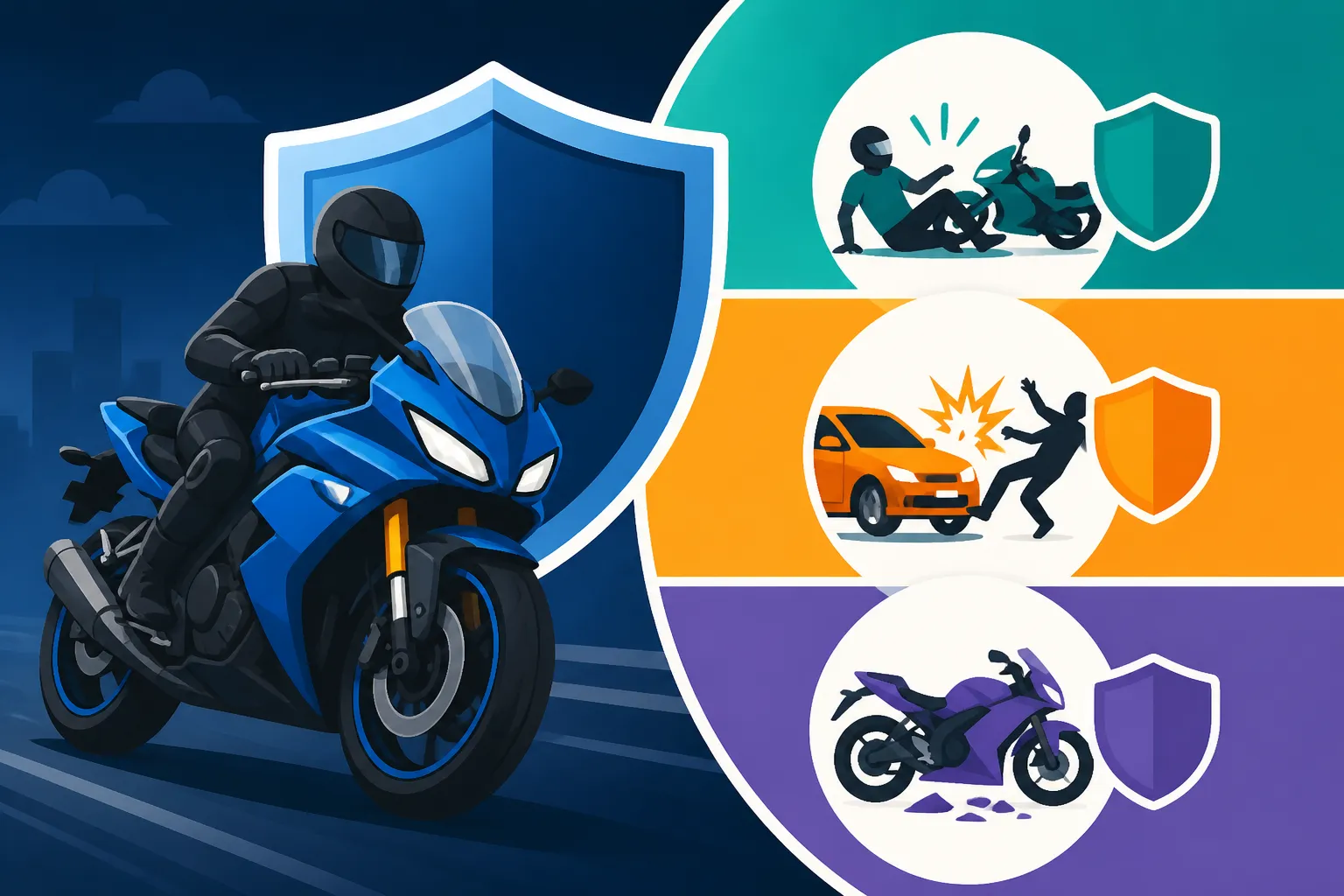
When you see "25/50/25" as your minimum liability insurance, it's not just a cryptic code; it's a critical set of financial limits that dictate how much your insurance company will pay out in the event you're found at fault in an accident. These numbers are a common standard, often representing the bare minimum required by law in many states across the U.S. Ignoring or misunderstanding them can have severe financial consequences, turning a bad day into a catastrophic one. Think of these as the maximums your insurer will cover for specific types of damages, not what you’re guaranteed to receive.
The real frustration here often stems from the initial confusion. Riders hear these numbers thrown around and might just nod along, assuming it's enough because "the state says so." But the truth is, while it's the legal minimum, it's rarely what most experienced riders consider adequate protection. Let's peel back the layers and examine each number individually to truly grasp its significance.
The First Number: $25,000 for Bodily Injury Per Person
That initial "25" in the 25/50/25 sequence refers to $25,000 in bodily injury liability coverage per person. This means that if you cause an accident and another person is injured, your insurance company will pay a maximum of $25,000 for their medical expenses, lost wages, pain, and suffering. This limit applies to each individual injured in the accident, up to the total bodily injury limit per accident.
Imagine you're cruising down a scenic highway, and an unexpected maneuver on your part leads to another motorist swerving and hitting a guardrail. They're injured, perhaps with a broken arm and a concussion, requiring an ambulance ride, emergency room treatment, and follow-up physical therapy. The bills for that single person can escalate rapidly. In today's healthcare landscape, $25,000 might sound like a lot, but a single ambulance ride can be thousands, and a few days in the hospital can easily push past this limit. If their total damages, including medical bills and lost income, exceed $25,000, you, the at-fault rider, are personally responsible for paying the difference out of pocket. This can mean liens on your assets, wage garnishments, or even bankruptcy.
The Second Number: $50,000 for Total Bodily Injury Per Accident
The "50" in 25/50/25 stands for $50,000 in total bodily injury liability coverage per accident. This is the maximum amount your insurance company will pay for all injuries sustained by all parties in a single accident you cause, regardless of how many people are hurt. However, it's crucial to remember that this $50,000 is still subject to the $25,000 per person limit.
Let’s say that same accident involving your motorcycle now affects not just one, but two or three people in another vehicle. Perhaps a driver and their passenger both sustain injuries. Your insurance would pay a maximum of $25,000 to the driver and another $25,000 to the passenger. In this scenario, your $50,000 per accident limit would be completely exhausted. What if a third person in the car was also injured, even if their medical bills were minimal? Your policy wouldn't pay another cent for that third person's injuries because the $50,000 total per accident limit has been reached. Any medical costs or other damages beyond that $50,000 for all injured parties, and again, you're on the hook for the remainder. This is a common point of confusion and a significant area of exposure for riders who only carry minimum coverage.
The Third Number: $25,000 for Property Damage
Finally, the last "25" in the 25/50/25 sequence refers to $25,000 in property damage liability coverage. This portion of your policy is designed to pay for damage you cause to other people's property in an accident where you are at fault. This primarily includes damage to other vehicles, but it can also extend to other property like fences, utility poles, mailboxes, or even buildings.
Consider a scenario where you misjudge a turn and clip the side of a parked luxury SUV, or worse, you collide with another vehicle on the road. The average cost to repair even minor damage to a modern car, especially one with advanced sensors or premium paint, can quickly climb into the thousands. If you total a newer car, or damage an expensive truck, $25,000 might not even cover half the value. A brand-new Ford F-150, for example, can cost upwards of $60,000, and a Tesla Model S can be over $70,000. If your $25,000 property damage limit is exhausted, you'll be personally responsible for the rest. This can be a tough pill to swallow, especially when you consider how easily vehicle repair costs can spiral after an accident. This particular coverage helps explain what Motorcycle Liability Insurance Covers.
Why States Mandate Minimum Coverage
It might seem arbitrary, but there's a very good reason why states across the country establish these minimum insurance requirements. It's not about ensuring every rider has "enough" coverage in every conceivable scenario, but rather about creating a baseline of financial responsibility. The goal is to mitigate the financial havoc that can ensue after an accident, ensuring that victims aren't left entirely on their own to cover medical bills and property repairs.
Think about the alternative: a world where no one carried insurance. Every fender bender or more serious collision would devolve into a drawn-out, often fruitless, legal battle as victims try to recover damages from individuals who might have no assets to seize. This system would be chaotic, unfair, and a massive burden on the judicial system. Therefore, minimum liability coverage acts as a public safeguard, a collective agreement to ensure a basic level of protection for everyone on the road.
Protecting Other Motorists and Their Property
The primary motivation behind these minimum liability requirements is to protect innocent third parties from the financial repercussions of an at-fault accident. When you're involved in a collision that is determined to be your fault, the other driver, their passengers, and their property shouldn't be left holding the bag for your mistake. This is precisely why these specific coverage types are mandated.
Without minimum coverage, imagine a scenario where a rider, let's call him Mark, causes an accident that totals another person's car and sends them to the hospital. If Mark has no insurance, the victim faces enormous medical bills and the cost of replacing their vehicle, all with potentially no recourse. Mark might not have the personal funds to cover these costs, leading to a situation where the victim is financially devastated. The state-mandated 25/50/25 helps to prevent this by ensuring there's at least some financial pool to draw from for these damages. It’s a way of saying, "If you're going to ride on public roads, you must be able to contribute to the financial recovery of anyone you might accidentally harm." This requirement is a core component of Motorcycle Insurance Requirements by State (2026 Guide).
Avoiding Financial Catastrophe for Riders and Victims
While the immediate focus of minimum liability is on the victims, it also provides a crucial layer of protection for the at-fault rider. Without insurance, an accident could lead to profound personal financial ruin. Medical bills, property damage, and potential legal fees could easily amount to hundreds of thousands of dollars, far more than most people have readily available.
For the rider, having even minimum coverage means that the insurance company steps in to pay up to the policy limits, shielding your personal assets from claims up to that point. This prevents immediate bankruptcy or the forced sale of your home and other possessions to satisfy a judgment. For victims, it provides a more straightforward path to compensation without having to pursue lengthy and often unsuccessful lawsuits against uninsured individuals. It also helps to clarify the nuances of Financial Responsibility Laws for Riders, which outlines the legal duty to cover damages caused by an accident. However, as we'll discuss, "minimum" protection is often just that – minimal – and might not save you from catastrophe if the damages exceed those low limits.
Real-World Scenarios: When 25/50/25 Might Not Be Enough
While 25/50/25 coverage meets the legal minimums in many places, it's essential to understand that these limits were often set decades ago and haven't kept pace with the soaring costs of medical care, vehicle repairs, and legal expenses. Relying solely on these minimums can leave you dangerously exposed, turning a seemingly minor accident into a life-altering financial burden. This is where the rubber meets the road, so to speak, and where many riders find themselves in a precarious position.
It’s easy to think, "It won't happen to me," or "I'm a careful rider." But accidents are, by definition, unexpected. Even if you're the most defensive rider out there, another distracted driver or an unforeseen road hazard can put you in a situation where you're deemed at fault, and suddenly, those minimum coverage numbers start to look frighteningly small.
The High Cost of Medical Bills After an Accident
Let's talk about medical bills. The cost of healthcare in the United States is astronomical. A trip to the emergency room, even for what seems like a non-life-threatening injury, can easily run into thousands of dollars. A broken leg requiring surgery, physical therapy, and follow-up appointments can quickly exceed $25,000 for a single individual. What if there are complications? Or a lengthy recovery period involving lost wages?
Consider a hypothetical accident in Austin, Texas. You're riding your motorcycle, and due to a momentary lapse, you swerve into the path of another car. The driver sustains a severe neck injury, requiring immediate hospitalization, an MRI, and several weeks of rehabilitation. Their medical bills alone could easily hit $40,000. Your 25/50/25 policy would only cover $25,000 for that individual. The remaining $15,000? That's coming straight out of your pocket. If they decide to sue for pain and suffering and lost income, those figures could climb even higher, adding to your personal liability. This example starkly illustrates why many riders consider increasing their coverage beyond the minimum limits for bodily injury.
Property Damage Beyond Basic Limits
Just as medical costs have inflated, so too have the prices of vehicles and their repairs. The $25,000 property damage limit, while it might cover a fender bender on an older model car, is often woefully inadequate for newer vehicles, especially those with advanced safety features.
Imagine you're involved in an accident in California and accidentally hit a brand-new Tesla Model 3. Even a moderate collision could result in structural damage, battery enclosure issues, and damage to sophisticated sensor systems. Repairs could easily surpass $30,000 or even lead to the car being declared a total loss, where its value could be $45,000 or more. Your $25,000 property damage coverage would be exhausted, leaving you liable for the remaining $5,000 to $20,000 (or more) that the other driver's insurance company or the driver themselves would pursue from you. This scenario often catches riders off guard, as they don't realize how expensive modern vehicle repairs have become. This is also why many companies advise higher limits, explaining Types of Motorcycle Insurance Coverage Explained.
The Impact of Multiple Parties Involved
The 25/50/25 structure becomes even more problematic when multiple people are injured in an accident you cause. That $50,000 per accident limit for bodily injury can be reached with surprising speed.
Picture yourself riding through a busy intersection in Miami, Florida. You misjudge a yellow light and collide with a sedan carrying a family of four. The mother sustains a broken leg ($28,000 in medical bills), and the father suffers whiplash and a minor concussion ($15,000 in medical bills). Their two children, thankfully, only have minor bumps and bruises but still require medical checks ($3,000 each). Total medical costs for the family: $28,000 + $15,000 + $3,000 + $3,000 = $49,000. Your policy would pay out $25,000 for the mother (hitting her individual limit), $15,000 for the father, and then you're left with just $10,000 of your $50,000 per accident limit. That remaining $10,000 would be split between the two children, meaning they'd each get $5,000, but their actual costs were $3,000 each, so their costs are fully covered. But wait, what if the mother's bills were actually $35,000? Your policy still only pays $25,000 to her. And the total payout for all injuries can’t exceed $50,000. In this case, your payout would max out at the $50,000 total accident limit, leaving you personally responsible for any medical bills or damages that exceed that amount, even if no single person hits their $25,000 individual limit. The complexity grows with more injured parties, underscoring why Minimum Liability Insurance Explained (The Three Numbers) is so important to truly grasp.
Navigating Your State's Specific Requirements
It's a common misconception that motorcycle insurance requirements are uniform across the United States. In reality, each state sets its own specific minimums, which can vary significantly from one jurisdiction to another. While 25/50/25 is a common figure, it's by no means universal. This patchwork of regulations is often a source of confusion for riders, especially those who travel frequently or move between states.
Understanding your state's particular mandates isn't just about avoiding a ticket; it's about staying compliant with the law and protecting yourself from severe penalties. Riding without adequate insurance can lead to hefty fines, license suspension, vehicle impoundment, and even jail time in some areas. It’s important to note that Motorcycle Insurance vs Car Insurance Requirements can also differ, so don’t assume your car policy knowledge applies directly to your bike.
How to Find Your State's Minimums and Potential Variations
The best way to determine your state's motorcycle insurance minimums is to check with your state's Department of Motor Vehicles (DMV) or equivalent transportation agency website. These official sources will provide the most up-to-date and accurate information on liability limits. Many state insurance departments also publish consumer guides that break down these requirements in plain language.
For example, while many states use the 25/50/25 split, others might have lower limits, like 10/20/10 in Florida, or higher, such as 30/60/25 in California or 25/50/15 in Washington state. Some states, like Michigan, operate under a no-fault insurance system, which has a different structure for personal injury protection (PIP) and may impact your liability coverage. It's not just the numbers that change; some states may also require additional coverages like Uninsured & Underinsured Motorist Coverage (UM/UIM) as part of their minimum package. Always double-check, and if you're unsure, consulting with a reputable insurance agent who specializes in motorcycles can provide clarity specific to your locale.
Understanding Financial Responsibility Laws
Beyond specific insurance policy numbers, most states also have what are known as "financial responsibility laws." These laws essentially state that every driver or rider must be able to prove they can pay for damages if they cause an accident. Carrying a compliant insurance policy is the most common and easiest way to satisfy this requirement.
However, in some very rare cases, states might allow alternative methods of proving financial responsibility, such as posting a bond with the state treasury or depositing a large sum of money. These alternatives are typically impractical and expensive for the average rider, making insurance the go-to solution. The key takeaway is that whether it's through an insurance policy or an alternative, you must be financially accountable for any damage or injury you cause. Failing to meet these requirements can lead to severe penalties for Riding Without Insurance, including fines, license suspension, and even the impoundment of your motorcycle. Always ensure you have Proof of Insurance & Registration for Motorcycles easily accessible, whether digitally or physically.
Beyond the Bare Minimum: Why More Coverage Makes Sense
We've established that 25/50/25 coverage is the bare legal minimum in many places, but relying solely on these limits is akin to riding with bald tires – it's legal, but it leaves you vulnerable to serious trouble. For any rider who owns assets, has dependents, or simply wants genuine peace of mind, opting for higher liability limits and additional coverage options is almost always a smarter financial decision. The cost difference between minimum coverage and significantly higher limits is often far less than the potential out-of-pocket expenses you could face after a serious accident.
It's natural to want to save money, and motorcycle insurance can feel like an extra expense. However, when you compare the potential cost savings of minimal coverage against the potential financial devastation of a major accident, the choice becomes clear. Think of it as investing in your financial future and protecting everything you've worked hard for.
Protecting Your Assets and Future
The most compelling reason to increase your liability limits beyond 25/50/25 is to protect your personal assets. If you're involved in an accident where the damages exceed your policy limits, a court judgment could be issued against you. This judgment could allow the injured party to pursue your savings, your home equity, your investments, and even garnish your future wages.
Imagine a scenario where you cause an accident with $100,000 in bodily injury damages, but you only have $50,000 in coverage. The other party could sue you for the remaining $50,000, and if they win, they could claim your assets. For a small increase in your monthly premium, you could raise your liability limits to something like 100/300/50 ($100,000 per person, $300,000 per accident for bodily injury, and $50,000 for property damage). This significantly reduces your personal exposure to lawsuits and financial ruin, ensuring your hard-earned assets remain yours. This proactive step helps avoid the grim reality of What Happens If You Ride Without Insurance?
Exploring Additional Coverage Options
Beyond just increasing your liability limits, there are several other types of motorcycle insurance coverage that offer crucial protection and are well worth considering, especially if you're serious about safeguarding yourself and your ride.
- Collision Coverage: This pays for damage to your own motorcycle if you hit another vehicle, an object, or if it overturns. If you have a loan on your bike, your lender will almost certainly require this.
- Comprehensive Coverage: This covers damage to your motorcycle from non-collision incidents, like theft, vandalism, fire, natural disasters (hail, floods), or hitting an animal. This is also typically required for financed bikes.
- Uninsured/Underinsured Motorist (UM/UIM) Coverage: This is incredibly important. It protects you if you're hit by a driver who has no insurance or not enough insurance to cover your damages. Given that many drivers only carry minimum liability, and some ride with none at all, this coverage can be a lifesaver for your medical bills and property damage.
- Medical Payments (MedPay) or Personal Injury Protection (PIP): These cover medical expenses for you and your passengers, regardless of who is at fault for the accident. This can be crucial for immediate medical costs after a crash.
- Accessories and Custom Parts Coverage: If you've invested in aftermarket parts, custom paint, or expensive gear, this coverage ensures those items are replaced if damaged or stolen.
Each of these coverages fills a specific gap that basic liability insurance leaves wide open. Understanding all these options, which are detailed in Types of Motorcycle Insurance Coverage Explained, is key to building a robust policy.
Comparing Coverage Options and Costs
Navigating the world of motorcycle insurance can be a maze, especially when you're trying to balance adequate protection with an affordable premium. It's not just about picking the cheapest option; it's about finding the best value for your specific needs, riding habits, and financial situation. Many riders mistakenly believe that significantly increasing their coverage will lead to prohibitive costs, but often, the jump in premium for much higher limits is surprisingly small compared to the peace of mind it provides.
The key to getting this right is being proactive and thorough in your search. Don't settle for the first quote you receive, and don't assume that the insurer who gave you a good rate on your car will automatically be the best for your motorcycle. These are often different products with different risk profiles.
Getting Multiple Quotes and Understanding the Value
The single best piece of advice for any rider looking for insurance is to shop around and get quotes from multiple providers. Different insurance companies have different underwriting models, which means they assess risk differently and will offer varying rates for the same coverage. What might be expensive with one insurer could be significantly more affordable with another.
When comparing quotes, don't just look at the bottom line. Pay close attention to the coverage limits for bodily injury, property damage, and any additional coverages like UM/UIM or Collision/Comprehensive. A slightly higher premium might come with significantly higher limits, offering much greater protection. For example, a quote for 100/300/50 might only be $50-$100 more per year than a 25/50/25 policy, but it provides four times the individual bodily injury coverage and six times the total bodily injury coverage. That's a huge value increase for a relatively small cost. This diligent comparison process is essential to ensure you understand How Much Is Motorcycle Insurance? 2026 Cost Guide and how to get the most for your money.
Discounts and Strategies for Affordable Enhanced Coverage
Even with higher coverage limits, there are numerous ways to make your motorcycle insurance more affordable. Many insurance companies offer a variety of discounts that can significantly reduce your premium.
Here are some common discounts and strategies:
- Motorcycle Safety Course Discount: Completing a Motorcycle Safety Foundation (MSF) course or a similar approved rider safety program often qualifies you for a discount. This is a win-win: you become a safer rider, and you save money.
- Multi-Policy Discount: Bundling your motorcycle insurance with your auto, home, or renters insurance can lead to substantial savings. Companies like Progressive, Geico, and State Farm often offer attractive bundles.
- Experienced Rider Discount: If you've been riding for many years without claims, your experience can translate into lower rates.
- Anti-Theft Device Discount: Installing an alarm, tracking device, or even keeping your bike in a locked garage can earn you a discount.
- Loyalty Discount: Staying with the same insurer for an extended period can sometimes lead to discounts.
- Low Mileage Discount: If you don't ride your motorcycle extensively, some insurers offer discounts for lower annual mileage.
- Pay-in-Full Discount: Paying your entire annual premium upfront often saves money compared to monthly installments.
- Good Rider/Driver Discount: A clean driving record (both car and motorcycle) is one of the biggest factors in keeping premiums low.
By strategically seeking out these discounts and thoroughly comparing quotes, you can often secure robust, comprehensive coverage without breaking the bank. Don't be afraid to ask your agent about every possible discount; they're there to help you find the best rate, as outlined in How to Get Cheap Motorcycle Insurance. It's about being an informed consumer and actively seeking out value.
| Coverage Type | First Number (25) | Second Number (50) | Third Number (25) |
|---|---|---|---|
| What It Covers | Bodily Injury Per Person | Total Bodily Injury Per Accident | Property Damage |
| Maximum Payout | $25,000 | $50,000 | $25,000 |
| Example Use Case | Injured driver's medical bills, lost wages | Multiple injured parties' combined medical bills | Repair/replace other vehicle, fence, etc. |
| Potential Shortfall | Single serious injury exceeds $25k | Multiple minor injuries exceed $50k total | Damage to new/luxury vehicle exceeds $25k |
| Why It's Risky | Personal assets exposed for costs over $25k per person | Personal assets exposed for costs over $50k total | Personal assets exposed for costs over $25k property |
Disclaimer
The information provided in this guide is for general informational purposes only and does not constitute financial, legal, or insurance advice. Motorcycle insurance requirements and costs vary by state, individual circumstances, and insurance provider. Always consult with a qualified insurance professional to discuss your specific needs and obtain personalized quotes and advice. Laws and regulations can change, so it's crucial to verify current requirements with your state's official sources.