What Is Gap Coverage on a Motorcycle?
There's nothing quite like the freedom of owning a motorcycle, but the excitement can quickly turn to dread if your beloved bike is totaled and you still owe more on the loan than it's worth. This painful financial gap leaves many riders footing the bill for a bike they no longer have. This guide dives deep into motorcycle gap insurance, explaining exactly what it is, how it protects your wallet, and when it's a smart addition to your policy.
The Unpleasant Reality of Negative Equity After a Total Loss
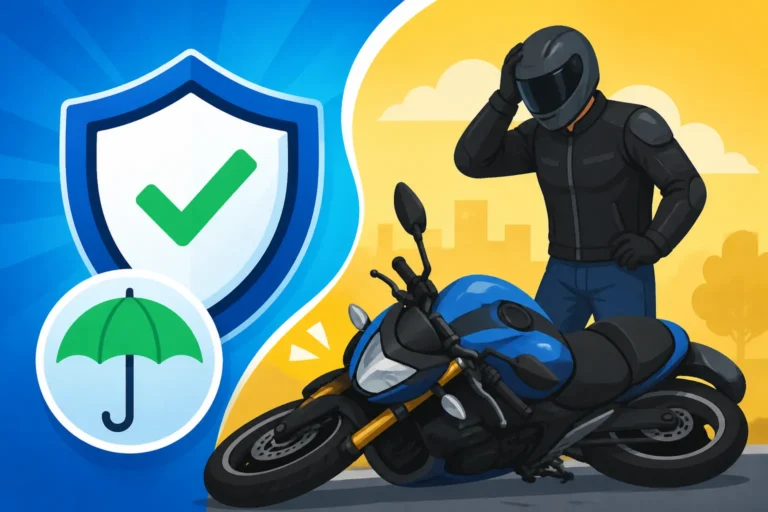
Imagine you just rode off the lot on that gleaming new Harley-Davidson, feeling the wind in your face and the rumble of the engine beneath you. You’ve got a fantastic loan rate, and you’re making your payments diligently. But then, an unfortunate accident occurs, or your bike is stolen and never recovered. The insurance company declares your motorcycle a total loss. This is where the financial nightmare can begin for many riders.
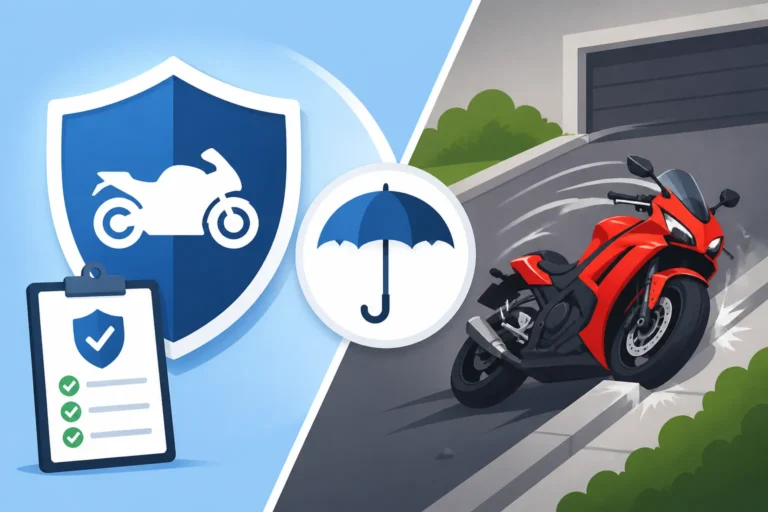
Standard motorcycle insurance policies, even comprehensive ones, typically pay out the "actual cash value" (ACV) of your bike at the time of the loss. ACV factors in depreciation, meaning your shiny new ride, which might have cost you $20,000, could now only be worth $16,000 in the eyes of the insurer. The problem arises if your loan balance is still, say, $18,000. That $2,000 difference? That's your "gap," and you're personally on the hook to pay it to your lender, even though the motorcycle is gone. It's a frustrating scenario that can leave you feeling like you've been hit twice – once by the incident, and again by the financial burden.
This isn't just a hypothetical problem; it's a very real concern, especially with new motorcycles that depreciate quickly the moment they leave the dealership. Many riders find themselves upside down on their loan, owing more than the bike is worth, simply due to the nature of financing and depreciation. It's not fair, but it's how the system often works without the right protection in place.
What is Motorcycle Gap Coverage and How Does It Work?
Motorcycle gap coverage, often called "guaranteed asset protection," is a specialized type of insurance designed to cover that exact financial shortfall. Its sole purpose is to pay the difference between your motorcycle's actual cash value (what your primary insurer pays out) and the remaining balance on your loan or lease, in the event of a total loss. It's an add-on, not a standalone policy, and it acts as a crucial safety net for riders who have financed or leased their bikes.
Here’s a simplified breakdown of how it typically functions: Let's say you financed your new Honda CBR600RR for $15,000. A year later, it's stolen. Your regular comprehensive policy assesses its actual cash value at $12,000, and that's what they pay out. However, you still owe $14,000 on your loan. Without gap coverage, you'd have to pay that $2,000 difference out of pocket. With gap coverage, it steps in to cover that $2,000, bringing your loan balance to zero. It saves you from having to continue making payments on a motorcycle you no longer possess.
It's important to understand that gap coverage doesn't cover anything other than this specific financial gap. It won't pay for repairs, medical bills, or liability claims. Its job is purely to protect your loan or lease in a total loss situation. Think of it as an extra layer of financial security that ensures you don't end up in debt for a lost asset.
Who Needs Gap Coverage Most?
Not every rider will need gap insurance, but it's particularly valuable for those in certain situations. If you financed a brand-new motorcycle with a small down payment, you're likely to be upside down on your loan for a significant period. New bikes lose value quickly in the first few years, and your loan balance might decrease slower than the bike's market value. Similarly, if you have a longer loan term (say, 60 or 72 months), you’ll be paying interest for longer, and the principal will reduce at a slower pace, making you more susceptible to negative equity. Riders who rolled over negative equity from a previous vehicle into their new motorcycle loan are also prime candidates for gap coverage. It's about protecting yourself from a potentially devastating financial hit.
You can often secure gap coverage through the dealership when you buy the bike, or sometimes directly from your motorcycle insurance provider as an add-on to your existing policy. Comparing options is key, and resources like The Zebra can help you see what's available and how it stacks up against different providers and costs. Just like with any other policy, it pays to shop around and understand the terms.
When is Gap Coverage Essential for Riders?
For many motorcycle enthusiasts, buying a new bike involves a loan, and that’s perfectly normal. But in today’s market, with higher prices and longer loan terms, the risk of owing more than your bike is worth has increased dramatically. This is precisely when gap coverage becomes not just an option, but a truly essential piece of your financial protection strategy.
Consider the common scenario of a new sportbike, like a Kawasaki Ninja ZX-6R. These machines, while thrilling, can depreciate fairly quickly, especially in the first couple of years. If you put down only a small percentage, say 10% or even 0%, and finance the rest over five or six years, you’re almost certainly going to owe more than the bike’s actual cash value for a good portion of that loan term. In this situation, if your bike is stolen from your garage or totaled in an unavoidable collision, your standard policy will pay its depreciated value, leaving you to cover the remaining loan balance. This is where the profound stress of negative equity kicks in.
Another often-overlooked factor is the length of your loan. The longer your loan term, the more interest you'll pay, and the slower you'll build equity in your motorcycle. A 72-month loan, while offering lower monthly payments, means you're more likely to be upside down on the loan for a longer period compared to a 36-month loan. Gap coverage provides significant peace of mind, knowing that even if the worst happens, you won't be saddled with thousands of dollars in debt for a bike you can no longer ride. It frees you up to potentially start fresh with a new bike when the time comes, rather than being financially handcuffed by the past.
Comparing Total Loss Scenarios: With and Without Gap Coverage
To truly appreciate the value of gap coverage, let's look at a side-by-side comparison of a total loss event. This table illustrates how much financial exposure you could face without this crucial protection.
| Scenario Detail | Without Gap Coverage | With Gap Coverage |
|---|---|---|
| Original Motorcycle Purchase Price | $18,000 | $18,000 |
| Loan Amount | $17,000 | $17,000 |
| Loan Balance at Total Loss | $15,000 | $15,000 |
| Actual Cash Value (ACV) from Insurer | $12,000 | $12,000 |
| Primary Insurance Payout | $12,000 | $12,000 |
| Remaining Loan Balance Owed | $3,000 (Out-of-Pocket) | $0 (Gap Coverage Pays $3,000) |
| Total Financial Exposure | $3,000 | $0 |
As you can see, that $3,000 gap is a significant sum to pay out-of-pocket, especially after losing your motorcycle. This is money that could have gone towards a down payment on a new bike, or simply not stressed your emergency fund. Understanding these numbers really drives home the benefit. If you’re not sure about the exact figures, it’s always a good idea to chat with your lender or an insurance professional who can break down your specific situation.
How Does Gap Coverage Work in a Real-World Scenario?
Let's walk through a more detailed hypothetical situation to really see how gap insurance kicks in. Picture this: you finally saved up for that dream Indian Scout Bobber. You loved the look, the sound, everything about it. You put down $1,000 and financed the remaining $15,500 over 60 months. Your monthly payment is manageable, and you elected for comprehensive and collision coverage, along with gap coverage, from a reputable insurer like Progressive.
Six months into your ownership, you're enjoying a beautiful Sunday ride through the scenic routes of the Pacific Northwest. Suddenly, a deer jumps out onto the road. You do your best to avoid it, but unfortunately, you lay the bike down. You're shaken but mostly okay, thanks to your protective gear. Your bike, however, is a mess – bent frame, shattered fairings, engine damage. It's clearly a total loss.
Steps from Total Loss to Payout with Gap Coverage
-
Contact Your Primary Insurer: The first thing you do, after ensuring your safety and filing a police report if necessary, is call your motorcycle insurance company. You explain the situation, and they open a claim. This initial step is critical for any incident, regardless of whether you have gap coverage or not. You can learn more about this process in our guide on How to File a Motorcycle Insurance Claim.
-
Adjuster Assessment: An insurance adjuster comes out to inspect the damage. They determine the bike's actual cash value (ACV) right before the accident. Because your bike was relatively new and had depreciated a bit, they determine its ACV to be $13,000.
-
Primary Insurance Payout: Your primary policy (comprehensive and collision) pays out the $13,000 ACV, minus your $500 deductible. So, you receive $12,500 from your main insurer.
-
The Remaining Loan Balance: You check your loan statement and realize you still owe $14,200 on your Indian Scout Bobber.
-
The Gap Appears: Here’s the crunch: you received $12,500 from your primary insurance, but you owe $14,200. That leaves a gap of $1,700. Without gap coverage, that $1,700 would be your personal responsibility, due to your lender.
-
Gap Coverage Kicks In: Because you wisely added gap coverage to your policy, you inform your insurer (or the gap provider if it's separate) about the outstanding balance. The gap policy then covers that $1,700.
-
Loan Zeroed Out: Your lender receives the $12,500 from your primary policy and the $1,700 from your gap policy, totaling $14,200. Your loan is now paid in full, and you walk away without owing any additional money for a motorcycle that no longer exists. This really highlights the value of the coverage, allowing you to emotionally and financially recover from the loss without the added stress of debt. This scenario is a stark reminder of why it's so important to have Motorcycle Insurance Requirements for Financed Bikes fully understood.
Where Can You Get Motorcycle Gap Insurance?
So, you’re convinced that gap coverage is a smart move for your financed motorcycle. But where exactly do you go to get it? It’s not always a straightforward purchase, and options can vary, so it’s essential to know where to look and what to ask.
One of the most common places to acquire gap coverage is directly through the dealership when you purchase your motorcycle. They often bundle it into your financing agreement. This can be convenient because it's a one-stop shop, and the cost is rolled into your monthly payment. However, always be wary of simply accepting it without questioning the price. Dealerships sometimes mark up the cost of gap coverage, and it might be more expensive than if you sourced it elsewhere. Don't be afraid to ask for a breakdown of the costs and to compare it to other options.
Another excellent route is to inquire with your existing motorcycle insurance provider. Many major insurers, like GEICO, Progressive, or Dairyland, offer gap coverage as an add-on to your standard policy. This is often a more cost-effective option, as insurers tend to price it competitively, and you can simply integrate it into your existing premium. If you're comparing different types of coverage, understanding Types of Motorcycle Insurance Coverage Explained will give you a good foundation for this conversation.
Additionally, some credit unions and banks, especially those specializing in vehicle loans, might offer their own gap insurance products. These can sometimes be more affordable than dealership offerings. It's worth checking with your lender if they have such a program. Lastly, there are third-party companies that specialize in gap insurance, though this is less common for motorcycles than for cars.
The key takeaway here is to shop around. Don't just take the first offer. Get quotes from your insurance company, check with your lender, and if you’re at the dealership, ask them to show you the exact cost of their gap offering separate from the loan. Comparison tools, like The Zebra, can be incredibly useful in this process. They allow you to input your details and get quotes from multiple providers, including those who offer gap coverage, making it easier to see how the costs and benefits stack up. This kind of diligent research is how you truly get How to Get Cheap Motorcycle Insurance and the right protection.
Is Gap Coverage Always Worth It for Every Rider?
While gap coverage offers invaluable protection for many, it’s not a universal must-have for every single rider out there. Deciding if it’s worth the extra premium involves weighing your specific financial situation against the potential risks. It's about smart money management and understanding your individual exposure.
For instance, if you bought a used motorcycle outright with cash, or if you made a very substantial down payment (say, 50% or more) and have a short loan term, you might quickly build enough equity in your bike that the risk of being upside down is minimal. In these cases, your loan balance will likely drop below the bike's actual cash value fairly quickly, making gap coverage less critical. The cost of the additional coverage might outweigh the remote chance of needing it. Similarly, if your motorcycle is an older model that’s already fully depreciated and you only owe a small amount on it, the gap between the ACV and your loan balance might be negligible, rendering gap coverage unnecessary.
However, for most new motorcycle owners with traditional financing, the benefits far outweigh the relatively small cost. The peace of mind alone, knowing that a total loss won't plunge you into thousands of dollars of debt, is often worth the extra few dollars a month. It allows you to focus on the joy of riding, rather than worrying about what might happen if your bike is deemed a What Happens When Your Motorcycle Is Totaled. Consider your loan term, your down payment, and how quickly your specific motorcycle model depreciates. A high-performance sportbike, for example, might depreciate faster and be more susceptible to total loss claims (and thus higher initial insurance costs, as detailed in How Much Is Motorcycle Insurance? 2026 Cost Guide), making gap coverage a very prudent choice.
Ultimately, the decision comes down to your risk tolerance and financial health. Could you comfortably absorb a $2,000, $5,000, or even $10,000 unexpected debt if your bike were totaled tomorrow? If the answer is no, or if that thought sends a shiver down your spine, then gap coverage is almost certainly a wise investment. It’s about protecting your present and future financial stability, allowing you to ride with confidence. Remember, understanding What Does Full Coverage Motorcycle Insurance Mean is the first step, and gap coverage builds on that foundation.
Disclaimer
This article is for general informational purposes only and does not constitute professional advice. Laws, prices and regulations vary by location and change over time. Consult a qualified professional for guidance on your specific situation.