Accessories & Custom Parts Coverage Explained
Riding a motorcycle is more than just transportation; it's a passion, a lifestyle, and for many, a canvas for self-expression. You spend countless hours, not to mention a significant chunk of change, personalizing your bike with unique accessories and custom parts, only to wonder if your standard insurance policy will truly protect that investment. It's a frustrating thought to realize your pride and joy might only be covered for its factory value if something unexpected happens. This guide is here to unravel the complexities of motorcycle insurance for those one-of-a-kind additions, helping you understand how to safeguard your custom build.
Understanding Motorcycle Accessories and Custom Parts
When we talk about motorcycle accessories and custom parts, we're really diving into the heart of what makes your bike uniquely yours. It's not just about getting from point A to point B; it's about the journey, the aesthetic, and the performance upgrades that truly transform a factory model into a personal statement. But what exactly qualifies as an accessory or a custom part in the eyes of an insurance provider? It’s a crucial distinction that often catches riders off guard.
Defining What Qualifies as an Accessory
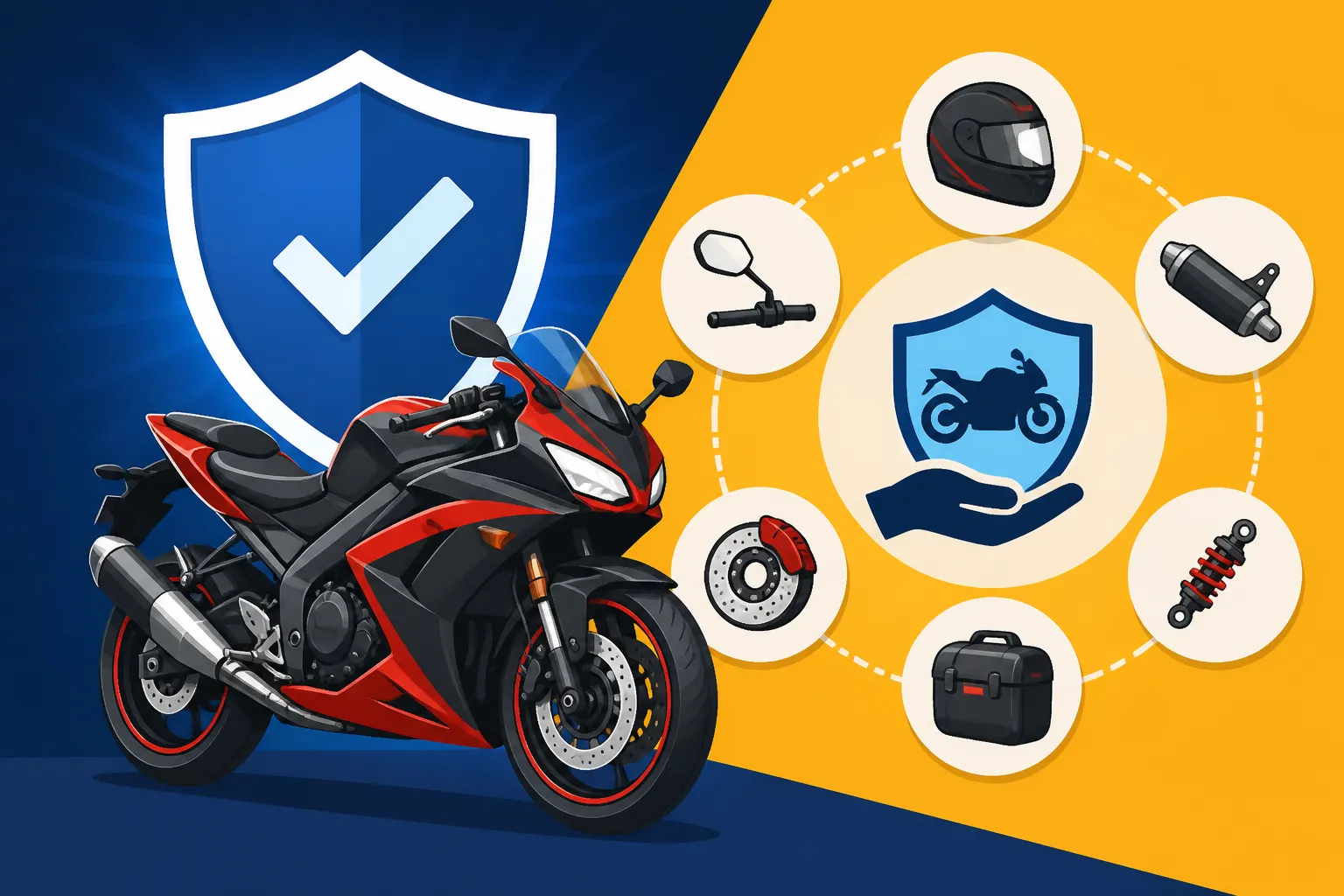
An accessory, in the insurance world, generally refers to any item that is added to your motorcycle after it leaves the factory, typically without altering its fundamental structure or performance capabilities. Think of these as bolt-on enhancements that improve comfort, convenience, or visual appeal. For example, those shiny new chrome exhaust pipes you added, the saddlebags that carry your gear for weekend trips, or that aftermarket windscreen designed to cut down on wind buffeting at highway speeds – these are all classic examples of accessories.
This also extends to things like upgraded seats, passenger backrests, custom paint jobs that don't involve structural changes, LED lighting kits, and even premium grips or mirrors. Many policies might include a small amount of coverage for these items automatically, often a few thousand dollars, because they're so common. However, for serious enthusiasts who invest heavily in these additions, that basic coverage is rarely enough to replace everything they’ve accumulated. Imagine a touring rider with thousands of dollars in luggage, navigation systems, and comfort modifications; a standard policy's accessory coverage might only cover a fraction of their investment.
Distinguishing Custom Parts and Modifications
Custom parts and modifications take things a step further than mere accessories. These are components that fundamentally change the original factory specifications of your motorcycle, often impacting its performance, handling, or structural integrity. This category can be a bit of a grey area, but generally, if it requires significant fabrication, specialized installation, or alters the engine, frame, suspension, or braking system, it falls under custom parts.
For instance, installing a big bore kit to increase engine displacement, upgrading to a performance suspension system like Öhlins or Fox Racing, fitting custom wheels that aren't factory options, or even a professionally installed turbocharger kit would be considered custom modifications. These aren't just cosmetic; they often represent a substantial investment in engineering and labor. The distinction is vital because these types of modifications often carry a higher risk profile for insurers, and they are almost never covered adequately by standard accessory limits. Neglecting to inform your insurer about significant modifications could lead to a claim denial, leaving you on the hook for expensive repairs or replacement.
The Shortcomings of Standard Motorcycle Insurance
It’s easy to assume that if you have "full coverage" on your motorcycle, every single part, including your beloved custom additions, is automatically protected. Unfortunately, that's a common misconception that many riders learn the hard way after an accident or theft. Standard motorcycle insurance policies are designed to cover the motorcycle as it came from the factory, or perhaps with a very minimal amount of accessory coverage, leaving a massive gap for personalized bikes.
Limited or No Coverage for Add-ons
Most basic motorcycle insurance policies, even those that include collision and comprehensive coverage, only offer a very limited amount of protection for aftermarket parts and accessories. We're talking about a nominal amount, perhaps $1,000 to $3,000, depending on the insurer and the specific policy. While this might be enough for a basic set of saddlebags or a tank bag, it's woefully inadequate for anyone who has truly customized their ride.
Consider a rider who’s invested in a premium custom paint job that cost $5,000, a high-performance exhaust system for $1,500, upgraded LED lighting for $800, and a state-of-the-art navigation system for $1,200. Totaling over $8,500 in accessories, if their policy only offers $2,000 in add-on coverage, they’re looking at a $6,500 out-of-pocket loss if their bike is stolen or totaled. This gap is a significant financial risk, especially for bikes that are truly unique. It’s crucial to understand these limitations from the outset and not assume your standard policy will cover all your hard-earned modifications. For a deeper dive into overall protection, check out our guide on Types of Motorcycle Insurance Coverage Explained.
The "Actual Cash Value" Trap for Custom Bikes
Another major pitfall with standard policies, particularly when dealing with custom bikes, is the "Actual Cash Value" (ACV) clause. Most insurance policies payout claims based on the ACV of your motorcycle, which is the replacement cost minus depreciation. For a factory-standard bike, this is usually straightforward. However, for a heavily customized motorcycle, ACV can be a cruel blow. The insurance company might value your bike based on its stock condition and age, completely ignoring the thousands of dollars you've poured into custom parts, performance upgrades, and unique aesthetics.
Imagine you have a five-year-old cruiser that you've meticulously customized over the years, spending $15,000 on custom chrome, an engine rebuild with performance cams, upgraded brakes, and a unique handmade fairing. If that bike is totaled in an accident, an insurer using ACV might only offer you $8,000, the depreciated value of a similar stock model. Your $15,000 investment in customization would essentially vanish. This is why specialized coverage for custom parts isn't just an add-on; it's an absolute necessity for anyone serious about protecting their personalized ride. Understanding how different valuation methods work, like Agreed Value vs Stated Value vs Actual Cash Value, is key.
How Accessories and Custom Parts Coverage Works
Since standard motorcycle policies typically don't cut it for customized bikes, specialized coverage for accessories and custom parts steps in to fill that critical void. This isn't usually an automatically included feature but rather an endorsement or add-on that you specifically request and pay for. It’s designed to extend your comprehensive and collision coverage to these unique additions, protecting your investment beyond the factory floor.
Expanding Your Comprehensive and Collision Protection
At its core, accessories and custom parts coverage acts as an extension of your existing comprehensive and collision insurance. If your base policy includes comprehensive coverage, which protects against non-collision events like theft, vandalism, fire, or hitting an animal, then your custom parts coverage would extend to these same perils. So, if your custom exhaust system is stolen or your unique paint job is vandalized, this specific coverage would kick in to help cover the costs. Similarly, if you have collision coverage, which pays for damages to your bike resulting from a collision with another vehicle or object, then your custom parts would also be covered in such an event.
Without this specialized add-on, your beautiful custom fairing, performance-tuned engine, or intricate hand-painted tank might only be covered up to the basic, often insufficient, factory accessory limit your standard policy provides. The beauty of this additional coverage is that it allows you to specify a higher limit, often up to $30,000 or even more with some specialized insurers, ensuring that your unique modifications are adequately protected. This way, if your bike is involved in an accident or faces other covered damages, you won't be left scrambling to replace those expensive custom components out of your own pocket.
Stated Value vs. Agreed Value for Custom Bikes
When it comes to insuring highly customized motorcycles, the valuation method used by your insurer becomes incredibly important. This is where "stated value" and "agreed value" coverage options come into play, offering alternatives to the depreciated "actual cash value" that often shortchanges custom bike owners. Understanding the nuances of each can mean the difference between getting a fair payout and a devastating financial loss.
Stated Value Coverage means you declare the value of your custom parts and modifications to the insurance company. They will then insure your bike up to that "stated value," but with a catch: in the event of a total loss, the payout will be the lesser of the stated value, the actual cash value, or the cost to repair or replace. This means the insurer still has the final say and can still apply depreciation. While it sounds good on paper, it's not a foolproof guarantee for full replacement cost for truly custom builds, as they can still factor in depreciation during the claim process.
Agreed Value Coverage is generally considered the gold standard for heavily customized or rare motorcycles. With agreed value, you and the insurance company agree on a specific value for your motorcycle and its custom additions before the policy is issued. This value is typically determined through an appraisal process, often requiring photos, receipts for custom work, and sometimes a professional valuation. In the event of a total loss, the insurance company will pay out that exact agreed-upon amount, regardless of its depreciated market value. This eliminates the uncertainty of ACV and provides peace of mind that your investment is truly protected. Many riders find this option indispensable for ensuring their unique creations are valued correctly.
For many custom bike owners, especially those with significant investments in their modifications, agreed value coverage is the only way to genuinely protect their unique motorcycle. It shifts the burden of valuation from a post-loss negotiation to a pre-loss agreement, giving you certainty about your payout.
Types of Accessories and Custom Parts Coverage
When you're ready to protect your customized ride, you'll find there isn't just one blanket "custom parts" coverage. Instead, insurers offer various ways to structure this protection, often allowing you to tailor the coverage to your specific needs and the extent of your modifications. It's not a one-size-fits-all solution, and understanding your options is key to getting the right safeguard for your unique machine.
Standard Aftermarket Parts and Accessories Coverage
Most major motorcycle insurance carriers, like Progressive or Dairyland, offer what's often referred to as "standard aftermarket parts and accessories coverage." This is usually an optional add-on that significantly increases the basic, often paltry, coverage limit for non-factory installed items. Instead of the typical $1,000 or $2,000 that might be included for free, you can often purchase additional coverage in increments, pushing your limit up to $10,000, $20,000, or even $30,000 for a moderately customized bike.
This type of coverage is ideal for riders who have added common upgrades: performance exhaust systems, passenger backrests, fairings, saddlebags, premium tires, custom seats, upgraded lighting, or specialized paintwork. It generally covers these items against perils included in your comprehensive and collision policies, such as theft, vandalism, fire, or accident damage. When you opt for this, your insurance company might ask for a list of your modifications and their approximate value, and it's always wise to keep detailed receipts and photos of everything you add. This makes the claims process smoother if something ever happens.
Specialized Coverage for High-Value Custom Builds
For those truly unique, one-off machines, or bikes with an exceptionally high investment in custom work, standard aftermarket parts coverage might still fall short. This is where specialized coverage options, often featuring agreed value policies, become indispensable. These policies are designed for bikes that are essentially works of art or high-performance machines built from the ground up, where standard depreciation models simply don't apply.
With a high-value custom build, you're looking for an insurer that understands the intrinsic value of craftsmanship and unique components. Companies like Markel, known for their focus on specialized vehicles, might be more adept at handling these types of policies. They'll typically require a thorough appraisal process, which could involve detailed documentation of every custom part, receipts for labor, and potentially even a professional assessment by a motorcycle appraiser. Once the agreed value is set, that figure becomes the guaranteed payout in the event of a total loss, providing unparalleled peace of mind for owners of truly bespoke motorcycles. This level of coverage ensures that every hand-fabricated piece, every intricate paint detail, and every performance-engineered component is accounted for and protected at its true worth.
Factors Affecting Your Coverage Cost and Limits
Just like with your primary motorcycle insurance, the cost and limits for your accessories and custom parts coverage aren't arbitrary. Several factors come into play, influencing how much you'll pay and how much protection your insurer is willing to offer. Understanding these elements can help you anticipate costs and make informed decisions about your policy. For a general overview of premiums, take a look at our How Much Is Motorcycle Insurance? 2026 Cost Guide.
The Value and Type of Modifications
The most significant factor influencing your custom parts coverage is, naturally, the value of the modifications themselves. It stands to reason that insuring $20,000 worth of custom parts will cost more than insuring $5,000 worth. Insurers look at the total replacement cost of these additions. Beyond just the dollar amount, the type of modifications also plays a role. Are they primarily cosmetic, like a custom paint job or chrome accessories? Or are they performance-enhancing, such as an engine tune, turbocharger, or advanced suspension system?
Performance modifications, especially those that significantly increase horsepower or alter handling characteristics, might be viewed as a higher risk by insurers. They might lead to slightly higher premiums or specific requirements, as they could increase the likelihood or severity of an accident. For example, a custom-built drag bike with an extensively modified engine will likely have a higher premium and more scrutiny than a cruiser with cosmetic chrome additions. The insurer is assessing the risk associated with replacing these parts and the potential impact they have on the bike's overall risk profile.
Your Riding Record and Other Policy Details
While specific to your custom parts coverage, your overall motorcycle insurance policy details and personal riding record will also have an impact. Your driving history – including any accidents, tickets, or DUIs – is a major determinant of your overall insurance rates, and this extends to any add-on coverages you purchase. A rider with a clean record is generally seen as less risky and will likely pay less for custom parts coverage than someone with a history of claims or moving violations.
Other factors from your main policy, such as your age, geographic location, type of motorcycle (even before modifications), and how often you ride, will influence the base premium onto which the custom parts coverage is added. For instance, a young rider with a sport bike in a high-theft urban area might find custom parts coverage more expensive than an experienced rider with a cruiser in a rural area, even for similar modification values. Even whether you bundle your motorcycle insurance with other policies, say, a car or home insurance policy, can affect your overall premium, potentially leading to discounts that indirectly reduce the cost of your custom parts coverage. Companies like The Zebra can help you compare various quotes to see how these factors play out across different carriers.
| Factor | Impact on Custom Parts Coverage Cost | Notes |
|---|---|---|
| Total Value of Mods | Directly proportional (higher cost) | More expensive to replace, so higher premium. |
| Type of Mods | Varies | Performance mods may be higher risk/cost than cosmetic mods. |
| Agreed vs. Stated Value | Agreed Value often slightly higher | Guarantees payout, insurer takes on more risk, requires appraisal. |
| Rider's Driving Record | Clean record = lower cost | Accidents, tickets, DUIs increase overall risk and thus custom coverage. |
| Bike Type (Base Model) | Varies | Sport bikes typically more expensive to insure than cruisers, even stock. |
| Location | Urban areas often higher | Theft rates, traffic density impact overall rates. |
| Deductible Chosen | Higher deductible = lower cost | You take on more initial risk in a claim. |
| Security Features | Can offer discounts | Alarms, GPS trackers, secure storage may reduce risk. |
Making a Claim for Custom Parts or Accessories
Nobody wants to file an insurance claim, especially when it involves damage or loss to your beloved custom motorcycle. But when the unthinkable happens, having accessories and custom parts coverage in place is a game-changer. Knowing the steps involved in making a claim can significantly reduce stress and help ensure you get a fair settlement for your unique additions.
Documenting Your Modifications Thoroughly
The single most important thing you can do to ensure a smooth claim for custom parts is to meticulously document everything. Before an incident even occurs, you should have a comprehensive record of all your modifications and accessories. This isn't just a suggestion; it's a critical step that can make or break your claim.
Start by taking detailed photographs and videos of your motorcycle, highlighting every custom part and accessory. Capture different angles, close-ups, and ensure they are well-lit. Make sure the photos clearly show the modifications in place. Beyond visual evidence, keep all receipts for custom parts purchases, installation costs, and any appraisal documents. If you did the work yourself, keep track of parts receipts and potentially even photos of the installation process. Maintain a spreadsheet detailing each modification, its cost, and the date it was added. This verifiable record proves your investment and helps the insurance adjuster understand the true value of what needs to be replaced or repaired. Without proper documentation, an adjuster might dispute the existence or value of certain modifications, leading to a smaller payout than you deserve.
The Claim Process for Custom Components
When it's time to actually file a claim involving your custom parts, the process will generally follow that of a standard motorcycle insurance claim, but with an added focus on your specific modifications. First, report the incident to your insurance provider as soon as safely possible. Be clear that the claim involves custom parts and accessories.
An insurance adjuster will be assigned to your case. This is where your thorough documentation comes into play. Provide the adjuster with your photos, videos, receipts, and any appraisal documents. Be prepared to walk them through your modifications, explaining the value and nature of each. The adjuster will use this information, along with their own assessment, to determine the extent of the damage and the cost of repair or replacement. If your policy is an "agreed value" policy, the process might be simpler for total loss scenarios, as the value is already predetermined. If it's a "stated value" or standard aftermarket coverage, be prepared for potential negotiation, especially if the adjuster’s initial assessment differs from your records. Persistence and clear documentation are your best allies here. For more general guidance on claims, refer to our article on How to File a Motorcycle Insurance Claim.
Finding the Right Coverage for Your Unique Ride
Navigating the world of motorcycle insurance, especially for a custom bike, can feel overwhelming. You want to ensure your pride and joy is truly protected, but without overpaying for unnecessary coverage. The key is to find an insurer that understands the value of customization and offers policies tailored to your specific needs.
Comparing Specialized Motorcycle Insurance Providers
Not all insurance companies are created equal when it comes to covering custom motorcycles. While major carriers like Progressive, Geico, and State Farm offer motorcycle policies and often have options for custom parts coverage, some specialized insurers might provide more comprehensive or flexible solutions for truly unique builds. Companies like Dairyland and Markel are often highlighted in the riding community for their understanding of custom and classic bikes, sometimes offering better terms or more generous limits for modifications.
When you're shopping for coverage, don't just get one quote. Reach out to several providers and specifically ask about their custom parts and accessories coverage. Inquire about their limits, whether they offer agreed value or stated value options, and what kind of documentation they require for modifications. A good starting point is to use comparison tools from platforms like The Zebra, which can help you quickly gather quotes from multiple carriers in one place. This allows you to easily compare not only the premiums but also the specific terms and benefits related to custom parts. Remember, the cheapest policy isn't always the best; value lies in adequate protection for your specific investment. When comparing, also consider reading up on How to Compare Motorcycle Insurance Quotes.
Working with an Agent Who Understands Custom Bikes
While online quotes are convenient, for a truly custom motorcycle, working with an experienced insurance agent can be invaluable. A knowledgeable agent who specializes in motorcycle insurance, particularly one with experience in custom or classic bikes, can guide you through the complexities and ensure you don't overlook any critical coverage gaps. They can explain the nuances between stated value and agreed value, help you accurately value your modifications, and even advise on the best ways to document your custom parts for future claims.
An agent acts as your advocate and can often leverage their relationships with various carriers to find a policy that precisely fits your needs and budget. They can also help you understand how your custom parts coverage interacts with other policy components, like What Does Full Coverage Motorcycle Insurance Mean? or how modifications might affect your overall premiums. Don't hesitate to ask questions and provide as much detail as possible about your bike and its unique features. Their expertise can save you a lot of headache and potential financial loss down the road.
Common Pitfalls and What to Watch Out For
Even with the best intentions, riders sometimes fall into traps when insuring their custom motorcycles. Being aware of these common pitfalls can help you avoid costly mistakes and ensure your valuable modifications are truly protected.
Under-Insuring Your Modifications
One of the most frequent mistakes riders make is under-insuring their custom parts and accessories. It's easy to lose track of how much you've invested over time. A few hundred dollars here for new grips, a grand there for an exhaust, another grand for a special paint job – it all adds up quickly. Many riders simply estimate a round number like "$5,000 for customs" without truly tallying up the full cost, leading to a significant gap between their coverage limit and the actual replacement value.
Imagine you told your insurer you had $5,000 in custom parts, but after an incident, you realize the true replacement value is closer to $12,000. That's $7,000 you'd have to pay out of pocket, despite having "custom parts coverage." To avoid this, keep meticulous records as discussed earlier. Periodically review your policy and update your custom parts coverage as you add more modifications. It might seem like a minor hassle, but failing to do so could result in a substantial financial hit if your bike is stolen or totaled. Remember, the goal is to fully cover the actual cost to repair or replace those unique parts, not just a portion of it.
Assuming All Parts Are Covered Equally
Another dangerous assumption is that all aftermarket or custom parts are treated the same by insurance policies. While a policy might offer a decent limit for "accessories," some insurers might have specific exclusions or limitations for certain types of modifications. For instance, highly specialized performance parts, custom fabrication work, or items not compliant with street legal regulations could be treated differently or even excluded entirely.
Always read the fine print of your policy and specifically ask your agent about any unusual or extreme modifications you've made. For example, if you've done a complete engine swap, installed a nitrous kit, or significantly altered the frame, confirm that these specific changes are covered under your custom parts endorsement. Some insurers might require a separate rider or a more specialized policy for such extensive modifications. Don't assume that because your custom chrome is covered, your custom-built turbocharged engine automatically is too. Clarifying these details upfront ensures there are no unwelcome surprises if you ever need to file a claim.
Maximizing Your Custom Parts Coverage Value
Getting the right custom parts coverage isn't just about paying for the add-on; it's about strategically managing your policy to get the most value and protection for your unique motorcycle. There are several proactive steps you can take to keep costs down while ensuring your investment is well-protected.
Regular Reappraisal and Documentation Updates
Your custom bike isn't a static object; it evolves with new additions, repairs, and improvements. To ensure your coverage keeps pace, regular reappraisals and documentation updates are essential. If you’ve added significant new parts since you first insured the bike, your current custom parts limit might be outdated. For instance, if you initially got coverage for $15,000 in custom work, but have since added a $5,000 paint job and a $3,000 suspension upgrade, your actual investment is now $23,000, leaving an $8,000 gap.
Make it a habit to review your custom parts coverage annually, especially before renewal. Take new photos, update your list of modifications, and gather any new receipts. Share this updated documentation with your insurer or agent and adjust your coverage limits accordingly. This might lead to a slight increase in your premium, but it’s a small price to pay for ensuring full protection of your growing investment. For bikes with agreed value policies, a formal reappraisal every few years or after significant modifications is crucial to maintain an accurate agreed value.
Leveraging Discounts for Security and Safety
Insurance companies generally love responsible riders who take steps to minimize risk. This applies just as much to your customized motorcycle as it does to a stock one. Many insurers offer discounts for security and safety features that can help reduce the chances of theft or accident, indirectly lowering the overall cost of your premium, including your custom parts coverage.
Installing an approved anti-theft device, such as an alarm system, GPS tracker, or even a robust disc lock, can often qualify you for a discount. Always ensure the device is recognized by your insurer. Storing your motorcycle in a secure, locked garage can also sometimes earn you a reduction. Beyond security, completing a motorcycle safety course, especially an advanced one, demonstrates a commitment to safe riding and can lead to discounts. For a deeper dive into saving money, explore Motorcycle Insurance Discounts You're Missing. You can compare quotes through services like The Zebra to see which companies offer the best discounts for your specific situation. Every little bit helps when you're trying to protect a substantial investment in your custom ride.
Disclaimer
This article is for general informational purposes only and does not constitute professional advice. Laws, prices and regulations vary by location and change over time. Consult a qualified professional for guidance on your specific situation.