Uninsured & Underinsured Motorist Coverage (UM/UIM)
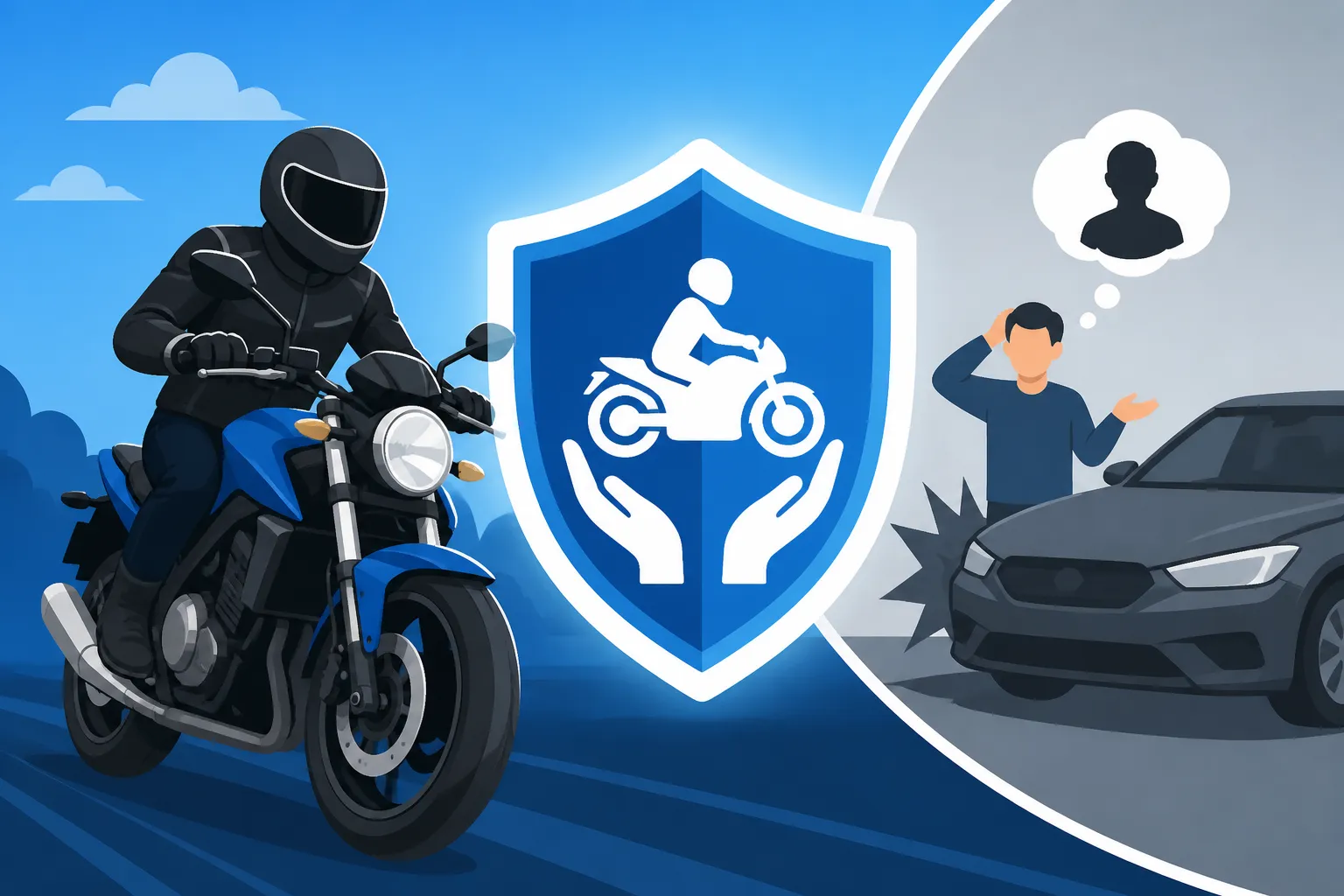
There's a scenario every motorcyclist dreads: you're out enjoying the open road, doing everything right, and then suddenly, another driver makes a mistake. What's worse is finding out that driver doesn't have insurance, or worse, has so little coverage that it barely covers the tow truck, let alone your medical bills and bike repairs. It's a frustrating, terrifying reality, and it leaves far too many riders in a devastating financial hole. This comprehensive guide is here to shed light on uninsured and underinsured motorist (UM/UIM) coverage, explaining exactly what it is, why it's absolutely crucial for motorcycle riders, and how it can be your lifeline when others fail to take responsibility.
Understanding the High Stakes of Uninsured and Underinsured Motorists
Riding a motorcycle is an exhilarating experience, a feeling of freedom that's hard to match. But with that freedom comes a unique set of vulnerabilities, especially when sharing the road with drivers who are either irresponsible or simply don't have enough coverage. The statistics can be pretty grim, and for motorcyclists, they hit particularly hard. We're talking about real people, real accidents, and real financial fallout.
The Alarming Reality on the Roads
Imagine this: you're cruising down a scenic highway in California, enjoying a perfect Sunday ride, when a beat-up sedan swerves into your lane without warning. You manage to avoid a direct hit, but you're forced to lay the bike down, sustaining serious injuries and totaling your beloved machine. When the dust settles, you discover the driver of that sedan doesn't have any insurance. Not a penny. Or maybe they have the bare minimum liability insurance, say, the California 15/30/5 limits, which translates to $15,000 for bodily injury per person, $30,000 per accident, and $5,000 for property damage. For a serious motorcycle accident, these amounts are often woefully inadequate.
This isn't some far-fetched nightmare; it's a daily occurrence across the United States. In some states, like Florida, the percentage of uninsured drivers can hover around 20% or even higher. That means one in five drivers you encounter on the road might not have the financial means to cover the damage they cause. Think about how many vehicles you pass on an average ride – the odds are not in your favor. This alarming reality is why knowing your options, especially regarding coverage like UM/UIM, isn't just a good idea; it's a fundamental necessity for every rider. For a deeper dive into the broader legal landscape, you might want to read our guide on Motorcycle Insurance Requirements by State (2026 Guide).
Why Riders Face Greater Risks
Let's be brutally honest: when a motorcycle is involved in a collision with a car or truck, the motorcyclist almost always comes out on the worse end. There's no steel cage, no airbags, and very little crumple zone to protect us. Even with the best gear, injuries can be severe, ranging from broken bones and road rash to traumatic brain injuries or spinal damage. These aren't just minor scrapes; these are life-altering injuries that often require extensive, long-term medical care, rehabilitation, and can lead to significant lost wages.
Beyond personal injuries, the damage to your motorcycle itself can be substantial. A minor fender-bender for a car could be a total loss for a motorcycle, especially if it's a custom build or a high-end model. When you combine potentially catastrophic medical bills, weeks or months of lost income, and the cost of repairing or replacing your bike, you quickly realize that even a "minor" accident can lead to hundreds of thousands of dollars in expenses. Without adequate coverage, like UM/UIM, you're left to foot these bills yourself, a burden that can shatter families and finances. This stark reality underscores why standard liability coverage, while legally required for others, offers little solace to a rider when the other party is uninsured or underinsured.
What Exactly is Uninsured Motorist (UM) Coverage?
Uninsured Motorist (UM) coverage is one of those policy components that often gets overlooked, buried in the jargon of insurance documents, but it is, without a doubt, one of the most critical protections a motorcycle rider can have. It's essentially an insurance policy that kicks in when the at-fault driver has no insurance at all, saving you from a potentially devastating financial situation.
Protecting Yourself from Drivers with No Insurance
Imagine you're on your way to a rally in Sturgis, South Dakota, cruising along I-90. Suddenly, another driver, distracted by their phone, veers into your lane, causing you to crash. It's unequivocally their fault. But then, as law enforcement and paramedics respond, you find out they don't have a valid insurance policy. Maybe their policy lapsed, maybe they never bothered to get one, or maybe they’re just driving illegally. In this heart-dropping moment, your uninsured motorist coverage becomes your champion.
This part of your policy is designed to cover your medical expenses, lost wages, and pain and suffering as if the at-fault driver had insurance. Without it, you would have to sue the uninsured driver directly – a lengthy, costly, and often fruitless endeavor, as most uninsured drivers lack significant assets to cover your damages. Your UM coverage steps in to pay for those damages, up to your policy limits, providing a vital safety net that protects your financial future rather than leaving you at the mercy of someone else’s negligence and lack of responsibility. It's a stark contrast to simply having Minimum Liability Insurance Explained (The Three Numbers), which only covers damages you cause to others.
Scenarios Where UM Kicks In
UM coverage isn't just for dramatic, head-on collisions. It applies to a range of situations where an uninsured driver causes you harm. Consider a hit-and-run incident in a busy city like New York. You're stopped at a red light, and a vehicle rear-ends you, causing damage to your bike and a nasty whiplash. Before you can even get out your phone to take a picture, they speed off into traffic, never to be seen again. This is another classic scenario where your uninsured motorist coverage would kick in. Since the at-fault driver cannot be identified, they are treated as an uninsured motorist.
Another less common but equally frustrating scenario could involve a "phantom vehicle." Perhaps you're riding through a construction zone, and a truck swerves recklessly, sending debris flying that causes you to lose control and crash. The truck never makes contact and doesn't stop, and you can't identify the vehicle or its driver. Your UM coverage is designed to protect you in these situations too, covering your damages when there's no identifiable, insured party to pursue. It's a proactive measure that safeguards your financial well-being against the unpredictable and often frustrating actions of others on the road.
What is Underinsured Motorist (UIM) Coverage?
While Uninsured Motorist (UM) coverage protects you from drivers with no insurance, Underinsured Motorist (UIM) coverage addresses an equally frustrating, and often more common, problem: drivers who have insurance, but their coverage limits are simply too low to cover the full extent of your damages. This is particularly relevant given how quickly medical and repair costs can escalate after a motorcycle accident.
When the Other Driver's Coverage Isn't Enough
Let's imagine a scenario in Texas. You're riding your beloved Harley-Davidson, worth a solid $25,000, and you're involved in a collision with a driver who is clearly at fault. Their vehicle is relatively inexpensive, but your bike is extensively damaged, looking like a definite total loss. On top of that, you've fractured your leg, requiring surgery, and you're looking at months of physical therapy. The other driver carries the state's minimum liability coverage, which in Texas is 30/60/25, meaning $30,000 for bodily injury per person, $60,000 per accident, and $25,000 for property damage.
Your medical bills alone quickly reach $50,000, and the replacement cost for your Harley is $25,000. The at-fault driver's policy will only pay out $30,000 for your bodily injury and $25,000 for your bike, leaving you with a $20,000 medical bill shortfall and no coverage for pain and suffering or lost wages beyond that initial sum. This is precisely where UIM coverage steps in. It's designed for these situations where the other driver's insurance is insufficient, ensuring you're not left in a financial lurch just because they bought the cheapest, lowest-limit policy possible. This coverage ensures that even if you have What Happens If You Ride Without Insurance?, you're still protected from others' lack of adequate coverage.
How UIM Fills the Gap
Think of UIM as a protective layer that sits above the at-fault driver's inadequate insurance. In our Texas example, after the other driver's policy pays out its maximum for your injuries ($30,000), your UIM coverage would then kick in to cover the remaining $20,000 of your medical bills, as well as any additional damages like lost wages or pain and suffering, up to your UIM policy limits. It essentially bridges the gap between what the at-fault driver's insurance pays and the total cost of your damages, or your UIM limit, whichever is less.
It's important to understand that UIM coverage typically "stacks" on top of the other driver's coverage, or in some states, it might act as a "difference in limits" coverage. This means if your UIM bodily injury limit is $100,000 and the at-fault driver has $30,000, your UIM coverage would pay up to an additional $70,000 after their policy is exhausted. This layering of protection is incredibly valuable because it means you aren't stuck paying the difference out of pocket for an accident that wasn't your fault. When you're looking to How to Compare Motorcycle Insurance Quotes, always pay close attention to the UIM limits offered.
The Crucial Difference: UM vs. UIM
While often bundled together and referred to as "UM/UIM," it's vital for every rider to understand that Uninsured Motorist (UM) and Underinsured Motorist (UIM) coverage address distinct, though related, problems. Confusing the two can lead to misunderstandings about your policy's true protective scope.
Identifying the Core Distinction
The most straightforward way to differentiate between UM and UIM is by focusing on the other driver's insurance status. Uninsured Motorist (UM) coverage is your safety net when the at-fault driver completely lacks any liability insurance. They either never bought it, their policy lapsed, or it's a hit-and-run where they can't be identified. In these scenarios, there's no other insurance company to turn to for compensation for your injuries or property damage. Your UM policy steps up to act as that "missing" liability coverage.
Underinsured Motorist (UIM) coverage, on the other hand, comes into play when the at-fault driver does have liability insurance, but their policy limits are simply too low to cover the full extent of your damages. This is a crucial point because while minimum liability requirements exist in most states, they are often insufficient for serious accidents, especially those involving motorcycles. For instance, in a state like Florida, where minimums are low, UIM can be a lifesaver. This distinction is paramount when assessing your personal risk and making decisions about your policy, as detailed in guides like Types of Motorcycle Insurance Coverage Explained.
Practical Examples for Clarity
Let's use a couple of real-world hypotheticals to make this crystal clear.
UM Scenario: You're riding your classic Triumph Bonneville through the rural roads of Montana. A pickup truck pulls out from a side road without looking, hitting your front wheel. You go down, breaking your collarbone and severely damaging your bike. At the scene, the truck driver admits they let their insurance lapse because "they barely drive." This is a classic UM situation. The other driver has no insurance to cover your medical expenses, lost wages, or the extensive repairs to your Triumph. Your UM coverage would then activate to cover these costs up to your policy limits.
UIM Scenario: Now, imagine you're on your Ducati, navigating rush hour traffic in downtown Seattle. Another driver, distracted by their GPS, merges into your lane, clipping your rear wheel and sending you sprawling. You suffer multiple fractures, and your high-performance bike needs significant, costly repairs. The at-fault driver has Washington's minimum liability coverage, which might be $25,000 for bodily injury per person. However, your medical bills alone are projected to hit $75,000, and your Ducati's repairs are another $20,000. Here, the other driver's policy will only pay its $25,000 limit. That leaves a massive gap. Your UIM coverage would then step in to cover the remaining $50,000 of your medical expenses (and any other covered damages) up to your UIM policy limits, ensuring you aren't left with a mountain of debt from an accident that wasn't your fault. Understanding this difference empowers you to choose appropriate coverage limits, a topic further explored in our article on How to Choose the Right Coverage Limits.
| Coverage Type | What it Covers | When it Applies | Key Difference |
|---|---|---|---|
| Uninsured Motorist (UM) | Bodily injury, property damage (depending on state/policy) caused by an at-fault uninsured driver. | At-fault driver has NO insurance or is a hit-and-run driver. | Covers you when the other driver has zero liability insurance. |
| Underinsured Motorist (UIM) | Bodily injury, property damage (depending on state/policy) caused by an at-fault driver whose liability limits are INSUFFICIENT to cover your damages. | At-fault driver HAS insurance, but their limits are too low to pay your full claim. | Covers you when the other driver has some, but not enough, liability insurance. |
This table clarifies that while both coverages protect you from another driver's lack of adequate insurance, they do so under slightly different circumstances, making both indispensable for a motorcycle rider.
Why UM/UIM is Non-Negotiable for Motorcycle Riders
For motorcycle riders, UM/UIM isn't just an optional add-on; it's a foundational pillar of smart insurance planning. Given the unique risks we face on two wheels, choosing to go without this coverage is akin to riding without a helmet – a gamble with potentially catastrophic consequences.
The Financial Devastation of a Crash
Let's talk about the cold, hard cash. A serious motorcycle accident can be financially ruinous. Think about the immediate aftermath: ambulance rides, emergency room visits, specialist consultations, surgeries, hospital stays, and then the long road of physical therapy and rehabilitation. These bills can easily climb into the tens, if not hundreds, of thousands of dollars. And that's just for medical expenses. Add to that the cost of repairing or replacing your motorcycle, which for many riders isn't just a vehicle, but a significant investment and a passion.
Beyond the immediate costs, there's the long-term impact. If your injuries prevent you from working, you're looking at lost wages, potentially for months or even permanently. There's also the immeasurable cost of pain and suffering, and the emotional toll on you and your family. If the at-fault driver is uninsured or woefully underinsured, and you don't have UM/UIM, all these burdens fall squarely on your shoulders. You could face bankruptcy, lose your home, or deplete your life savings, all because someone else was irresponsible. This isn't theoretical; it happens to riders every day. It truly reinforces why you need more than just What Motorcycle Coverage Do You Actually Need?.
The Specific Vulnerabilities of Motorcyclists
As riders, we're acutely aware of our vulnerabilities on the road. We are smaller, less visible, and offer far less protection than a car. This isn't a complaint; it's a reality. What this means for insurance purposes is that when an accident occurs, the injuries to a motorcyclist are often more severe and costly to treat than those sustained by someone in a car. Furthermore, the likelihood of a motorcycle being totaled in an accident, even a relatively minor one, is higher.
Consider the "target fixation" phenomenon where drivers often fail to see motorcycles, or simply don't register them until it's too late. The tragic consequence is often a collision where the motorcyclist is an innocent party. This inherent vulnerability, combined with the alarming rates of uninsured and underinsured drivers on the road (courtesy of a 2023 report, approximately 1 in 8 drivers nationwide is uninsured), makes UM/UIM coverage not just a smart choice, but an essential one. It acknowledges the undeniable fact that despite your best riding skills and vigilance, you cannot control the actions of every other driver, and you deserve comprehensive protection when their negligence impacts your life. When considering companies, exploring options like Best Motorcycle Insurance Companies (2027) might lead you to providers that emphasize UM/UIM.
Navigating UM/UIM Limits and Payouts
Once you're convinced of the necessity of UM/UIM, the next step is to understand how these coverages work in terms of limits and potential payouts. It's not enough to just "have it"; you need to ensure your limits are adequate for the worst-case scenario.
Deciphering Your Policy's Numbers
Just like with standard liability coverage, UM/UIM comes with specific limits that dictate the maximum amount your insurance company will pay out. These limits are typically expressed in a "split limit" format, often mirroring your liability coverage, such as 25/50/25. This means:
- $25,000 for bodily injury per person (the maximum your policy will pay for one person's injuries).
- $50,000 for bodily injury per accident (the maximum your policy will pay for all injuries in a single accident, regardless of how many people were injured).
- $25,000 for property damage per accident (the maximum your policy will pay for damage to your motorcycle or other property in a single accident).
Sometimes, you might see a "combined single limit" (CSL), where one larger number (e.g., $100,000 CSL) covers all bodily injury and property damage for the accident. When reviewing your policy or getting quotes, it's crucial to understand these numbers. Opting for higher limits might increase your premium slightly, but the peace of mind and financial protection it offers in a severe accident far outweighs that marginal cost. For example, if you consider How Much Is Motorcycle Insurance? 2026 Cost Guide, you’ll see higher UM/UIM limits often make up a small portion of the overall premium.
Understanding How Claims Work
Filing a UM/UIM claim is a bit different from a standard claim where you deal with the at-fault driver's insurer. In a UM/UIM claim, you are essentially making a claim against your own insurance company for damages caused by the uninsured or underinsured driver. This can sometimes feel counterintuitive, as you're dealing with your own insurer to get compensation for someone else's mistake. The process generally involves:
- Reporting the Accident: Immediately report the accident to your insurance company. Provide all details, including the other driver's lack of insurance (or insufficient insurance) or if it was a hit-and-run.
- Investigation: Your insurer will investigate the claim, just like they would any other. They'll confirm the other driver's insurance status (or inability to identify them) and assess your damages. This includes reviewing police reports, medical records, and repair estimates for your bike.
- Negotiation and Payout: Once the investigation is complete and damages are tallied, your insurer will negotiate a settlement with you, up to your UM/UIM policy limits.
- Subrogation: In some cases, your insurer might then pursue the uninsured or underinsured driver to recover the money they paid out to you. This is called subrogation, but it doesn't affect your payout.
It's important to keep thorough records, including police reports, medical bills, and any communication with your insurance company or law enforcement. This organized approach can significantly streamline the claims process, which can otherwise be complex. Our article on How to File a Motorcycle Insurance Claim provides a detailed walkthrough of this process, including specific steps when dealing with uninsured motorists, to ensure you know what to do if the worst happens.
State Requirements and Opting Out
The regulatory landscape for UM/UIM coverage varies significantly from state to state. While some states mandate this vital protection, others only require insurers to offer it, leaving the decision to the individual rider. Knowing your state's specific laws is the first step toward making an informed choice.
Where UM/UIM is Mandatory or Offered
Across the U.S., you'll find a patchwork of requirements for Uninsured and Underinsured Motorist coverage. In some states, like Maryland or North Carolina, UM/UIM bodily injury coverage is actually mandatory, often set at the same minimum limits as the state's liability requirements. This means if you buy liability insurance, you automatically get UM/UIM to protect you from those who don't have it or don't have enough. This is a massive win for riders in those states, providing a crucial baseline of protection that you don't even have to think about actively adding.
However, in many other states, UM/UIM is not mandatory. Instead, insurers are legally required to offer you the coverage, and you have the option to accept or reject it. For example, in states like Pennsylvania or Arizona, you'll likely be presented with a form where you can sign to "waive" or reject UM/UIM coverage. This is a critical moment. While opting out might save you a few dollars on your premium, it leaves you incredibly exposed. Remember, the minimal state requirements for Motorcycle Insurance Requirements by State (2026 Guide) often focus on protecting others from you, not protecting you from others. Riders truly need to be proactive and understand what they are signing.
The Risks of Waiving This Vital Protection
Let's be unequivocally clear: waiving UM/UIM coverage to save a few bucks is one of the riskiest financial decisions a motorcycle rider can make. While it might seem appealing to trim your premium, the potential consequences if you're involved in an accident with an uninsured or underinsured driver are nothing short of devastating. You're essentially betting your entire financial future – your savings, your assets, your ability to earn an income – against the possibility of encountering an irresponsible driver.
Consider a scenario where you've waived UIM in Florida, a state known for both its high number of uninsured drivers and its often-low minimum liability limits. You're involved in a severe accident that totals your bike and leaves you with $150,000 in medical bills and lost wages. The at-fault driver has only the state minimum of $10,000 bodily injury liability. If you had UIM, your policy would cover the remaining $140,000. Without it, that $140,000 comes out of your pocket. This could mean draining your retirement savings, taking out high-interest loans, or even facing bankruptcy. Companies like The Zebra, an insurance comparison site, consistently emphasize the importance of robust coverage, including UM/UIM, warning consumers against the false economy of skimping on these critical protections. It's a prime example of how seemingly small savings on a premium can lead to life-altering debt.
How to Secure the Right UM/UIM Coverage
Now that we've covered the what, why, and how of UM/UIM, the next logical step is figuring out how to actually get the right coverage for your specific needs. It's not about just picking the first option; it's about being strategic and informed.
Shopping for Comprehensive Protection
When you're in the market for motorcycle insurance, or even just reviewing your current policy, don't treat UM/UIM as an afterthought. Make it a central point of discussion with your insurance agent or when using online comparison tools. Start by considering your own potential vulnerabilities. What kind of medical costs might you incur in a serious accident? How much is your motorcycle worth? What's your income, and how long could you afford to be out of work? These are tough questions, but they help you determine appropriate limits.
Many experts, including those who contribute to resources like The Zebra, recommend carrying UM/UIM limits that are at least equal to your bodily injury liability limits, if not higher. If you have $100,000/$300,000 in liability, try to aim for similar UM/UIM limits. While there's a slight cost increase for higher limits, it's usually minimal compared to the overall premium and provides exponentially greater protection. Don't shy away from asking your agent detailed questions about how UM/UIM would apply in different scenarios, and clarify if property damage is included in your state's UM/UIM offering, as it's not always standard. Comparing policies is crucial, and our guide on How to Compare Motorcycle Insurance Quotes can help you navigate this process effectively.
Making Informed Decisions with Your Agent
Working with a knowledgeable insurance agent can make a world of difference when configuring your UM/UIM coverage. A good agent won't just sell you a policy; they'll act as a consultant, helping you understand your risks and tailor coverage to your lifestyle. They can explain the nuances of stacking versus non-stacking UM/UIM in your state, which determines if you can combine coverage from multiple vehicles on your policy or if your limits are fixed per vehicle.
For instance, if you live in a state like Oregon that allows stacking, and you have two motorcycles on your policy, your UIM limits could effectively double if you pay for stacking. This is a huge advantage for protecting against catastrophic losses. An agent can also help you understand if your state offers both UM property damage (UMPD) and UM bodily injury (UMBI), and whether you need both. Don't be afraid to ask about discounts that might offset the cost of higher UM/UIM limits, such as a multi-policy discount if you bundle your auto and motorcycle insurance, or a motorcycle safety course discount. Remember, your agent is there to help you make these critical decisions, ensuring you have What Does Full Coverage Motorcycle Insurance Mean? in a way that truly protects you.
Disclaimer
Please note that this content is intended for informational purposes only and does not constitute professional financial, legal, or insurance advice. Motorcycle insurance laws and regulations vary by state and can change frequently. It is crucial to consult with a qualified insurance professional to understand the specific requirements and options available in your jurisdiction and to ensure your policy meets your individual needs. Always read your policy documents carefully.