Best Motorcycle Insurance That Covers Custom Parts
It’s a tale as old as time for riders: you pour your heart, soul, and hard-earned cash into making your motorcycle truly yours. From performance upgrades to gleaming chrome, custom paint, or a unique sound system, these modifications are what make your bike stand out. But when an accident happens or theft strikes, many riders are heartbroken to discover their standard insurance policy falls dramatically short, often leaving them on the hook for thousands. This guide will help you navigate the complexities of motorcycle insurance to find the best policy that truly values and protects your custom parts and accessories.
The Common Pitfall: Why Standard Policies Ignore Your Custom Touches
It’s easy to assume your comprehensive policy covers everything on your bike, but when it comes to customizations, that’s rarely the case with a basic plan. Standard motorcycle insurance policies are designed to cover your bike as it left the factory. Any aftermarket additions, unless specifically accounted for, might be severely underinsured or not covered at all. This oversight can lead to significant financial heartache if you ever need to file a claim.
Default Limits for Accessories and Aftermarket Parts
Most standard motorcycle insurance policies include a very minimal amount of coverage for accessories and custom parts, typically as an automatic add-on within your comprehensive or collision coverage. This limit can range from a paltry $1,000 to perhaps $3,000 at most, depending on the insurer and your base policy. While this might seem like a decent buffer, anyone who has customized a motorcycle knows how quickly these costs add up. A simple exhaust system upgrade, new handlebars, or a custom seat can easily blow past that $1,000 mark.
Imagine you've invested in a top-tier aftermarket exhaust, a personalized fairing, and some high-end LED lighting, totaling around $5,000. If your standard policy only offers $2,000 in accessory coverage, you’re looking at a $3,000 loss right off the bat if those parts are damaged or stolen. This is a crucial area where "set it and forget it" insurance can truly fail custom bike owners. It's not just about the big, flashy items either; even small, individual upgrades contribute to the overall value of your unique machine.
The Heartbreak of Undervalued Claims
The real sting often comes when you’re forced to file a claim. You’ve had an accident, or perhaps your bike was stolen, and the insurance adjuster comes back with an offer that barely covers the stock value of your motorcycle, completely disregarding the thousands you've put into making it special. This scenario is incredibly common and one of the biggest frustrations for custom bike owners. Insurers, without proper documentation and specific coverage, will value your bike based on its factory specifications and market value, not your emotional or financial investment in its unique components.
Consider a rider in Austin, Texas, who spent $10,000 on custom paint, engine tuning, and suspension upgrades for their Harley-Davidson Street Glide. If their policy didn't have adequate custom parts coverage and their bike was totaled, they might only receive a payout for a standard Street Glide of that year and mileage. That means the entire $10,000 they poured into personalization is effectively lost, leaving them without the means to recreate their beloved custom ride. It’s a bitter pill to swallow, and it highlights why understanding your options for custom parts coverage is absolutely vital. You don't want to be caught off guard after an incident; the time to ensure your custom parts are protected is before anything happens.
Essential Custom Parts Coverage Options to Look For
When you're dealing with a custom motorcycle, standard liability and collision coverage simply won't cut it for your unique additions. You need specialized endorsements that specifically address the value of your modifications. These add-ons are designed to increase the limits for your aftermarket parts, ensuring that your investment is adequately protected against damage, theft, or other covered perils.
Dedicated Accessories and Custom Parts Coverage
This is the bread and butter for custom bike owners. Many reputable motorcycle insurance companies offer an optional add-on often called "Accessories and Custom Parts Coverage" or something similar. This endorsement allows you to significantly increase the coverage limit for non-factory installed components. Instead of that default $2,000, you might be able to get $10,000, $20,000, $30,000, or even more, depending on the insurer and the value of your customizations.
What exactly falls under this umbrella? Generally, it includes a wide range of modifications such as:
- Custom paint and chroming: From intricate murals to detailed pinstriping.
- Performance parts: Aftermarket exhaust systems, engine modifications, upgraded carburetors, turbochargers, or superchargers.
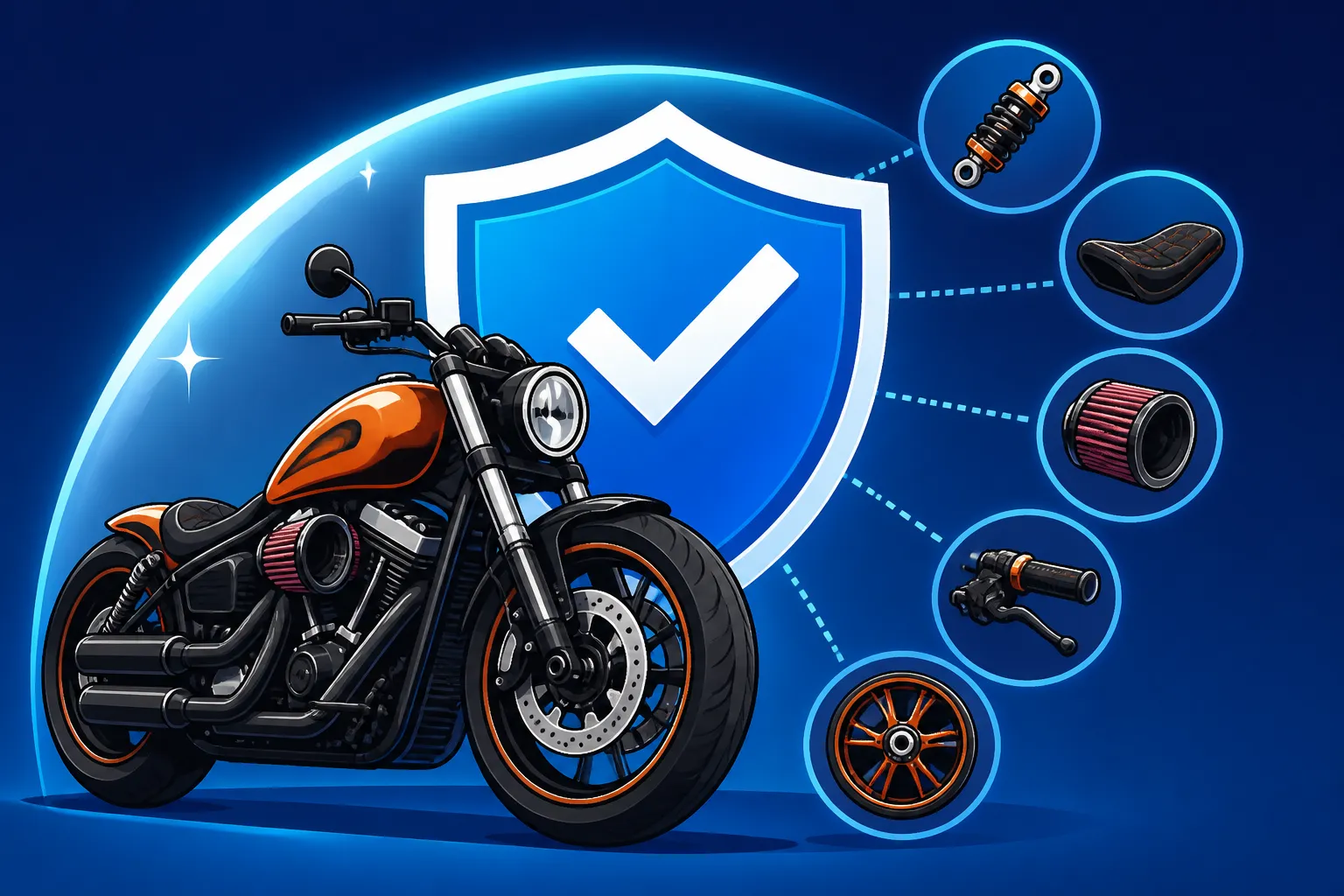
- External modifications: Custom handlebars, fairings, wind screens, upgraded wheels, custom seats, saddlebags, and luggage racks.
- Electronics: Aftermarket sound systems, GPS units, enhanced lighting, security systems.
- Safety enhancements: Frame sliders, crash bars, upgraded braking components.
It’s crucial to understand that this coverage typically applies whether the damage occurs in an accident (collision) or due to other events like theft, vandalism, fire, or severe weather (comprehensive). Companies like Progressive, Dairyland, and Markel are known for offering robust options in this area, recognizing the passion riders have for their unique machines. When comparing options, make sure to ask about the specific limits available and what categories of modifications are covered. Don't assume everything you've added will automatically be included; always clarify with your agent.
Understanding Valuation Methods: ACV, Stated Value, and Agreed Value
How your custom parts are valued at the time of a claim is just as important as the coverage limit itself. There are three primary valuation methods, and understanding the differences is absolutely critical for custom motorcycle owners. Getting this wrong can mean a massive difference in your payout.
Actual Cash Value (ACV)
This is the most common valuation method for standard policies. ACV pays out the replacement cost of an item minus depreciation. For custom parts, this can be devastating. That brand-new, gleaming custom exhaust system you installed last year? The insurer will factor in its age and wear and tear, paying you significantly less than what you paid for it or what it would cost to replace it today. This method almost guarantees you'll be financially penalized for your custom work, as unique parts often don't depreciate in the same way standard factory parts do in your mind, but they do in the insurer's eyes under an ACV policy.
Stated Value
Often misunderstood, "stated value" sounds promising but comes with a big catch. With stated value, you declare the maximum value of your motorcycle, including all custom parts. However, in the event of a total loss, the insurer will typically pay you up to that stated value, or the actual cash value (ACV), whichever is less. This means if you state a value of $25,000 for your custom bike, but the insurer assesses its ACV at $18,000 due to depreciation, you’ll only get $18,000. It protects the insurer from overpaying for a bike that has depreciated, but it doesn't truly protect your investment in custom parts against depreciation. This is often an option to be wary of for truly unique builds.
Agreed Value
For custom motorcycle owners, "agreed value" coverage is often the gold standard, and what you should really be aiming for. With this method, you and the insurance company agree on the value of your motorcycle, including all custom parts, before the policy is issued. This agreed-upon amount is the exact amount you will receive if your bike is declared a total loss, regardless of depreciation. This provides peace of mind, knowing that your significant investment in customization will be fully honored. To qualify for agreed value, you’ll usually need a professional appraisal and detailed documentation of all your modifications, including receipts and photos.
For example, if you have a custom chopper with an agreed value of $40,000, and it's stolen, you will receive $40,000 (minus your deductible). This removes the uncertainty and potential for dispute over the value of your unique parts. This is particularly valuable for rare, vintage, or highly personalized bikes where market value might be hard to pinpoint or doesn’t reflect the true cost of the build. When exploring options, specifically ask about "Agreed Value" coverage, especially if you have a significant amount invested in custom work. It truly makes a difference in protecting your passion. You can learn more about the nuances of Agreed Value vs Stated Value vs Actual Cash Value for motorcycles to fully grasp the importance.
Here's a quick comparison of these valuation methods:
| Valuation Method | How it Works for Custom Parts | Rider Benefit | Rider Risk | Ideal for |
|---|---|---|---|---|
| Actual Cash Value (ACV) | Replacement cost minus depreciation. | Lower premium. | Significant payout reduction due to depreciation. | Minor, easily replaceable mods on older bikes. |
| Stated Value | You declare a maximum limit, but payout is still ACV or stated value, whichever is less. | Can declare a high potential value. | Still subject to depreciation assessment at claim time. | Riders who want higher limits but are aware of ACV risk. |
| Agreed Value | You and insurer agree on a value upfront; that's your payout for a total loss. | Guarantees specific payout, no depreciation surprises. | Requires thorough documentation/appraisal, higher premium. | Highly customized, unique, or vintage bikes with significant investment. |
Steps to Secure the Best Custom Motorcycle Insurance
Getting the right coverage for your custom bike isn't just about choosing an insurance company; it's about being proactive, meticulous, and persistent. You need to present a clear picture of your motorcycle's value to potential insurers to ensure they understand what you're trying to protect.
Thorough Documentation is Your Best Defense
This cannot be stressed enough: documentation is everything when it comes to custom parts coverage. Without solid proof of your modifications, their cost, and their installation, an insurance company will have little reason to cover them adequately. Think of it as building a bulletproof case for your bike's value.
Start by creating a comprehensive "mod log" for your motorcycle. This isn't just a list; it's a detailed record of every single customization you've made. For each modification, include:
- Date of Purchase and Installation: Knowing when the part was acquired helps with potential depreciation discussions (though less so with agreed value).
- Purchase Receipts: Keep original receipts for every custom part and the labor involved in installation if you didn't do it yourself. This is your primary proof of cost.
- Detailed Photos: Take clear, high-resolution photos of each part before it was installed (if possible), during installation, and after it's on the bike. Get close-ups, wide shots, and shots that show the part in context with the rest of the bike. Don't forget photos of unique paint jobs or custom fabrication.
- Descriptions: Write a clear description of each part, including make, model, and any unique features.
- Appraisals: For very expensive or custom-fabricated components, consider getting a professional appraisal. An independent appraiser specializing in motorcycles can provide an unbiased valuation that carries significant weight with insurers. This is especially helpful for vintage bikes or truly one-off builds.
Store all this documentation securely, both physically and digitally. Cloud storage, external hard drives, and a fireproof safe are your friends here. If your bike is stolen or damaged, you’ll need quick access to these records to support your claim. Remember, the burden of proof is often on you, the policyholder, to demonstrate the value of your custom work. Without it, you might find yourself struggling to justify a higher payout for your cherished modifications.
Choosing the Right Insurance Provider for Custom Bikes
Not all insurance companies are created equal, especially when it comes to specialized coverage like custom motorcycle parts. While big names like Geico and State Farm offer motorcycle insurance, they might not always have the most flexible or comprehensive options for highly customized bikes. You'll want to seek out providers known for their strong motorcycle divisions or those that specialize in powersports.
Look for companies that:
- Offer high limits for custom parts and accessories: This is non-negotiable. Don't settle for a $3,000 limit if you've spent $15,000 on modifications.
- Provide Agreed Value coverage: As discussed, this is the best protection for significant custom investments. If a company only offers ACV or stated value that defaults to ACV, keep looking.
- Understand custom culture: Some insurers truly "get" the custom motorcycle world and have adjusters who are knowledgeable about aftermarket parts and valuations. Others may treat a custom exhaust the same as a factory part.
- Have positive reviews from other custom riders: Online forums and rider communities are excellent places to get recommendations and read about real-world experiences with different insurers.
Websites like The Zebra can be incredibly helpful here. They allow you to compare quotes from multiple providers side-by-side, which is essential for finding an insurer that specifically caters to custom bikes and offers the best rates for the coverage you need. Don't just look at the bottom line premium; dig into the policy details, especially the custom parts clauses. Ask specific questions like, "What is your maximum limit for custom parts coverage?" and "Do you offer agreed value for motorcycles?" You might find that a slightly higher premium with a specialist insurer is a far better investment than a cheaper policy that leaves your custom work exposed. Consider checking out Best Motorcycle Insurance for Custom Bikes for more specific recommendations.
Regularly Review and Update Your Policy
Your motorcycle isn't a static object, especially if you're a custom enthusiast. You're likely adding new parts, making upgrades, or fine-tuning existing modifications over time. It's easy to forget about your insurance policy once it's in place, but this can be a costly mistake. Each time you add a significant custom part or make an expensive upgrade, you need to update your insurance policy.
Think about it: you spend $3,000 on a new set of custom wheels and tires. If you don't inform your insurer and adjust your custom parts coverage limit, those new wheels won't be covered in the event of an accident or theft. This makes your initial custom parts coverage obsolete and creates a new gap in your protection.
Make it a habit to review your policy at least once a year, or immediately after any major modification. Contact your insurance agent, provide them with the updated documentation (receipts, photos) for your new parts, and adjust your coverage limits accordingly. Yes, your premium might go up slightly, but it's a small price to pay for ensuring your entire investment is protected. This ongoing communication with your insurer helps maintain an accurate valuation of your motorcycle and prevents any disputes down the line. It's a proactive step that protects your passion and your wallet. If you’re ever wondering How Much Is Insurance for a Custom or Modified Motorcycle? remember that these updates directly impact your premium.
Common Questions and Considerations for Custom Coverage
Navigating the world of motorcycle insurance, especially for custom bikes, can bring up a lot of specific questions. It's always better to ask than to assume. Let's tackle a few more considerations that often come up.
What if I Fabricated the Parts Myself?
Many custom bike builders take pride in fabricating their own unique parts. This adds an incredible amount of personal value and craftsmanship to the bike, but it can complicate insurance. If you created a custom exhaust system or a bespoke frame from scratch, you won't have receipts for the finished part, only for the raw materials.
In these cases, excellent documentation becomes even more paramount. Keep detailed records of:
- Material costs: Receipts for steel, aluminum, welding wire, paint, etc.
- Tools and equipment used: While these aren't directly insured parts, they show the investment in the process.
- Time spent: While insurers typically don't cover your labor directly, a detailed log of hours invested can help an appraiser or adjuster understand the intrinsic value of your craftsmanship.
- Process photos: Document the fabrication process step-by-step with photos. This visually demonstrates the effort and skill involved.
- Professional appraisal: This is crucial for self-fabricated parts. An expert appraiser can assess the quality, uniqueness, and market value of your custom work, providing a credible valuation for the insurer.
Some insurers, especially those specializing in collector or custom vehicles, are more adept at working with self-fabricated parts. Others, particularly larger, more generic providers, might struggle to value something without a clear purchase price. This is another reason why finding the right provider and opting for agreed value coverage is so beneficial.
Can My Riding Gear and Helmet Be Covered?
It’s not just your bike that’s custom – your riding gear often is too, or at least it represents a significant investment. High-quality helmets, leather jackets, custom boots, and protective riding pants can easily run into thousands of dollars. Standard motorcycle insurance typically focuses on the bike itself.
However, some policies offer an optional endorsement for "Personal Belongings" or "Riding Gear Coverage." This add-on extends protection to your helmet, jacket, gloves, and other gear if they are damaged in a covered accident or stolen along with your motorcycle. The limits for this coverage vary but are usually separate from your custom parts coverage for the bike itself.
When discussing your policy, specifically ask if this type of coverage is available and what its limits are. It’s a worthwhile addition, especially if you own premium gear or multiple sets. Remember that these items often fall under depreciation rules unless specified otherwise, so understanding the payout method for gear is also important. Knowing that your Motorcycle Insurance Requirements by State (2026 Guide) won't typically include gear protection automatically can save you a nasty surprise.
What About Loans and Financed Custom Bikes?
If you have a loan on your custom motorcycle, your lender will almost certainly require you to carry full coverage insurance, which typically includes collision and comprehensive coverage. However, these basic coverages often only protect the lender's interest in the stock value of the bike.
If your custom bike is financed and you've poured additional money into modifications, you have an even greater need for robust custom parts coverage and potentially Gap Insurance. If your custom-laden bike is totaled, and the insurer only pays out the actual cash value of a stock bike, you could be left owing money on a loan for a motorcycle that no longer exists, especially if your custom investment pushed the bike's value far beyond its stock MSRP.
Gap insurance helps cover the "gap" between what your motorcycle is worth (and what your regular insurance pays out) and the remaining balance on your loan. When combined with strong custom parts coverage and ideally, agreed value, you create a comprehensive safety net. Always inform your lender about your custom coverage, and ensure your policy meets all their requirements while also protecting your personal investment in the modifications. Don't forget to ask about Do You Need Gap Insurance on a Motorcycle? if you have a loan.
Getting the best motorcycle insurance that covers custom parts requires diligence and a clear understanding of your options. It's not just about protecting a vehicle; it's about safeguarding your passion, your craftsmanship, and your unique style on two wheels. Companies like The Zebra can help you compare various insurers to find one that truly caters to the specific needs of custom bike owners, ensuring that every dollar you've invested in making your ride special is protected. Remember, your motorcycle is more than just transportation; it's an extension of you, and its insurance should reflect that. Explore your options, document everything, and ride with confidence knowing your custom masterpiece is covered.
Disclaimer
Please note that this article provides general information about motorcycle insurance and custom parts coverage. Insurance policies and requirements can vary significantly by state, insurer, and individual circumstances. It is essential to consult with a licensed insurance professional to discuss your specific needs and obtain personalized quotes and advice. Policy terms, conditions, and coverage limits should always be thoroughly reviewed directly with your chosen insurance provider before making any decisions.