Best Motorcycle Insurance by Rider Type
Riding a motorcycle is more than just transportation; it's a lifestyle, a passion, and for many, a deeply personal expression. But when it comes to insurance, it often feels like you're just another number, a generic rider in a sea of statistics. The truth is, your motorcycle insurance needs are as unique as your riding style and the bike you throw your leg over. Trying to find the "best" policy without considering who you are as a rider can lead to overspending or, worse, being dangerously underinsured. This comprehensive guide is here to demystify the process, helping you find the perfect motorcycle insurance tailored specifically to your rider type.
Understanding Different Rider Personas
It's easy to think all motorcycle insurance is the same, but that couldn't be further from the truth. Just as a seasoned touring rider has different priorities than a young sport bike enthusiast, their insurance needs will vary dramatically. Recognizing these differences is the first crucial step in securing coverage that truly protects you and your ride.
Why Rider Type Matters for Insurance
You might wonder why your age, experience, or even the style of your bike matters so much to an insurance company. It feels unfair sometimes, doesn't it, that your premium is so different from your buddy's, even if you both have similar bikes? The reality is, insurance companies are in the business of assessing risk, and "rider type" is a major factor in that equation. An underwriter looks at a complex profile that goes beyond just the motorcycle itself; they're keenly interested in who is riding it and how they typically use it. For instance, a brand-new rider on a powerful sport bike presents a very different risk profile than an experienced rider on a cruiser.
Your riding habits play a huge role too. Are you a daily commuter, navigating heavy traffic day in and day out? Or are you a weekend warrior, only hitting the twisties on sunny Saturdays? Perhaps you're a long-distance tourer, piling on thousands of miles across state lines. Each of these scenarios carries different probabilities of incidents, from minor fender benders to major accidents or even theft. Insurance providers adjust your coverage options and pricing based on these habits, aiming to match the policy to the potential exposure. It’s all about predicting the likelihood of a claim and ensuring they can cover it.
Ultimately, there's a direct correlation between perceived risk, the likelihood of a claim, and the premium you'll pay. Insurers analyze vast amounts of data—from accident statistics involving different bike types and rider demographics to theft rates in specific zip codes. This allows them to create a risk assessment that, while sometimes feeling impersonal, is designed to accurately price the financial protection they're offering. Understanding this underlying mechanism can help you make more informed decisions when selecting your coverage, making it easier to see What Affects Your Motorcycle Insurance Rate?.
Common Rider Classifications
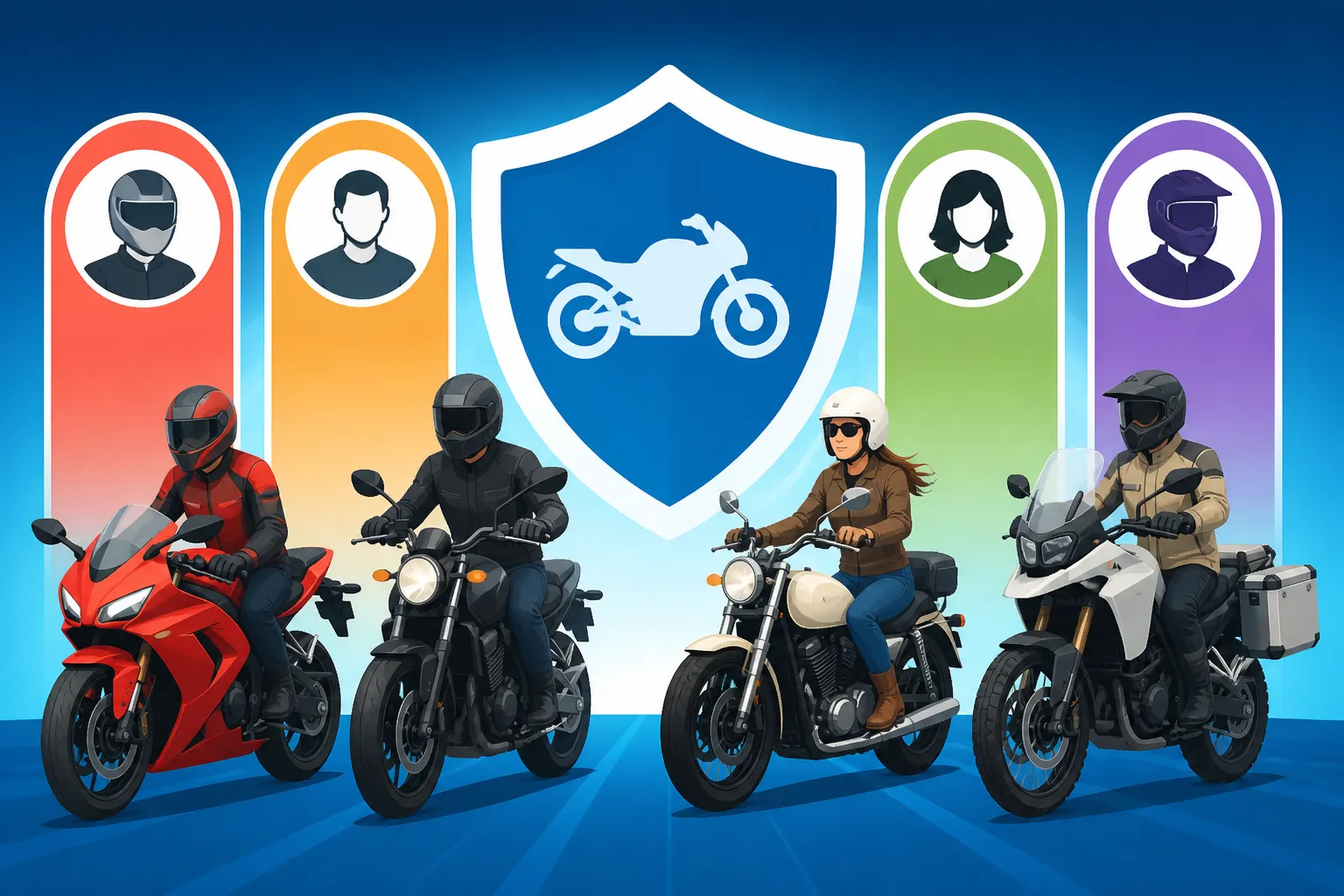
To help simplify this complex assessment, insurance companies often categorize riders into various classifications. While these aren't always rigid, they provide a framework for tailoring policies. Broadly, you can think of common rider types as new/young riders, experienced/mature riders, sport bike enthusiasts, cruiser/touring riders, adventure/dual-sport riders, and owners of custom/classic bikes. Each of these groups comes with its own set of typical behaviors, risks, and therefore, specific insurance considerations that need to be addressed.
Insurers use these internal classifications to build sophisticated risk profiles, which in turn dictate the types of policies available and the premium rates. For example, a "young rider" category might automatically flag for higher liability limits and offer discounts for safety courses, while a "custom bike owner" classification would prompt specific questions about stated or agreed value coverage. This structured approach helps them manage their risk exposure while attempting to offer relevant products to diverse customers.
It's also important to remember that you might find yourself fitting into multiple categories. Perhaps you're an experienced rider who just bought a sport bike, or a mature rider with a custom-built cruiser. In these cases, a good insurance policy will be flexible enough to combine elements from different classifications, addressing all your specific needs without unnecessary overlap. This is where a little careful shopping and understanding your options truly pay off, allowing you to blend different coverages for a truly personalized policy.
Insurance for the New Rider
The thrill of getting your first motorcycle is absolutely unforgettable. The open road, the wind in your face – it's pure freedom. But then comes the moment you look at insurance quotes, and suddenly that freedom feels a bit constrained by the numbers. It's a common hurdle, and understanding why and how to navigate it is key.
Navigating High Premiums as a Beginner
Let's just be honest here: new riders, especially those under 25, often face some serious sticker shock when it comes to motorcycle insurance premiums. It's tough when you're just starting out, eager to hit the road, and insurance costs feel like they're trying to hold you back. Insurance companies view lack of experience as a higher risk. You're statistically more likely to be involved in an accident in your early riding years, and that translates directly into higher rates. It's not personal, it's just how the data crunches out for them.
Several factors compound these high premiums for beginners. Age is a huge one; riders under 25, and especially teenagers, are almost universally charged more due to a lack of driving history and higher general risk profiles. Furthermore, the type of motorcycle you choose as your first can significantly impact your rates. Opting for a powerful, high-performance sport bike will almost always result in a much more expensive policy compared to starting with a smaller, more docile cruiser or a standard bike. The combination of inexperience and a powerful machine is a red flag for insurers.
The good news is that many insurers understand this challenge and offer programs or discounts tailored to help. Companies like Progressive and Dairyland have historically been friendly to newer riders, sometimes even offering specific policy features that acknowledge the learning curve. Using a comparison platform like The Zebra can be incredibly helpful here, as it allows you to quickly compare multiple quotes from different providers, revealing which ones might offer the best rates for your specific beginner profile.
Essential Coverages for Beginners
When you're new to riding, it can be tempting to skimp on coverage to save money, but this is one area where cutting corners can be truly detrimental. At a minimum, you'll need to meet your state's Motorcycle Insurance Requirements by State (2026 Guide) for liability coverage. This protects you financially if you cause an accident that injures others or damages their property. As a new rider, you're statistically more prone to at-fault incidents, so having robust liability limits is incredibly important to avoid out-of-pocket expenses that could derail your financial future.
Beyond basic liability, seriously consider adding comprehensive and collision coverage to your policy. While liability covers others, collision coverage pays for damage to your own motorcycle if you hit another vehicle or object, or if you simply lay the bike down. Comprehensive coverage protects against non-collision incidents like theft, vandalism, fire, or hitting an animal. For a new rider, minor drops, parking lot tip-overs, or even an unfortunate encounter with a deer are more common than you might think, and these coverages can save you thousands. If your bike is new, financed, or a significant investment, these protections are almost non-negotiable.
Don't overlook personal injury protection either. Medical Payments MedPay for Riders can cover your own medical expenses, regardless of who is at fault in an accident, which is crucial given the vulnerability of motorcyclists. Additionally, Uninsured Underinsured Motorist Coverage (UM/UIM) is vital. Even if you're the safest rider on the road, there's always a risk of encountering drivers who are uninsured or have insufficient coverage. UM/UIM protects you in these scenarios, ensuring you're not left with massive medical bills or repair costs due to someone else's negligence.
Tips for Lowering Beginner Rates
While initial rates might be high, there are definite strategies you can employ to make motorcycle insurance more affordable as a new rider. One of the most impactful ways to snag a discount is by completing an approved Motorcycle Safety Course. Seriously, this isn't just about learning valuable skills; it often qualifies you for a significant discount with most insurers. Providers recognize that riders who invest in formal training are less likely to be involved in accidents, making it a win-win situation for both you and your wallet. If you want to know more, check out the post on Does a Motorcycle Safety Course Lower Insurance?.
Another savvy move is to choose your first motorcycle wisely. While that flashy sport bike might be calling your name, starting with a smaller, less powerful, and generally less expensive bike (like a 250cc-500cc cruiser or standard model) can drastically reduce your premiums. These bikes are not only more forgiving to ride as you build skills but also signal lower risk to insurance companies. As you gain experience and a clean riding record, you can always upgrade to a more powerful machine later, often with more favorable insurance rates.
Finally, explore all available discounts. Bundling your motorcycle insurance with your auto or home insurance policies from the same provider can often lead to substantial multi-policy savings. Maintaining a clean driving record, even in your car, will positively impact your motorcycle rates over time. Also, actively shop around. Don't settle for the first quote you get. Using a comparison tool, like the one offered by The Zebra, allows you to effortlessly compare multiple quotes from various providers, helping you discover which company offers the Cheapest Motorcycle Insurance Companies for your specific situation.
Covering the Experienced and Mature Rider
For those who've seen countless miles roll under their tires, the insurance landscape shifts. Experience doesn't just make you a better rider; it also makes you a more attractive customer to insurance companies.
Benefits of Experience and Longevity
After years, or even decades, of riding, you've earned your stripes on the road. The good news is, all that saddle time often translates into tangible benefits when it comes to your motorcycle insurance premiums. It's like finally getting a reward for your dedication and skill. Insurers generally view experienced riders with clean records as significantly lower risk. This isn't just a hunch; actuarial data consistently shows that seasoned riders are less prone to accidents and file fewer claims. That proven track record of safe riding is gold to an insurance company, and it typically reflects in more favorable rates compared to a beginner or a younger rider.
Beyond just a clean record, your age itself often plays a role, especially if you've reached what insurers consider a "mature" age bracket—typically 25 and over, with even better rates often kicking in for those over 50. This demographic generally exhibits more responsible driving habits, less impulsive behavior, and a greater understanding of road risks. While it might feel a little stereotypical, the data supports that older riders often represent a lower risk pool. This demographic advantage, combined with a solid riding history, makes you a desirable client, often unlocking access to a wider range of policy options and competitive pricing.
Furthermore, your long-standing relationship with an insurance provider can often lead to additional perks. Many companies offer loyalty discounts for customers who stick with them for several years, rewarding your consistent business. If you've been bundling your motorcycle insurance with other policies, such as auto, home, or even life insurance, these multi-policy discounts become even more significant over time. It pays to check in with your existing provider periodically to ensure you're getting all the longevity-based discounts you've earned.
Tailoring Coverage for Older Riders
While experienced riders often enjoy lower base premiums, the focus shifts to smart, comprehensive coverage that protects not just the bike, but also your accumulated assets and health. Many mature riders have substantial assets to protect, making high liability limits absolutely critical. If you're involved in an at-fault accident, your personal assets could be at risk if your liability coverage is insufficient to cover damages and injuries. Therefore, opting for limits significantly higher than state minimums is a wise investment in protecting your financial future.
As an experienced rider, you might own a more valuable motorcycle, perhaps a high-end touring bike or a meticulously maintained classic. This necessitates robust physical damage coverage. Consider whether What Does Full Coverage Motorcycle Insurance Mean? is appropriate even on a paid-off bike, as comprehensive and collision coverage protect your investment from a wide array of perils. You might also want to look into specialized coverages like Accessories & Custom Parts Coverage Explained if your touring bike is outfitted with expensive navigation systems, upgraded seats, or custom fairings.
For riders who frequently embark on long-distance tours, certain add-on coverages become invaluable. Trip Interruption Coverage for Motorcycles can reimburse you for unexpected expenses like lodging, food, or alternative transportation if your bike breaks down far from home. Roadside assistance and towing are also highly recommended for peace of mind on those epic journeys. These tailored options ensure that your insurance isn't just a legal requirement, but a true safety net for your riding lifestyle.
Special Considerations for Sport Bike Enthusiasts
The roar of a sport bike, the incredible acceleration, and the precision handling are undeniable draws. But that adrenaline-pumping performance often comes with a heftier price tag when it's time to talk insurance.
The High Cost of Speed and Performance
Let's be real, the moment you mention "sport bike," insurance companies often see dollar signs… and not always in your favor. It's a common frustration for sport bike owners: why does their insurance seem so much higher than a cruiser or touring bike? The answer lies in the inherent characteristics of these machines and the typical rider demographic. Sport bikes are designed for speed and aggressive handling, which, statistically, correlates with a higher frequency and severity of accidents. They're also often targets for theft due to their value and desirability, and their intricate fairings and high-tech components can lead to astronomical repair costs after even a minor spill.
Engine size (cc) is a direct contributor to these elevated rates. Insurers generally categorize bikes based on their displacement, and the jump from, say, a 300cc beginner sport bike to a 600cc supersport or a 1000cc+ liter bike usually brings a significant surge in premiums. The more powerful the engine, the higher the perceived risk of high-speed incidents, and thus, the higher the insurance cost. It's a frustrating reality for many enthusiasts, but it's a consistent pattern across almost all insurance providers.
Beyond the bike itself, factors like rider age and location further compound these costs. Younger riders, particularly those under 25, on sport bikes face some of the highest premiums in the industry due to the combination of inexperience and a high-performance machine. Living in an urban area with higher traffic density or a greater incidence of theft will also push rates upwards. It's a perfect storm of risk factors that insurers must account for, leading to what many sport bike riders feel are exorbitant premiums.
Navigating Coverage Options
Given the high value and vulnerability of sport bikes, robust physical damage coverage is not just recommended, it's virtually essential. This means investing in comprehensive and collision coverage. Collision insurance will cover the cost of repairing or replacing your sport bike if it's damaged in an accident, even if you're at fault. Comprehensive coverage steps in for non-collision events like theft, vandalism, fire, or hitting an animal – all significant risks for these desirable machines. Skimping on these could leave you with a totaled bike and a massive financial burden.
Many sport bike enthusiasts love to customize their rides, whether it's through performance upgrades like aftermarket exhausts and engine tunes, or cosmetic enhancements like custom paint and fairings. Standard insurance policies often have very limited coverage, if any, for these modifications. This is where Accessories & Custom Parts Coverage Explained becomes incredibly important. You'll want to specify the value of your custom parts and modifications to ensure they're adequately protected in the event of a claim. Without this specialized coverage, you could find yourself with a beautiful, custom bike that's only covered for its stock value.
While premiums for sport bikes can be high, there are still ways to find some relief. Look for discounts for anti-theft devices, such as alarms or GPS trackers, which can deter thieves and lower your comprehensive premium. Multi-bike discounts if you own more than one motorcycle can also help. Most importantly, enrolling in advanced rider training courses, specifically those focused on high-performance riding, can sometimes lead to discounts. Not only do you sharpen your skills, but you also present a lower risk profile to your insurer. Remember to use platforms like The Zebra to compare different providers; some might be more favorable to sport bike owners than others.
Cruiser and Touring Riders: Comfort and Long Hauls
Cruisers and touring bikes embody a different spirit of riding – one focused on comfort, long distances, and the joy of the journey. This distinct style of riding also translates into unique insurance considerations.
Relaxed Rides, Different Risks
Cruisers and touring bikes often enjoy a bit of a break when it comes to insurance rates compared to their sport bike counterparts. This isn't because they're inherently safer, but because of their perceived risk profile. These bikes are typically associated with a less aggressive riding style, emphasizing comfort and stability over raw speed. Due to their heavier build and often more relaxed ergonomics, they are generally less likely to be involved in high-speed, single-vehicle accidents. This translates into a more favorable risk assessment from insurers, often resulting in lower premiums. Iconic brands like Harley-Davidson, Indian, and Honda Gold Wing are prime examples of bikes that fall into this category.
The typical rider demographic for cruisers and touring bikes also plays a significant role in their insurance costs. These motorcycles often attract a more mature, experienced rider base. This demographic tends to have years of riding under their belt, a more responsible approach to road safety, and generally cleaner driving records. As we've discussed, experience and age are strong indicators of lower risk for insurance companies, further contributing to more affordable premiums for this group. It's a combination of the bike's characteristics and the rider's profile that creates this beneficial pricing structure.
However, while collision risk might be comparatively lower, the sheer value of these machines cannot be understated. Fully kitted touring models, especially premium ones, can easily cost as much as a new car, if not more. They often come equipped with expensive infotainment systems, comfortable seating, and extensive storage. Therefore, while basic liability might be cheaper, robust physical damage coverage—comprehensive and collision—is crucial to protect your significant investment. A simple parking lot tip-over or a minor accident could result in thousands of dollars in repairs, making adequate coverage a necessity.
Crucial Coverages for the Open Road
For the dedicated cruiser and touring rider, hitting the open road for extended periods is the ultimate goal. That's why certain specialized coverages become not just nice-to-haves, but essential for peace of mind. One of the most important is Trip Interruption Coverage for Motorcycles. Imagine you're hundreds of miles from home, and your bike breaks down unexpectedly. This coverage can reimburse you for costs like alternative transportation, lodging, and meals while your motorcycle is being repaired, saving you from a potentially costly and stressful situation. It's a small investment that offers huge relief when you're far from your familiar mechanic.
Another absolute godsend for long-haul riders is robust roadside assistance and towing coverage. A flat tire on a remote highway, a dead battery in a small town, or an unexpected mechanical failure can quickly turn an enjoyable trip into a nightmare. Having coverage that ensures you and your bike can be safely transported to the nearest service center is invaluable. Many policies offer this as an affordable add-on, and it's almost a non-negotiable for anyone planning significant touring mileage.
Finally, consider the amount of Accessories & Custom Parts Coverage Explained you have. Cruisers and touring bikes are renowned for their customization options and the extensive array of expensive amenities riders add to enhance comfort and capability. From upgraded navigation systems, heated grips, and custom seats to chrome accents, larger fairings, and saddlebags, these additions can easily add thousands to your bike's value. Ensure your policy's accessory coverage limits accurately reflect the total investment you've made in personalizing your ride, so you're not left underinsured if these items are damaged or stolen.
Adventure and Dual-Sport Riders: Off-Road and On-Road Needs
Adventure (ADV) and dual-sport motorcycles offer the incredible freedom to tackle both paved roads and unpaved trails. This versatility is a huge draw, but it also creates a unique set of challenges and considerations when it comes to securing appropriate insurance.
The Best of Both Worlds, Insurance Challenges
Adventure and dual-sport bikes are fantastic because they truly offer the best of both worlds – the ability to comfortably cruise on the highway and then seamlessly transition to a rugged dirt trail. But while you love the freedom of tackling both asphalt and trails, sometimes insurance companies scratch their heads trying to fit you into a neat little box. This versatility introduces a layer of complexity for insurers, as they have to account for risks associated with both on-road and off-road riding, which aren't always covered identically. It requires a nuanced approach to ensure you're protected no matter where your journey takes you.
A key distinction for insurers is whether your adventure or dual-sport bike is street-legal or a dedicated off-road machine. If your bike is street-legal and registered for road use, it will generally require standard motorcycle insurance, just like any other street bike. However, if you primarily ride an off-road or dirt bike that isn't street-legal, its insurance needs will be quite different. Often, these bikes fall under Off-Road & Dirt Bike Insurance Requirements, which typically involve specialized policies that might focus more on theft and damage coverage rather than liability on public roads.
It's absolutely crucial to read the fine print of your policy, especially regarding exclusions for off-road riding or racing. Many standard street bike policies will have clauses that limit or even deny coverage for damages incurred while participating in organized races, track days, or even simply riding on unpaved private property that's not designated for public access. If you frequently venture off the beaten path, or participate in any type of competitive event, you need to verify that your policy explicitly covers these activities to avoid an unwelcome surprise when you need to file a claim.
Tailored Coverage for Mixed Terrain
For adventure and dual-sport riders, comprehensive coverage is arguably more critical than for almost any other rider type. Your bike is exposed to a broader range of non-collision risks. Imagine dropping your bike on a rocky trail, encountering wildlife in a remote area, or having your valuable gear stolen from a campsite – these are all scenarios where comprehensive coverage would kick in. Since you're exploring diverse and sometimes rugged environments, the chances of non-collision damage, such as falling over on uneven ground or hitting an animal (a common risk in rural and wilderness areas), are significantly higher. This coverage protects your investment against the unpredictable nature of adventure riding.
Beyond the bike itself, many ADV riders invest heavily in specialized riding gear. We're talking about high-end adventure helmets, armored jackets and pants, robust boots, and advanced GPS navigation units – equipment that can cost thousands of dollars. Standard policies might offer minimal or no coverage for your riding gear. Look for specialized gear coverage endorsements that specifically protect your helmet, jackets, and other personal belongings that are on the bike or being worn at the time of an incident. This ensures that your entire investment, both in your bike and your personal safety equipment, is properly protected.
Finally, when choosing your policy, explicitly ask about endorsements that cover damage incurred during legal off-road use. Some standard policies might have limitations or blanket exclusions for anything not on a paved, public road. A good adventure bike policy should acknowledge and cover the realities of dual-sport riding. For example, some insurers might offer specific riders for "off-road use" or "trail riding" that clarify coverage for incidents that happen away from traditional roadways. Don't assume; verify that your policy truly aligns with how you ride, and consider using a platform like The Zebra to compare providers who specialize in this niche.
Custom, Classic, and Vintage Bike Owners
Owning a custom-built motorcycle or a meticulously restored classic machine is a source of immense pride. These bikes are often unique, carry significant sentimental value, and represent a substantial investment of time and money. Standard insurance policies, however, aren't always equipped to properly value and protect these one-of-a-kind treasures.
Valuing the Unique and Irreplaceable
Your custom chopper or meticulously restored vintage machine isn't just a vehicle; it's a piece of art, a passion project, and often, an extension of your own personality. The frustration comes when standard insurance policies, which often use Actual Cash Value (ACV), simply don't "get" that. ACV policies value your bike based on its depreciated market value at the time of a loss, which can drastically undervalue a custom or classic bike that might have unique parts, rare components, or countless hours of skilled labor invested. This can leave you facing a substantial financial shortfall if your beloved machine is totaled or stolen.
This is where understanding the differences between Agreed Value vs Stated Value vs Actual Cash Value becomes absolutely critical. For custom and classic bikes, Actual Cash Value is almost never the right choice. Stated Value policies allow you to "state" a value for your bike, but the insurer still reserves the right to pay out the lesser of the stated value or the ACV at the time of loss. This means you could still be significantly underpaid.
The gold standard for unique bikes is Agreed Value coverage. With an Agreed Value policy, you and the insurer agree on a specific value for your motorcycle before the policy starts. In the event of a total loss, the insurer pays you that agreed-upon amount, no questions asked (assuming all conditions were met). This provides invaluable peace of mind, knowing that your investment is fully protected. To secure this type of policy, you'll need detailed documentation, including professional appraisals, comprehensive photos, and meticulous records of all modifications and parts. This evidence helps the insurer understand and affirm the true value of your one-of-a-kind machine.
Essential Specialized Coverages
For custom, classic, and vintage bike owners, standard comprehensive and collision coverage is a must, but it needs to be paired with crucial specialized endorsements. Foremost among these is Agreed Value coverage. As discussed, this is the best way to ensure that in the event of a total loss, you receive the full, pre-determined value of your unique motorcycle. Many specialty insurers like Markel or Hagerty are experts in agreed value policies, understanding the nuances of valuing these special bikes. Without it, you run the risk of an insurer valuing your bike as a stock model, leaving you significantly out of pocket.
Beyond the base value of the motorcycle, the individual components and craftsmanship that make it unique need separate protection. This is where robust Accessories & Custom Parts Coverage Explained comes into play. If your custom bike boasts a bespoke paint job, unique fabricated parts, rare vintage components, or high-performance aftermarket upgrades, standard policies will likely not cover their full replacement cost. You'll need to work closely with your insurer to itemize these special features and assign appropriate coverage limits to ensure every custom detail is accounted for in your policy. Don't assume; get it in writing.
Another valuable consideration for sentimental or truly irreplaceable bikes is the "Cherished Salvage" option, sometimes offered by specialty insurers. In the unfortunate event of a total loss, many standard policies simply take your bike away. However, if your motorcycle holds immense sentimental value, or if you plan to salvage parts for a future build, a cherished salvage option allows you to retain ownership of the damaged bike while still receiving a payout, albeit sometimes a reduced one. This unique feature acknowledges that for some owners, the bike is more than just its monetary value.
Riders with a Challenged History: High-Risk Insurance
Life happens. Sometimes, a past mistake—an accident, a speeding ticket, or a DUI—can suddenly throw a wrench into your insurance plans, labeling you as a "high-risk" rider. It's a frustrating label that can feel unfair, especially if you've turned a new leaf.
Overcoming Past Mistakes
Getting hit with the "high-risk" label can feel incredibly frustrating and even punitive. It feels like you're stuck in a 'high-risk' box forever, doesn't it? But it's important to understand that while your rates might be higher for a period, it's not a permanent sentence. Insurance companies, again, are all about assessing risk. Past incidents like at-fault accidents, multiple speeding tickets, or a conviction for driving under the influence (DUI) are significant red flags for them. These events indicate a higher likelihood of future claims, and insurers adjust their premiums accordingly to offset that increased risk.
Each type of incident impacts your perceived risk differently. A minor speeding ticket might cause a slight bump, but an at-fault accident involving injuries or a DUI conviction will almost certainly lead to a dramatic increase in your premiums and potentially even a policy cancellation from your current insurer. The severity and recency of these incidents are key factors. Incidents within the last three to five years generally have the most significant impact on your rates, making the period immediately following a major infraction particularly challenging.
To complicate matters further, some severe violations, like DUIs or multiple serious infractions, can trigger state requirements for an SR-22 or FR-44 filing. An SR-22 is not insurance itself, but a certificate of financial responsibility that your insurance company files with your state's DMV, proving you carry the required minimum liability coverage. FR-44 is similar but applies in only a few states (like Florida and Virginia) for DUI convictions, requiring even higher liability limits. (SR-22 for Motorcycles: When It's Required). These filings further complicate finding affordable insurance, as not all companies offer them, and those that do often charge higher rates.
Finding Coverage When It's Tough
When you're labeled a high-risk rider, finding affordable insurance can feel like an uphill battle. Many standard insurers might deny coverage or quote astronomical rates. This is precisely when shopping around becomes not just recommended, but absolutely crucial. Some insurance companies specialize in high-risk policies, understanding that everyone deserves a second chance, even if their rates reflect the increased risk. While these policies will undoubtedly be more expensive than what a rider with a clean record pays, comparing multiple options can reveal the most competitive rates available for your specific situation. This is where platforms like The Zebra really shine, allowing you to access quotes from providers that might be more willing to cover high-risk individuals.
Your immediate priority should be to secure at least the state minimum liability coverage, especially if you're required to carry an SR-22 or FR-44. Failure to maintain these requirements can lead to license suspension, hefty fines, and further complications. While it might be tempting to opt for just the bare minimum, carefully consider your financial situation and exposure. If you can afford it, increasing your liability limits slightly beyond the minimum can provide crucial protection against catastrophic financial loss, even with higher premiums.
The good news is that "high-risk" isn't forever. There are concrete steps you can take to gradually lower your costs over time. First and foremost, maintain a spotless riding and driving record moving forward. Every year you go without an accident or violation will work in your favor. Consider enrolling in an advanced defensive riding course; not only does it improve your skills, but it can sometimes qualify you for a discount, signaling to insurers that you're committed to safe riding. Most importantly, be patient. As past incidents fall off your driving record (typically after 3-5 years, depending on the state and the severity of the offense), your premiums will naturally begin to decrease, allowing you to eventually return to a more favorable insurance tier.
Comparing Rider Types and Insurance Needs
To help illustrate how different rider types lead to distinct insurance considerations, here's a helpful table summarizing key factors:
| Rider Type | Typical Profile | Common Bike Types | Key Insurance Challenges | Recommended Coverages |
|---|---|---|---|---|
| New/Young Rider | Limited experience, often under 25, budget-conscious | Smaller cruisers, entry-level standards, 300-500cc sport bikes | High premiums, perceived high risk, common minor incidents | Robust Liability, Comprehensive, Collision, MedPay, UM/UIM, Safety Course Discount |
| Experienced/Mature Rider | 25+, clean record, asset protection focus | Cruisers, touring bikes, standards, ADV bikes | Protecting assets, specific bike value, long-distance needs | High Liability, High UM/UIM, Comprehensive, Collision, Agreed Value (if applicable), Trip Interruption, Roadside Assistance |
| Sport Bike Enthusiast | Performance-focused, often younger, high-value bikes | Supersports (600cc, 1000cc+), naked sport bikes | Very high premiums, theft risk, high repair costs, accident frequency | High Liability, Comprehensive, Collision, Accessories/Custom Parts, Theft Protection Discounts |
| Cruiser/Touring Rider | Comfort-oriented, long-distance, usually experienced | Harley-Davidson, Indian, Gold Wing, large displacement cruisers | Protecting extensive accessories, breakdown support, asset value | High Liability, Comprehensive, Collision, Accessories/Custom Parts, Trip Interruption, Roadside Assistance |
| Adventure/Dual-Sport Rider | Versatile riding (on/off-road), exposed to varied risks | BMW GS, KTM Adventure, Honda Africa Twin, DRZ400 | Off-road exclusions, specialized gear, diverse accident scenarios | High Liability, Comprehensive, Collision, Gear Coverage, Roadside Assistance, Off-road endorsement (if available) |
| Custom/Classic/Vintage | Unique bikes, high sentimental/financial value, rare parts | Choppers, cafe racers, restored classics, vintage models | Accurate valuation, protecting unique components, scarcity of parts | Agreed Value, High Accessories/Custom Parts, Cherished Salvage Option, Specialized Appraisals |
| High-Risk Rider | History of accidents, tickets, DUIs, SR-22/FR-44 required | Any bike type, but often impacts rates severely | Difficulty finding coverage, extremely high premiums, state compliance | State Minimum Liability (with SR-22/FR-44), Defensive Riding Course, Clean Record Tracking |
Remember, this table provides a general overview. Your individual circumstances might blend elements from several categories. The key is to communicate your specific needs to your insurance provider or use a comprehensive comparison tool to find tailored solutions.
Disclaimer
Please remember that this article provides general information about motorcycle insurance by rider type. Insurance laws and requirements can vary significantly by state and change over time. It is always recommended to consult with a licensed insurance professional to discuss your specific needs and obtain personalized quotes and advice. The information here is not a substitute for professional legal or financial advice.