Honda Rebel Insurance Cost
You’ve just picked up a shiny new Honda Rebel, or maybe you're thinking about adding this classic cruiser to your garage. It’s an exciting time, but then the practical questions hit: how much is this beauty going to cost to insure? Navigating motorcycle insurance rates can feel like a labyrinth, especially when you're trying to figure out if your dream bike will break the bank just to get it on the road. This guide will walk you through the factors that determine Honda Rebel insurance costs and give you a clear picture of what to expect.
What Influences Your Honda Rebel Insurance Cost?
It's a common misconception that all motorcycles cost roughly the same to insure. The truth is, your premium is a complex puzzle made up of many pieces, and each one plays a significant role in the final number you see. For a Honda Rebel, while generally known for being more affordable to insure than some other types of bikes, these factors still apply and can cause your rates to swing quite a bit.
Rider Demographics and Experience
Let's be real, insurance companies are all about assessing risk, and a big part of that assessment is you, the rider. Your personal profile has a huge impact on your premium.
When you're a new rider, especially a younger one, insurers see more risk. A 20-year-old on their first bike in Miami, Florida, is likely to pay significantly more than a 45-year-old seasoned rider in a quiet suburb of Des Moines, Iowa, even if they're both on the exact same Honda Rebel. This isn't just prejudice; it's based on reams of data showing that younger, less experienced riders are statistically more prone to accidents. Your riding experience is crucial; if you've been riding for years with a clean record, you'll generally get better rates. Think about adding a motorcycle endorsement to your license as early as possible and maintaining a stellar driving record. Any tickets or accidents, especially those involving your motorcycle, can send your rates soaring for years to come. It’s not just about your riding skills, either; a DUI or even a string of minor traffic violations in your car can signal to insurers that you're a higher risk behind the handlebars as well.
Location, Location, Location
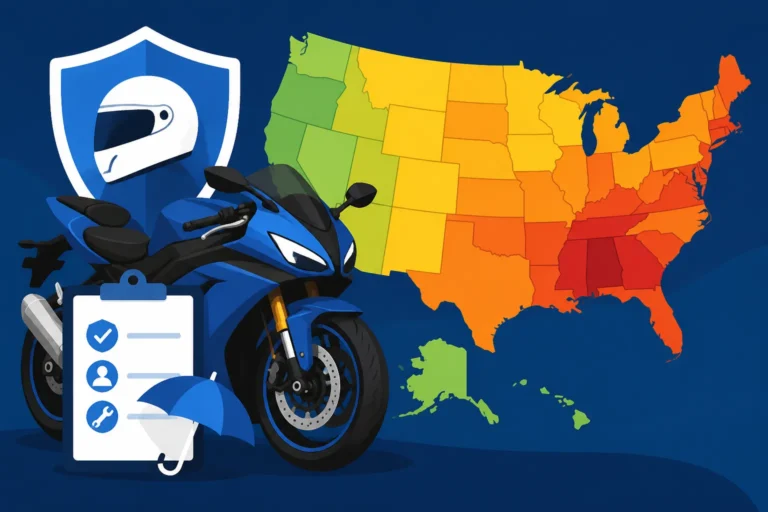
Just like with real estate, where you live and ride makes a massive difference to your insurance rates. It’s not just about the state you're in, though that's a big part of it, as outlined in guides like Average Motorcycle Insurance Cost by State. It's also about your specific zip code.
Consider someone living in a densely populated urban area like Los Angeles versus a rider in a more rural part of Arizona. City dwellers often face higher rates because urban environments generally have more traffic, leading to a greater potential for accidents. Plus, unfortunately, some areas have higher rates of vehicle theft or vandalism, which directly impacts the comprehensive portion of your insurance. Insurers keep detailed statistics on claims by geographic region, so if your neighborhood has a history of higher theft or accident rates, you're going to see that reflected in your premium. Even parking arrangements matter: if your Rebel is garaged securely overnight, you'll often get a better rate than if it's left exposed on a city street. Companies like The Zebra can help you quickly compare quotes from various providers, often highlighting how much your location impacts these numbers.
Your Chosen Coverage Levels
This is where you have a lot of control over your premium, but it's also where many riders get confused. The type and amount of coverage you select are huge cost drivers. You might just want the bare minimum, often called liability-only coverage, which covers damages you cause to others. However, if you have a financed bike, your lender will almost certainly require you to carry full coverage, which adds protection for your own motorcycle against damage or theft.
Choosing to carry What Does Full Coverage Motorcycle Insurance Mean? will always be more expensive than just sticking with the minimum required liability, but it also offers a far greater peace of mind. Let's compare the basics:
| Coverage Type | What It Covers | Impact on Premium | Typical Scenario for Riders |
|---|---|---|---|
| Liability | Damages/injuries you cause to others. | Lower | Required by law; good for riders on older, paid-off bikes. |
| Collision | Damage to your motorcycle from an accident (your fault or not). | Medium | Essential for newer bikes or if you want your bike repaired. |
| Comprehensive | Damage to your motorcycle from non-collision events (theft, vandalism, fire, weather, animal strikes). | Medium | Crucial for all bikes, especially in areas with high theft or bad weather. |
| Uninsured/Underinsured Motorist | Your injuries/damages if hit by a driver with no or insufficient insurance. | Low to Medium | Highly recommended, as many drivers ride without adequate insurance. |
| Medical Payments/PIP | Your medical bills, regardless of fault. | Low | Can be vital, as health insurance might have gaps or high deductibles. |
Each addition or increase in coverage limits will nudge your premium higher. For instance, increasing your Liability Coverage for Motorcycles Explained limits from state minimums (like 25/50/25) to higher amounts (like 100/300/100) will cost more but offers far better protection if you're involved in a serious accident. Similarly, opting for a lower deductible on your collision or comprehensive coverage means you pay less out of pocket if you make a claim, but your premium will be higher. It's a delicate balance between cost and financial protection.
Average Honda Rebel Insurance Costs by State
Okay, let's talk numbers, or at least how numbers vary wildly from one state to another. The cost of insuring a Honda Rebel can differ by hundreds, even thousands, of dollars depending on where you register and ride your bike. States have their own unique legal requirements, population densities, average claim costs, and even weather patterns that influence rates. For instance, a state like Michigan, with its no-fault insurance system, might have different cost structures than a tort state like Texas.
California, a state known for its high cost of living, often sees higher motorcycle insurance premiums due to dense traffic, higher theft rates, and more expensive repair costs. On the flip side, states with lower population densities and fewer traffic incidents, perhaps in the Midwest or certain Southern states, tend to offer more affordable rates. This isn't just about the state’s overall wealth; it's about specific risk factors and regulatory environments.
Here's a look at some estimated average monthly costs for a Honda Rebel in a few diverse states. Keep in mind, these are highly generalized figures for a relatively experienced rider with a clean record and basic full coverage; your exact quote will depend on all the factors we just discussed. For precise figures tailored to your situation, you’d want to use a comparison tool from a provider like The Zebra to get multiple quotes.
| State | Estimated Monthly Premium (Honda Rebel) | Key Influencing Factors |
|---|---|---|
| California | $80 – $150 | High traffic density, higher theft rates, legal costs. |
| Texas | $60 – $110 | Varies greatly by urban/rural areas, moderate accident rates. |
| Florida | $70 – $130 | High population density, year-round riding, hurricane risk. |
| Ohio | $45 – $90 | More moderate accident and theft rates, lower population density in many areas. |
| North Carolina | $50 – $100 | Generally lower cost of living and less traffic density outside major cities. |
These numbers are just a snapshot, but they illustrate the significant variations. Factors like the number of uninsured motorists in a state can also drive up costs, as insurers need to factor in the potential for Uninsured & Underinsured Motorist Coverage UM/UIM claims.
Why Honda Rebels Tend to Be More Affordable to Insure
It’s not just wishful thinking; the Honda Rebel generally enjoys lower insurance premiums compared to many other motorcycle models. This isn't arbitrary; it's rooted in the bike's fundamental design and market positioning.
Engine Size and Performance
When an insurance company assesses a motorcycle, one of the first things they look at is its "power-to-weight ratio" and overall performance capabilities. Sport bikes, with their high horsepower, aggressive riding positions, and often younger demographic of riders, are statistically involved in more high-speed accidents and can be incredibly expensive to repair. Because of this, Sport Bike Insurance Cost Why So High is notoriously higher.
The Honda Rebel, whether it’s the popular 300cc, 500cc, or even the 1100cc model, is categorized as a cruiser. Cruisers, by their very nature, are designed for a more relaxed, comfortable ride. They don't typically encourage the same kind of aggressive riding that a sport bike might. Even the Rebel 1100, while powerful, isn't built for track days and blistering speeds in the same way a superbike is. This translates to a lower perceived risk of severe accidents for insurers, directly contributing to lower premiums. Their engines are often less complex and less expensive to repair after a minor incident compared to the highly tuned engines found in performance bikes. This makes them a more appealing option for riders looking for a balance of style, performance, and reasonable running costs.
Safety Features and Claims History
Beyond just the raw power, the actual claims data for a specific model heavily influences its insurance cost. Honda Rebels have a strong safety record and are generally considered reliable machines. Their comfortable, low-slung riding position makes them easier to handle for a wide range of riders, including beginners, which can contribute to fewer single-vehicle accidents.
Furthermore, compared to flashy sport bikes or high-end touring models, Rebels are often less of a target for theft. While no bike is completely immune to theft, statistics show that certain types and brands of motorcycles are stolen more frequently than others. Insurers track this data meticulously. A bike with a lower theft rate will typically have a lower comprehensive coverage premium. Honda’s reputation for reliability and the Rebel's widespread popularity also mean that parts are generally accessible and repairs are often less costly than for more exotic or limited-production motorcycles. This combination of factors — good handling characteristics, a solid safety record, and less appeal to thieves — helps keep insurance rates for the Honda Rebel quite competitive.
Practical Strategies to Lower Your Honda Rebel Insurance Premiums
Even if the Honda Rebel is already known for being more affordable to insure, there’s still plenty you can do to shave even more off your premium. Every dollar saved on insurance is a dollar more for gas, gear, or your next road trip!
Discounts You Should Ask For
Insurance companies love to reward safe, responsible riders and loyal customers. The trick is, sometimes you have to ask for these discounts, as they aren't always automatically applied. This is where comparing quotes, perhaps using a service like The Zebra, can really highlight which companies offer the best deals for your profile.
- Motorcycle Safety Course Discount: This is probably the biggest no-brainer. Completing an approved motorcycle safety course, like those offered by the Motorcycle Safety Foundation (MSF), not only makes you a safer rider but almost universally qualifies you for a discount. Many insurers offer 10-15% off just for taking a weekend course. It’s an investment in your skills and your wallet! You can learn more about this in How Much Can You Save With Motorcycle Discounts?.
- Multi-Policy/Bundling Discount: If you already have car insurance, homeowner's, or renter's insurance with a company like Progressive or Geico, ask about bundling your motorcycle policy. Combining multiple policies with the same insurer can lead to significant savings across the board.
- Good Rider/Driver Discount: A clean driving record is your best friend. No accidents, no speeding tickets, no violations – this history tells insurers you’re a low-risk individual, and they’ll reward you for it.
- Anti-Theft Device Discount: Installing an alarm system, GPS tracker, or even just using a heavy-duty chain lock can sometimes qualify you for a discount on your comprehensive coverage.
- Pay-in-Full Discount: If you can afford it, paying your annual premium upfront rather than in monthly installments can often save you a small percentage.
- Rider Group/Association Discount: Some insurers offer discounts to members of specific motorcycle clubs or associations, like the Harley Owners Group (HOG) or even certain labor unions. It's always worth checking if your affiliations apply.
Adjusting Your Coverage Wisely
While you don't want to leave yourself exposed to financial ruin, you can make smart choices about your coverage limits and deductibles to find a sweet spot between protection and affordability.
- Raising Your Deductibles: Your deductible is the amount you pay out of pocket before your insurance kicks in for collision or comprehensive claims. If you have, say, a $500 deductible, consider raising it to $1,000 or even $1,500. This will significantly lower your premium because you're taking on more of the initial financial risk. Just make sure you have that deductible amount readily available in savings in case you need to make a claim. This is a common strategy discussed in articles like How to Lower Your Motorcycle Insurance Premium.
- Reviewing Comprehensive and Collision on Older Bikes: If your Honda Rebel is an older model and fully paid off, you might consider dropping collision and comprehensive coverage if the bike's market value is low. For example, if your bike is only worth $2,000, but your annual full coverage premium is $500 with a $500 deductible, you're paying a quarter of the bike's value each year. In such cases, the cost of the premium plus your deductible might nearly equal the bike's value. You’d still want to keep strong liability and uninsured motorist coverage, of course.
- Considering Seasonal Coverage (Lay-Up): If you live in a region with harsh winters and won't be riding your Rebel for several months, some insurers offer a "seasonal lay-up" option. This allows you to temporarily suspend your collision coverage (since you're not riding) while maintaining comprehensive coverage for theft, fire, or other damages while the bike is stored. This can save you money during the off-season.
By actively engaging with your insurance provider and exploring these options, you can tailor your Honda Rebel policy to fit your budget without sacrificing essential protection. Don't be afraid to How to Compare Motorcycle Insurance Quotes from multiple companies every year or two; rates change, and new discounts emerge.
Disclaimer
Please remember that motorcycle insurance information, including costs and requirements, can change rapidly. This article provides general guidance based on current market understanding. Always consult with a licensed insurance professional for personalized advice and the most up-to-date policy details and quotes for your specific situation.