Is Motorcycle Insurance Required in South Carolina?
Riding the open roads of South Carolina on two wheels is an unparalleled experience, from cruising along the coast to exploring the charming inland towns. But before you twist the throttle and feel the wind in your hair, you’ve got to make sure your paperwork is in order, and that often starts with insurance. Many riders worry about the complexities of state laws, especially when it comes to mandatory coverage, and it's a valid concern. Nobody wants to be caught off guard, especially when facing potential fines or legal trouble. This guide will clarify everything you need to know about motorcycle insurance requirements in the Palmetto State, helping you ride legally and with peace of mind.
Navigating South Carolina’s Motorcycle Insurance Laws
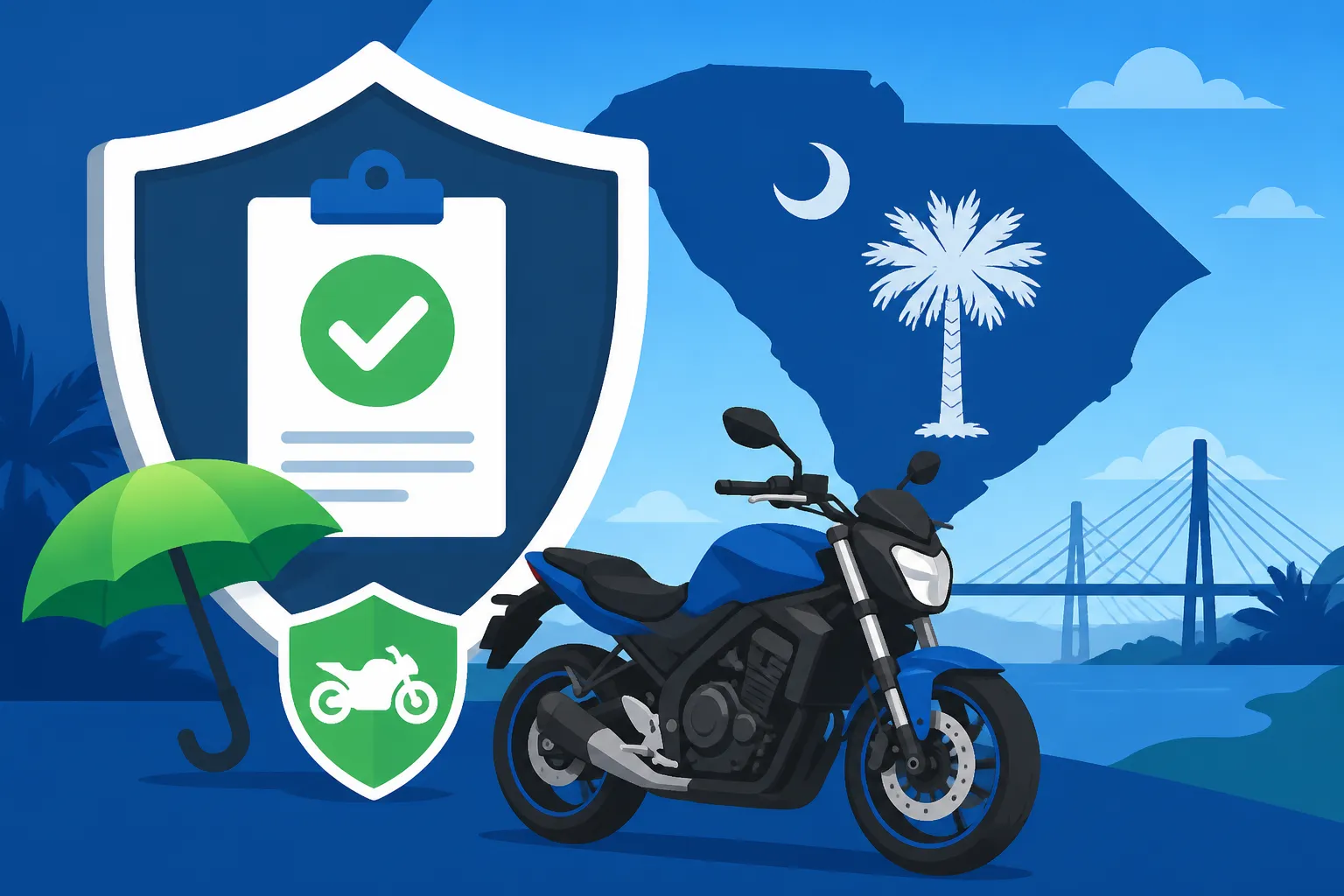
Let's cut right to the chase, because this is the question on every rider's mind: Is motorcycle insurance required in South Carolina? The answer, unequivocally, is yes. South Carolina is one of the many states that mandates motorcycle insurance for anyone operating a motorcycle on public roads. This isn't just about protecting your own bike; it's a fundamental aspect of responsible riding, ensuring that you can cover potential damages or injuries you might cause to others in an accident.
The Mandate: Yes, You Need It!
It's a common misconception among some newer riders, or even those coming from states with different regulations, that motorcycles might operate under a different set of rules than cars when it comes to insurance. Not so in South Carolina. The state views motorcycles just like any other motor vehicle when it comes to financial responsibility. This means that if you're planning on registering and riding your motorcycle in South Carolina, you absolutely must have a valid motorcycle insurance policy in place.
Imagine this scenario: you're enjoying a beautiful Saturday ride through the Lowcountry, perhaps near Charleston, and you get pulled over for a routine traffic stop – maybe a broken tail light or rolling through a stop sign. The first thing that officer will ask for, after your license and registration, is proof of insurance. If you can't provide it, that pleasant ride can quickly turn into a headache of fines, court dates, and potentially even having your bike impounded on the spot. It's not a situation any rider wants to experience, and it's entirely avoidable by simply having the required coverage.
Minimum Liability Coverage Explained
So, we know you need insurance. But what kind of insurance, and how much? South Carolina, like most states, operates under an "at-fault" system for accidents, meaning the person who causes the accident is financially responsible for the damages. Your motorcycle insurance policy, at its most basic level, needs to meet the state's minimum liability requirements. These minimums are usually expressed as a series of three numbers, and for South Carolina, they are 25/50/25.
Let's break down what those numbers really mean, because it's crucial to understand what you're actually covered for with just the minimums.
- $25,000 for bodily injury liability per person: This is the maximum amount your insurance will pay for medical expenses, lost wages, and pain and suffering for one person injured in an accident where you are at fault. If you accidentally cause injuries to another driver or passenger, this is the cap for their individual claims.
- $50,000 for total bodily injury liability per accident: This is the absolute maximum your insurance will pay for all bodily injuries sustained by all people in an accident where you are at fault, regardless of how many people were hurt. So, if you injure three people and their combined medical bills exceed $50,000, you could be on the hook for the difference.
- $25,000 for property damage liability per accident: This is the maximum your insurance will pay for damage you cause to other people's property in an accident where you are at fault. This includes their vehicles, fences, mailboxes, or anything else you might damage.
While these minimums allow you to ride legally, they often don't provide sufficient protection in a serious accident. Imagine you're riding through Myrtle Beach during peak season and, through no fault of your own, swerve to avoid a sudden obstacle, clipping another vehicle. Even a minor fender bender can easily exceed $25,000 in repairs, especially with newer cars packed with technology. And if anyone sustains a significant injury, $25,000 for their medical care can disappear alarmingly fast. This is why many experienced riders will tell you that while the minimums get you legal, they might not truly keep you safe from financial ruin.
Here's a quick look at South Carolina's minimums compared to what many seasoned riders often recommend for better peace of mind:
| Coverage Type | South Carolina Minimum (25/50/25) | Recommended for Better Protection | What it Covers |
|---|---|---|---|
| Bodily Injury Liability (per person) | $25,000 | $50,000 – $100,000 | Your financial responsibility for injuries to one other person if you cause an accident. |
| Bodily Injury Liability (per accident) | $50,000 | $100,000 – $300,000 | Your financial responsibility for injuries to all other people if you cause an accident. |
| Property Damage Liability | $25,000 | $50,000 – $100,000 | Your financial responsibility for damage to other people's property if you cause an accident. |
| Uninsured/Underinsured Motorist | Yes, required (equal to liability) | $50,000 – $100,000 (per person) | Covers your injuries and damages if you're hit by a driver who has no insurance or not enough insurance. |
| Medical Payments/PIP | Optional | Recommended | Covers medical expenses for you and your passengers, regardless of fault. |
| Collision | Optional | Recommended for newer bikes | Covers damage to your own motorcycle from an accident, regardless of fault. |
| Comprehensive | Optional | Recommended for all bikes | Covers damage to your own motorcycle from non-collision events like theft, vandalism, fire, or hitting an animal. |
South Carolina also requires uninsured motorist (UM) and underinsured motorist (UIM) coverage equal to your liability limits. This is a huge benefit for riders, as it protects you if you're involved in an accident with someone who doesn't have enough (or any) insurance. Given how often riders face challenges with other drivers, having robust Uninsured & Underinsured Motorist Coverage (UM/UIM) is absolutely critical.
Understanding the Consequences of Uninsured Riding in South Carolina
I've heard countless stories, seen the regret on riders' faces. Thinking you can save a few bucks by skipping insurance in South Carolina is a gamble with incredibly high stakes, and the house almost always wins. The consequences for riding uninsured aren't just a slap on the wrist; they can be financially devastating and severely impact your ability to ride in the future.
Penalties That Hit Hard
The state of South Carolina takes its financial responsibility laws seriously, and riding without valid motorcycle insurance will quickly land you in a heap of trouble. The penalties are designed to deter uninsured driving, and they certainly do.
First off, if you're caught without insurance, you're looking at fines that can range from a few hundred dollars for a first offense to over a thousand for repeat violations. But it doesn't stop there. Your driving privileges will likely be suspended, meaning you can't legally operate any motor vehicle, not just your motorcycle. This suspension can last for an extended period, making it tough to get to work, run errands, or simply live your life.
Then there's the vehicle registration suspension. Not only will your license be suspended, but your motorcycle's registration will be too. This means your bike is effectively grounded until you get everything sorted out, including obtaining insurance and paying all the associated reinstatement fees. In some cases, your motorcycle could even be impounded on the spot, adding towing and storage fees to your rapidly growing pile of expenses. Just thinking about your beloved bike sitting in an impound lot, accruing fees, is enough to make any rider cringe.
And here’s where it can get even more complicated: if you have repeated offenses or are caught driving without insurance after a suspension, you might be required to file an SR-22 for Motorcycles: When It's Required form. An SR-22 isn't insurance itself, but a certification that your insurance company files with the state to prove you have the minimum required liability coverage. Having an SR-22 requirement almost always means significantly higher insurance premiums for years to come.
The Financial Risk Beyond Legal Fines
Beyond the immediate legal penalties, the true nightmare scenario for an uninsured rider is getting into an accident where they are at fault. Let's paint a picture: you're making a turn on a busy street in Columbia, and you misjudge the distance, causing a collision with an SUV. The SUV sustains significant body damage, and the driver and passenger both suffer whiplash and other injuries requiring immediate medical attention and ongoing therapy.
If you don't have insurance, or only have the bare minimums that are quickly exhausted, you are personally on the hook for everything. We're talking about:
- Tens of thousands of dollars in property damage: Repairing a modern SUV can be incredibly expensive.
- Medical bills that can easily reach six figures: Emergency room visits, doctor appointments, physical therapy, medications – these costs add up at an alarming rate.
- Lost wages for the injured parties: If they can't work due to their injuries, you might be responsible for their income loss.
- Pain and suffering settlements: These can be substantial, especially in cases of long-term injury.
- Your own legal defense costs: Even if you argue fault, you'll need a lawyer.
- Damage to your own motorcycle: Without collision coverage, you'll be paying out of pocket to fix or replace your bike.
Suddenly, that few hundred dollars you "saved" by not having insurance looks incredibly small compared to a potential quarter-million-dollar bill. This isn't fear-mongering; it's the harsh reality of personal financial responsibility under South Carolina law. Many people have had their lives completely upended by such an event, leading to bankruptcy, garnished wages, and years of financial struggle. The cost of proper Motorcycle Insurance Requirements by State (2026 Guide) is a small investment compared to the risk you take by riding uninsured.
Beyond the Basics: Essential Considerations for SC Riders
Okay, so we've established that insurance is a must in South Carolina, and that minimum coverage is just that – a minimum. Now, let's talk about the practicalities of proving your coverage and why it's always a good idea to consider boosting your protection, especially on a motorcycle.
Proof of Insurance and Enforcement
When you get pulled over in South Carolina, or if you're involved in an accident, law enforcement will absolutely ask for proof of insurance. It's not enough to have insurance; you need to be able to prove you have it right then and there.
Most insurance companies provide you with an insurance card, either a physical paper card or an electronic version you can display on your smartphone. Both are generally accepted in South Carolina. However, it's always wise to have a physical copy tucked away in your wallet or saddlebag, just in case your phone battery dies or you're in an area with no signal. You never want to be in a situation where you can't immediately provide proof. For more details on what's accepted, check out our guide on Proof of Insurance: Digital vs Paper for Riders.
The state's Department of Motor Vehicles (DMV) also employs systems to verify insurance coverage electronically. When you register your motorcycle, your insurance company typically reports your coverage to the state. If there's a lapse in your policy, the state may be notified, and you could receive a letter asking for proof of continuous coverage. Ignoring these letters can lead to registration suspension and other penalties, even if you haven't been pulled over. It's a system designed to catch uninsured drivers, and it works.
Why More Than Minimums Matters
As a rider, you're more exposed than someone in a car. There's no metal cage, no airbags, no crumple zones. When something goes wrong, the consequences for you and your bike can be severe. This is why most seasoned riders strongly advocate for carrying more than just the state minimum liability.
Think about additional coverages like:
- Collision Coverage: This pays for damages to your own motorcycle if you're involved in an accident, regardless of who is at fault. Without it, even if you have liability coverage, you'll be paying out-of-pocket to repair or replace your cherished ride.
- Comprehensive Coverage: This is your safety net for non-collision events. Theft, vandalism, fire, hitting a deer, hail damage – these things happen, and comprehensive coverage steps in to cover the costs. If you've got a financed bike, your lender will almost certainly require both collision and comprehensive, essentially mandating what's commonly known as What Does Full Coverage Motorcycle Insurance Mean?.
- Uninsured/Underinsured Motorist (UM/UIM) Coverage: As mentioned, South Carolina mandates this coverage, but seriously consider increasing the limits beyond the minimum. There are far too many uninsured drivers out there. If one of them hits you, your UM/UIM coverage can be the difference between getting proper medical care and vehicle repairs, or being left to deal with the financial aftermath yourself.
- Medical Payments (MedPay): This is a fantastic coverage to have, especially for motorcyclists. MedPay covers your medical expenses and those of your passengers, regardless of who was at fault in the accident. It's a quick way to get immediate medical attention without waiting for fault to be determined.
The peace of mind that comes with knowing you're truly protected far outweighs the slightly higher premium for enhanced coverage. A few extra dollars a month could save you from financial ruin and allow you to focus on getting back on your feet – and back on your bike – after an incident. Protecting yourself, your passengers, and your investment is what smart riding is all about.
Disclaimer
This article is for general informational purposes only and does not constitute professional advice. Laws, prices and regulations vary by location and change over time. Consult a qualified professional for guidance on your specific situation.