Does Motorcycle Insurance Cover Passengers’ Injuries?
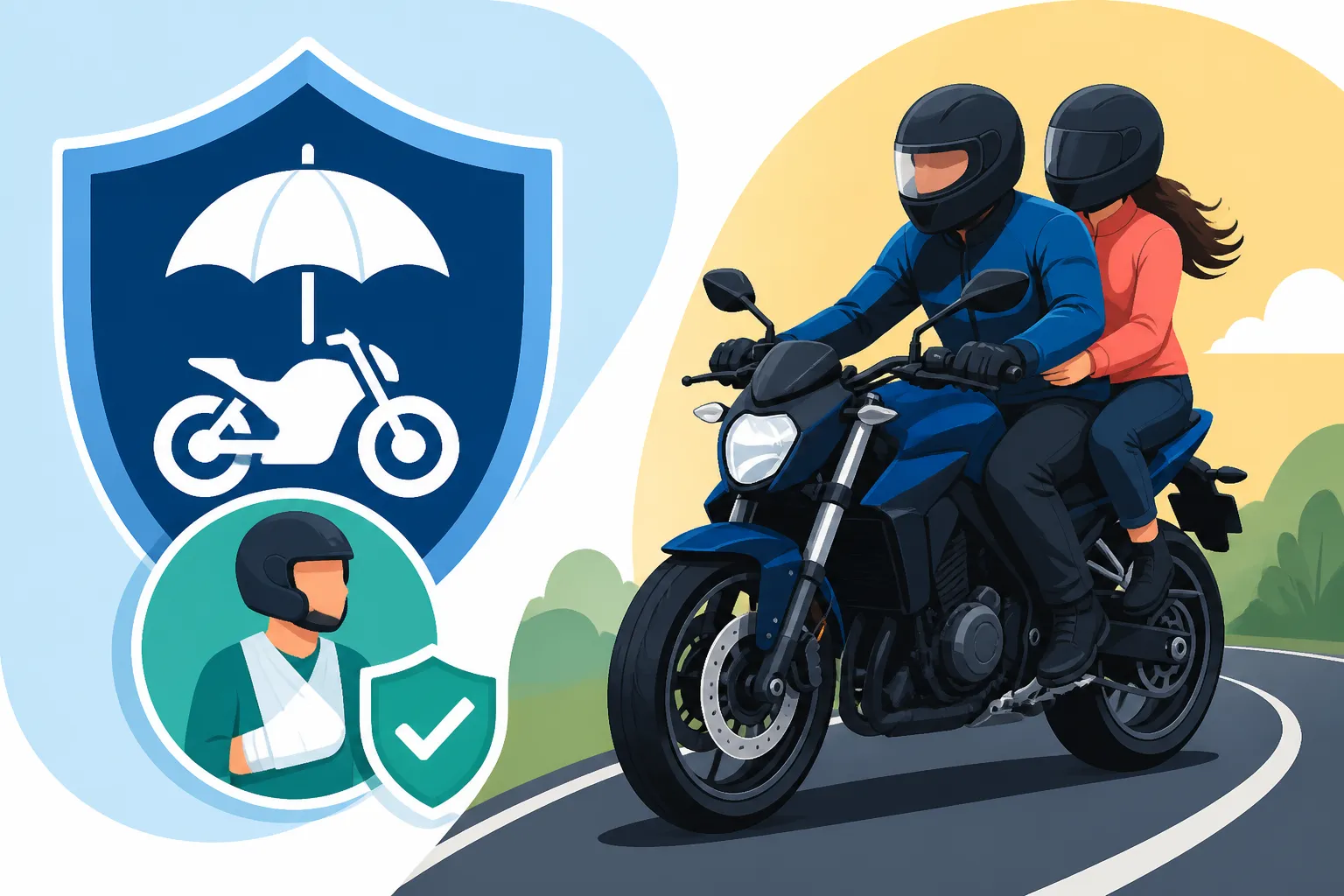
Riding with a passenger on your motorcycle brings a unique kind of joy and shared experience, but it also piles on a significant layer of responsibility and, let's be honest, a fair bit of worry. You’re not just responsible for yourself anymore; you’re carrying someone else’s well-being. A common question that keeps many riders up at night is, "Does my motorcycle insurance actually cover my passenger if we're involved in an accident?" It’s a critical question with answers that aren't always straightforward. This comprehensive guide will break down the complexities of motorcycle insurance and passenger injury coverage, helping you understand how to protect your co-pilot.
Unpacking Passenger Coverage: What Your Policy Might — Or Might Not — Do
When you think about motorcycle insurance, your mind probably jumps to covering your bike, your own medical bills, or damage you cause to others. But when a passenger is involved, the situation shifts. Your insurance policy isn't a one-size-fits-all shield, and how it protects a passenger's injuries can depend heavily on the specific coverages you've purchased and the circumstances of the accident. It's a nuanced area, often leading to confusion and, in unfortunate situations, financial strain if you haven't planned ahead.
The Liability Question: Protecting Others, Including Your Passenger?
Liability coverage is the foundation of almost every motorcycle insurance policy. It’s what pays for bodily injury and property damage you cause to other people if you’re at fault in an accident. But here's where it gets tricky for your passenger: is your passenger considered "another person" in the eyes of your liability coverage? In many states and with many insurance companies, the answer is yes.
If you are at fault for an accident and your passenger is injured, your bodily injury liability coverage would typically step in to cover their medical expenses, lost wages, and other damages up to your policy limits. This is crucial because a passenger can suffer severe injuries, and their medical bills can quickly escalate. Imagine riding through the winding roads of the Great Smoky Mountains, and an unexpected patch of gravel causes you to lay the bike down. If your passenger breaks a leg, your liability coverage would be the primary source for their medical treatment, provided you have adequate limits. Understanding what your liability coverage entails is paramount for any rider, especially those who frequently carry passengers. For a deeper dive, you can explore what exactly is included in your policy by checking out articles like Liability Coverage for Motorcycles Explained.
However, there are nuances. Some policies might have specific exclusions or limitations regarding household members or family members riding as passengers. It’s vital to read your policy documents carefully or speak directly with your insurance provider to clarify how your specific liability coverage applies to a passenger, whether they're a friend, a spouse, or a child.
Medical Payments (MedPay) and Personal Injury Protection (PIP)
Beyond liability, two other types of coverage can be incredibly beneficial for your passenger: Medical Payments (MedPay) and, in some states, Personal Injury Protection (PIP). These coverages are often overlooked but can be a financial lifesaver for all occupants of your motorcycle, regardless of who was at fault for the accident.
Medical Payments coverage, often referred to as MedPay, is designed to pay for reasonable and necessary medical expenses for you and your passengers if you're injured in a motorcycle accident, regardless of fault. This means if you hit a deer on a scenic route in rural Pennsylvania, both you and your passenger's immediate medical costs – emergency room visits, ambulance rides, X-rays – could be covered up to the policy limit. It's an excellent "first responder" for medical bills, often paying out quickly without waiting for fault to be determined. The beauty of MedPay is that it typically covers immediate costs that health insurance might not, or it can cover deductibles and co-pays. It's a no-fault coverage, making it particularly valuable when your passenger needs immediate care. If you're wondering Is Medical Payments Coverage Worth It on a Motorcycle?, the answer is often a resounding yes, especially when carrying others.
Personal Injury Protection (PIP), or "no-fault" insurance, is less common for motorcycles than for cars, but it exists in some no-fault states like Florida or Michigan. PIP is generally more comprehensive than MedPay, covering not only medical expenses but also lost wages and other essential services for both the rider and passenger, regardless of who caused the accident. If you live in a no-fault state, it’s worth investigating if PIP is an available add-on for your motorcycle policy and how it specifically applies to passengers. The state-specific nature of these coverages makes it crucial to understand your local laws. For instance, Motorcycle Insurance Requirements by State (2026 Guide) can give you a broad overview of what's mandated where you ride.
Real-World Scenarios: Who Pays When Your Passenger Gets Hurt?
It's one thing to understand the abstract concepts of insurance, and another to see how they play out in real life. When a passenger is injured in a motorcycle accident, the chain of events and who ultimately pays can vary wildly based on who was at fault, the types of coverage in place, and even where the accident occurred.
Scenario 1: You Are At Fault
This is perhaps the most common scenario for passenger injuries. Let's say you misjudge a turn on a mountain pass in Colorado, causing your bike to go down, and your passenger sustains a concussion and a broken collarbone.
- Your Liability Coverage: As mentioned, your bodily injury liability coverage would typically pay for your passenger's medical bills, lost wages, and pain and suffering, up to your policy limits. This is because you, the rider, were at fault.
- Your MedPay/PIP: If you have Medical Payments or PIP, these coverages would act as a first line of defense, paying for your passenger's immediate medical expenses regardless of fault. This can provide quick access to care without waiting for a liability claim to process.
- Passenger's Own Health Insurance: Your passenger's personal health insurance would also likely cover their medical treatment, possibly with subrogation clauses, meaning their health insurer might seek reimbursement from your liability coverage.
The key here is having sufficient liability limits. If your passenger's injuries are severe and their medical bills exceed your liability limits, you could be personally responsible for the remaining costs. This is why financial responsibility is so important, and choosing adequate limits is a decision that impacts more than just your own wallet.
Scenario 2: Another Driver Is At Fault
Imagine you're cruising through downtown Nashville, and another driver runs a red light and broadsides your motorcycle, injuring both you and your passenger.
- The At-Fault Driver's Liability Coverage: In this situation, the primary source of compensation for your passenger's injuries would be the at-fault driver's bodily injury liability insurance. Their policy should cover your passenger's medical expenses, lost wages, and other damages.
- Your MedPay/PIP: Even if another driver is at fault, your MedPay or PIP can still kick in to cover immediate medical costs for your passenger. This can be incredibly helpful for bridging the gap before the at-fault driver's insurance pays out, which can sometimes take time.
- Your Uninsured/Underinsured Motorist (UM/UIM) Coverage: This is a crucial coverage for motorcycles. If the at-fault driver has no insurance (uninsured) or not enough insurance (underinsured) to cover your passenger's injuries, your UM/UIM bodily injury coverage would step in. This coverage protects you and your passengers when the negligent driver can't. This is why Uninsured & Underinsured Motorist Coverage (UM/UIM) is an indispensable part of a robust motorcycle insurance policy.
Scenario 3: No One Is At Fault (Single-Vehicle Accident)
Sometimes accidents happen without another vehicle involved – hitting an animal, swerving to avoid road debris, or losing control on a gravel patch.
- Your MedPay/PIP: This is where MedPay or PIP really shines. Since there's no other at-fault party's liability insurance to claim against, your MedPay or PIP would be the primary source of coverage for your passenger's medical expenses.
- Your Passenger's Health Insurance: Their health insurance would also be a critical safety net in this scenario.
In this situation, your liability coverage would generally not apply to your passenger, as there's no "other party" to claim against in terms of fault. Comprehensive and Collision coverage protects your bike, but not necessarily human occupants. This highlights the importance of having MedPay or PIP, especially if you ride frequently with a passenger.
Essential Coverages and Smart Choices for Passenger Protection
Navigating the world of motorcycle insurance can feel like trying to read a map with half the roads missing. But when it comes to covering passenger injuries, there are specific types of coverage you absolutely need to consider.
Bodily Injury Liability Coverage
This is your first line of defense for protecting your passenger if you are deemed at fault. It covers the medical bills, lost wages, and pain and suffering of others involved in an accident where you are liable, and this often includes your passenger. The minimum liability limits required by states are usually quite low and may not be enough to cover serious injuries. For example, many states mandate a 25/50/25 minimum, meaning $25,000 for bodily injury per person, $50,000 for bodily injury per accident, and $25,000 for property damage. If your passenger incurs $60,000 in medical bills, your $25,000 per person limit won't cut it, leaving you on the hook for the remaining $35,000. It’s always recommended to carry higher limits than the state minimums to truly protect yourself and your passengers. A quick glance at Minimum Liability Insurance Explained (The Three Numbers) can help clarify these figures.
Medical Payments (MedPay) or Personal Injury Protection (PIP)
These coverages are arguably the most direct way to ensure your passenger’s medical bills are paid, regardless of fault. They are especially critical for single-vehicle accidents or situations where fault is ambiguous. These policies pay out relatively quickly, which is invaluable when someone needs immediate medical attention. When choosing a policy, think about the maximum amount of coverage you'd want if you or your passenger needed emergency surgery. The difference in premiums for higher MedPay limits is often quite small compared to the potential out-of-pocket costs.
Uninsured/Underinsured Motorist (UM/UIM) Coverage
It's a harsh reality that many drivers on the road don't carry enough insurance, or any at all. If an uninsured or underinsured driver causes an accident that injures your passenger, your UM/UIM coverage can step in to cover those costs. This extends to medical bills, lost wages, and other damages that the at-fault driver's insufficient policy can't handle. This coverage is for your protection, and by extension, your passenger's, against the negligence of others.
The Full Picture: What "Full Coverage" Means for Passengers
When riders talk about "full coverage," they usually mean a policy that includes liability, collision, and comprehensive coverage. While collision and comprehensive cover damage to your motorcycle (the former for impact, the latter for non-collision events like theft or vandalism), they don't directly cover human injuries. However, a truly "full coverage" approach, especially for those carrying passengers, should also include robust bodily injury liability, MedPay/PIP, and UM/UIM. Without these, even with collision and comprehensive, your passenger's medical bills might not be adequately addressed. To understand the whole package, you can read more about What Does Full Coverage Motorcycle Insurance Mean?.
Comparing Policies and Getting the Right Fit
Finding the right motorcycle insurance policy that adequately covers your passengers requires careful consideration and a bit of homework. It's not just about finding the cheapest premium; it's about securing peace of mind.
Asking the Right Questions to Your Insurer
When you're shopping for motorcycle insurance, or even reviewing your current policy, don't hesitate to ask specific questions about passenger coverage:
- "Does my bodily injury liability cover my passenger if I'm at fault?"
- "What are the limits for MedPay/PIP, and how do they apply to my passenger?"
- "How does my Uninsured/Underinsured Motorist coverage protect my passenger?"
- "Are there any exclusions for specific types of passengers (e.g., family members)?"
These direct questions will help clarify the specifics of your policy and identify any gaps in coverage that you might need to address. Reputable companies like Progressive, Geico, and Dairyland generally offer comprehensive options for passenger coverage, but the specifics can vary by state and individual policy. Comparison tools, like those offered by The Zebra, can be incredibly helpful in seeing what different carriers offer side-by-side.
Shopping Around and Comparing Quotes
The cost and extent of coverage for passenger injuries can vary significantly between insurance providers. It pays to shop around and get multiple quotes. Websites like The Zebra allow you to input your information once and receive multiple quotes from different carriers, making it easier to compare not just prices, but also the specific coverage details. Look for policies that offer higher liability limits, robust MedPay/PIP, and strong UM/UIM options, especially if you regularly ride with someone on the back. While finding How to Get Cheap Motorcycle Insurance is a goal for many, don't sacrifice essential passenger protection for a slightly lower premium.
Reviewing Your Policy Regularly
Your life changes, and so should your insurance. If you start riding with a passenger more frequently, or if your financial situation changes (perhaps you now have more assets to protect), it's a good time to review your policy. An annual check-up with your insurance agent is a great habit to ensure your coverage still meets your needs. This is also a good opportunity to ask about any new discounts or coverage options that might have become available.
Proactive Steps for Passenger Safety Beyond Insurance
While insurance is a crucial safety net, prevention is always the best policy. As the rider, you are directly responsible for the safety of your passenger.
Pre-Ride Briefing and Communication
Before you even pull out of the driveway, have a brief chat with your passenger, especially if they’re new to riding. Explain basic hand signals, how to lean with the bike, where to hold on, and the importance of not making sudden movements. Good communication before and during the ride significantly reduces risks.
Proper Gear is Non-Negotiable
Just as you wear appropriate gear, your passenger should too. This includes a DOT-approved helmet, a sturdy jacket, gloves, long pants, and over-the-ankle boots. Investing in quality gear for both of you isn't just about comfort; it's about minimizing injury in case of an accident. While some policies offer Does Motorcycle Insurance Cover Riding Gear?, the best protection is preventing the injury in the first place.
Ride Responsibly
This goes without saying, but it's even more critical when you have a passenger. Adjust your riding style – smoother acceleration, gentler braking, and wider turns. Maintain a safer following distance and be extra vigilant, as the added weight of a passenger changes the bike's dynamics. Remember, even minor incidents can lead to significant injuries for a passenger if they're not prepared or protected.
Table: Passenger Coverage Options at a Glance
To help consolidate this information, here's a quick reference table outlining how various coverage types typically relate to passenger injuries:
| Coverage Type | What It Covers Generally | Applies to Passenger Injuries? | Key Scenarios |
|---|---|---|---|
| Bodily Injury Liability | Injuries you cause to others | Yes (if you are at fault) | You are at fault for an accident; passenger is injured. |
| Medical Payments (MedPay) | Medical bills for you & passengers (regardless of fault) | Yes (up to policy limits) | Single-vehicle accident, immediate medical costs, deductibles for health insurance. |
| Personal Injury Protection (PIP) | Medical bills, lost wages, etc. for you & passengers (no-fault states) | Yes (up to policy limits) | Same as MedPay, but broader scope, primarily in no-fault states like Florida. |
| Uninsured/Underinsured Motorist | Injuries to you & passengers caused by uninsured/underinsured drivers | Yes (up to policy limits) | At-fault driver has no or insufficient insurance; your passenger is injured. |
| Collision | Damage to your motorcycle from an accident | No | Damage to your bike from hitting another vehicle or object. |
| Comprehensive | Damage to your motorcycle from non-collision events | No | Theft, vandalism, fire, hitting an animal. |
This table provides a generalized overview. Always check your specific policy details with your insurance provider.
The responsibility of carrying a passenger on your motorcycle is immense, and ensuring they are adequately covered in case of an accident is a critical part of that responsibility. By understanding the different types of motorcycle insurance coverage, asking the right questions, and proactively seeking out comprehensive options, you can ride with confidence, knowing you've done your best to protect everyone on your bike. Don't leave your passenger's well-being to chance; invest in the right protection.
Disclaimer
Please remember that insurance policies and state laws can vary greatly. The information provided in this article is for general informational purposes only and does not constitute professional insurance advice. You should always consult with a licensed insurance agent or review your specific policy documents to understand your coverage options and limitations.