SR-22 Motorcycle Insurance Requirements in Florida
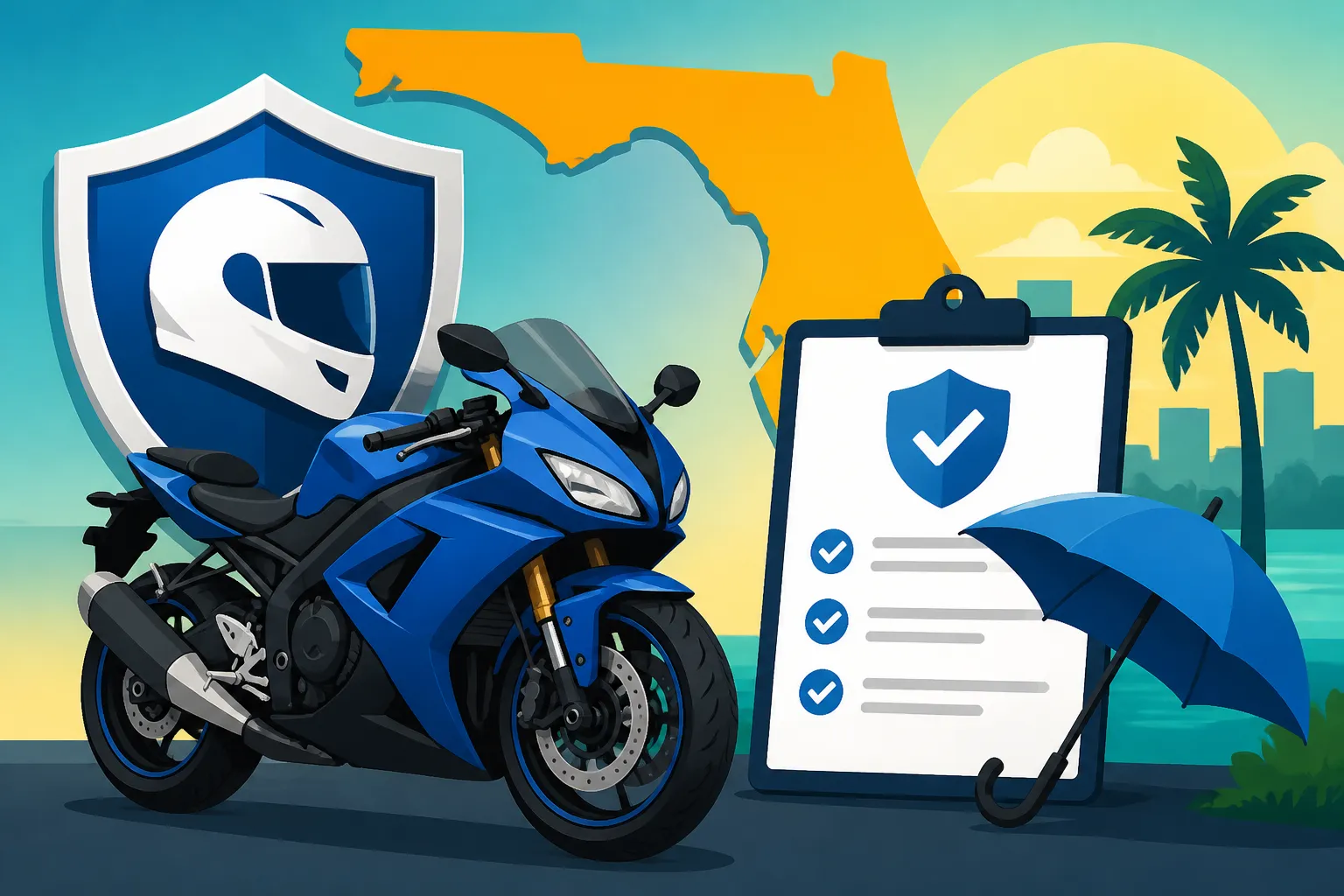
Getting hit with an SR-22 requirement can feel like a punch to the gut, especially when you're just trying to enjoy the open roads of Florida on your motorcycle. It's often confusing, stressful, and leaves many riders wondering what exactly an SR-22 is, how they ended up needing one, and how to navigate the whole process without breaking the bank or losing their riding privileges. This guide is here to demystify Florida's SR-22 requirements for motorcycle insurance, helping you understand the steps to get back on track.
Understanding SR-22 Insurance in the Sunshine State
When the Florida Department of Highway Safety and Motor Vehicles (FLHSMV) demands an SR-22, it's not actually a special type of insurance policy you're buying. This is one of the biggest misconceptions out there, and it's completely understandable why people get confused. Instead, an SR-22 is simply a certificate, a document filed by your insurance company with the state, proving that you have met Florida's minimum liability insurance requirements. It's essentially a guarantee to the state that you're carrying the proper coverage and that they'll be notified if your policy lapses or is canceled.
What an SR-22 Filing Really Means
Think of the SR-22 as a formal "I promise" from your insurance provider to the state of Florida. After certain violations, the state wants to ensure that you, as a rider, are financially responsible and can cover potential damages or injuries you might cause in an accident. They want a constant assurance that you're insured. That's where the SR-22 comes in. Your insurance company files this form, often electronically, directly with the FLHSMV. This certificate remains on file for a specified period, typically three years from the date of your suspension or conviction, though it can vary based on the specific violation. If you let your coverage lapse during this time, your insurance company is legally obligated to inform the state, which will lead to immediate re-suspension of your license and registration, piling on more headaches.
Florida’s Financial Responsibility Law and SR-22
Florida operates under a Financial Responsibility Law, which means that all drivers and riders must be able to prove they can cover damages if they cause an accident. While many states enforce this through mandatory bodily injury liability insurance for all drivers, Florida's standard requirements are a bit unique. For a regular vehicle, you mainly need Personal Injury Protection (PIP) and Property Damage Liability (PDL). However, for motorcycles, it's different. If you cause an accident in Florida, and you don't have the appropriate bodily injury liability insurance at the time, or if you're cited for certain serious offenses, the state will then require you to file an SR-22.
This means that for motorcycle riders, the SR-22 requirement isn't always about a typical auto insurance policy. Instead, it's often triggered when you've been in an accident where you were at fault and caused injury or significant property damage, and you didn't have adequate coverage at the time. Or, more commonly, it’s a consequence of major traffic infractions. This distinction is crucial because it highlights that the SR-22 isn't just a hurdle; it's a direct response to a past lapse in demonstrating financial responsibility. For a deeper dive into general state rules, you can check out our article on Motorcycle Insurance Requirements by State (2026 Guide).
How Riders End Up Needing an SR-22 in Florida
It's never a pleasant surprise to find out you need an SR-22. Usually, it comes after a significant incident or a series of infractions that signal to the state that you're a higher risk on the road. Understanding the common triggers can help you avoid them in the future or prepare for the process if you're already facing the requirement.
Common Offenses That Trigger an SR-22
The list of violations that can land you an SR-22 requirement in Florida is pretty clear-cut, and they almost always involve serious traffic offenses or situations where you failed to meet financial responsibility.
- DUI (Driving Under the Influence) Convictions: This is, without a doubt, one of the most common reasons. A DUI conviction automatically flags you as a high-risk driver, and the state will demand an SR-22 filing before you can get your license reinstated. The FLHSMV takes DUI seriously, and proving financial responsibility is a key step in getting your riding privileges back. Our guide on Motorcycle Insurance Cost With a DUI can give you more insight into the financial repercussions.
- Driving Without Insurance: If you're caught riding your motorcycle without the legally required insurance, especially if it leads to an accident, you're almost certainly going to face an SR-22 requirement. Florida's Financial Responsibility Law is designed to prevent uninsured motorists from leaving accident victims with unpaid medical bills or property damage. If you're ever wondering, "Is it illegal to ride a motorcycle without insurance?" the answer is a resounding yes, and the penalties can be severe.
- Accumulation of Too Many Traffic Infractions: While a single minor speeding ticket might not trigger an SR-22, accumulating a pattern of multiple violations within a short period can. Points on your license add up, and if you hit a certain threshold (often leading to habitual traffic offender status or repeated suspensions), the state might mandate an SR-22 to ensure you maintain coverage moving forward.
- Unsatisfied Judgments from Accidents: If you cause an accident and are unable to pay for the damages or injuries out-of-pocket, and a court issues a judgment against you, an SR-22 will be required until that judgment is satisfied and to prevent future uninsured incidents.
- Serious Reckless Driving Charges: Actions like reckless driving, street racing, or other extremely dangerous maneuvers that result in substantial property damage or injury can also lead to an SR-22 order. The state views these as behaviors indicating a high risk, and they want proof you're financially covered.
The Duration of the SR-22 Requirement
Typically, in Florida, you'll need to maintain your SR-22 filing for a continuous period of three years. This three-year clock usually starts from the date your license suspension is reinstated, not from the date of the violation itself. It's crucial to understand this distinction because many people mistakenly believe the clock starts earlier. If your policy lapses or is canceled at any point during this three-year period, your insurance company will notify the FLHSMV. This immediately triggers a re-suspension of your driving privileges, and the three-year clock often resets or extends, making it an even longer and more frustrating ordeal. This is why consistent, uninterrupted coverage is absolutely vital when you have an SR-22. For more general information on this topic, consider reading our comprehensive guide on SR-22 & FR-44 After a Violation: Rider's Guide.
The Nitty-Gritty of Getting and Maintaining SR-22 Coverage
Once you know an SR-22 is required, the next step is actually securing the insurance that comes with it. This process can be a little different from your typical insurance shopping experience, and it's important to be prepared for what's ahead.
Finding an Insurance Provider for SR-22
Not all insurance companies are willing to file an SR-22 for you, especially if they specialize in low-risk drivers. The good news is that many major carriers, like Progressive, and specialized insurers do offer SR-22 filings. Your best bet is to reach out to insurance providers directly and be upfront about your need for an SR-22. Don't try to hide it; transparency will save you time and hassle. You'll likely need to speak with an agent who understands high-risk policies.
When you're shopping around, it's wise to get several quotes. This is where tools like The Zebra can be incredibly helpful. Comparison sites can give you a quick overview of what different companies are offering and help you identify insurers that work with high-risk policies. Remember, your rates will almost certainly be higher than they were before your violation, so comparing options is key to finding the most affordable coverage available to you. Don't be discouraged by the initial quotes; explore all your options. Our guide on Best Motorcycle Insurance for SR-22/High-Risk offers further advice on finding appropriate coverage.
Here's a breakdown of common SR-22 triggers and their typical impact:
| Violation Type | Typical SR-22 Filing Period (FL) | Impact on Insurance Rates | Key Considerations |
|---|---|---|---|
| DUI/DWI Conviction | 3 years | Significant increase | May require specialized "high-risk" insurance. |
| Driving Without Insurance | 3 years | Moderate to significant | Proof of prior lack of insurance is a red flag. |
| Multiple Traffic Violations | 3 years (if severe enough) | Moderate increase | Number and severity of tickets matter. |
| Unsatisfied Accident Judgment | Until judgment is satisfied + 3 yrs | Significant increase | Often tied to inability to pay prior damages. |
| Reckless Driving Conviction | 3 years | Significant increase | Demonstrates high-risk driving behavior. |
Note: The filing period typically starts from the date of license reinstatement, not the violation itself.
The Application Process and What to Expect
Once you've found an insurer, the application process will largely mirror a standard motorcycle insurance application, but with a few critical differences. You'll need to provide all your personal information, details about your motorcycle (make, model, VIN), and your riding history. The main difference is that you'll clearly state your requirement for an SR-22 filing. The insurance company will then process your application, and if approved, they will file the SR-22 form electronically with the FLHSMV on your behalf. You usually won't receive a physical copy of the SR-22 form itself; instead, you'll get confirmation from your insurer that it has been filed. The state will also notify you once your SR-22 is on file and your license has been reinstated, allowing you to ride legally again.
It's vital to ensure that the coverage you purchase meets Florida's minimum liability requirements, which, for motorcycles requiring an SR-22, will typically be higher than just the standard PDL. The minimums often cited are 10/20/10: $10,000 for bodily injury liability per person, $20,000 for bodily injury liability per accident, and $10,000 for property damage liability. Make sure your policy explicitly covers these amounts.
Maintaining Continuous Coverage
This cannot be stressed enough: you must maintain continuous coverage for the entire duration of your SR-22 requirement. If your policy lapses for even a single day, your insurance company will immediately inform the FLHSMV. When this happens, your license and registration will be suspended again, and you'll have to start the reinstatement process from scratch, including potentially resetting the three-year SR-22 clock. This means more fees, more hassle, and a longer period of high insurance rates.
To avoid this, set up automatic payments, mark your renewal dates on your calendar, and communicate proactively with your insurer if you foresee any issues. If you decide to switch insurance companies, ensure there is absolutely no gap in coverage between your old policy ending and your new one beginning. Your new insurer must file a new SR-22 immediately upon policy inception to avoid any lapse.
Navigating Life After an SR-22 Requirement
The good news is that the SR-22 requirement isn't forever. There is a light at the end of the tunnel, but getting there requires vigilance and understanding what comes next.
When Your SR-22 Period Ends
Once you've maintained continuous SR-22 coverage for the required three years (or longer, depending on your specific situation), your insurance company will stop filing the SR-22 form with the state. You won't receive a special "SR-22 free" certificate; instead, your insurer simply ceases the filing. It's a good idea to confirm with both your insurance company and the FLHSMV that your SR-22 requirement has indeed been fulfilled. This confirmation can save you headaches down the line if there's any discrepancy. Our article on How to Cancel SR-22 When It's No Longer Required provides specific steps for this.
At this point, you're no longer considered a "high-risk" driver by the state in the same way, at least concerning the SR-22. This is a huge milestone!
Impact on Future Insurance Rates
While the SR-22 requirement itself ends, the violations that led to the SR-22 will likely remain on your driving record for a longer period. For example, a DUI conviction can impact your rates for five to ten years, depending on the insurer and state regulations. However, once the SR-22 filing is no longer required, you can expect to see a noticeable decrease in your insurance premiums. The removal of the SR-22 itself, which signals to insurers that you are no longer under direct state monitoring for financial responsibility, removes a significant surcharge.
This is an excellent time to shop around for new motorcycle insurance quotes. With the SR-22 off your back, you'll likely find more competitive rates. Contact different providers, including those you might have used before, and compare what they offer. Your driving record will still play a role, but without the SR-22, you're in a much better position to secure more affordable coverage. Remember to ask about discounts for which you might now qualify, such as those for experienced riders, motorcycle safety courses, or bundling policies. For a deeper understanding of general cost factors, read What Affects Your Motorcycle Insurance Rate?.
Avoiding Future SR-22 Requirements
The best way to deal with an SR-22 is to never need one again! This means committing to safe riding practices and always maintaining continuous, adequate motorcycle insurance coverage.
- Ride Responsibly: Adhere to all traffic laws, avoid impaired driving, and practice defensive riding techniques. Florida roads can be beautiful, but they demand your full attention.
- Maintain Your Motorcycle: Keep your bike in good working order to prevent mechanical issues that could contribute to an accident.
- Stay Insured: Always keep your motorcycle insurance active and make sure your coverage limits are sufficient for Florida's financial responsibility laws. Even if you're storing your bike for winter, consider maintaining comprehensive-only coverage to protect against theft or other non-riding incidents.
- Understand Your Policy: Know what your policy covers and what it doesn't. If you're not sure, ask your agent. Being informed is your best defense against unexpected financial burdens.
- Check Your Record: Periodically check your driving record with the FLHSMV to ensure there are no errors and that all requirements have been properly noted.
Taking these steps ensures you can continue to enjoy the freedom of riding your motorcycle through Florida, with peace of mind knowing your insurance is in order and you're fulfilling your responsibilities as a rider.
Disclaimer
This article is for general informational purposes only and does not constitute professional advice. Laws, prices and regulations vary by location and change over time. Consult a qualified professional for guidance on your specific situation.