How Much Does Motorcycle Insurance Go Down at 25?
If you're under 25 and riding, you probably know the sting of high insurance premiums all too well. It feels like you're paying an arm and a leg just to legally enjoy your bike, and you've likely heard the magic number "25" whispered as the age when things finally get better. But how much does motorcycle insurance really go down at 25? This guide will dive deep into the factors influencing rates and what you can genuinely expect when you hit that milestone birthday.
The Age Factor: Why 25 is a Game-Changer for Motorcycle Insurance
It’s no secret that age plays a huge role in how much you pay for motorcycle insurance. For riders, turning 25 is often seen as a significant financial checkpoint, and there's a good reason for this perception. Insurers, based on extensive actuarial data, categorize drivers and riders under 25 as higher risk. This isn't just about a number; it's rooted in statistical realities and perceived risk factors that are often, unfortunately, true.
Understanding the Under-25 Risk Perception
Insurance companies operate on risk assessment. When you're under 25, especially if you're a new rider, the data suggests you're statistically more likely to be involved in an accident. This isn't a personal judgment on your riding skills, but a cold, hard fact from years of claims data. Younger riders often have less on-road experience, might be more prone to impulsive decisions, and may not have fully developed hazard perception skills that come with years of riding. Think about it: a 19-year-old with a brand-new sport bike is seen as a much higher risk than a 45-year-old with decades of riding experience on a touring cruiser. This age bracket is also typically associated with a higher incidence of traffic violations, which further inflates premiums. The companies aren't trying to punish you; they're trying to balance their books against potential payouts.
The Gradual Shift at 25 and Beyond
While "25" often feels like a switch flips and your rates magically plummet, it's usually more of a gradual reduction. As you approach and pass 25, you enter a demographic that insurers generally view as more mature and experienced. You're statistically less likely to be involved in serious accidents, and your driving record has had more time to mature and ideally, remain clean. This perception of reduced risk directly translates into lower premiums. You might not see a dramatic 50% drop overnight, but you will definitely notice a favorable trend. The steepest reductions usually occur between the ages of 18 and 25, with rates continuing to decrease, albeit more slowly, into your 30s and 40s, provided your driving record stays clean.
For instance, a 23-year-old rider in Phoenix, Arizona, might be paying upwards of $1,500 to $2,500 annually for a sport bike with full coverage, while that same rider at 25 could see that drop to $1,000 to $1,800, depending on all the other factors we'll discuss. It's not just about your birth certificate; it's also about the accumulated years of responsible riding and driving that often come with those extra candles on the cake.
Beyond Your Birthday: Factors That Truly Influence Your Motorcycle Insurance Rate
While turning 25 is definitely something to look forward to for your wallet, it’s crucial to understand that it’s not the only factor influencing your motorcycle insurance costs. Many other elements play a significant role in determining how much you’ll pay, and some of these you can control. Ignoring these other aspects means you might not see the full potential savings, even after your 25th birthday.
Your Riding Experience and Driving Record
This is perhaps the biggest one, even more so than age once you're past the initial high-risk years. A clean driving record, free of tickets, accidents, or claims, is gold to insurance companies. Every year you ride without incident builds your profile as a responsible, low-risk rider. Conversely, even a minor speeding ticket or a fender bender can significantly inflate your premiums, overshadowing any savings you might gain from hitting the 25-year mark. Insurance companies consider your overall driving history, not just your motorcycle-specific incidents. If you have a car accident on your record, that can impact your motorcycle rates too. This is why it's so important to be extra vigilant on the road. For more on this, you might want to read our guide on what affects your motorcycle insurance rate.
The Type of Motorcycle You Ride
Let's be real, the bike you choose has a massive impact. A high-performance sport bike, like a Yamaha R1 or a Ducati Panigale, is inherently more expensive to insure than a more sedate cruiser, like a Honda Rebel or an Indian Scout. Why? Because sport bikes are associated with higher speeds, more aggressive riding, and, unfortunately, higher accident rates and repair costs. If you're riding a powerful machine, especially one with a large engine size (CC), insurers will factor that into your premium. Even if you turn 25, maintaining a sport bike will still likely cost you more in insurance than if you were riding a touring model. The value of the bike itself, including any custom parts or modifications, also plays a role in how much you're asked to pay for comprehensive and collision coverage.
Where You Live and Where Your Bike is Stored
Your geographic location, right down to your specific zip code, can significantly affect your insurance rates. If you live in a densely populated urban area with higher traffic congestion, higher rates of theft, or more reported accidents, your premiums will naturally be higher than someone living in a rural area. For example, a rider in downtown Los Angeles or Miami will almost certainly pay more than a rider in a small town in Idaho.
Furthermore, how and where you store your motorcycle also matters. If you keep your bike garaged overnight, especially in a secure, locked garage, you're seen as less of a theft risk compared to someone who parks their motorcycle on the street. Insurers often offer discounts for secure storage options.
Your Chosen Coverage Levels and Deductibles
This is where you have direct control over your costs. The more coverage you opt for – full coverage versus liability-only, higher liability limits, or extra add-ons like roadside assistance or custom parts coverage – the higher your premium will be. Similarly, your deductible choice impacts your rate. A higher deductible (the amount you pay out of pocket before insurance kicks in) typically results in a lower premium, and vice-versa. It’s a trade-off: save money upfront but potentially pay more if you have a claim. Consider what types of motorcycle insurance coverage explained would best suit your needs and budget.
When you're comparing policies, whether you're 23 or 25, remember to adjust these factors to see how they impact your quotes. Tools like The Zebra can be incredibly helpful here, allowing you to easily compare different coverage scenarios from multiple providers side-by-side, giving you a transparent view of how these choices affect your bottom line.
How Much Can You Actually Save at 25? Realistic Expectations
It's easy to get swept up in the dream of massively reduced motorcycle insurance rates the moment you blow out 25 candles. While savings are definitely on the horizon for many riders, it's important to set realistic expectations. The exact amount your premium will decrease is highly individualized and depends on a confluence of factors beyond just your age.
Expecting a Reduction, Not a Revelation
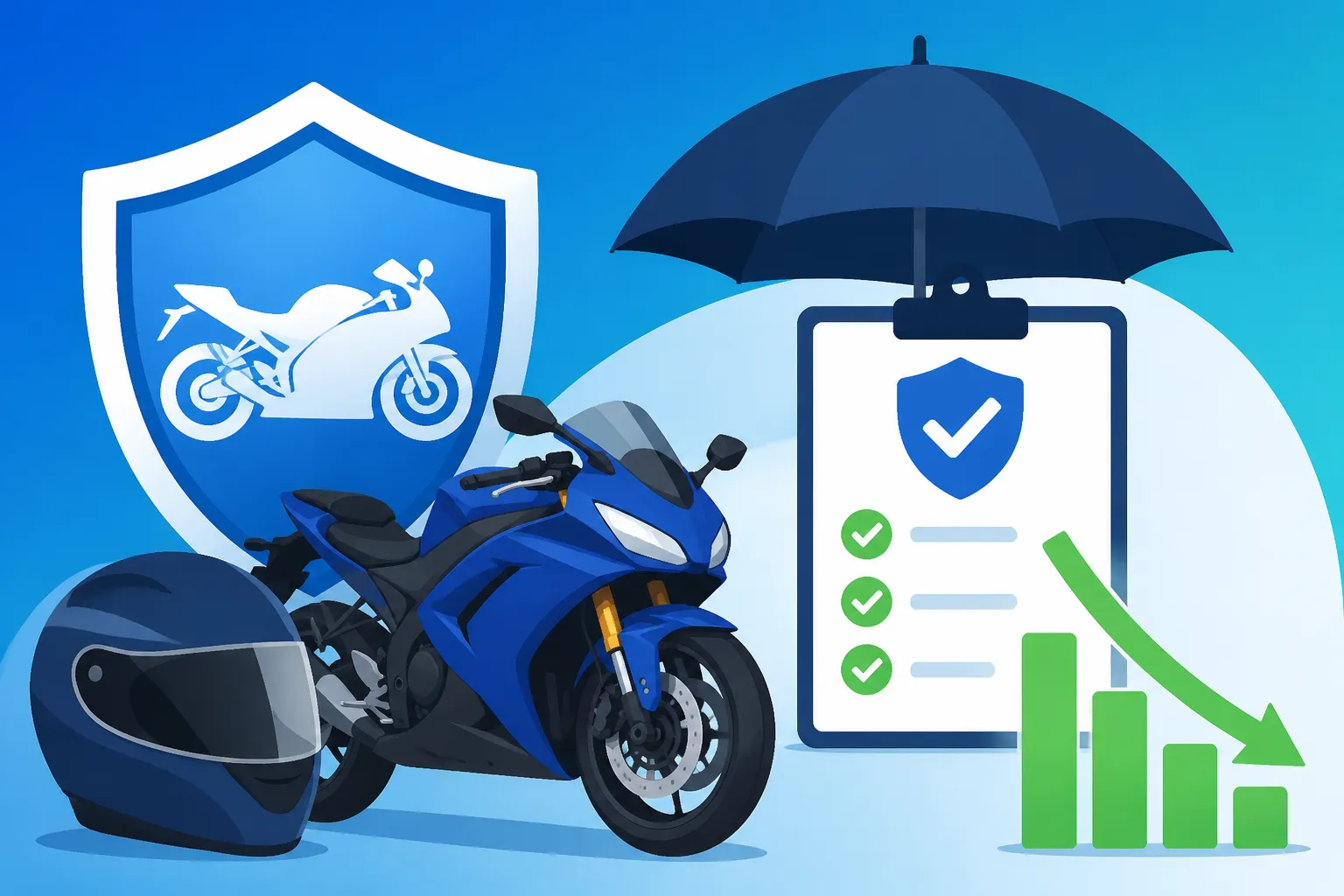
For many riders, turning 25 marks the point where insurance companies begin to view you as a statistically less risky individual. The good news is, yes, your rates are likely to go down. The average reduction for many riders moving from their early 20s to age 25 can range anywhere from 10% to 25%. However, this isn't a hard and fast rule. For someone with a spotless record, a basic cruiser, and a rural address, the drop might be more noticeable. For a rider with a few speeding tickets, a high-performance sport bike, and an urban address, the reduction might be less dramatic, but still present.
Imagine a rider named Sarah. At 23, she's riding a 600cc sport bike in a suburban area of Florida. She's got a clean record but still pays around $1,800 a year for full coverage. When she turns 25, assuming her record remains clean and she keeps the same bike, her premium might drop to closer to $1,400-$1,500. That's a solid saving, but it's not cutting her bill in half. This is where researching your specific state's average motorcycle insurance cost by state can provide a more localized benchmark.
The Role of Your Personal Profile
Your personal risk profile is constantly being evaluated by insurers. If you had a minor accident at 24, that incident will likely carry more weight than the positive impact of turning 25. Similarly, if you upgraded from a modest 250cc beginner bike to a liter-class superbike right after your birthday, the increase in risk from the new bike might offset any age-related savings.
Here's a simplified look at how age, combined with other factors, might influence rates. These are purely illustrative and actual rates will vary wildly based on location, specific insurer, bike model, and more.
| Factor | Rider Age 23 (Estimated Annual Premium) | Rider Age 25 (Estimated Annual Premium) |
|---|---|---|
| Sport Bike (600cc) | $1,800 – $2,500 | $1,400 – $2,000 |
| Cruiser (883cc) | $1,000 – $1,600 | $800 – $1,300 |
| Touring Bike (1200cc) | $900 – $1,400 | $750 – $1,200 |
| Clean Record | Lower end of range | Lower end of range |
| Minor Infraction | Higher end of range | Mid to higher end of range |
It's also worth noting that while 25 is a key age, the benefits of age-related discounts continue to accumulate. Riders in their 30s, 40s, and 50s typically enjoy the lowest premiums, assuming a consistent history of safe riding. For a detailed breakdown, you might want to look into Motorcycle Insurance Cost by Age.
Smart Strategies to Maximize Your Savings (Before & After 25)
You don't have to wait until your 25th birthday to start chipping away at those premiums, and you definitely shouldn't stop trying to save afterward. There are plenty of proactive steps you can take to keep your motorcycle insurance costs as low as possible. Being smart about your choices can lead to significant savings over time.
Complete a Motorcycle Safety Course
This is one of the most effective ways to show insurers you're serious about safety, regardless of your age. Completing an approved motorcycle safety course, like those offered by the Motorcycle Safety Foundation (MSF), not only sharpens your riding skills but often qualifies you for a discount of 5% to 15% on your premiums. This discount isn't just for new riders; even seasoned veterans can take an advanced course for a refresher and potentially snag a discount. For more information, check out our article on whether a motorcycle safety course lowers insurance. It’s a win-win: you become a safer rider, and you save money.
Take Advantage of All Available Discounts
Insurance companies offer a surprising number of discounts, and it's your job to find out which ones you qualify for. Don't be shy about asking your agent or checking online. Here are some common ones:
- Multi-Policy/Bundling Discount: If you insure your car, home, or other vehicles with the same provider, you can often get a significant discount on your motorcycle policy. Many riders find that bundling motorcycle and auto insurance is worth it.
- Multi-Bike Discount: Got more than one bike? Insuring them all with the same company can lead to savings.
- Good Rider/Safe Driver Discount: A clean driving record for a certain number of years (often three or five) can earn you a discount.
- Anti-Theft Device Discount: Installing an alarm system, GPS tracker, or even just keeping your bike locked in a secure garage can reduce your premium.
- Homeowner Discount: Owning a home often signals stability to insurers, leading to a discount.
- Association Discounts: Being part of a motorcycle club (like H.O.G. for Harley-Davidson owners) or certain professional organizations might qualify you.
- Paid-in-Full Discount: Paying your annual premium upfront instead of in monthly installments can sometimes save you a few percentage points.
Make sure you're asking about all the motorcycle insurance discounts you're missing. Every little bit adds up!
Shop Around and Compare Quotes Regularly
This cannot be stressed enough: always shop around. Insurance rates are not static, and what might be the cheapest option for you one year could be more expensive the next. Your rates can change based on market conditions, the insurer's risk algorithms, and your personal profile. Get quotes from several different providers, not just the big names. Sometimes, smaller, specialized motorcycle insurers like Dairyland or Markel can offer incredibly competitive rates, especially for certain rider types or bikes.
It’s a good idea to compare motorcycle insurance quotes at least once a year, or whenever you have a significant life event like moving, buying a new bike, or celebrating a birthday like your 25th. Online comparison tools, such as those provided by The Zebra, are fantastic for this, allowing you to input your information once and get multiple quotes quickly, making the comparison process much less of a headache. Don't just settle for your current provider's renewal offer without checking the market.
Adjust Your Coverage and Deductibles Strategically
Review your policy annually to ensure your coverage still aligns with your needs and the value of your bike. If your motorcycle is older and its market value has significantly depreciated, you might consider adjusting your collision and comprehensive coverage or increasing your deductibles. While full coverage motorcycle insurance is essential for newer or financed bikes, it might not be the most economical choice for an older, paid-off motorcycle.
Increasing your deductible from, say, $500 to $1,000 can reduce your premium, but remember that you'll have to pay that higher amount out of pocket if you make a claim. Only do this if you have a comfortable emergency fund to cover it. Understanding your minimum liability insurance explained (the three numbers) is also critical, as state minimums often aren't enough to fully protect you in a serious accident.
By proactively managing these factors, you can significantly influence how much your motorcycle insurance costs, both before and after you hit that magic number of 25.
Disclaimer
The information provided in this article is for general informational purposes only and does not constitute financial, legal, or insurance advice. Motorcycle insurance rates and requirements vary significantly by state, insurer, and individual circumstances. It is essential to consult with a licensed insurance professional to discuss your specific needs and obtain personalized quotes.