How Much Is Motorcycle Insurance in Delaware?
Figuring out how much motorcycle insurance will set you back in Delaware can feel like trying to nail down a greased pig. Every rider's situation is unique, and the rates can swing wildly based on so many factors, leaving you scratching your head. This guide is here to untangle the complexities, give you a realistic understanding of average costs in the First State, and show you how to navigate the market without breaking the bank.
Understanding Delaware's Motorcycle Insurance Landscape
Delaware might be small, but its roads offer a diverse riding experience, from the coastal cruise down Route 1 to the more rural backroads. Just like any state, Delaware has specific rules and average costs when it comes to keeping your bike covered. You want to make sure you're riding legally, but also adequately protected, which often means going beyond the bare minimum.
Minimum Coverage Requirements in Delaware
Let's talk brass tacks: what's the absolute least you can get away with in Delaware? Like most states, Delaware mandates minimum liability coverage for all registered motorcycles. This isn't about protecting your bike; it's about protecting other people and their property if you cause an accident. The typical minimums you'll see in Delaware are often expressed as 25/50/10.
What do those numbers even mean? The first "25" means $25,000 for bodily injury liability per person in an accident you cause. The "50" means $50,000 for total bodily injury liability per accident. And that final "10"? That's $10,000 for property damage liability per accident. So, if you hit a car and cause $15,000 worth of damage, your policy would only cover $10,000, leaving you on the hook for the remaining $5,000. It quickly becomes clear why these minimums, while legal, are rarely enough to truly protect your financial well-being. You can learn more about these figures in our detailed explanation of Minimum Liability Insurance Explained (The Three Numbers).
Average Costs in the First State
Now, for the million-dollar question: how much should you expect to pay? Pinpointing an exact average for motorcycle insurance in Delaware is tricky because, as we'll dive into, so many individual factors come into play. However, based on recent data, many riders in Delaware can expect to pay anywhere from $300 to $800 annually for basic liability coverage, while full coverage could range from $600 to $1,500 or more per year.
It's crucial to remember these are broad averages. A seasoned rider in Georgetown on a modest cruiser might pay significantly less than a young rider in Wilmington with a brand-new sport bike. These figures are just a starting point to give you a sense of the landscape. The exact cost for your motorcycle insurance in Delaware will be a highly personalized number. If you're wondering how this stacks up generally, our guide on How Much Is Motorcycle Insurance? 2026 Cost Guide offers a broader perspective.
Key Factors Driving Your Motorcycle Insurance Rates in Delaware
It's frustrating when you get a quote and it feels like a shot in the dark. Why is your buddy paying half what you are for a similar bike? The truth is, insurance companies look at a mountain of data points to assess risk, and these factors are precisely what influence your premium in Delaware, just as they would anywhere else. Understanding them can help you see where you might be able to make adjustments.
Your Personal Rider Profile
This is probably the biggest piece of the puzzle. Insurers are trying to predict how likely you are to file a claim, and your personal history and demographics tell them a lot.
- Age and Experience: Younger, less experienced riders, especially those under 25, statistically have more accidents. If you're a new rider just getting your endorsement in Delaware, expect higher rates. Conversely, older, experienced riders with years under their belt often enjoy some of the lowest premiums.
- Driving Record: This one is a no-brainer. Speeding tickets, at-fault accidents, or even a DUI on your record will significantly increase your rates. Insurers see these as clear indicators of higher risk. Keeping a clean driving record is one of the best ways to keep your costs down over time.
- Location within Delaware: Where you live and store your bike in Delaware matters. If you're in a more densely populated area like Wilmington or Newark, with higher traffic volumes, theft rates, or accident statistics, your rates will likely be higher than someone living in a rural area like Smyrna or Laurel. Even your specific zip code can make a difference.
- Credit Score: Many insurers use credit-based insurance scores (where allowed by law) as a predictor of risk. A higher credit score can often lead to lower premiums, while a lower score might mean you're paying more.
Your Bike's Specs and Value
The motorcycle itself plays a huge role in how much you pay. Not all bikes are created equal in the eyes of an insurer.
- Type of Motorcycle: This is huge. Sport bikes, with their high-performance engines and greater likelihood of being involved in high-speed incidents, are almost always more expensive to insure than cruisers, touring bikes, or standard motorcycles. If you're dreaming of a Ducati Panigale, prepare for a higher premium than if you're eyeing a Harley-Davidson Street Glide or a Honda Rebel.
- Engine Size (CC): Generally, the larger and more powerful the engine, the higher the insurance cost. A 1000cc superbike will cost more to insure than a 300cc beginner bike. Our article on Does Engine Size (CC) Affect Insurance Cost? delves deeper into this.
- Value of the Bike: A brand new, expensive motorcycle costs more to repair or replace, especially if you have collision and comprehensive coverage. If your bike is worth $20,000, the payout risk for the insurer is much higher than for a $5,000 used motorcycle.
- Modifications and Accessories: Have you tricked out your ride with custom paint, aftermarket exhaust, or expensive chrome? Standard policies often only cover factory parts. If you want your custom additions protected, you'll need to add special Accessories & Custom Parts Coverage Explained, which will, naturally, increase your premium.
Choosing Your Coverage Levels
Beyond the minimum liability, the types and amounts of coverage you choose are massive determinants of your overall cost. This is where you decide how much financial protection you really want.
- Liability-Only vs. Full Coverage: This is the most significant differentiator. Opting for just the state-mandated Liability Coverage for Motorcycles Explained is the cheapest route, but it leaves your bike completely unprotected. Full coverage, which typically includes collision and comprehensive, protects your motorcycle from damage, theft, and other perils, but comes at a much higher price point. If you have a financed bike, your lender will almost certainly require full coverage.
- Deductibles: This is the amount you pay out-of-pocket before your insurance kicks in for collision or comprehensive claims. Choosing a higher deductible (e.g., $1,000 instead of $500) will lower your monthly or annual premium, but it means you'll pay more upfront if you have to file a claim.
- Additional Coverages: Many riders add extra protections like Uninsured/Underinsured Motorist (UM/UIM) coverage, Medical Payments (MedPay), Roadside Assistance, or Trip Interruption. While these offer valuable peace of mind, each add-on increases your overall premium. You can explore a broader range of options in our guide on Types of Motorcycle Insurance Coverage Explained.
Strategies for Finding Affordable Motorcycle Insurance in Delaware
It's easy to feel overwhelmed by all these factors, but don't despair! There are definite, actionable steps you can take to make sure you're getting the best possible rate on your motorcycle insurance in Delaware. It's not about cutting corners on safety, but about being a smart consumer.
Shopping Around and Comparing Quotes
This is, hands down, the single most effective way to save money on motorcycle insurance. Don't settle for the first quote you get, or even the second. Different companies assess risk differently, and one insurer might offer significantly better rates for your specific profile than another.
Think about it like this: if you're buying a new bike, you don't just go to one dealer, right? You shop around, compare prices, look at different models. Insurance should be no different. Dedicate some time to getting quotes from several reputable providers. Major players like Progressive, Geico, Dairyland, and Markel all operate in Delaware and can offer competitive rates. When you're ready to start this process, services like The Zebra can be incredibly helpful. They allow you to input your information once and then compare multiple quotes side-by-side, saving you a ton of time and effort. Many riders find that using comparison sites like The Zebra gives them a clear picture of the market without having to visit each insurer's website individually.
Discounts You Might Qualify For
Insurance companies love to reward riders who demonstrate responsibility or meet certain criteria. Ask every insurer you get a quote from about available discounts. You'd be surprised how many are out there, and they can really chip away at your premium.
Here are some common discounts available to Delaware riders:
- Motorcycle Safety Course Discount: This is a huge one! Completing an approved motorcycle safety course, like those offered by the Delaware Motorcycle Safety Program (DELMSP), not only makes you a safer rider but also tells insurers you're serious about honing your skills. Many companies offer a significant discount for this. Our article on Does a Motorcycle Safety Course Lower Insurance? elaborates on the benefits.
- Multi-Policy Discount: If you already have your car insurance, homeowner's insurance, or renter's insurance with a particular company, ask if you can bundle your motorcycle policy. Companies like State Farm and Allstate are known for offering attractive multi-policy discounts.
- Experienced Rider/Renewal Discount: The longer you've been riding and continuously insured, the better your rates tend to get.
- Lay-Up or Seasonal Policy: If you don't ride your motorcycle during Delaware's colder winter months, some insurers offer a "lay-up" period where certain coverages (like collision) are suspended, reducing your premium during that time.
- Anti-Theft Device Discount: Installing a LoJack system, a robust alarm, or even simply storing your bike in a locked garage can qualify you for a discount.
- Paid-in-Full Discount: Paying your annual premium upfront instead of in monthly installments often comes with a small discount.
Adjusting Your Policy
Sometimes, the quickest way to lower your rate is to adjust the policy itself. This requires a careful balance between saving money and maintaining adequate protection.
- Raising Your Deductible: As mentioned earlier, increasing your deductible for collision and comprehensive coverage will decrease your premium. Just make sure you have enough in savings to cover that deductible if you ever need to file a claim.
- Reviewing Coverage Levels: As your motorcycle ages or its market value decreases, you might consider adjusting your coverage. Do you still need full comprehensive and collision on an older bike that's worth only a few thousand dollars? For some, maintaining liability-only coverage on an older, paid-off bike makes more financial sense, especially if they have an emergency fund for potential repairs.
- Consider Actual Cash Value vs. Agreed Value: For older or custom bikes, the payout method can heavily influence your premium and claim experience. Actual Cash Value (ACV) pays out the depreciated value of your bike, while Agreed Value means you and the insurer agree on the bike's value before the policy starts. Agreed Value is often more expensive but provides more certainty. Make sure you understand how your policy values your bike.
By combining these strategies—diligent comparison shopping, leveraging all eligible discounts, and strategically adjusting your policy—you can significantly impact the cost of your motorcycle insurance in Delaware. Remember, your goal isn't just the cheapest policy, but the best value: robust coverage at an affordable price. Using comparison tools from providers like The Zebra can be a vital first step in achieving that goal.
Motorcycle Insurance Cost Comparison Factors
To help visualize how different elements contribute to your motorcycle insurance costs, here’s a table summarizing common factors and their general impact on premiums in Delaware. Keep in mind these are generalizations, and individual quotes will vary.
| Factor | Lower Impact on Premium | Higher Impact on Premium |
|---|---|---|
| Rider Age | 30s and above | Under 25 |
| Riding Experience | 5+ years | Less than 2 years |
| Driving Record | Clean record, no claims/tickets | Recent accidents, speeding tickets, DUI |
| Motorcycle Type | Cruisers, touring, standard bikes | Sport bikes, high-performance bikes |
| Engine Size | Under 500cc | 1000cc+ |
| Coverage Type | Minimum liability only | Full coverage (Collision + Comprehensive) |
| Deductible (Collision/Comp) | Higher deductibles ($1,000+) | Lower deductibles ($250-$500) |
| Location (Delaware) | Rural areas (e.g., Sussex County) | Urban areas (e.g., Wilmington, Newark) |
| Credit Score | Excellent/Good | Fair/Poor |
| Safety Course | Completed approved course | Not completed |
| Anti-Theft Devices | Yes | No |
Why Delaware's Specific Riding Conditions Matter
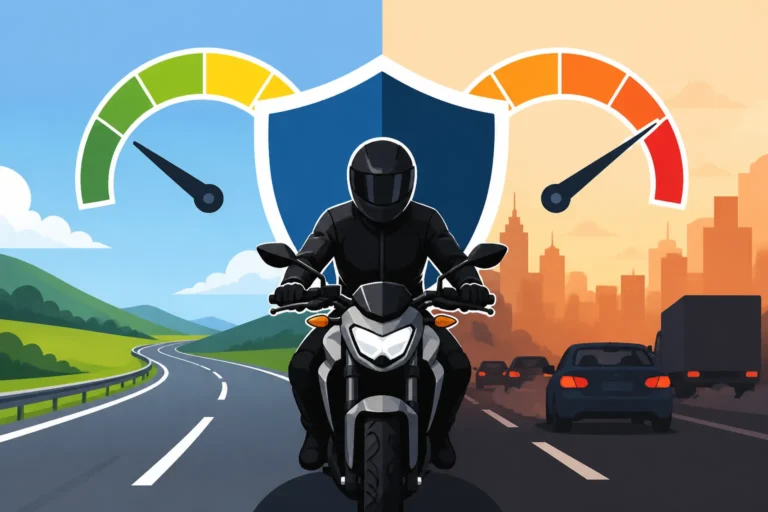
Delaware, while small, offers a distinct riding environment that can indirectly influence overall insurance rates. The state experiences all four seasons, meaning a significant portion of the year involves favorable riding weather. This longer riding season might lead to more exposure on the roads, which insurers factor into their calculations.
Additionally, Delaware's proximity to major metropolitan areas like Philadelphia, Baltimore, and Washington D.C. means that many riders might take their bikes across state lines. While your insurance generally follows you, understanding specific state requirements and traffic patterns in these busy areas can be important. Riding through areas with higher traffic density naturally increases the statistical likelihood of incidents, which contributes to regional rate assessments. For those who frequently ride beyond Delaware, knowing your policy covers you when Riding Across State Lines: Insurance & Helmet Rules is essential.
Final Thoughts on Delaware Motorcycle Insurance Costs
Navigating the cost of motorcycle insurance in Delaware might seem like a maze, but with a clear understanding of the factors at play and a proactive approach to shopping, you can find a policy that fits both your budget and your needs. Don't be shy about asking questions, exploring all your discount options, and always, always comparing quotes from several providers. Whether you use a comparison tool like The Zebra or call individual companies, doing your homework will pay off in the long run. Ride safe out there, Delaware!
Disclaimer
Please remember that this article provides general information and estimates. Insurance rates are highly individualized and subject to change. For the most accurate and up-to-date quotes, it's essential to contact licensed insurance providers directly and discuss your specific circumstances.