Does Where You Live Affect Motorcycle Insurance?
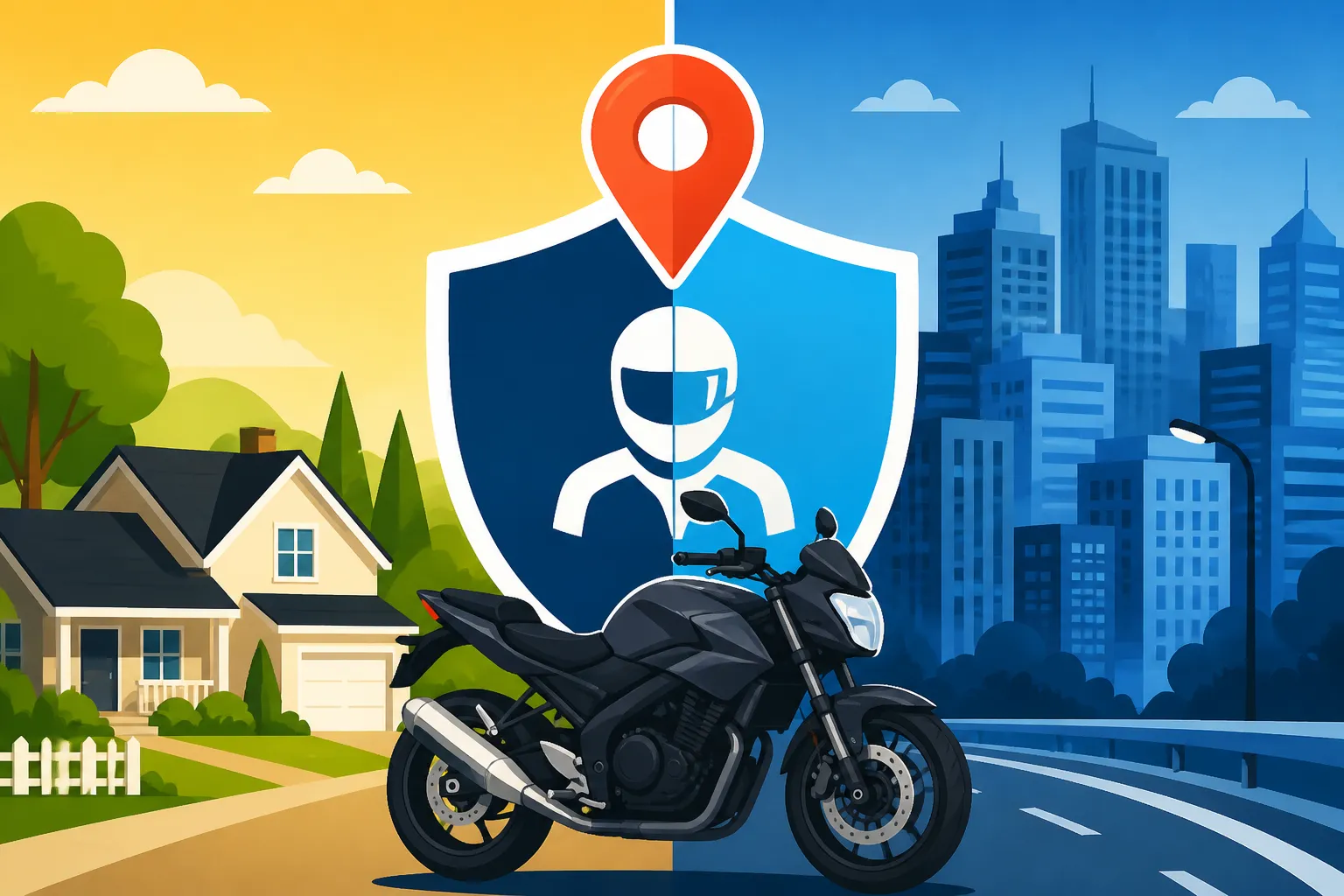
One of the most frustrating moments for any rider is discovering that a friend living just three zip codes away pays significantly less for the exact same coverage on the same bike. This guide meticulously breaks down how your physical location—from state-wide legislation to the specific crime statistics of your neighborhood—directly dictates your premiums and what you can do to mitigate those geographic price hikes.
The Zip Code Factor: Why Your Street Address Matters
If you have ever wondered why insurance companies are so obsessed with where you park your bike at night, the answer lies in data. Your zip code is a concentrated snapshot of risk that tells an insurer almost everything they need to know about the likelihood of a claim being filed. When you provide your address, the company isn't just looking at a map; they are looking at a history of accidents, thefts, and hospitalizations that have occurred within a few square miles of your driveway.
Population Density and Accident Rates
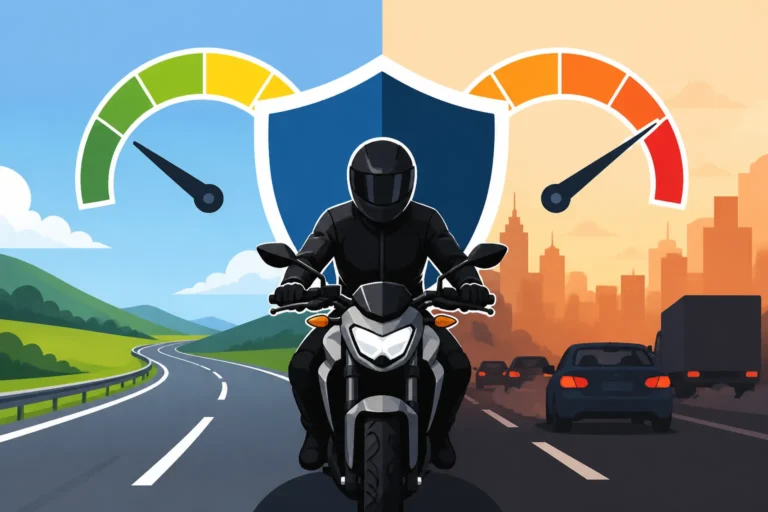
In high-density urban environments, the sheer volume of traffic creates a statistical nightmare for motorcycle riders. If you are navigating the gridlock of downtown Los Angeles or the narrow, congested streets of Boston, you are sharing the road with thousands of distracted drivers, delivery trucks, and pedestrians. The probability of a "SMIDSY" (Sorry Mate, I Didn't See You) accident skyrockets in these areas. Insurers know that more cars per square mile equals more opportunities for a collision, which is a primary reason Why Is My Motorcycle Insurance So Expensive? for city dwellers compared to those in the suburbs.
When traffic is bumper-to-bumper, lane splitting—where legal—and constant stop-and-go movement increase the risk of minor low-speed drops or being rear-ended. Even if these accidents aren't fatal, the cost of repairing fairings or replacing handlebars on a modern bike is high. Consequently, riders in densely populated areas are often grouped into higher risk pools regardless of their individual riding skill or clean driving record.
Local Crime Statistics and Theft Risks
Motorcycles are unfortunately easy targets for theft. Unlike a car, a small team of people can lift a sport bike into the back of a van in under sixty seconds. If your zip code has a high rate of vehicle theft or vandalism, your comprehensive coverage premiums will reflect that reality. Insurers use localized data to determine how likely it is that your bike will "grow legs" while parked on the street or even in a shared apartment complex garage.
This is where the Average Motorcycle Insurance Cost by State begins to diverge at the local level. A rider in a quiet rural county in Vermont might pay pennies for comprehensive coverage because bike theft is virtually non-existent there. Meanwhile, a rider in a specific neighborhood in Miami or San Francisco might find that theft coverage makes up the largest portion of their bill. Using a comparison tool like The Zebra can help you see how these localized crime rates shift the numbers when you look at different providers who may weight theft data differently.
Garage Requirements and Urban vs Rural Rates
Where you physically store the motorcycle is just as important as the city you live in. Many insurance applications will ask if the bike is stored in a locked garage, a carport, or on the street. In rural areas, the assumption is often that the rider has space for a dedicated shed or garage, which naturally lowers the risk of both theft and weather-related damage. In the city, however, street parking is often the only option, which puts the bike at risk of being knocked over by a parallel-parking car or damaged by road salt and debris.
The difference in Motorcycle Insurance Cost in a Big City vs Rural areas can be staggering, sometimes exceeding a 50% price gap. If you live in an apartment and pay for a secured, off-site storage unit, it is worth mentioning this to your agent. Some insurers will offer a slight break if you can prove the bike is kept in a climate-controlled, monitored facility rather than sitting out on the curb with nothing but a disc lock for protection.
State Level Regulations and Legal Minimums
While your zip code handles the "micro" risks, your state government handles the "macro" financial framework. Every state has the authority to set its own insurance laws, and these mandates create the "floor" for what you will pay. You cannot legally ride without meeting these requirements, and the variation between a state like Florida and a state like California is immense.
No-Fault vs Tort States
One of the biggest geographic dividers in insurance pricing is whether you live in a "no-fault" state or a "tort" state. In a no-fault state, such as Michigan, your own insurance company pays for your medical bills regardless of who caused the accident. This is intended to reduce litigation and speed up payments, but it often leads to much higher premiums because the insurance company is on the hook for potentially massive medical payouts for their own policyholders.
Understanding Michigan Motorcycle Insurance (No-Fault) Explained is crucial for riders in that region because the Personal Injury Protection (PIP) requirements are unlike almost anywhere else in the country. Conversely, in "at-fault" or tort states, the person who caused the accident is responsible for the damages. This typically keeps premiums lower for safe riders, as they aren't forced to buy the same level of first-party medical protection, though it can lead to long legal battles after a crash.
Minimum Liability Requirements by State
Every state that mandates insurance has a set of "three numbers" that represent the minimum coverage you must carry. For example, a 25/50/25 policy means $25,000 for bodily injury per person, $50,000 for total bodily injury per accident, and $25,000 for property damage. If you move from a state with low minimums to one with high minimums, your bill will naturally increase.
You can check the Motorcycle Insurance Requirements by State (2026 Guide) to see exactly where your home stands. Some states require much higher limits to ensure that riders aren't left destitute after a major accident. If you are curious about what those specific numbers signify for your wallet, you can find a deep dive in the Minimum Liability Insurance Explained (The Three Numbers) guide. Higher state minimums provide better protection but act as a permanent upward pressure on the base cost of any policy written in that jurisdiction.
Helmet Laws and Their Impact on Premiums
There is a direct correlation between a state’s helmet laws and the cost of medical-related insurance coverage. States with universal helmet laws—meaning everyone must wear one—often see lower rates for Medical Payments (MedPay) or Personal Injury Protection because the severity of injuries in accidents tends to be lower. In states with partial or no helmet laws, insurers often bake the increased risk of traumatic brain injuries into the premiums.
In some cases, if you live in a state without a helmet mandate, you might be required to carry higher medical insurance limits just to legally ride without a lid. This is a perfect example of how local "freedom" laws can have a direct financial cost. Whether you are looking at California Motorcycle Helmet Law requirements or the more relaxed rules in other regions, your choice of safety gear and the state’s requirement for it will influence your risk profile in the eyes of an underwriter.
Environmental and Weather Considerations
The physical environment of your region plays a subtle but significant role in how much you pay. Insurance companies are experts at actuarial science, meaning they look at how the climate and geography of your area contribute to the frequency of claims.
Riding Seasons and Regional Climate
If you live in a state like Arizona or Florida, you can theoretically ride 365 days a year. While this is great for your soul, it is "bad" for your insurance premium. A year-round riding season means you are on the road longer, exposing yourself to more risk of an accident. Consequently, insurers charge more because there is no "down time" where the bike is safely tucked away in a garage.
In contrast, riders in the Northeast or Midwest often deal with a "lay-up" period. Many policies in these regions automatically account for the fact that the bike will be in storage from November to March. If you want to know more about how to maximize these savings, looking into Is Motorcycle Insurance Cheaper if You Only Ride Seasonally? can provide some clarity. Some companies even allow you to suspend everything but comprehensive coverage during the winter to save money. Tools like The Zebra are particularly helpful here, as they allow you to compare how different companies handle "seasonal" versus "annual" policy pricing.
Wildlife Hazards and Rural Riding Risks
Rural living often means lower premiums due to less traffic, but it introduces a different set of risks: wildlife. In states like Pennsylvania, Michigan, or Montana, deer strikes are a leading cause of motorcycle accidents. Insurers in these regions track the frequency of animal-related claims by county. If you live in a "deer heavy" area, your comprehensive coverage—which usually covers animal strikes—might be slightly higher than you'd expect for a quiet country road.
Furthermore, the quality of rural infrastructure can be a factor. Roads that are prone to washouts, gravel buildup, or lack of lighting can lead to higher single-vehicle accident rates. When you look at How Much Is Motorcycle Insurance in California? or other states with diverse terrain, you’ll see that the rates in the winding mountain passes of the Sierras differ from the flat, paved suburbs of Orange County for these very reasons.
| Geographic Factor | Impact on Premium | Why it Matters |
|---|---|---|
| High Population Density | Increases | More vehicles = more collision opportunities. |
| High Theft Rate Zip Code | Increases | Higher probability of a total loss comprehensive claim. |
| No-Fault State Laws | Increases | Insurer must pay your medical bills regardless of fault. |
| Seasonal Lay-up Area | Decreases | Bike is off the road for several months a year. |
| Universal Helmet Law | Decreases | Reduces the severity and cost of medical claims. |
| Locked Garage Storage | Decreases | Protects against theft, vandalism, and weather. |
Infrastructure and Road Conditions
The state of the roads you ride on every day is a hidden variable in your insurance cost. Crumbling infrastructure doesn't just annoy you; it costs insurance companies money in the form of bent rims, blown tires, and low-side crashes caused by potholes or loose asphalt.
Road Quality and Maintenance Records
Insurers monitor the general safety of a region's infrastructure. Areas that invest heavily in road maintenance and clear signage tend to have fewer "environmental" accidents. If you live in a city notorious for "tank-slapper" inducing potholes or poorly marked construction zones, you might see a slight bump in your collision premiums. This is because a simple pothole that a car would drive over can be a catastrophic event for a motorcycle, leading to a total loss claim for a bike with a cracked frame.
Traffic Congestion and Commute Patterns
Do you live in a "commuter town"? If your zip code is home to thousands of people who spend two hours a day in stop-and-go traffic, your risk goes up. Commuters are often tired, frustrated, and distracted by phones or coffee. If your local riding environment is defined by the "rush hour" rush, you are at a higher risk of being involved in a multi-vehicle accident.
Insurers often ask for your estimated annual mileage. If you live in a sprawling area like Houston or Dallas, your mileage is likely higher than someone living in a small, walkable town in the Midwest. High mileage combined with heavy congestion is a recipe for higher premiums. If you are a new rider navigating these tough environments, it is worth checking How Much Is Motorcycle Insurance for a Beginner? to see how your inexperience compounds with these geographic risks.
Comparing High Cost and Low Cost Areas
Geography isn't just about small differences; it can mean thousands of dollars over the life of your bike. Knowing which areas are the "hot zones" can help you prepare your budget or even influence where you choose to live if riding is a core part of your lifestyle.
The Most Expensive Cities for Riders
Cities like Detroit, New York City, Miami, and Las Vegas consistently top the charts for the most expensive motorcycle insurance. The combination of high theft rates, dense traffic, and specific state laws (like Michigan's PIP or Florida's complex liability rules) creates a perfect storm. In these cities, it isn't uncommon for a sport bike rider to pay more in insurance annually than the bike is actually worth.
If you find yourself in one of these high-cost hubs, you must be aggressive about finding savings. Learning How to Lower Your Motorcycle Insurance Premium becomes a necessity rather than a suggestion. This might include taking safety courses or installing GPS tracking devices on your bike to lower the theft risk portion of your bill.
Hidden Gem States for Cheap Coverage
On the flip side, states like Iowa, Wyoming, and the Dakotas often enjoy some of the lowest rates in the nation. These states feature wide-open roads, low population density, and relatively low crime rates. For a rider in these areas, insurance is often an afterthought because the premiums are so manageable.
However, even in "cheap" states, the specific bike you choose matters. A high-performance liter bike will still be expensive to insure in a rural area, though it will be significantly cheaper than the same bike in Brooklyn. You can see how these two factors interact by checking the Motorcycle Insurance Cost by State data to find where your region ranks nationally.
How to Offset Geographic Price Hikes
Just because you live in a high-rent district doesn't mean you are powerless. There are several strategic moves you can make to "fight back" against the geographic data that the insurance companies use.
Strategic Discounts for Specific Locations
Many insurers offer discounts that directly counter geographic risks. For example, if you live in a high-theft area, a "recovery device" discount (for things like Lojack) can significantly slash your comprehensive premium. If you live in a state with high medical costs, completing a certified training program can lead to a "safety course" discount that offsets the higher base rates.
Always ask your agent about a Multi-Bike Discount: Insuring More Than One Motorcycle if you have a "stable" of bikes. Often, the cost of adding a second bike is much lower than the first because the insurer knows you can only ride one at a time, effectively splitting your "road risk" across multiple vehicles.
The Role of Comparison Tools
The single best way to handle living in a high-cost area is to shop around frequently. Every insurance company uses a different "formula" to weigh geographic risks. One company might be very afraid of theft in your zip code, while another might have data showing that theft isn't an issue for your specific type of bike (e.g., thieves love sport bikes but rarely touch heavy cruisers).
By using a platform like The Zebra, you can see these different philosophies in action. Comparing 5-10 different quotes allows you to find the one company that has a "softer" view of your neighborhood's risk profile. It is also wise to check for a Does a Motorcycle Safety Course Lower Insurance? discount with every quote, as this is one of the few universal ways to lower your rate regardless of where you live. Geography may be a major factor, but with the right data and a bit of shopping, you can still find a rate that lets you enjoy the ride without breaking the bank.
Motorcycle Insurance Disclaimer
The information provided in this guide is for educational and informational purposes only and does not constitute professional legal, financial, or insurance advice. Motorcycle insurance laws, state minimums, and company-specific underwriting practices vary significantly by location and are subject to change. Always consult with a licensed insurance agent or legal professional in your specific jurisdiction to ensure you are meeting all state requirements and have the appropriate coverage for your individual needs. We do not guarantee the accuracy of third-party data or the availability of specific discounts or rates mentioned herein.