How to Compare Full Coverage Motorcycle Quotes
Trying to compare full coverage motorcycle insurance quotes can feel like deciphering ancient scrolls written in a language you barely understand. You're juggling different numbers, confusing terms, and a nagging feeling that you're probably missing something crucial. It's a real headache, especially when all you want is to protect your beloved bike without overpaying. This guide is here to cut through the jargon and give you a clear, actionable roadmap for comparing full coverage quotes, so you can ride with genuine peace of mind.
Understanding Full Coverage Beyond the Buzzword
When someone says "full coverage," it sounds like a magical blanket that protects you from absolutely everything. While it's certainly comprehensive, it's crucial to understand that it's not a single, all-encompassing policy type. Instead, "full coverage" is a common term riders use to describe a policy that includes a combination of essential coverages designed to protect both you and your motorcycle from a wide range of perils. It’s about building a robust safety net, piece by piece.
What "Full Coverage" Truly Means for Your Ride
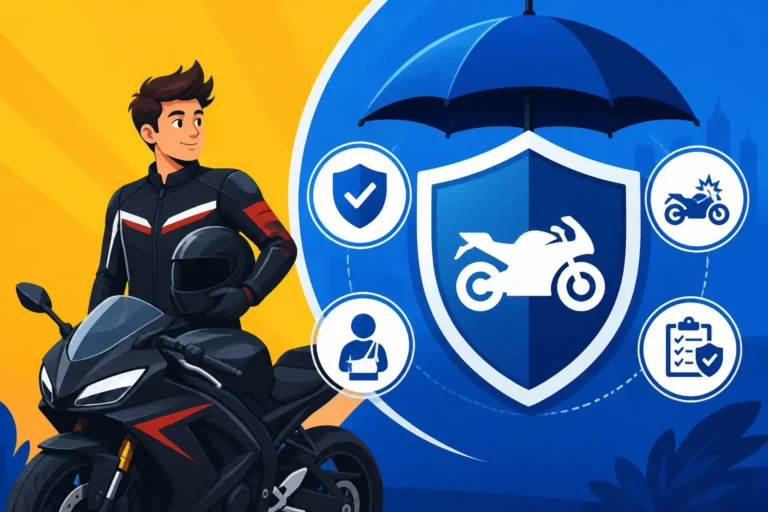
At its heart, full coverage for your motorcycle typically bundles three core components: liability, collision, and comprehensive insurance. Each plays a distinct but equally vital role in safeguarding your financial well-being after an incident.
First, you have your liability coverage. This is the absolute non-negotiable, legally required baseline in almost every state. If you're at fault in an accident, your liability insurance steps in to cover the damages you cause to other people's property (like their car, fence, or even a storefront) and their bodily injuries. It doesn't, however, cover any damage to your motorcycle or your medical bills. That's where the other pieces come in. It’s split into two main parts: bodily injury liability and property damage liability. Imagine you accidentally clip a car pulling out of a parking spot in Phoenix, Arizona, and ding their bumper. Your property damage liability would help pay for their car's repair. If that same incident caused the driver whiplash, your bodily injury liability would cover their medical expenses up to your policy limits. For a deeper dive, you might want to read our article on Liability Coverage for Motorcycles Explained.
Next up is collision coverage. This is the part of your policy that pays for damages to your motorcycle if you hit another vehicle, an object (like a guardrail or a tree), or if your bike simply tips over. It doesn't matter who was at fault; collision coverage is there to get your bike repaired or replaced. Think of it this way: if you're cruising down the Pacific Coast Highway and have a minor spill that dents your tank and snaps a mirror, collision coverage would help cover the repair costs, after your deductible, of course. Without it, those repairs would come straight out of your pocket.
Finally, we have comprehensive coverage. This is often jokingly called "Acts of God" coverage, but it's really for non-collision incidents. It protects your motorcycle from things like theft, vandalism, fire, natural disasters (hail, floods, wind), and even hitting an animal. If you wake up one morning in your San Antonio home to find your beloved Harley-Davidson Electra Glide missing from your garage, or if a rogue tree branch falls on it during a thunderstorm, comprehensive coverage is what you’d rely on. It's a critical component because motorcycles are unfortunately a target for theft, and nature can be unpredictable. To truly understand the differences, take a look at our detailed breakdown on Collision vs Comprehensive Motorcycle Coverage.
Why You Might Need Full Coverage
While liability insurance is the legal minimum, full coverage often becomes a necessity or a very wise investment for many riders. There are several compelling reasons why opting for this more robust protection makes sense, especially in the unpredictable world of motorcycling.
One of the most common scenarios mandating full coverage is when your motorcycle is financed. Lenders have a significant financial interest in your bike, and they want to ensure their investment is protected. If you've taken out a loan to purchase your motorcycle, your financing agreement will almost certainly require you to carry full coverage until the loan is paid off. This protects the lender in case the bike is damaged or totaled, ensuring they can recoup their losses. Without this, if your financed bike is destroyed in an accident and you only had liability, you'd still be on the hook for the loan payments even though you no longer have a motorcycle. This is a tough spot no rider wants to be in. In such cases, you might also consider additional protections like Do You Need Gap Insurance on a Motorcycle?
Beyond financing, the value of your motorcycle plays a huge role. If you ride an expensive, high-performance sport bike like a Ducati Panigale, a luxury touring machine like a Honda Gold Wing, or a meticulously customized Harley-Davidson, the cost of repairs or replacement can be astronomical. Relying solely on liability in these cases is a massive gamble. Full coverage ensures that your significant investment is protected. Imagine the heartbreak and financial strain if your high-value bike is stolen or totaled and you can't afford to replace it because you skimped on coverage.
Finally, there's the invaluable peace of mind that full coverage provides. Riding a motorcycle inherently carries more risks than driving a car. Even if you're the safest rider on the road, you can't control other drivers, road hazards, or unforeseen events. Knowing that if something goes wrong – whether it's an accident, theft, or a tree falling on your bike – you have comprehensive protection can significantly reduce stress and allow you to enjoy the ride more fully. It means you won't be left scrambling to pay for potentially tens of thousands of dollars in damages out of your own pocket. For a complete understanding of what this comprehensive protection truly entails, check out What Does Full Coverage Motorcycle Insurance Mean?.
Key Factors to Consider When Comparing Quotes
Comparing full coverage motorcycle quotes isn't just about finding the lowest number at the bottom of the page. It's about understanding what each quote offers, how it aligns with your specific needs, and ensuring you're getting true value for your money. Think of it as carefully selecting the right gear for a long ride – you wouldn't just grab the cheapest helmet; you'd look for protection, comfort, and features.
Decoding Coverage Limits and Deductibles
When you get a quote, you'll see a series of numbers that represent your coverage limits. These are the maximum amounts your insurance company will pay out for a covered claim. Understanding these is paramount because they directly impact your out-of-pocket exposure in the event of an accident.
For liability, you'll typically see a "split limit" format, often expressed as three numbers like "25/50/25." Let's break that down:
- The first number ($25,000) is the maximum your insurer will pay for bodily injury to one person in an accident.
- The second number ($50,000) is the maximum they'll pay for bodily injury to all persons in a single accident.
- The third number ($25,000) is the maximum they'll pay for property damage in a single accident.
While your state might have minimum requirements, like Motorcycle Insurance Minimums: 25/50/25 Meaning, it's often wise to carry higher limits. Imagine you're riding in a crowded area like Los Angeles and cause an accident involving multiple vehicles and serious injuries. State minimums could be quickly exhausted, leaving you personally responsible for the remaining costs, which could easily be hundreds of thousands of dollars. Increasing your limits to, say, 100/300/100 might only slightly increase your premium but offers vastly greater financial protection. Some policies also offer a "combined single limit" (CSL), which is one lump sum that applies to all damages and injuries in an accident, giving more flexibility.
Then there are deductibles, which apply to your collision and comprehensive coverages. A deductible is the amount of money you agree to pay out-of-pocket before your insurance company starts paying for a covered claim. Common deductible amounts range from $250 to $1,000 or even higher. Here’s the trade-off: a higher deductible generally means a lower premium, and a lower deductible means a higher premium.
Let's say you have a $500 deductible for collision. If your bike sustains $3,000 in damage in an accident, you'd pay the first $500, and your insurance would cover the remaining $2,500. When comparing quotes, make sure the deductibles for collision and comprehensive are consistent across all options. A quote might seem cheaper, but only because it has a significantly higher deductible, which means more out of your pocket if you need to file a claim. It's about finding the sweet spot where your premium is manageable, but your deductible isn't so high that you couldn't reasonably afford it in an emergency.
Assessing Additional Coverages and Endorsements
Full coverage isn't just about the big three; it's also about the crucial add-ons and endorsements that tailor your policy to your specific riding style and needs. These optional coverages can make a world of difference when you genuinely need your insurance to step up.
One of the most important often overlooked coverages is Uninsured/Underinsured Motorist (UM/UIM) coverage. In a perfect world, every driver would have adequate insurance, but we all know that's not the case. UM/UIM protects you if you're involved in an accident with a driver who has no insurance or not enough insurance to cover your damages and injuries. This is especially vital for motorcyclists, as your injuries tend to be more severe in an accident, and an uninsured driver could leave you facing massive medical bills and repair costs with no recourse. It's scary to think about, but a very real threat. For more on this, check out Uninsured & Underinsured Motorist Coverage (UM/UIM).
Another valuable add-on is Medical Payments (MedPay) or Personal Injury Protection (PIP), depending on your state. These coverages pay for your medical expenses (and sometimes lost wages) regardless of who was at fault in an accident. Given the vulnerability of riders, even minor accidents can lead to significant medical costs. MedPay can provide a crucial first line of defense for your health bills.
For many riders, their bike isn't just stock; it's a labor of love, adorned with custom parts, chrome, performance upgrades, or expensive accessories. Standard collision and comprehensive policies often only cover the bike's factory value. That's why Accessories & Custom Parts Coverage Explained is a game-changer. This endorsement allows you to add specific coverage for those aftermarket parts, ensuring that your custom paint job, upgraded exhaust, or expensive saddlebags are protected in case of damage or theft. When comparing quotes, confirm if this is included or offered as an option and what its limits are.
Consider also Roadside Assistance & Towing, especially if you tour frequently or ride an older bike. Breaking down far from home can be a major hassle and expense, and this coverage can be a lifesaver. Some policies even offer Trip Interruption coverage, which helps with lodging and meals if your bike breaks down while you're on a long road trip.
Here's a quick comparison of some common add-on coverages:
| Coverage Type | What It Covers | Who Benefits Most |
|---|---|---|
| Uninsured/Underinsured Motorist | Your injuries/damages if hit by a driver with no or insufficient insurance | All riders, especially in states with many uninsured drivers |
| Medical Payments/PIP | Your medical bills (and sometimes lost wages) regardless of fault | All riders, as motorcycle accidents often lead to injuries |
| Custom Parts & Accessories | Aftermarket parts, modifications, gear, paint jobs | Riders with customized bikes, expensive gear, or unique setups |
| Roadside Assistance | Towing, flat tires, fuel delivery, jump-starts | Tourers, older bike owners, anyone wanting peace of mind on the road |
| Trip Interruption | Lodging, meals, alternative transportation if you break down far from home | Long-distance riders, tourers |
| Gap Insurance | The difference between your loan balance and actual cash value after a total loss | Riders with financed bikes, especially new ones that depreciate fast |
Comparing Apples to Apples: The Quote Breakdown
This might sound obvious, but it's where many riders get tripped up. To truly compare motorcycle insurance quotes, you absolutely must ensure that each quote is for the exact same level of coverage. It’s like test-riding two bikes: you wouldn’t compare a touring bike to a dirt bike for the same purpose, right?
When you’re gathering quotes, make sure the following parameters are identical across all insurers:
- Liability Limits: Are they all 50/100/50? Or 100/300/50? Be consistent.
- Deductibles: Is your collision deductible $500 on one quote and $1,000 on another? That will drastically change the premium, making the $1,000 deductible quote seem cheaper but costing you more out of pocket if you claim.
- Comprehensive Deductible: Same principle as collision.
- Optional Coverages: Did you include UM/UIM, MedPay, Custom Parts coverage, and Roadside Assistance on every quote? If one quote omits a crucial add-on, it will naturally be cheaper but provide less protection.
It’s easy to get distracted by a flashy low price, but that low price often hides reduced coverage or higher deductibles. Take your time to review each quote line by line. Don't be afraid to ask questions if something isn't clear. An easy way to streamline this process is by using comparison tools. Online platforms like The Zebra can be incredibly helpful here. You enter your information and desired coverage once, and it pulls multiple quotes from different providers, allowing for a side-by-side comparison that truly matches your criteria. This significantly reduces the legwork and helps ensure you're comparing like for like policies.
Strategies for Getting the Best Full Coverage Rate
Nobody wants to pay more than they have to, especially for insurance. While full coverage naturally costs more than basic liability, there are smart strategies you can employ to bring those premiums down without sacrificing essential protection. It's about being proactive and informed. For a general overview of saving money, check out How to Get Cheap Motorcycle Insurance.
Leveraging Discounts and Bundling Options
Insurance companies love to reward riders who demonstrate safe practices, loyalty, or who simply fit certain profiles. The key is to know what discounts are available and to actively ask for them. Never assume your insurer has automatically applied every discount you qualify for.
One of the most common and effective discounts is for completing a motorcycle safety course. Programs like the Motorcycle Safety Foundation (MSF) Basic RiderCourse are widely recognized. Not only do these courses make you a safer, more confident rider, but completing one can often net you a 10-15% discount on your policy. This is a win-win: better skills and lower premiums! Many insurers, including major players like Progressive and Geico, offer this discount.
If you own more than one motorcycle, inquire about a multi-bike discount. Insuring all your bikes under the same policy with the same provider can lead to significant savings. Similarly, if you have other policies – like car insurance, home insurance, or renters insurance – consider bundling them with your motorcycle policy. Most major insurers, such as State Farm, Allstate, and Nationwide, offer substantial multi-policy discounts, sometimes up to 20% or more, for keeping all your business with them. This is often one of the biggest money-savers available.
Other common discounts include:
- Paid-in-Full Discount: If you can afford to pay your annual premium upfront instead of monthly installments, many insurers will give you a break.
- Loyalty Discount: Staying with the same insurer for several years can sometimes earn you a discount.
- Anti-Theft Device Discount: Installing an alarm system, GPS tracker, or even simply using a disc lock on your motorcycle might qualify you for a discount, as it reduces the risk of theft.
- Mature Rider Discount: Experienced riders, often those over 50, may qualify for lower rates due to their proven track record.
- Rider Group/Association Discount: Belonging to a motorcycle club or association might also unlock specific discounts with certain providers.
The trick is to ask your agent about all possible discounts. Don't be shy! Every little bit helps. To uncover even more potential savings, our article on Motorcycle Insurance Discounts You're Missing can be a great resource.
The Importance of Shopping Around Regularly
Insurance rates aren't static; they fluctuate based on market conditions, your driving record, the age of your bike, and even changes in the insurer's own risk assessments. What was the cheapest full coverage motorcycle insurance provider for you last year might not be this year. That’s why complacency is your enemy when it comes to insurance costs.
Make it a habit to shop around for new quotes at least once a year, ideally a few weeks before your current policy is due for renewal. This allows you to compare your current renewal offer against what other companies are willing to provide. Don't just accept your existing insurer's renewal notice without checking the market. You might be surprised at the savings you could find elsewhere.
Major life events are also prime opportunities to shop for new quotes. Did you just move to a new state or a different zip code within your state? Your rates could change significantly. Did you get married, turn 25 (a common age for rates to drop), or complete a motorcycle safety course? All these factors can impact your premium, and a new quote could reflect those changes more favorably.
Using online comparison tools, like The Zebra, makes shopping around incredibly easy. Instead of spending hours filling out forms on multiple individual insurer websites, you can input your information once and receive quotes from numerous reputable companies in minutes. This not only saves you time but also ensures you're getting a broad view of the market, helping you pinpoint the best full coverage deal for your specific needs. It's a proactive step that puts money back in your pocket.
Common Pitfalls to Avoid When Comparing Quotes
Comparing insurance quotes can feel like a maze, and it’s easy to fall into traps that can either leave you underinsured or overpaying. As a seasoned rider, I've seen too many friends learn these lessons the hard way. Avoiding these common mistakes is just as important as knowing what to look for.
Focusing Solely on the Lowest Price
It's natural to be drawn to the lowest premium, especially when you're on a budget. However, chasing the absolute cheapest full coverage motorcycle quote without scrutinizing what it actually covers is a dangerous game. This is perhaps the biggest pitfall riders make, and it can lead to devastating financial consequences down the line.
A rock-bottom price often comes with significantly reduced coverage limits or very high deductibles. Imagine saving a few hundred dollars a year on your premium, only to find yourself facing a $10,000 medical bill or $15,000 in motorcycle repair costs that your "cheap" policy won't fully cover. That initial "saving" quickly vanishes and turns into a massive personal expense. For instance, if you live in Florida and opt for minimum liability coverage, but cause an accident with significant property damage and injuries, your personal assets could be on the line.
The purpose of full coverage is to provide comprehensive protection. If that protection is so minimal it barely covers a serious incident, then you're essentially self-insuring for a large portion of the risk, but still paying a premium. This isn't just about your bike; it's about protecting your financial future. Don't let a low monthly payment blind you to the potential for catastrophic out-of-pocket expenses if the worst happens. Always prioritize adequate coverage over the cheapest possible price. Reviewing "What Motorcycle Coverage Do You Actually Need?" can help you identify your true needs.
Overlooking Customer Service and Claims Reputation
While price and coverage are paramount, the quality of an insurance company's customer service and its claims handling reputation are equally crucial, especially when you need them most. A cheap policy from an unresponsive or difficult insurer can turn an already stressful accident situation into an absolute nightmare.
Think about it: an accident is traumatic enough. The last thing you want is to be dealing with an insurance company that's impossible to reach, takes weeks to process a claim, or gives you the runaround when you're trying to get your bike repaired or replaced. A company might offer seemingly attractive rates, but if their customer reviews are riddled with complaints about slow claim payouts, denied claims, or rude agents, that low premium isn't worth the headache and potential financial limbo.
Before committing to an insurer, do your homework. Check online reviews on independent sites, look at their ratings with organizations like J.D. Power, and even check the National Association of Insurance Commissioners (NAIC) complaint index for your state. This index allows you to see how many complaints a company has received relative to its size, giving you a good indicator of their customer satisfaction. Ask fellow riders about their experiences with different companies. Brands like Progressive and Dairyland often get good marks from riders for their specialized motorcycle departments, but experiences can vary by region.
Remember, insurance is there for you in your worst moments. Choosing a company with a strong reputation for efficient and fair claims handling means that when you do need to file a claim, the process will be as smooth and stress-free as possible. It’s an investment in your peace of mind and an essential part of comparing full coverage motorcycle quotes effectively. You might find our guide on Best Motorcycle Insurance Companies (2027) helpful for researching reputable providers.
Disclaimer
This article is for general informational purposes only and does not constitute professional advice. Laws, prices and regulations vary by location and change over time. Consult a qualified professional for guidance on your specific situation.