Full Coverage vs Liability: Which Should You Choose?
Deciding on the right motorcycle insurance can feel like navigating a maze, especially when you're faced with terms like "full coverage" and "liability only." Many riders wrestle with this choice, wondering if they're buying too much or too little protection for their beloved machine and their peace of mind. This guide aims to clear up the confusion, breaking down what each type of coverage truly means and helping you choose the best fit for your unique riding life.
Understanding the Basics of Motorcycle Insurance Coverage
Before we dive deep into the differences, let's lay the groundwork. Motorcycle insurance isn't a one-size-fits-all product; it's a collection of various coverage types designed to protect you, your bike, and others on the road. Knowing these fundamental building blocks is crucial to making an informed decision.
What is Motorcycle Liability Insurance?
At its core, liability insurance is about protecting other people and their property when you are at fault in an accident. It's the bare minimum required by law in most states, and for good reason. Imagine you're riding through a busy intersection, and due to a misjudgment, you accidentally clip the fender of a brand new SUV, sending it into a guardrail. Or worse, you cause another rider to lay down their bike, resulting in injuries. Without liability coverage, you'd be personally responsible for those damages and medical bills, which can easily climb into the tens or even hundreds of thousands of dollars. That's a financial nightmare no one wants to face.
Liability coverage is typically split into two main categories:
- Bodily Injury Liability (BIL): This covers the medical expenses, lost wages, and pain and suffering for other people injured in an accident where you are deemed at fault. It protects you from the financial burden of these claims. For example, if you cause an accident and the other driver breaks an arm, your bodily injury liability would kick in to cover their emergency room visit, X-rays, and physical therapy. Most states mandate a minimum amount of this coverage, usually expressed as two numbers, like $25,000 per person and $50,000 per accident.
- Property Damage Liability (PDL): As the name suggests, this covers the cost to repair or replace other people's property damaged in an accident you cause. This could be anything from another vehicle to a fence, mailbox, or even a storefront. Using our earlier example, if you hit that new SUV, your property damage liability would pay for the repairs to their vehicle and the guardrail. This is often the third number in the state minimums, such as $25,000. So, you might see state minimums expressed as 25/50/25, which represents $25,000 for bodily injury per person, $50,000 for bodily injury per accident, and $25,000 for property damage per accident. Understanding these numbers is vital, and you can learn more about what they mean in our guide on Minimum Liability Insurance Explained (The Three Numbers).
The Umbrella of Full Coverage for Your Motorcycle
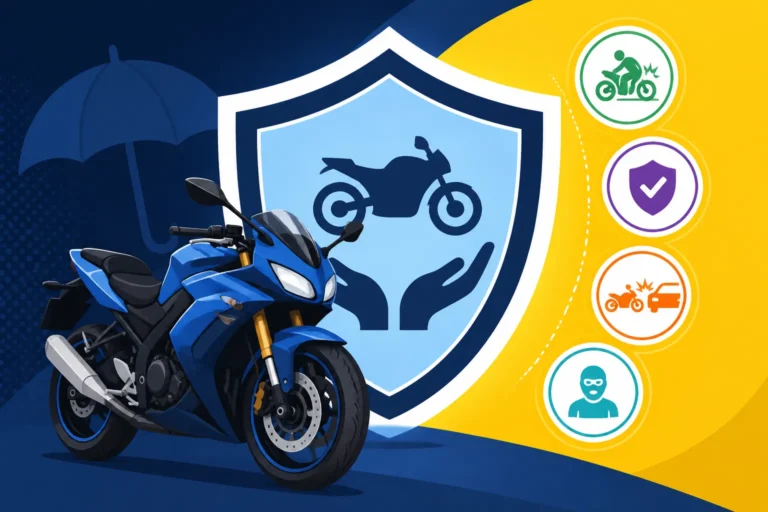
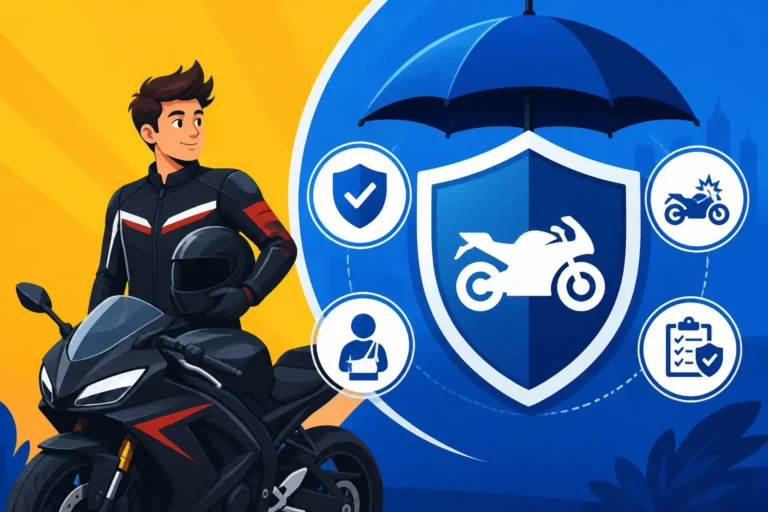
When people talk about "full coverage" for their motorcycle, they're not actually referring to a single type of policy. Instead, it's a common term that refers to a bundle of different coverages designed to provide extensive protection for your motorcycle, yourself, and others. It typically includes the mandatory liability coverage, plus additional options that protect your own bike from damage or loss, and may even cover your medical bills.
Think of it as adding extra layers of armor to your financial protection. While liability protects you from what you might owe others, full coverage extends that protection to cover your own assets and well-being. This comprehensive approach is often what lenders require if you finance your motorcycle, ensuring their investment is protected.
The key components that typically make up what riders call "full coverage" include:
- Collision Coverage: Pays for damage to your motorcycle if it collides with another vehicle or object, regardless of who is at fault.
- Comprehensive Coverage: Protects your motorcycle from non-collision incidents like theft, vandalism, fire, natural disasters, or hitting an animal.
- Uninsured/Underinsured Motorist (UM/UIM) Coverage: Steps in to cover your medical bills and property damage if you're involved in an accident with a driver who doesn't have insurance or doesn't have enough insurance.
- Medical Payments (MedPay) or Personal Injury Protection (PIP): Covers your medical expenses and sometimes lost wages, regardless of fault, up to a certain limit.
We'll break down these individual coverages in more detail shortly, but for now, understand that "full coverage" is a strategic combination of policies to provide a robust safety net.
A Deep Dive into Liability-Only Motorcycle Insurance
For some riders, liability-only coverage is the obvious choice. It meets the legal requirements, keeps premiums low, and for certain bikes or situations, it might feel like enough. But it's crucial to understand its limitations.
What Liability Coverage Protects You Against
Primarily, liability coverage protects your personal assets. If you're involved in an at-fault accident, your liability insurance steps in to pay for the other party's damages and injuries up to your policy limits. Without it, a hefty judgment against you could lead to wage garnishment, asset seizure, or even bankruptcy. This is why almost every state requires some form of financial responsibility, typically met through liability insurance. Many states, like California, Texas, and Florida, have specific Motorcycle Insurance Requirements by State (2026 Guide) that riders must adhere to.
Let's say you're riding in Arizona, which mandates minimum liability coverage. If you cause an accident that totals another rider's 2023 Harley-Davidson Street Glide, and their medical bills pile up, your liability policy would be the first line of defense. The property damage portion would cover the cost of their totaled bike, and the bodily injury portion would cover their medical care.
However, it's critical to note that these state-mandated minimums are often quite low. They might cover minor incidents but could quickly be exhausted in a serious accident. If the costs exceed your policy limits, you become personally responsible for the remaining balance. This is a huge risk many riders unknowingly take when they opt for the bare minimum just to save a few bucks on their monthly premium. For instance, while some states might only require 10/20/10, a modern motorcycle or car could easily incur $30,000 in repair costs alone, not to mention potential medical bills for the occupants. This gap could put your savings, home, or future earnings at risk.
The Pros and Cons of Opting for Liability Only
Making the choice for liability-only coverage involves weighing financial savings against potential risks. It's not a decision to be taken lightly, and what's right for one rider might be completely wrong for another.
Pros of Liability-Only Coverage:
- Lower Premiums: This is hands down the biggest appeal for liability-only coverage. Because you're taking on more risk yourself, the insurance company charges you less. For riders on a tight budget, or those with multiple vehicles, the savings can be significant, sometimes cutting your monthly cost by more than half compared to full coverage.
- Meets Legal Requirements: It ensures you're legally compliant to ride in almost all states. This means you won't face penalties for riding without insurance, which can include fines, license suspension, or even vehicle impoundment. You can avoid those stressful situations where you're asking, "Is Motorcycle Insurance Required? State-by-State".
- Suitable for Older or Low-Value Bikes: If your motorcycle is older, has a low resale value, or is a project bike you're not deeply invested in financially, the cost of full coverage might outweigh its potential payout. For example, insuring a vintage 1970s Honda CB350 that's only worth a couple of thousand dollars might not warrant an extra $50 a month for collision and comprehensive. If the bike gets totaled, you might prefer to simply replace it out of pocket rather than paying higher premiums for years.
- Good for Paid-Off Bikes: If you own your motorcycle outright and don't have a lienholder, you have the freedom to choose your coverage levels. Without a lender demanding full coverage, you can decide if the risk of self-insuring your bike's physical damage is acceptable.
Cons of Liability-Only Coverage:
- No Protection for Your Motorcycle: This is the most significant drawback. If your bike is damaged in an accident, stolen, vandalized, or catches fire, your liability policy will not pay for repairs or replacement. You'll be left footing the entire bill, which for many, is a significant financial hit. Imagine your pristine Harley-Davidson Road Glide being stolen from your garage overnight, and you find out your insurance won't pay a dime. That's a gut-wrenching realization.
- No Coverage for Your Injuries: In an at-fault accident, your liability policy only covers the injuries of others. It does not cover your own medical expenses or lost wages. Motorcycle accidents often result in significant injuries, and even if you have personal health insurance, there can be deductibles, co-pays, and gaps in coverage that MedPay or PIP would otherwise fill.
- Vulnerable to Uninsured/Underinsured Drivers: Even if you're the safest rider on the road, you can't control other drivers. If an uninsured driver hits you, and you only have liability, your own bike damage and medical bills won't be covered by your policy. You'd have to sue the at-fault driver, which can be a long, costly, and often fruitless endeavor if they have no assets.
- Leaves Gaps in Coverage: Many common scenarios that can be devastating to a rider financially are simply not covered. Hitting a deer, storm damage, or even dropping your bike in a parking lot won't be covered. This means every time you swing your leg over your bike, you're taking on a substantial personal financial risk for anything that might happen to your motorcycle or your body.
Unpacking the Layers of Full Coverage Motorcycle Insurance
For a great many riders, especially those with new or valuable bikes, or those who simply want comprehensive peace of mind, full coverage is the preferred route. It wraps you in a much thicker blanket of financial protection, addressing many of the vulnerabilities that liability-only leaves exposed.
Key Components of Full Coverage
As we discussed, "full coverage" is really a combination of several different insurance products. Understanding each one individually helps you see the complete picture of protection you're getting.
Collision Coverage
This is a cornerstone of full coverage, designed to repair or replace your own motorcycle if it's damaged in a collision. The beauty of collision coverage is that it pays out regardless of who is at fault. So, if you accidentally hit a parked car, or if another driver sideswipes you, your collision coverage will pay for the damage to your bike.
Here's how it typically works: You choose a deductible (e.g., $500 or $1,000). If you have an accident and the damage to your bike costs $3,000 to repair, you pay your $500 deductible, and your insurance company covers the remaining $2,500. A higher deductible usually means a lower premium, but it also means you pay more out of pocket if you make a claim. For example, if you're taking a scenic ride through the winding roads of North Carolina and misjudge a turn, hitting a guardrail, your collision coverage would be your saving grace, covering the repairs to your fork, fairing, and other damaged components.
Comprehensive Coverage
While collision covers accidents, comprehensive coverage steps in for nearly everything else that isn't a collision. This can be a real lifesaver for riders who worry about events beyond their control. Think of it as protection against the unpredictable challenges of the world.
Comprehensive coverage protects your motorcycle from:
- Theft: If your bike is stolen, comprehensive coverage will help you replace it. This is a very real concern for many riders, especially those with popular models.
- Vandalism: If someone scratches your paint, slashes your tires, or damages your bike maliciously.
- Fire: Whether it's a garage fire or a spontaneous combustion event (rare, but it happens!).
- Natural Disasters: Damage from floods, hail, wind, or falling objects (like tree branches).
- Animal Strikes: Hitting a deer, coyote, or other animal. This is a surprisingly common claim for motorcyclists.
Like collision coverage, comprehensive also comes with a deductible. For instance, if you live in Florida and a hurricane floods your garage, damaging your Suzuki V-Strom, your comprehensive coverage would help pay for the repairs or replacement, minus your deductible. It's truly a vital part of a complete policy, and you can explore more about it in our dedicated piece, What Is Comprehensive Motorcycle Insurance?.
Uninsured/Underinsured Motorist (UM/UIM) Coverage
This coverage is incredibly important for motorcyclists and arguably one of the most critical components of "full coverage." Unfortunately, not everyone on the road carries adequate insurance, or any insurance at all. If you're involved in an accident that's not your fault, and the at-fault driver has no insurance (uninsured) or not enough insurance to cover your damages and injuries (underinsured), UM/UIM steps in.
Without UM/UIM, you'd be left to pay for your own medical bills, lost wages, and potentially even the damage to your motorcycle if the other driver can't. This can be devastating. Many states, like New York, offer or require UM/UIM due to the prevalence of uninsured drivers. Consider a scenario in rural Pennsylvania: you're hit by a driver who fled the scene or simply doesn't have insurance. Your UM/UIM coverage could be the only way to get your medical bills covered and your bike repaired. For an in-depth look at this crucial protection, check out our guide on Uninsured & Underinsured Motorist Coverage (UM/UIM).
Medical Payments (MedPay) or Personal Injury Protection (PIP)
These coverages are designed to pay for medical expenses for you and your passengers, regardless of who was at fault in an accident. This can include ambulance fees, hospital stays, doctor visits, and even funeral expenses. In some no-fault states, PIP may also cover lost wages.
While your personal health insurance might cover some of these costs, MedPay or PIP can provide immediate funds without waiting for fault to be determined, often covering deductibles and co-pays that your health insurance might leave you with. This can be particularly valuable for motorcyclists, who are more vulnerable to serious injuries in an accident. If you’re curious about how this coverage can benefit you, read more in our article, What Is Medical Payments (MedPay) for Riders?.
When Full Coverage is a Must-Have
While liability-only can work for some, there are definite situations where opting for full coverage isn't just a good idea, it's practically non-negotiable.
Financed Motorcycles
If you have a loan on your motorcycle, your lender will almost certainly require you to carry full coverage. This is because the motorcycle itself serves as collateral for the loan, and the lender wants to protect their investment. Should the bike be totaled or stolen, full coverage ensures that the remaining loan balance can be paid off, even if you can't. Without full coverage, if something happens to the bike, you could be stuck paying off a loan for a motorcycle you no longer have or can't ride. This is a standard practice across the industry; lenders like Harley-Davidson Financial Services or local credit unions will enforce this. Dive deeper into this topic with our guide on Motorcycle Insurance Requirements for Financed Bikes.
New or High-Value Motorcycles
If you've recently purchased a brand-new motorcycle, or own a high-value model like a BMW R 1250 GS or a premium Ducati, full coverage is usually a wise investment. The cost to repair or replace these bikes out of pocket can be staggering. Losing a significant investment due to theft, an accident, or unforeseen damage without the financial safety net of full coverage is a risk few owners are willing to take. The cost of comprehensive and collision coverage, while higher than liability, often pales in comparison to the replacement value of a new bike.
Customized Motorcycles and Accessories
Many riders pour their heart, soul, and significant money into customizing their bikes with aftermarket parts, specialized paint jobs, and expensive accessories. Standard policies often only cover the bike's factory value. If you've added thousands of dollars in custom exhaust, performance upgrades, or unique fairings, you'll want to ensure those investments are protected. Full coverage, often with an added "accessories and custom parts" endorsement, is crucial here. Without it, a total loss could mean losing all that custom work with no reimbursement. Imagine your custom-built Indian Challenger, with thousands invested in custom paint and exhaust, being involved in a collision and only having its stock value covered. That would be devastating. Our article on Accessories & Custom Parts Coverage Explained offers more insight into protecting your unique modifications.
Peace of Mind
Beyond the financial requirements and asset protection, full coverage simply offers invaluable peace of mind. Knowing that you're protected against a wide array of potential misfortunes – from a collision on the highway to a surprise hail storm – allows you to focus on the joy of riding. This intangible benefit can be worth the extra premium for many riders, reducing stress and allowing them to fully enjoy their passion without constant worry. It's about ensuring that a single incident doesn't derail your financial stability or riding future.
Comparing Costs and Factors Affecting Premiums
The decision between full coverage and liability-only often boils down to cost. While liability is almost always cheaper upfront, understanding why prices differ and what factors play into your premium can help you make a more informed long-term choice.
How Coverage Choice Impacts Your Rates
It's no secret that full coverage costs more than liability-only. This is because full coverage policies offer a significantly broader range of protection, meaning the insurance company is taking on much more risk. They're not just covering potential damages to others; they're covering your bike, your medical bills, and protecting you from uninsured drivers. Each additional layer of coverage adds to the premium.
For example, a rider in Ohio might pay an average of $300-$500 annually for liability-only coverage on a cruiser. That same rider, with the same bike, might see their annual premium jump to $800-$1500 or more for full coverage, depending on their chosen deductibles and specific endorsements. The price difference can be substantial, and it’s why using a comparison tool like The Zebra can be incredibly helpful. The Zebra allows you to input your details and compare various coverage levels side-by-side, giving you a clear picture of how much each additional layer of protection will cost you from multiple providers.
Beyond the choice of liability versus full coverage, many other factors influence your specific rate. These include:
- Your Bike Type: Sportbikes and high-performance motorcycles typically have higher premiums due to their increased risk of accidents and higher repair costs. Cruisers and touring bikes are generally less expensive to insure. You can explore how your specific bike might affect your rates in our article on What Affects Your Motorcycle Insurance Rate?.
- Your Age and Experience: Younger, less experienced riders often pay more because statistics show they're at a higher risk of accidents. Rates tend to decrease as riders gain experience and reach their late 20s and 30s.
- Your Riding History: A clean driving record with no accidents or tickets will result in lower premiums. DUIs, speeding tickets, or at-fault accidents will significantly increase your rates.
- Your Location: Urban areas with higher traffic density and theft rates typically have higher premiums than rural areas. State-specific laws and minimums also play a role.
- Credit Score: In many states, your credit score can influence your insurance rates, with better scores often correlating to lower premiums.
- Annual Mileage: Riders who log fewer miles might qualify for lower rates.
- Storage and Security: Where and how you store your bike (e.g., in a locked garage versus on the street) can also impact your premium.
Finding the Right Balance: Discounts and Savings
Even if you opt for full coverage, there are numerous ways to lower your premium and find a balance that fits your budget. Insurance companies want your business, and they offer a variety of discounts to attract and retain riders.
- Motorcycle Safety Course Discounts: Completing an approved motorcycle safety course, such as those offered by the Motorcycle Safety Foundation (MSF), often qualifies you for a discount. This not only makes you a safer rider but can also save you a noticeable amount on your premium. It's a win-win, and you can see how much you might save in our piece, Does a Motorcycle Safety Course Lower Insurance?.
- Multi-Policy/Bundling Discounts: Insuring your motorcycle with the same company that covers your car, home, or renters insurance can lead to significant savings. Many companies, like Progressive and Geico, heavily promote these bundling options. It’s an easy way to consolidate your policies and reduce overall costs, as discussed in Bundling Motorcycle and Auto Insurance: Worth It?.
- Anti-Theft Device Discounts: Installing an alarm system, GPS tracker, or even a basic wheel lock on your motorcycle can make it less attractive to thieves, and insurers often reward this proactive measure with a discount on your comprehensive coverage.
- Loyalty Discounts: Staying with the same insurance company for several years can sometimes earn you a loyalty discount.
- Good Rider/Driver Discounts: Maintaining a clean driving record free of accidents and violations can qualify you for safe rider discounts.
- Organization/Affinity Discounts: Being a member of certain riding clubs, associations, or even certain professions can sometimes lead to group discounts.
- Seasonal/Lay-Up Discounts: If you only ride your motorcycle seasonally and store it during the winter months, some insurers offer a "lay-up" or storage discount, reducing certain coverages (like collision) when the bike isn't being ridden.
By actively seeking out and utilizing these discounts, you can make full coverage much more affordable, getting the comprehensive protection you need without breaking the bank. Don't be afraid to ask your insurance provider about all available discounts; they won't always offer them up without you inquiring!
Real-World Scenarios: When Each Coverage Shines (or Fails)
To truly grasp the difference between liability and full coverage, it helps to walk through some hypothetical scenarios. This allows you to visualize how each policy would respond when real-life situations inevitably throw a wrench in your riding plans.
Scenario 1: The Minor Fender Bender (or Drop)
Let's imagine you're cruising through downtown Austin, Texas, on your beautiful Kawasaki Vulcan. You're approaching a stop light, hit a patch of gravel, and gently lay your bike down. Or, perhaps, you're at a local bike meet, backing out of a tight parking spot, and accidentally clip the fender of the car next to you, causing minor damage to both your bike and theirs.
-
If you have Liability-Only Coverage:
- Your Bike: If you simply lay your bike down, your liability-only policy offers absolutely no coverage for the damage to your Kawasaki. The scratched fairing, bent lever, or dented tank? That's all coming out of your pocket. If you clipped the car next to you, your bike damage is still on you.
- The Other Vehicle: If you hit the car, your property damage liability would kick in to cover the repairs to their fender, up to your policy limits. You're financially protected from their claim, but your own bike remains uninsured for the damage it sustained.
- Your Injuries: Any scrapes or bruises you sustained from laying down the bike, or from the minor collision, would not be covered by your liability policy. You'd rely solely on your personal health insurance.
-
If you have Full Coverage (including Collision):
- Your Bike: In either scenario, your collision coverage would pay for the repairs to your Kawasaki Vulcan, minus your chosen deductible. This means the scratches, the bent lever, the dented tank – all covered. This is a huge relief, especially for a newer or more valuable bike.
- The Other Vehicle: If you hit the car, your property damage liability would still cover their repairs.
- Your Injuries: Depending on if you have MedPay or PIP, your policy could also cover your initial medical expenses, regardless of fault, providing a quick payout for immediate care.
This scenario clearly illustrates how full coverage protects your investment, even in a minor incident, something liability-only completely overlooks.
Scenario 2: The Uninsured Driver Hit-and-Run
Picture this: You're riding your beloved Honda Africa Twin home on a quiet Sunday afternoon in rural Washington state. Suddenly, a car swerves into your lane, clips your front wheel, and sends you sprawling. The driver doesn't stop, and you're left on the side of the road with a damaged bike and a broken collarbone. The police can't identify the hit-and-run driver.
-
If you have Liability-Only Coverage:
- Your Bike: With liability-only, you have no coverage for the damage to your Honda Africa Twin. You're responsible for all repair costs or replacement if it's totaled.
- Your Injuries: Your liability policy offers no coverage for your medical expenses. You'll be relying entirely on your personal health insurance, which may have high deductibles, co-pays, and limits on what it covers. Lost wages from not being able to work? Also not covered by your motorcycle policy.
- No Recourse: Since the driver fled and is unidentified (or turns out to be uninsured), you have no one to claim against, leaving you with significant out-of-pocket expenses.
-
If you have Full Coverage (including UM/UIM and Collision):
- Your Bike: Your collision coverage would pay for the repairs or replacement of your Honda Africa Twin, minus your deductible. If the unknown driver is later identified but turns out to be uninsured, your uninsured motorist property damage (UMPD) could also cover this, often with a lower or no deductible.
- Your Injuries: Your uninsured motorist bodily injury (UMBI) coverage would pay for your medical expenses, lost wages, and pain and suffering, up to your policy limits. This is a critical safety net against irresponsible drivers. If you have MedPay/PIP, that could also provide immediate funds for medical care.
- Financial Security: While the incident is traumatic, your full coverage policy minimizes the financial fallout, allowing you to focus on recovery rather than crushing medical bills or bike repair costs.
This scenario powerfully demonstrates why UM/UIM is considered indispensable by many experienced riders, providing protection against the actions of others that are completely beyond your control.
Scenario 3: Theft or Vandalism
Imagine you park your vintage Triumph Bonneville in a public garage in downtown Chicago for an evening out. When you return, you find the garage broken into, and your bike is gone. Or, you step outside your home one morning to find someone has maliciously keyed your tank and cut your seat.
-
If you have Liability-Only Coverage:
- Your Bike: Your liability-only policy offers no coverage for theft or vandalism. Your beautiful vintage Triumph is gone, and you're left with a complete financial loss. The keyed tank and cut seat? You're paying for those repairs yourself.
- Personal Property: Any personal items stolen with the bike (like a helmet or jacket stored in saddlebags) would also not be covered.
-
If you have Full Coverage (including Comprehensive):
- Your Bike: Your comprehensive coverage would pay for the replacement of your stolen Triumph Bonneville (based on its actual cash value, or agreed/stated value if you have that endorsement), minus your deductible. For the vandalism, it would cover the repairs to the paint and seat.
- Personal Property: Some comprehensive policies include a limited amount of coverage for personal belongings stolen with the bike, though typically not for items simply vandalized on the bike. You might need additional personal property coverage on a homeowner's or renter's policy for that.
This scenario highlights the crucial role comprehensive coverage plays in protecting your bike from non-collision damages and criminal acts. Without it, your prized possession could disappear, leaving you with nothing but a memory and a hole in your wallet.
Making the Smart Choice for Your Riding Style and Budget
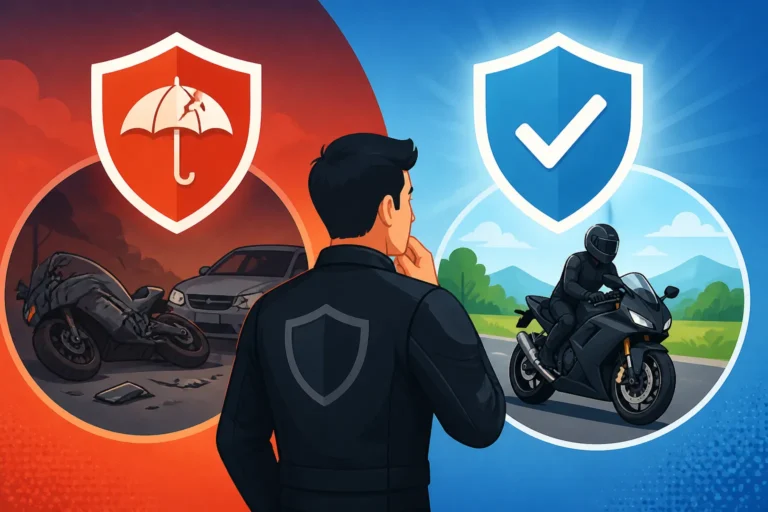
Ultimately, the decision between full coverage and liability-only is a personal one, but it should be an educated decision. It requires a thoughtful assessment of your specific situation, your appetite for risk, and your financial capability to handle potential losses out of pocket.
Assessing Your Risk Tolerance and Financial Situation
Before you commit to a policy, ask yourself some hard questions:
- Can I afford to replace my motorcycle out of pocket if it's totaled or stolen? If the answer is no, or if doing so would create a significant financial hardship, full coverage is likely the smarter choice. This is especially true if you own a new, expensive, or highly customized bike.
- Do I have robust personal health insurance with low deductibles and comprehensive coverage for accident-related injuries? While not a direct substitute for MedPay or PIP, having excellent personal health coverage can mitigate some of the medical risks that liability-only policies leave exposed. However, remember that health insurance doesn't cover lost wages or pain and suffering.
- How much equity do I have in my motorcycle? If your bike is nearly paid off, or if its market value is low, the cost of full coverage might start to feel less justified compared to its potential payout. On the other hand, if you're upside down on a loan (meaning you owe more than the bike is worth), gap insurance, often bundled with full coverage, becomes very important.
- What is my state's uninsured motorist rate? In some states, a high percentage of uninsured drivers makes UM/UIM coverage almost a necessity, regardless of your other coverage choices.
- How often and where do I ride? A rider who commutes daily in heavy traffic faces different risks than someone who only rides occasionally on rural roads. Likewise, parking your bike overnight in a high-crime area increases theft and vandalism risk compared to a secured garage.
By honestly evaluating these points, you can align your insurance choice with your true financial needs and personal comfort level with risk.
Consulting with a Trusted Advisor
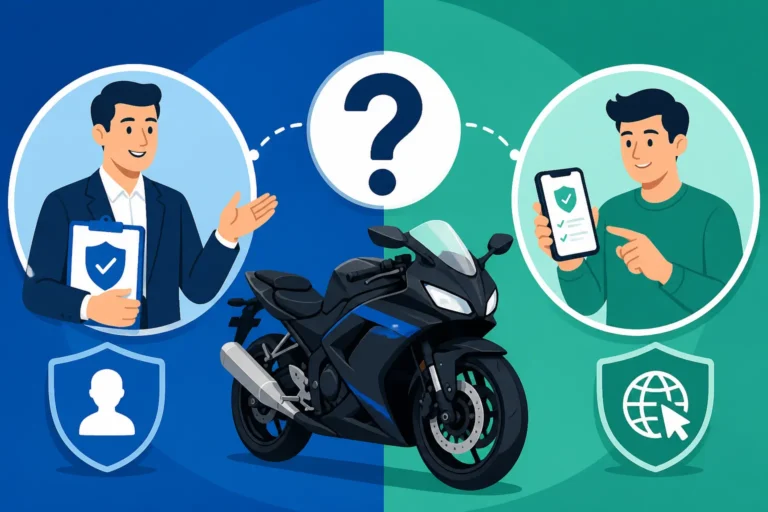
While this guide provides extensive information, there's no substitute for personalized advice. An experienced insurance agent or broker can help you navigate the nuances of different policies, explain specific endorsements, and recommend coverage levels tailored to your unique circumstances. They understand the local laws and market conditions, offering insights that generic advice can't.
Furthermore, don't just get one quote. The insurance market is competitive, and prices for the exact same coverage can vary significantly between providers. This is where using a comparison platform like The Zebra becomes invaluable. The Zebra allows you to easily compare quotes from multiple insurance companies simultaneously. You can see how much Progressive, Geico, Dairyland, or Markel might charge you for both liability-only and various levels of full coverage. This side-by-side comparison empowers you to make an informed decision, ensuring you get the right amount of protection at the most competitive price. It’s a fantastic resource for understanding How to Compare Motorcycle Insurance Quotes efficiently. Take your time, weigh your options, and make a choice that allows you to ride confidently and responsibly.
Motorcycle Coverage Comparison Table
To help summarize the key differences, here's a comparison table illustrating what each type of coverage typically includes:
| Feature/Coverage Type | Liability-Only Motorcycle Insurance | Full Coverage Motorcycle Insurance (Combination) |
|---|---|---|
| Covers Damage to Your Motorcycle | No (Except if another insured driver is at fault) | Yes (Collision & Comprehensive portions) |
| Covers Theft of Your Motorcycle | No | Yes (Comprehensive portion) |
| Covers Vandalism to Your Motorcycle | No | Yes (Comprehensive portion) |
| Covers Fire/Natural Disaster Damage | No | Yes (Comprehensive portion) |
| Covers Injuries to Others (You're At Fault) | Yes (Bodily Injury Liability) | Yes (Bodily Injury Liability) |
| Covers Damage to Others' Property (You're At Fault) | Yes (Property Damage Liability) | Yes (Property Damage Liability) |
| Covers Your Medical Bills (Any Accident Cause) | No | Yes (Medical Payments/PIP portion) |
| Covers Your Medical Bills (Uninsured Driver) | No | Yes (Uninsured Motorist Bodily Injury) |
| Covers Your Bike Damage (Uninsured Driver) | No | Yes (Uninsured Motorist Property Damage or Collision) |
| Required by Lenders for Financed Bikes | Rarely | Almost Always Required |
| Deductibles Applicable | No | Yes (Collision & Comprehensive) |
| Cost (Generally) | Lower Premiums | Higher Premiums |
| Peace of Mind | Limited | Extensive |
Disclaimer
Please remember that insurance policies and requirements can vary significantly by state, insurer, and specific policy terms. This guide provides general information and should not be considered legal or financial advice. Always consult with a qualified insurance professional to discuss your specific needs and obtain personalized quotes. Review your policy documents carefully to understand your coverage limits, exclusions, and deductibles.