What to Do After Motorcycle a Minor Drop for Insurance
We've all been there, haven't we? That stomach-dropping moment when your beloved motorcycle, whether in a parking lot, a slow turn, or just nudged off its kickstand, tips over. It's not a major crash, no high-speed impact, but the clang of metal on asphalt, the immediate rush of embarrassment, and the looming worry about damage and insurance implications can feel just as crushing. Dealing with a minor drop can be surprisingly stressful, making you wonder, "Should I even bother my insurance company about this?" This guide is here to walk you through exactly what to do when your motorcycle takes an unexpected nap, helping you navigate the aftermath, assess the damage, and make an informed decision about filing a claim.
Immediate Steps After a Minor Motorcycle Drop
The instant your motorcycle hits the ground, it's easy to panic or feel a surge of frustration. But taking a moment to breathe and follow a clear set of steps can make all the difference, not just for your safety but also for any potential insurance process down the line. Remember, even a minor drop can sometimes lead to hidden issues.
Prioritize Your Safety and the Scene
Before you even think about lifting your bike, take a good look at yourself and your surroundings. It might sound obvious, but adrenaline can mask minor injuries, and the desire to pick up your bike can override common sense.
First, check yourself for any scrapes, bruises, or twists. Even a small impact can cause a sprained wrist or a bruised knee when you try to brace the fall. If you're hurt, even slightly, address that first. Your health is far more important than any cosmetic damage to your bike. Next, quickly scan the immediate area. Are you in traffic? Is there any spilled fuel or oil that could pose a hazard to you or others? If you're on a busy street, consider moving to a safer spot if you can do so without further injuring yourself or damaging your bike. Sometimes, a kind stranger might offer to help you lift the bike. While appreciated, make sure you feel comfortable and safe before accepting assistance, especially if there's any concern about how it might be done or if you suspect internal damage.
Assess the Damage to Your Motorcycle
Once you're safe and collected, it's time to play detective with your bike. A minor drop can create a surprising amount of damage, some of which isn't immediately visible. Don't just look at the most obvious scuff marks; do a thorough inspection. Start by checking the handlebars for alignment or bends, the mirrors for cracks or breaks, and the levers for snapping or bending. Move down to the engine casing – a common contact point – and look for scrapes, gouges, or any signs of fluid leaks. The exhaust system often takes a hit too, so check for dents or deep scratches.
Next, inspect the fairings, fuel tank, and fenders for cracks, deep scratches, or dents. Don't forget the turn signals, headlight, and taillight for cracks. Wheels and tires should be examined for any visible damage, and give the suspension a quick bounce to see if anything feels off. Even if the damage seems superficial, like a simple scratch on the clutch lever or a scuff on a saddlebag, these small things can add up quickly in repair costs. Many riders have been surprised to find that a "minor" tip-over resulted in a cracked fairing that costs hundreds to replace, or a bent shift lever requiring professional attention.
Document Everything with Photos and Notes
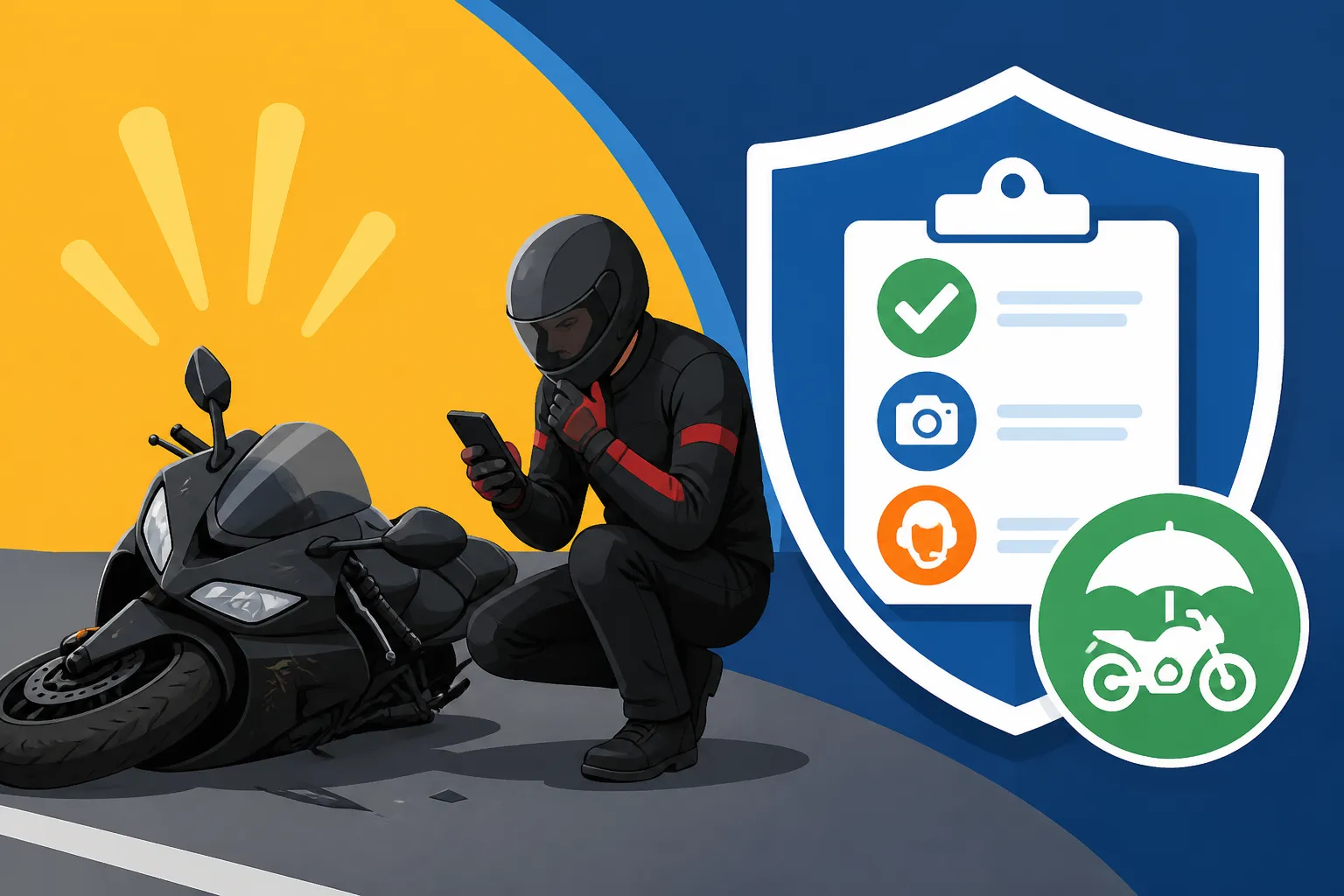
This step is crucial, whether you decide to file an insurance claim or not. Pull out your phone and take clear, well-lit photos and even a short video of the bike from multiple angles. Capture wide shots of the entire bike, then zoom in on every single area where you suspect damage, no matter how small. Think about the "before and after" if you were to eventually file a claim. You want to show the extent of the damage as clearly as possible.
Also, take photos of the surrounding area where the drop occurred. Was there gravel? A pothole? An uneven surface? This contextual information can be surprisingly helpful later. Make a mental note, or better yet, jot down the date, time, and location of the incident, along with a brief description of what happened. If anyone witnessed the drop, politely ask for their contact information, but don't pressure them. This meticulous documentation will serve as a strong record, whether you're dealing with your insurance company, a repair shop, or just keeping track for your own peace of mind. Without solid evidence, proving the extent of damage to your insurer later can become a frustrating uphill battle.
To Claim or Not to Claim: That is the Question
Once the immediate stress has subsided and you've thoroughly documented the damage, you're faced with a big decision: should you involve your insurance company? This isn't always a straightforward "yes" or "no" answer, especially for a minor drop. There are several factors to weigh carefully before picking up the phone to call your insurer like Progressive or even contacting a comparison site like The Zebra.
Calculating the Cost of Repairs Versus Your Deductible
This is often the primary factor in deciding whether to file a claim. Most motorcycle insurance policies come with a deductible, which is the amount you're responsible for paying out-of-pocket before your insurance coverage kicks in. Deductibles can range from a few hundred dollars to over a thousand, depending on your policy.
First, get an estimate for the repairs. Contact a reputable motorcycle repair shop – preferably one that specializes in your bike's make and model – and get a detailed quote for all the visible damage you've identified. Be honest with them about how the damage occurred. Once you have this estimate, compare it to your deductible.
- If the repair cost is less than or only slightly more than your deductible, it often makes more sense to pay for the repairs yourself. For example, if your deductible is $500 and the repair estimate is $600, you'd only get $100 from the insurance company. Is that $100 worth potentially impacting your insurance rates for years to come? Probably not.
- If the repair cost significantly exceeds your deductible, then filing a claim becomes a more attractive option. For instance, a $500 deductible with $2,500 in damages means the insurer would pay $2,000, which is a substantial amount.
Remember, many minor drops lead to cosmetic damage like scratched fairings or bent levers that can be surprisingly expensive to fix due to parts and labor costs. What looks like a small ding on your fuel tank could require sanding, painting, and clear coating, running into hundreds of dollars. Sometimes, a seemingly minor drop can even affect hidden components like fork alignment or wheel bearings, further increasing repair expenses.
Understanding How a Claim Might Impact Your Future Rates
One of the biggest anxieties riders have about filing a claim, especially for a minor incident, is the fear of their insurance premiums skyrocketing. While it's not guaranteed, filing any claim can, unfortunately, lead to an increase in your rates at renewal time. Insurers often view a claim, even a minor one, as an increased risk.
How much your rates might increase depends on several factors:
- Your claims history: If this is your first claim in a long time (or ever), the impact might be minimal. If you've filed multiple claims recently, even small ones, your insurer might see you as a "high-risk" rider, leading to a more significant hike.
- The cost of the claim: Larger payouts generally have a greater impact on premiums.
- Your driving record: A clean driving record can help mitigate the impact of a minor claim.
- Your specific insurer's policies: Every company, whether it's Geico, Progressive, or a smaller regional insurer, has its own underwriting rules. Some might be more forgiving of a single, minor incident than others.
Before you file, it might be worth making an anonymous call to your insurance provider (or using a different policy number, if you have another vehicle insured with them) to inquire generally about how a "not-at-fault, low-cost" claim might affect rates. Don't give them your policy number or specific details about your incident unless you're ready to proceed with a claim. Some riders also opt to consult comparison tools like The Zebra to see how their rates might change across different providers if they had a recent claim, which can help in deciding whether the financial hit is worth it. For more detailed information, check out our guide on what affects your motorcycle insurance rate.
Reviewing Your Coverage: Collision Versus Comprehensive
Knowing what type of coverage applies to your minor drop is key. Generally, damage from a tip-over falls under one of two categories:
- Collision Coverage: This covers damage to your motorcycle resulting from an accident with another vehicle or object, or even a single-vehicle accident where you hit something (like a curb) or lay your bike down. A "minor drop" while riding or due to rider error (e.g., losing balance at a stoplight) typically falls under collision.
- Comprehensive Coverage: This covers damage from non-collision incidents, such as theft, vandalism, fire, natural disasters, or hitting an animal. If your bike was parked and knocked over by a storm, or if someone else tipped it over maliciously, comprehensive coverage might apply.
Most minor drops that are due to rider error (even just fumbling a parking maneuver) will go through your collision coverage. If your bike was parked and tipped over by external factors beyond your control, it might be a comprehensive claim. The crucial difference is that "at-fault" claims that raise premiums are almost always collision claims. Comprehensive claims are generally considered "not-at-fault" and have less impact on your rates, if any. Therefore, understanding exactly what happened can help determine which part of your policy would be triggered. You can learn more about the intricacies of these coverages in our detailed article on collision vs comprehensive motorcycle coverage.
Here's a quick comparison to help you decide:
| Scenario | Estimated Damage Cost | Deductible Amount | Recommended Action | Potential Impact on Rates |
|---|---|---|---|---|
| Scratched mirror, bent lever | $200 – $400 | $500 | Pay out of pocket | Minimal to none |
| Cracked fairing, bent handlebar | $800 – $1,500 | $500 | Get multiple quotes, consider claim if well over deductible | Possible increase if filed |
| Dent in fuel tank, damaged exhaust | $1,500 – $3,000 | $500 | File a claim | Likely increase |
| Bike knocked over by storm (parked) | Any | $250 – $500 | File comprehensive claim | Minimal to none (not-at-fault) |
When to Consider NOT Filing a Claim
Beyond the financial calculations, sometimes it's just not worth the hassle or the long-term potential consequences to file a claim for a minor drop.
- Very Minor Cosmetic Damage: If the damage is truly superficial – a small scratch that can be buffed out, a minor scuff on a frame slider, or a slightly bent part you can easily replace yourself for less than your deductible – it's usually better to handle it yourself. The time and effort of dealing with adjusters, getting estimates, and the possibility of a rate increase often outweigh the small payout.
- Learning Experience: For many riders, especially newer ones, a minor drop is an unfortunate but valuable learning experience. It can teach you about proper parking techniques, slow-speed maneuvers, or the importance of frame sliders. Fixing it yourself can be a tangible reminder of that lesson without the added stress of insurance.
- Maintaining a Clean Claims Record: A clean claims record can lead to lower premiums and more discount opportunities in the long run. Sacrificing that for a small payout might not be the best strategic move. This is especially true for young riders or those with less riding experience, where any claim might be viewed more critically. You might also find value in exploring different motorcycle insurance discounts you're missing that could help offset future costs.
Ultimately, the decision is yours. Be realistic about the damage, pragmatic about the costs, and forward-thinking about the potential impact on your insurance premiums.
Navigating the Insurance Claim Process for a Minor Drop
If, after careful consideration, you decide that filing an insurance claim is the right path for your situation, the next step is to understand how the process works. Even for a minor drop, the steps are largely the same as for a more significant accident. Knowing what to expect can help ease the stress and ensure a smoother experience.
Initiating the Claim with Your Insurer
The very first official step is to contact your insurance company. Many insurers, including large providers like Progressive, offer multiple ways to file a claim: via their website, a mobile app, or by calling their claims department. Choose the method that you're most comfortable with.
When you contact them, be prepared to provide:
- Your policy number.
- The date, time, and location of the incident.
- A clear, factual description of what happened. Stick to the facts you documented earlier. Don't exaggerate or minimize the situation. Simply explain that your motorcycle tipped over, detailing how it occurred (e.g., "I was attempting to park in my driveway and lost my balance," or "The bike was parked and blown over by high winds").
- Details of the visible damage. Refer to your photos and notes.
- Your contact information and preferred method of communication.
The insurer will assign a claim number and a claims adjuster to your case. This adjuster will be your primary point of contact throughout the process. Don't feel rushed during this initial call. Take your time, explain everything clearly, and ask any questions you have about the next steps. Remember, you're looking for support, and it's their job to guide you through it. For more comprehensive information on the entire process, refer to our detailed guide on how to file a motorcycle insurance claim.
The Adjuster's Inspection and Repair Estimate
Once a claim is filed, your adjuster will usually arrange for an inspection of your motorcycle. This can happen in a few ways:
- You take your bike to an approved repair shop: The shop will conduct the inspection and send the estimate directly to your insurer. This is often the most convenient method.
- A mobile adjuster comes to you: Less common for minor drops, but possible if your bike isn't rideable.
- You submit photos and videos: For very minor, clear-cut damage, some insurers might allow you to submit your own documentation for an initial estimate, often through their app. This is more common with companies trying to streamline minor claims.
The adjuster's role is to assess the damage, confirm it's covered under your policy, and determine the cost of repairs. They'll use their expertise and potentially a database of parts and labor costs to create their own estimate. This might be different from the estimate you received from your preferred repair shop. It's important to compare the two. If there's a significant discrepancy, don't be afraid to discuss it with your adjuster. You want to ensure all damage is accounted for and that the repair costs are fair and accurate.
Sometimes, the adjuster might classify your motorcycle as a "total loss" even for what seems like a minor drop, especially if it's an older bike or if the cost of parts (like a rare fairing or a custom paint job) exceeds a certain percentage of the bike's actual cash value. This is typically when the repair costs reach a certain threshold, often 70-80% of the bike's value. In such cases, the insurer will pay you the bike's actual cash value (minus your deductible), and you might face the decision of whether to take the payout and walk away or buy back the salvage. To avoid nasty surprises, it's good to have a general understanding of what happens when your motorcycle is totaled.
Repair Options and Payout Process
Once the damage is assessed and the estimates are agreed upon, you'll generally have a few options for getting your bike repaired and receiving your payout.
- Repair at an Approved Shop: If you choose one of your insurer's network shops, they will typically bill the insurance company directly for the covered amount (after your deductible). You will then be responsible for paying your deductible to the shop.
- Repair at Your Preferred Shop: You might have a trusted local mechanic. Your insurer might allow you to use them. In this scenario, you'll often pay the shop for the repairs, and then your insurance company will reimburse you for the covered amount. Alternatively, the insurer might send the payment directly to you or your shop, with you still responsible for the deductible.
- Cash Payout: For very minor cosmetic damage that you're comfortable living with or fixing yourself, some insurers might offer a cash payout based on their estimate, minus your deductible. This can be a good option if you want to avoid formal repairs or if you want to use the money for other purposes, like upgrading a part that was damaged anyway.
Make sure you understand the payout process clearly with your adjuster before authorizing any repairs. Ask about timelines for payment and any documentation you'll need to submit. Keep all communication, estimates, and receipts organized in case you need them later. Remember, your deductible amount will be subtracted from any payout or repair cost covered by your insurer. Familiarize yourself with how deductibles work on a motorcycle claim to avoid any unexpected costs.
Preventing Future Drops and Minimizing Damage
While minor drops are an unfortunate reality for many riders, there are proactive steps you can take to significantly reduce the chances of your bike taking an unplanned nap and to minimize the damage if it does.
Improving Parking Habits and Situational Awareness
Many minor drops occur at low speeds or while parking. Often, it's not a lack of skill, but rather a momentary lapse in judgment or not fully assessing the parking environment.
- Scout Your Parking Spot: Before committing to a spot, always look for uneven surfaces, gravel, loose dirt, or significant slopes. These are prime culprits for a bike tipping over. Even a slight camber can make deploying your kickstand precarious. If the ground looks soft, like fresh asphalt on a hot day, avoid it or place a kickstand puck underneath to distribute the weight.
- Face Downhill if Possible: When parking on a slight incline, always try to park with your front wheel facing downhill. This puts gravity on your side when you need to pull out, and less stress on the kickstand. If you must park uphill, ensure the bike is in gear to prevent it from rolling back.
- Practice Slow Speed Maneuvers: Many drops happen during slow turns or tight maneuvers. Practice in an empty parking lot to build confidence and muscle memory for low-speed control. Courses like the Motorcycle Safety Foundation (MSF) Basic RiderCourse or Advanced RiderCourse can drastically improve your skills and awareness, often leading to a discount on your motorcycle insurance.
- Be Mindful of Kickstand Placement: Always ensure your kickstand is fully deployed and stable before dismounting. Give the bike a gentle rock to confirm it's secure. Never park where the bike could roll off the kickstand.
By being more mindful and intentional about where and how you park, you can avoid a lot of potential headaches.
Investing in Protective Gear for Your Motorcycle
Just as you wear protective gear to keep yourself safe, there's an array of accessories designed to protect your bike from the inevitable bumps and drops of motorcycle life.
- Frame Sliders: These are small, sacrificial pucks made of durable plastic or composite material that attach to your bike's frame. In a tip-over or low-side slide, they act as a contact point, keeping your fairings, engine casing, and other expensive parts from grinding on the pavement. They are an incredibly cost-effective investment compared to replacing bodywork.
- Crash Bars/Engine Guards: Especially popular on cruisers and touring bikes, crash bars are robust metal frames that wrap around the engine and sometimes other parts of the bike. They offer substantial protection in a drop, often preventing any damage to the engine or painted surfaces. For riders of a Harley-Davidson, these are almost a must-have accessory.
- Axle Sliders: Similar to frame sliders, these attach to the front and rear axles and protect the forks, swingarm, brake calipers, and wheel hubs.
- Handguards/Lever Protectors: These can prevent bent or broken clutch and brake levers, which are often the first things to hit the ground.
- Bar-End Sliders: These protect your handlebars and grips from damage.
While these accessories add a bit of weight and can alter the aesthetics of your bike, the cost of installing them pales in comparison to the repair bill for damaged engine cases, fairings, or a dented fuel tank. When considering these additions, it's also worth noting that some insurance policies, like those offered by Markel, are quite good at covering custom parts and accessories, which might be a factor if you invest heavily in protective modifications. Remember, a stitch in time saves nine, and a set of frame sliders can save you thousands in repairs.
Disclaimer
Please remember that the information provided in this article is for general guidance and informational purposes only, and does not constitute professional financial, insurance, or legal advice. Motorcycle insurance policies and state laws vary widely. Always consult with a qualified insurance professional or legal expert regarding your specific situation and policy details. We are not an insurance provider and cannot offer specific coverage recommendations or guarantees.